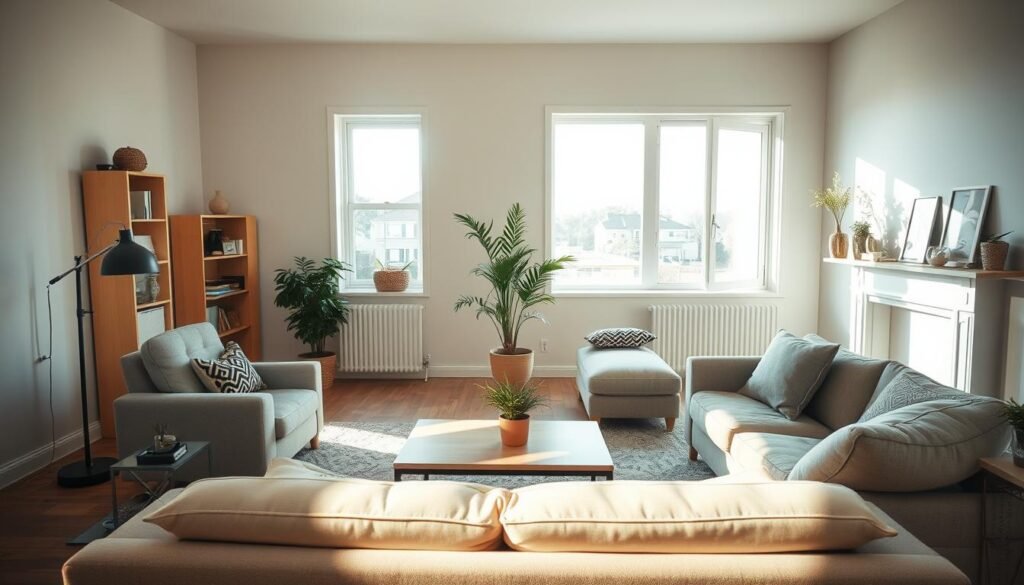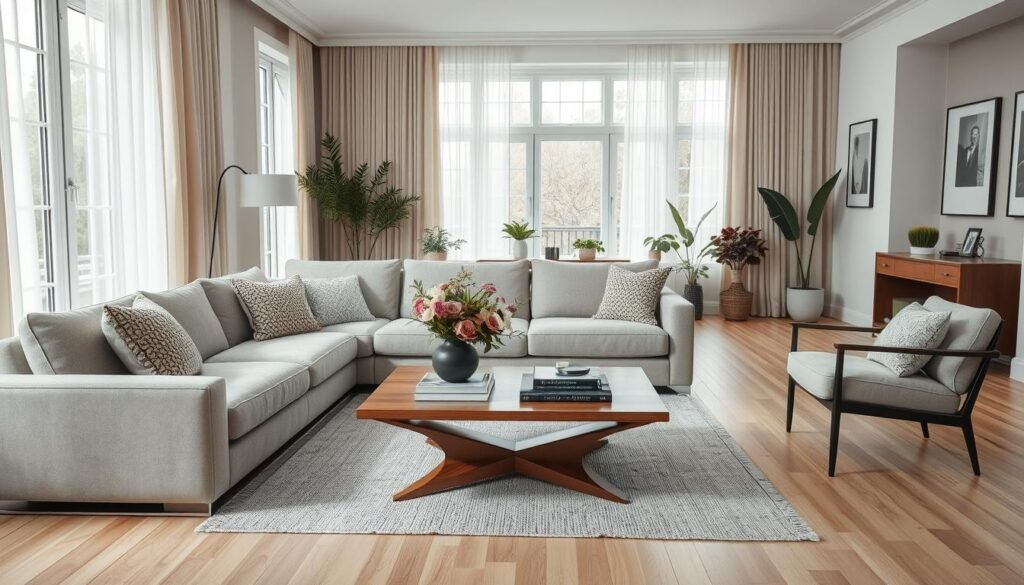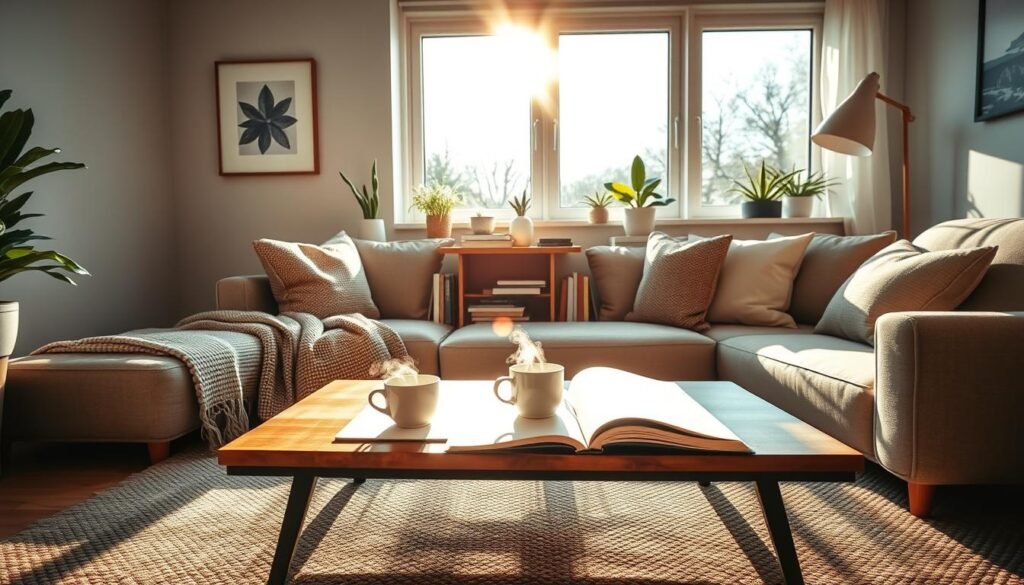
Creating a welcoming home starts with a smart living room layout. If your seating feels off, it might not be the furniture. It could be what’s missing underneath or around it.
A good layout balance makes every piece feel right at home. It makes the space feel welcoming. Many struggle with where to place big pieces, but the right sofa placement tips can help.
You want your space to look put together, not messy. This guide will show you new room layout ideas to refresh your home. We’ll explore how rugs, lighting, and textures can bring harmony.
By the end, you’ll know how to make a floating chair a key part of your design. Let’s explore ways to make your main gathering spot flow better.
Key Takeaways:
- Prioritize layout balance for a harmonious and inviting space.
- Use smart sofa placement tips to anchor furniture effectively.
- Apply new room layout ideas to ground the space and improve flow.
Understanding Why Your Living Room Feels Unanchored
The feeling of an unanchored living room often comes from bad furniture placement. When furniture is not placed well, it can cause an unbalanced layout. This makes the space feel disjointed and uncomfortable.
One big reason for this discomfort is not thinking about the room’s size and furniture scale. To make the most of small spaces, furniture must match the room’s size.
Common Mistakes in Furniture Arrangement
Several common mistakes can make a living room feel unbalanced. These include:
- Pushing all furniture against the walls, creating a void in the center of the room.
- Ignoring the scale and proportion of furniture relative to the room and each other.
- Failing to create a focal point, such as a statement piece of furniture or a fireplace, around which to arrange the rest of the room.
Effective furniture arrangement solutions involve balancing furniture size with available space. This balance is key for interior design for sofas and other big pieces. It ensures they fit well in the space.
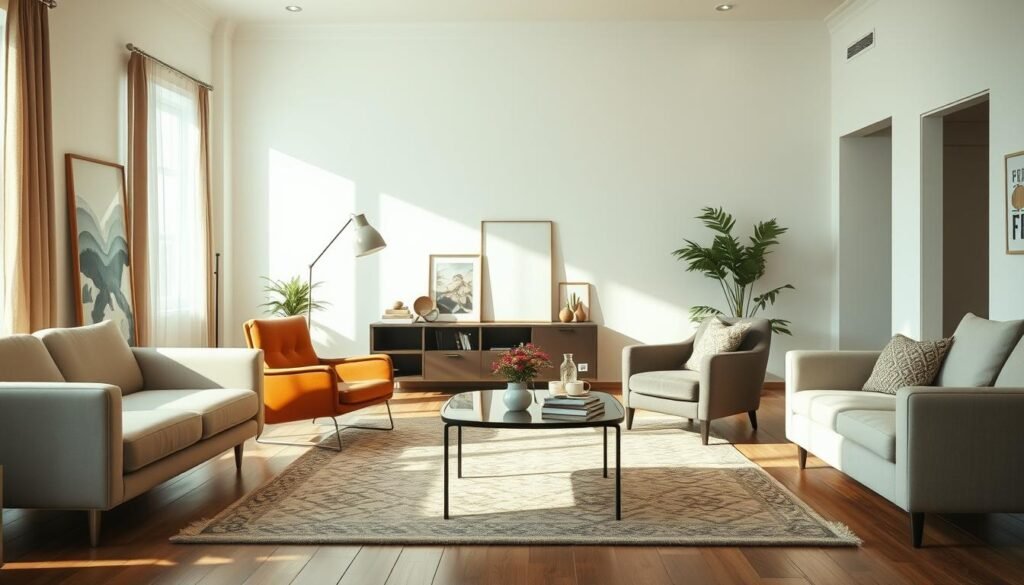
By understanding and avoiding these common mistakes, homeowners can start making their living room more balanced and welcoming. This improves both the space’s look and its use.
Does Your Sofa Feel Like It’s Just Lost in Your Room?
When your sofa seems lost in your living room, it’s time to rethink your furniture layout. A sofa is usually the biggest piece in the room. Its placement greatly affects the room’s feel and use.
Proper sofa placement is key to a cozy and welcoming space. Think about the room’s size, door and window locations, and how people move around.
Here are some tips for placing your sofa well:
- Put your sofa in a spot that makes a circle with other furniture.
- Place your sofa away from walls to make a cozy spot or to separate areas in an open-plan room.
- Make sure your sofa fits well with the room and other furniture.
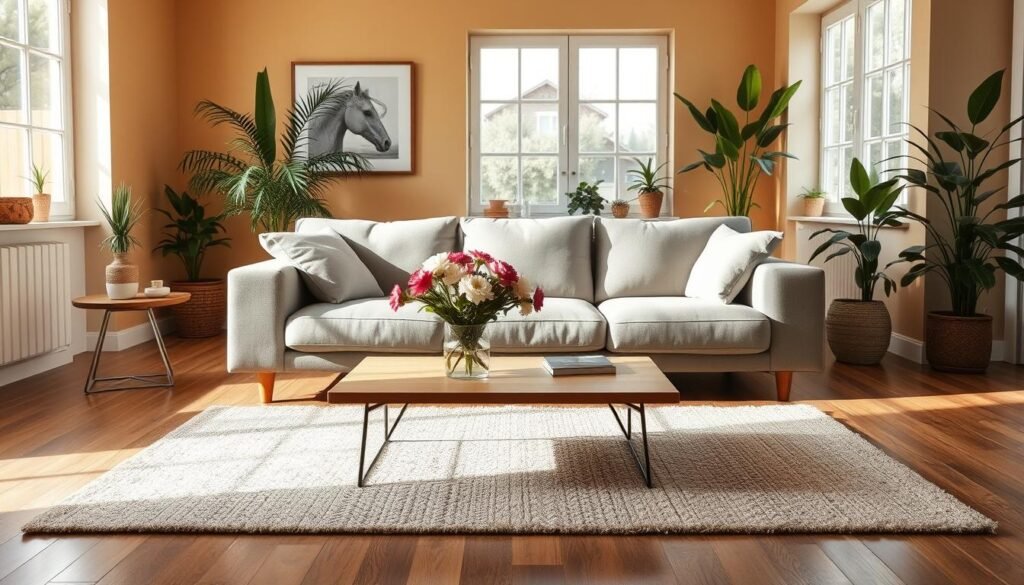
By carefully placing your sofa, you can make your living room balanced and inviting. Good organizing living spaces means thinking about furniture size and scale, and the look you want.
To make your home even cozier, add textiles, lights, and decor that match your sofa and room style.
Create a Strong Focal Point to Anchor Your Space
A focal point is key to making a living room cozy and inviting. It’s the centerpiece that the room’s design revolves around. A strong focal point draws the eye to a specific area, creating harmony and balance.
Using furniture is a great way to create a focal point. A bold sectional sofa or a vintage armchair can be the room’s centerpiece. When picking furniture, think about its size and how it fits with the room and other pieces.
Using Furniture to Create a Focal Point
Furniture can be used in many ways to create a focal point. For example, a large, stylish sofa in a key spot can catch the eye. Or, a unique coffee table or statement chair can be a focal point if placed right.
Some ideas for creating a focal point with furniture include:
- Using a bold, brightly colored sofa to draw attention.
- Placing a vintage or antique piece in a prominent position.
- Selecting a statement piece with an interesting shape or design.
In a cozy cottage or country cottage entryway, furniture should match the home’s style. A comfy bench or a beautifully made console table can be a great focal point.
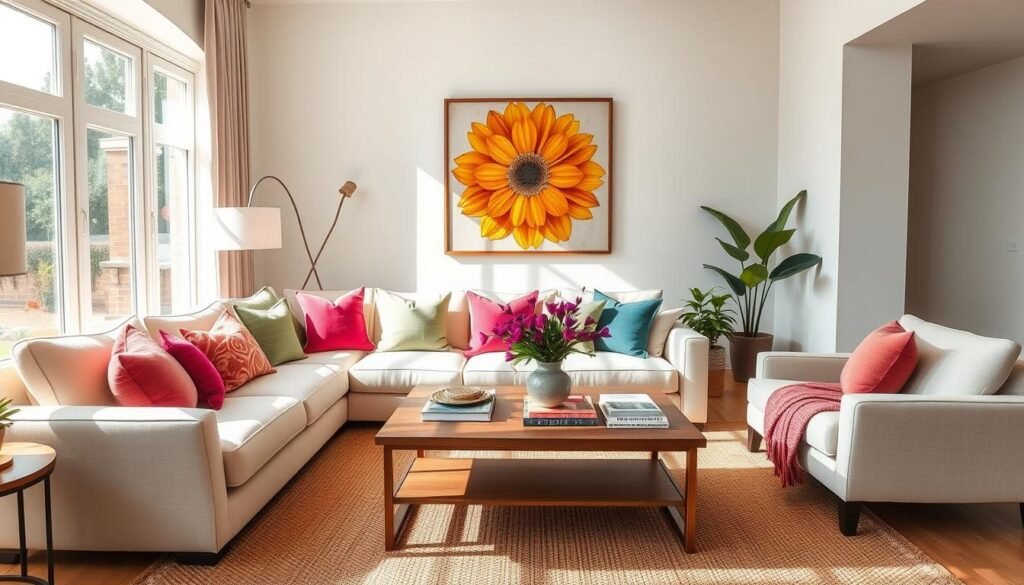
By carefully choosing and placing furniture, you can create a focal point that anchors your living room. This will also improve its overall look.
Master Furniture Arrangement for Visual Weight Distribution
The secret to a peaceful living room is in the furniture arrangement. It’s all about visual weight distribution.
Visual weight is how heavy or light things look in a room. It depends on size, color, texture, and where they are. A balanced room feels stable and harmonious.
Balancing Visual Weight in Your Living Room
To get balance, follow these tips:
- Size and Scale: Big furniture looks heavier. Pair a big sofa with smaller, lighter items.
- Color: Dark colors weigh more than light ones. Use darks on big pieces or as accents.
- Texture: Busy textures add weight. Mix them with smooth, simple ones.
- Placement: Furniture in corners or away from walls looks heavier. Try floating furniture for a lighter feel.
For instance, a big, dark sofa can be balanced with light walls, rugs, and accents. Adding modern vintage entryway ideas can also make the room look better together.
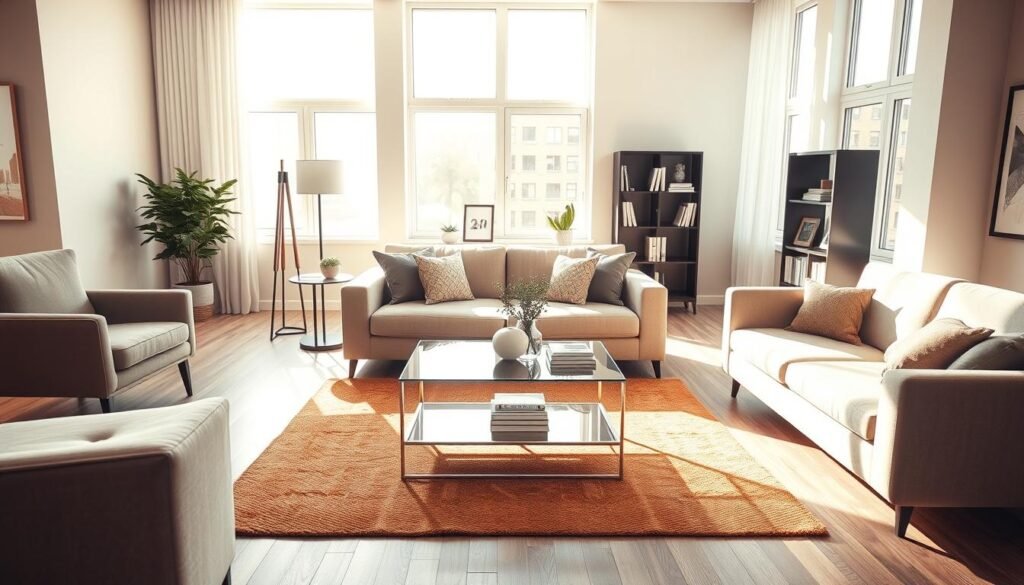
Begin with the biggest piece, usually the sofa. Place it in a spot where you can easily see it. Then, add other furniture around it, thinking about their weight and how they balance the room.
Learning to arrange furniture and manage visual weight can make your living room feel welcoming. It’s like having a vintage home entrance that welcomes everyone in.
Ground Your Layout With the Perfect Area Rug
An area rug can be the unsung hero in grounding your living room’s layout. It has the power to tie together disparate elements, creating a cohesive and balanced space. When chosen correctly, an area rug can add warmth, texture, and visual interest to your room.
To select the perfect area rug, consider the size, color, and texture that will complement your existing furniture and decor. A rug that is too small can make the room feel disjointed, while one that is too large can overwhelm the space. The ideal size will depend on the layout of your furniture and the dimensions of your room.
For instance, in an English farmhouse entryway or a checkerboard entryway, a bold or patterned area rug can add a touch of personality and style. The key is to balance the rug with the other elements in the room, ensuring that it grounds the layout without overpowering it.
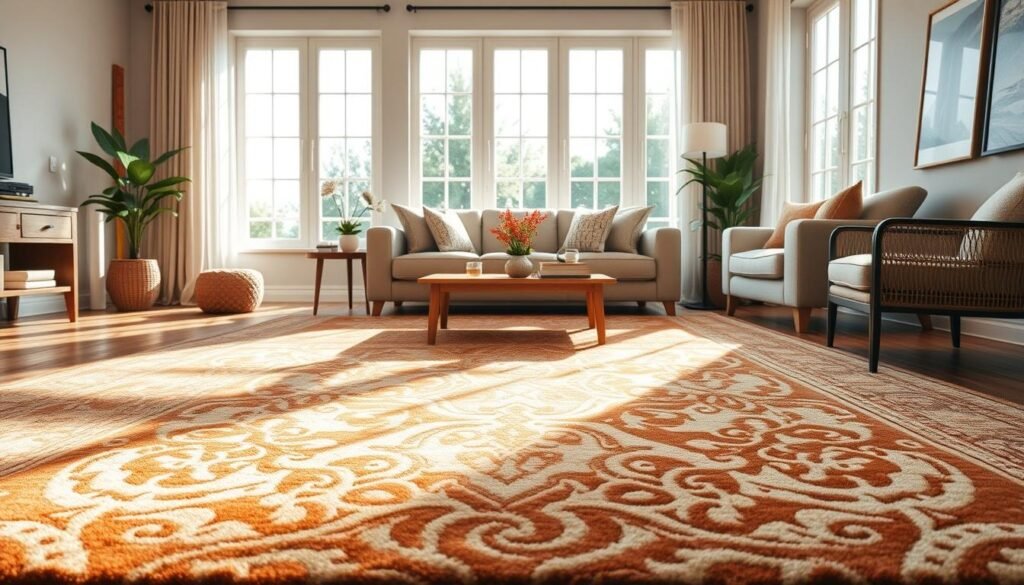
When it comes to color, choose a rug that complements the dominant hues in your room. You can either match the rug to the color of your furniture or select a contrasting color to create visual interest. Texture is also important, as it adds depth to your space. Consider a rug with a mix of textures or a plush pile to add warmth underfoot.
To further enhance the grounding effect of your area rug, consider the following tips:
- Place the rug in a position that creates a sense of flow and continuity.
- Ensure the rug is large enough to anchor the main furniture pieces.
- Use the rug to define different areas within an open-plan space.
By carefully selecting the right area rug, you can create a more balanced and inviting living room that feels grounded and harmonious.
Balance Scale and Proportion for a Harmonious Room
Creating a harmonious room is more than just choosing furniture. It’s about understanding scale and proportion. When these elements are balanced, the room looks better and feels more cohesive.
Scale refers to the size of an object in relation to the room and other objects within it. A big piece of furniture in a small room can make it feel cramped. On the other hand, a tiny piece in a large room can get lost. Proportion is about the balance of dimensions, like height, width, and depth.
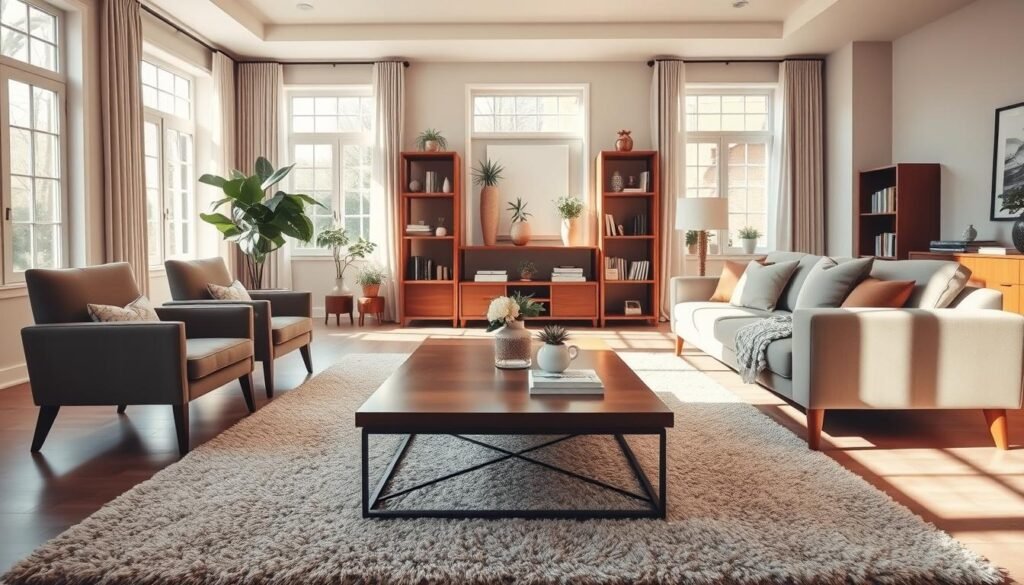
To use scale and proportion well, start by measuring your room and furniture. Think about the front foyer decor and how it sets the mood for the room. A well-proportioned bench and table entryway can make your home feel welcoming.
- Measure your room and furniture to understand their dimensions.
- Choose furniture that is proportional to the size of the room.
- Consider the visual weight of each piece, balancing large items with smaller ones.
- Don’t forget about the vertical dimension; tall furniture or decor can draw the eye upward, making the ceiling feel higher.
By carefully considering scale and proportion, you can make a room that feels balanced and inviting. This focus on detail will improve your living room’s design. It will make it a cozy and beautiful place to relax and entertain.
Solve Open Concept and Entryway Layout Challenges
Creating a cohesive look in open concept homes is more than just picking furniture. It’s about making your home feel grounded and inviting. Open concept living areas and entryways need careful planning to work well.
Open concept layouts make homes feel spacious and connected. But, they need smart planning to define areas clearly. The big challenge is making the entryway and living area feel separate without losing the open feel.
To solve this, use furniture as a divider. For example, a console table behind a sofa can mark the entryway. Using area rugs is also great for defining zones. A rug under the seating area can visually separate it from the entryway.
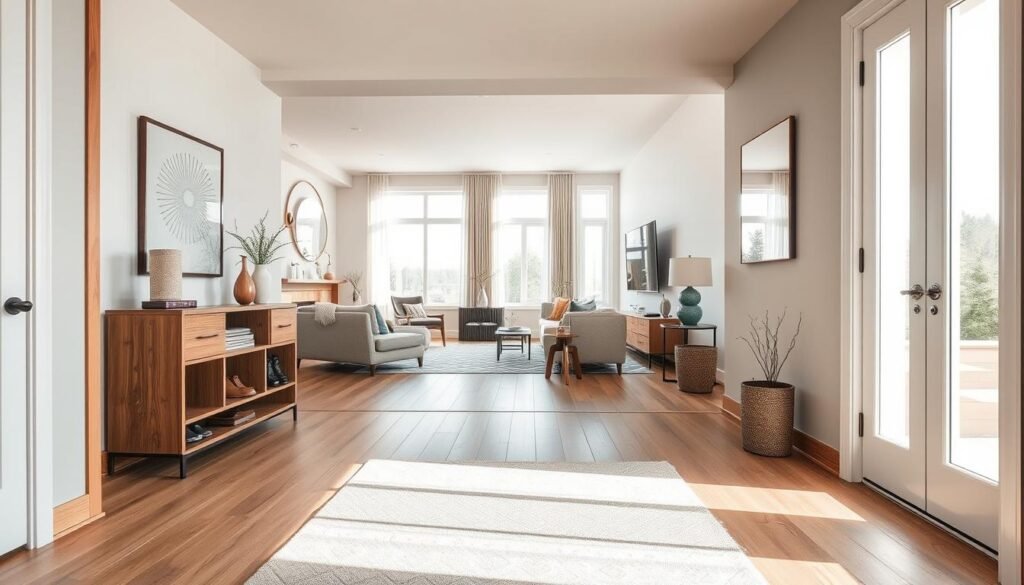
Lighting is key in defining areas. Pendant lights over a dining table or a reading lamp in a cozy corner can create zones. The right lighting can also make your space feel more welcoming and layered.
Entryway Layout Solutions
Creating a welcoming entryway is vital. Here are some entryway layout solutions to consider:
- Use a statement piece of furniture, like a bold console table or a unique bench, to draw the eye and create visual interest.
- Incorporate plants or a vase with fresh flowers to add a touch of warmth and personality.
- Hang a mirror or a piece of art that reflects your style and adds depth to the space.
- Consider the flow of traffic and ensure there’s enough space to move comfortably through the entryway.
By using these strategies, you can make an entryway that looks great and sets the tone for your home.
Complete the Balance With Lighting and Cozy Finishing Touches
Creating a balanced living room is more than just arranging furniture. It also needs careful thought on lighting and decor. The right lighting can change a room’s feel, making it cozy or lively.
Effective lighting is key for a cozy vibe. Mix different light sources like overhead lights, table lamps, and floor lamps. This creates depth and lets you adjust the light for various activities and moods.
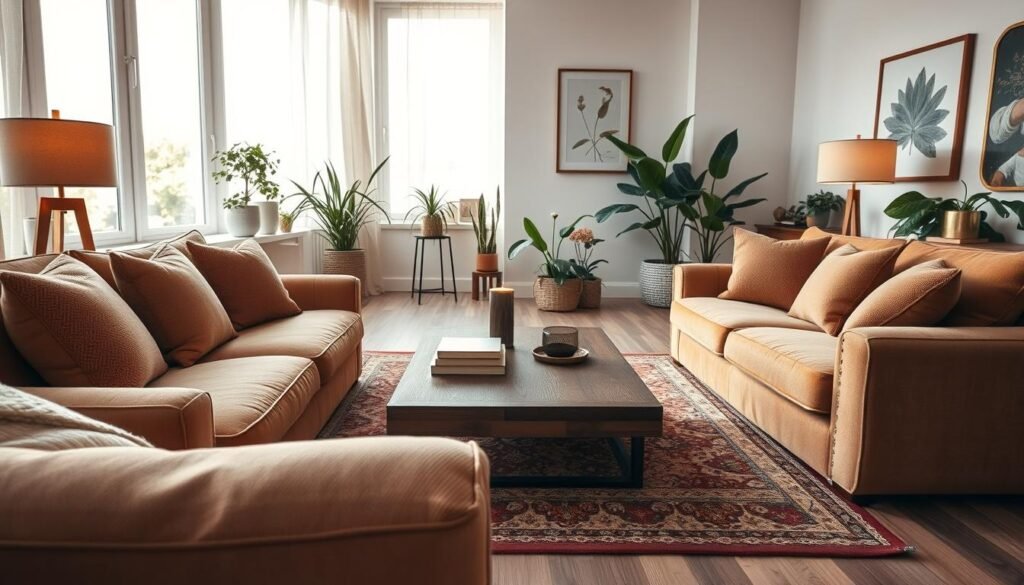
For a cozy room, soft and warm lighting is best. Table lamps with warm shades can create a cozy glow. Dimmable overhead lights help change the room’s feel. Here are some lighting tips for a cozy living room:
- Use warm-toned light bulbs for a cozy feel.
- Install dimmers to control the light.
- Place lamps in corners for warm light pools.
Adding Cozy Finishing Touches
Lighting is just the start. Cozy finishing touches make a room truly inviting. These include throw blankets, pillows, and rugs that add warmth and texture.
To make a cozy living room, add elements that show your style. Some ideas are:
- Adding plants or a vase with fresh flowers.
- Displaying personal items, like family photos or artwork.
- Using scented candles or essential oils for a nice smell.
By mixing good lighting with cozy touches, you can make a living room that’s balanced, welcoming, and just right for you.
Conclusion
A well-designed living room is more than looks. It’s a space that feels welcoming and cozy. By using the layout tips, you can make your living room a place for relaxation and fun.
Grounding your living room means more than just furniture placement. It’s about creating a balance that makes the space feel complete. Every detail, from a strong focal point to the right area rug, is important for a cozy feel.
Using these strategies will make your living room look better and feel more like home. Remember, balance is key to a cozy and inviting space.
With these tips and ideas, you’re on your way to creating a space that shows off your style. It will be warm and welcoming for family and friends.