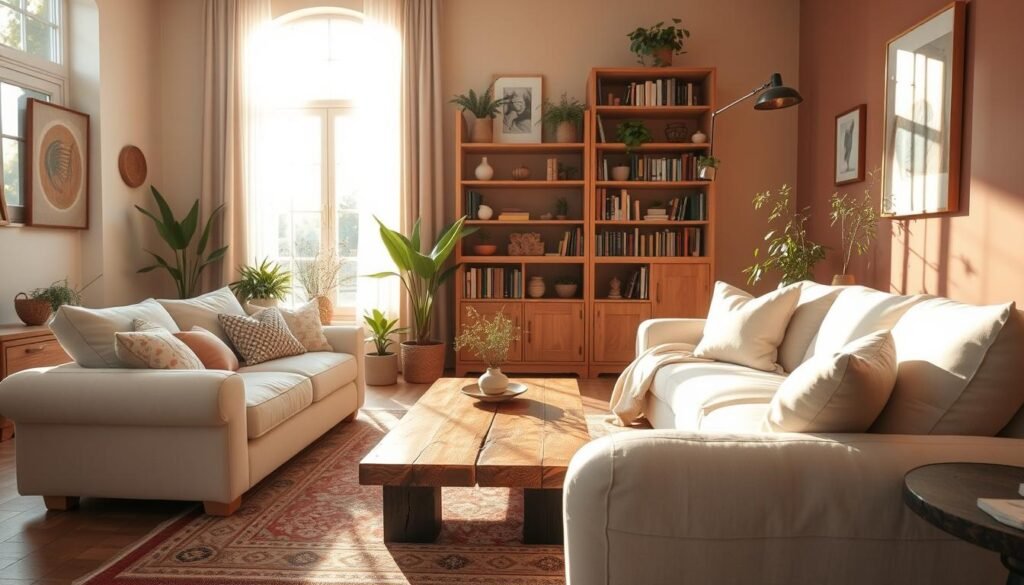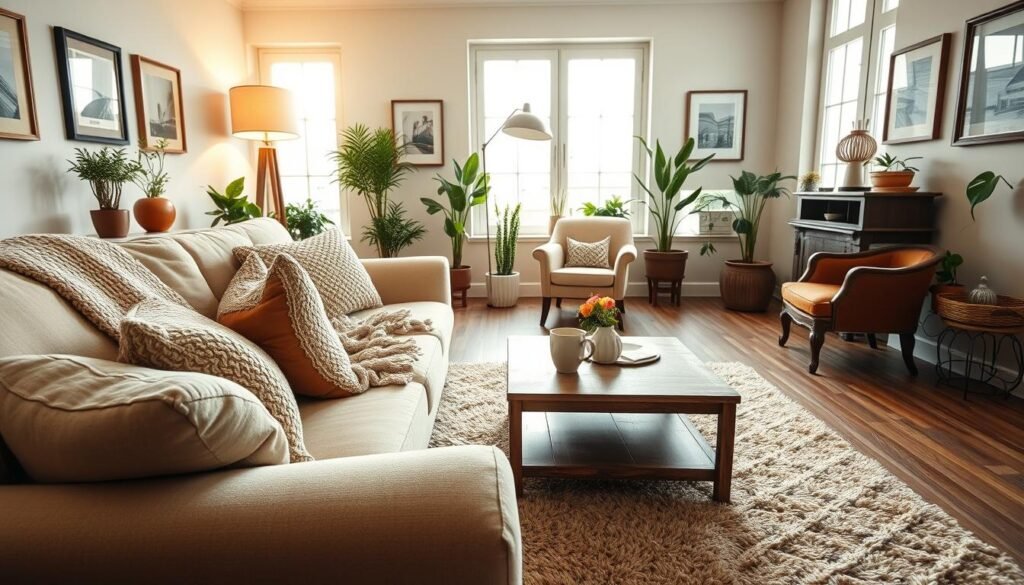
Furniture can quickly fill a room, but achieving balance is different. If your main area feels restless, even when it’s clean, it might lack layout flow.
It’s often about layout flow, not just decoration. Great home design is more than picking pretty things for your house.
It needs a focus on how people move through the den. Proper interior styling makes sure each piece has a purpose and improves flow.
A comfy seating area should relax you without feeling crowded. Using decluttering tips helps you see the floor plan clearly.
A balanced area makes walking easy and daily life comfortable. By looking at the living room decor, your home can become a peaceful place for everyone.
Take a moment to see how guests walk through to find hidden blocks. This small check shows if the arrangement works well for daily use.
1. The Visual Weight Test: Is Everything Fighting for Attention?
In living room decor, visual weight is key to a calm atmosphere. It’s about how objects look heavy or light, affecting the room’s balance.
How Heavy Furniture Creates Anchors
Big furniture, like a large sofa or a huge coffee table, anchors your room. They make it feel stable. But too much heavy furniture can clutter the space.
To balance, mix heavy with light furniture. For instance, a heavy sofa with a light armchair makes the room more lively.
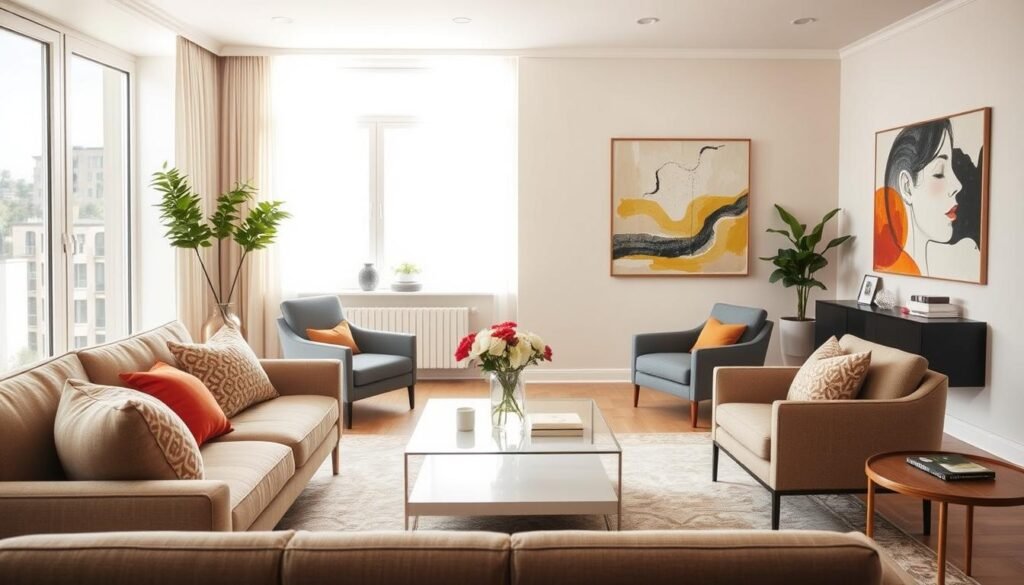
Color also impacts visual weight. Dark colors are heavier than light ones. A dark wall or bold rug anchors a room, while light colors open it up.
In home design, mixing warm and cool colors is vital. Warm colors like reds cozy up a room, while cool colors like blues calm it.
When Every Piece Demands to Be the Star
Sometimes, every item in your living room wants to be the center of attention. This happens with bold pieces like a patterned rug, a bright sofa, and striking art.
To fix this, pick a focal point. Use a few bold pieces and balance them with neutral ones. This makes your cozy living room welcoming and calm, not chaotic.
Using feng shui for living room design helps. It’s about balancing elements and creating a peaceful flow. This makes your space more balanced and serene.
2. The Walking Path Principle: Can You Move Freely Through Your Space?
Having a clear path in your living room is key. It should let you move easily without getting stuck. This makes your room both functional and comfortable.
The 30-Inch Minimum Walkway Rule
The 30-inch minimum walkway rule is a must for a smooth flow. It means furniture and walls should have at least 30 inches of space. This rule helps keep your room open and free from clutter.
Think about how you move around your room. Make sure paths are clear. For example, leave enough space between a sofa and an armchair for easy walking.
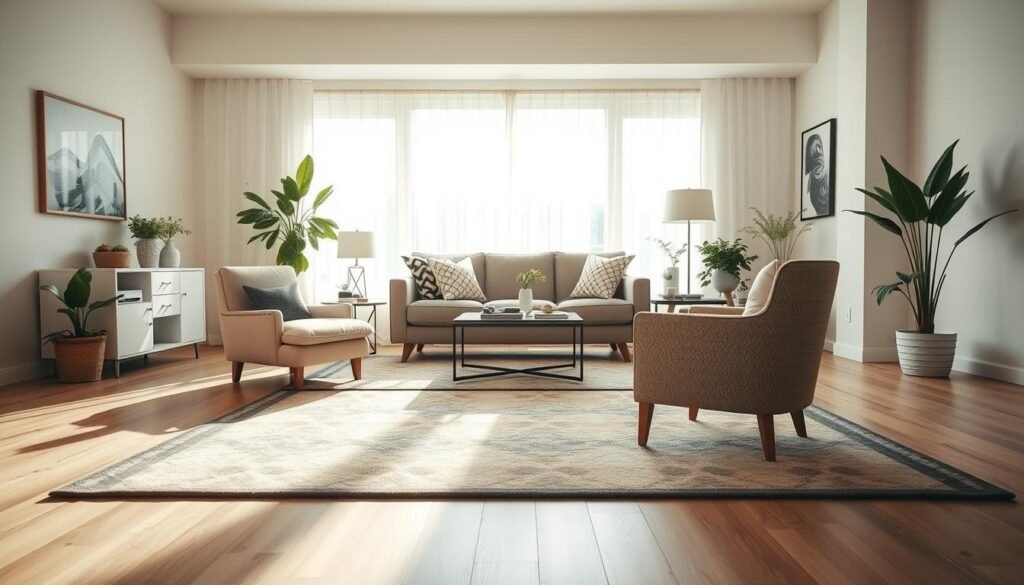
Where you put your furniture matters a lot. Good furniture placement makes your room better to use and enjoy. For example, a console table behind a sofa can be useful without blocking the way.
Think about what you do in your living room. Arrange furniture to help these activities. If you often have guests, make sure there’s room for them to move around. This makes your space more welcoming and useful.
- Assess the room’s traffic patterns and plan furniture around them.
- Use furniture to create separate zones within the room, such as a reading nook or a TV area.
- Ensure that the furniture is proportional to the room size to maintain a balanced look.
3. Does Your Living Room Feel Finished — Or Just Filled With Stuff?
Living room design is all about making choices. A space that looks finished has intentional design choices. Every piece has a purpose and adds to the look.
Intentional Design Choices vs. Random Accumulation
Intentional design means making choices about what goes in your living room. It’s about creating a look that shows your style and meets your needs. Random accumulation, on the other hand, leads to clutter and chaos.
To design your living room with intention, first figure out your style and the room’s purpose. Think about the space’s flow, colors, and furniture and decor choices.
When More Becomes Too Much
It’s easy to get carried away with decorating. But too much can make a space feel overwhelming. Knowing when to stop is key to a welcoming living room.
Check if each item has a purpose or adds to the look. If not, it’s time to edit.
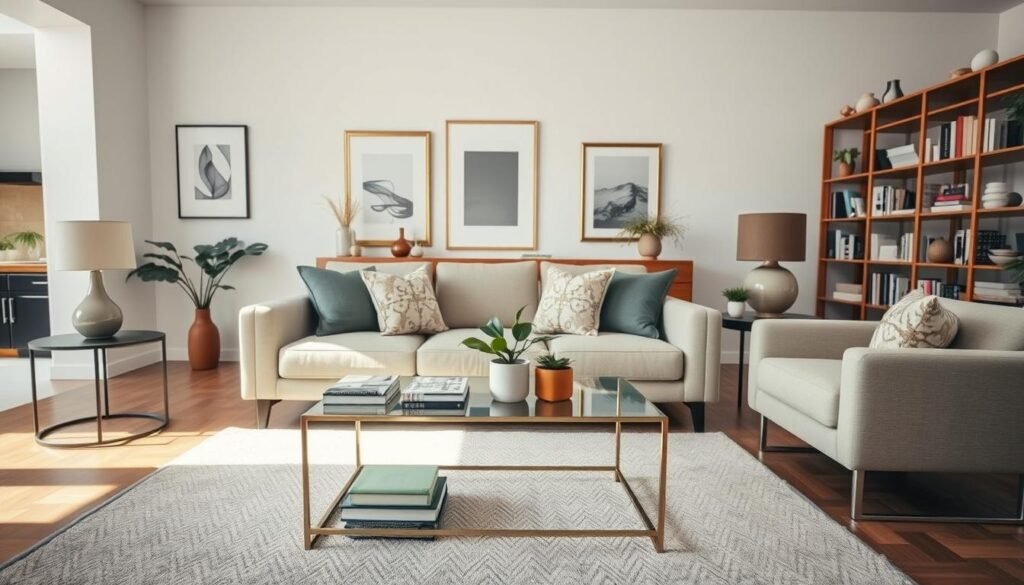
Editing is essential for a polished living room. It means reviewing each item and deciding what to keep, donate, or discard. This process clears clutter, reduces visual noise, and makes the space more inviting.
To edit well, start by removing broken, outdated, or unnecessary items. Then, think about the look you want and make changes. This might mean rearranging furniture, swapping decor, or adding a few pieces.
By focusing on intentional design, you can make your living room feel complete and polished, not just cluttered.
4. The Focal Point Test: Where Do Your Eyes Land First?
A well-designed living room often has a clear focal point that draws the eye and anchors the space. This could be an architectural feature or a statement piece of furniture.
The focal point is what captures your attention when you enter the room. It sets the tone for the rest of the space and helps guide the arrangement of other elements.
Architectural Features vs. Furniture Focal Points
There are two main types of focal points: architectural features and furniture focal points. Architectural features include elements like fireplaces, large windows, or built-in shelving units. These are inherent to the room’s design and can serve as a natural focal point.
Furniture focal points, on the other hand, are created using statement pieces like a bold sectional sofa, a vibrant piece of art, or a stunning chandelier. These elements can be rearranged or replaced as your style evolves.
Supporting Elements That Enhance, Not Distract
Once you’ve identified or created your focal point, it’s essential to balance it with supporting elements that enhance its presence without distracting from it. This can include complementary furniture, rugs, and decor that harmonize with the focal point.
For example, if your focal point is a fireplace, you can enhance it by arranging seating around it and adding decorative elements like vases or artwork on the mantel.
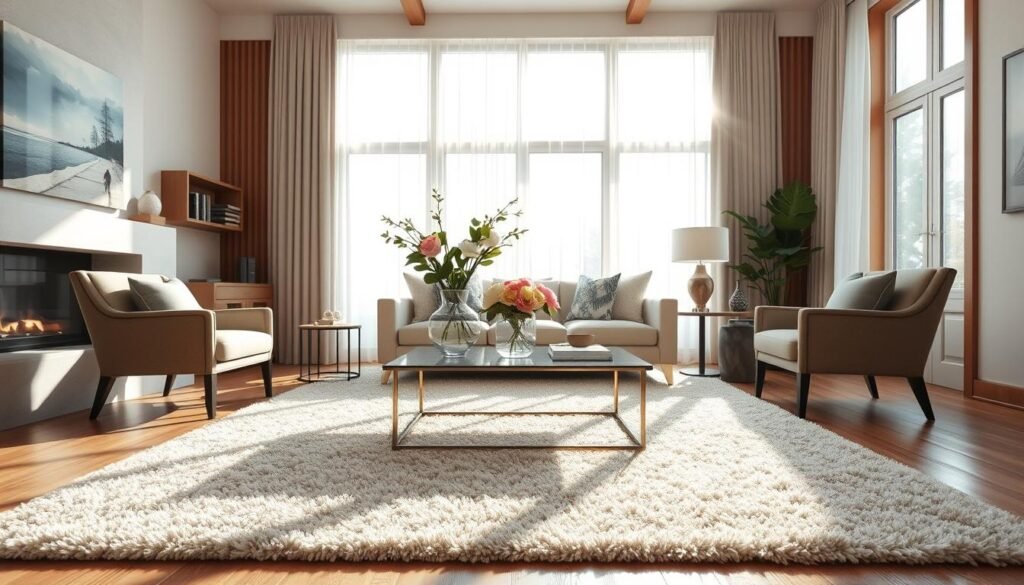
To ensure your supporting elements don’t distract from the focal point, follow these guidelines:
- Keep the color palette cohesive
- Balance scale and proportion
- Avoid cluttering the space with too many competing elements
By carefully selecting and arranging your focal point and supporting elements, you can create a living room that feels harmonious and visually appealing.
5. Furniture Scale and Proportion: Is Everything the Right Size for Your Room?
Furnishing your living room needs careful thought about scale and proportion. The right size furniture makes your room look balanced and welcoming.
Furniture scale is about the size of each piece in relation to the room and each other. Proportion is about the balance and harmony of these sizes. Finding the right balance can be tricky, but there are guidelines to help.
The Two-Thirds Rule for Coffee Tables
The two-thirds rule is a good guide for coffee tables. It says the coffee table should be two-thirds the length of your sofa. This creates a nice balance between the sofa and coffee table.
For example, a 90-inch sofa fits well with a 60-inch coffee table. This rule helps furniture in your living room look good together.
Sofa Scale Guidelines for Different Room Sizes
The sofa’s size should match the room’s size. In small rooms, a smaller sofa works best to avoid feeling cramped. Large rooms can handle bigger sofas or sectionals.
- For small rooms (less than 150 square feet), choose a sofa that’s 72 inches or less.
- Medium-sized rooms (150-250 square feet) do well with a sofa that’s 80-90 inches long.
- In large rooms (more than 250 square feet), go for sofas or sectionals over 96 inches long.
Oversized Furniture in Small Spaces
Oversized furniture in small spaces can make it feel tight and cluttered. Always measure your space before buying furniture to ensure it fits well.
Avoid large, bulky pieces that overwhelm small spaces. Choose furniture that’s the right size for your room.
When Petite Furniture Gets Lost in Large Rooms
In large rooms, small furniture can seem insignificant. To fix this, use several small pieces or a big statement piece.
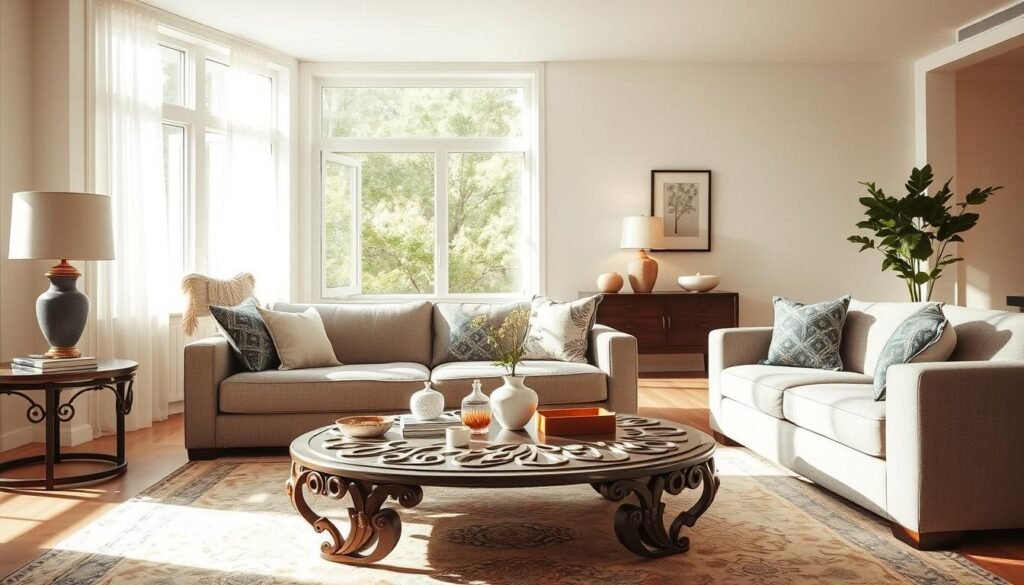
Thinking about furniture scale and proportion helps create a balanced and inviting living room. It makes sure your furniture fits your space perfectly.
6. The Breathing Room Factor: Does Your Space Feel Suffocated or Spacious?
The ‘breathing room factor’ is key to whether your living room feels open or cramped. It’s about having enough space for calm and clear views.
The Psychology of Open Space
Studies show that open spaces boost our mental health and help us relax. A cluttered room can make us feel anxious and overwhelmed.
But, a room with plenty of breathing room helps us think clearer and feel more at peace. It’s not just about looks; how we see space affects our mood and work.
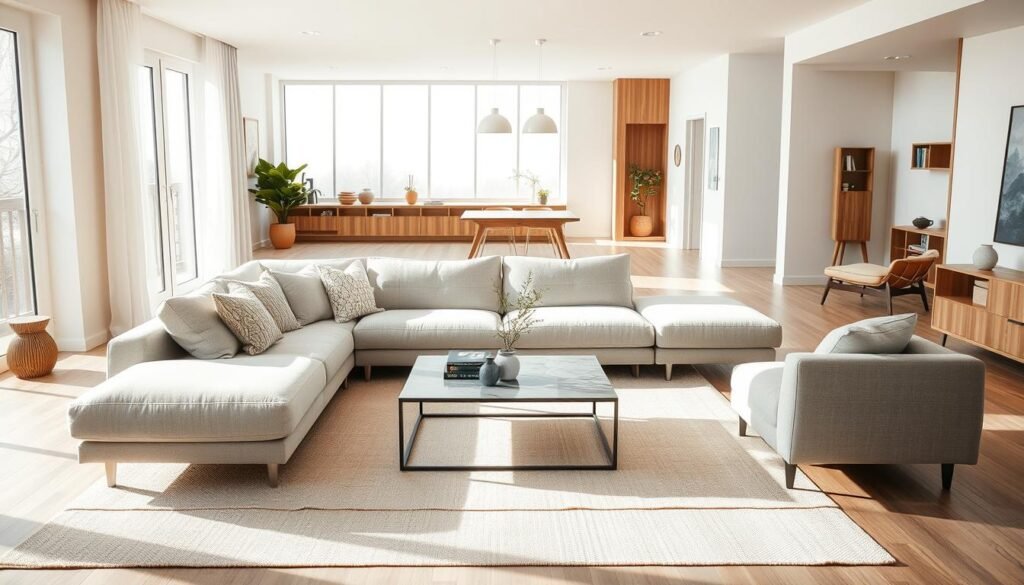
Finding the right mix of empty and full space is essential. Here are some tips to get it right:
- Begin by getting rid of things you don’t need.
- Choose furniture that does more than one thing to save space.
- Make sure your furniture fits well in the room.
- Keep some surfaces empty to make the room feel bigger.
With these tips, you can make your living room welcoming and roomy. It’s great for unwinding and hanging out with friends.
7. Color and Pattern Balance: Is Your Eye Overwhelmed or Engaged?
Color and pattern balance is an art that can make your living room feel welcoming. It’s key to creating a space that looks good and feels right.
Dominant, Secondary, and Accent Color Distribution
A good color scheme has a dominant color, a secondary color, and an accent color. The dominant color should cover the most area, like walls and big furniture. The secondary color supports the dominant and is for smaller items. Accent colors add excitement and can be in accessories like throw pillows or rugs.
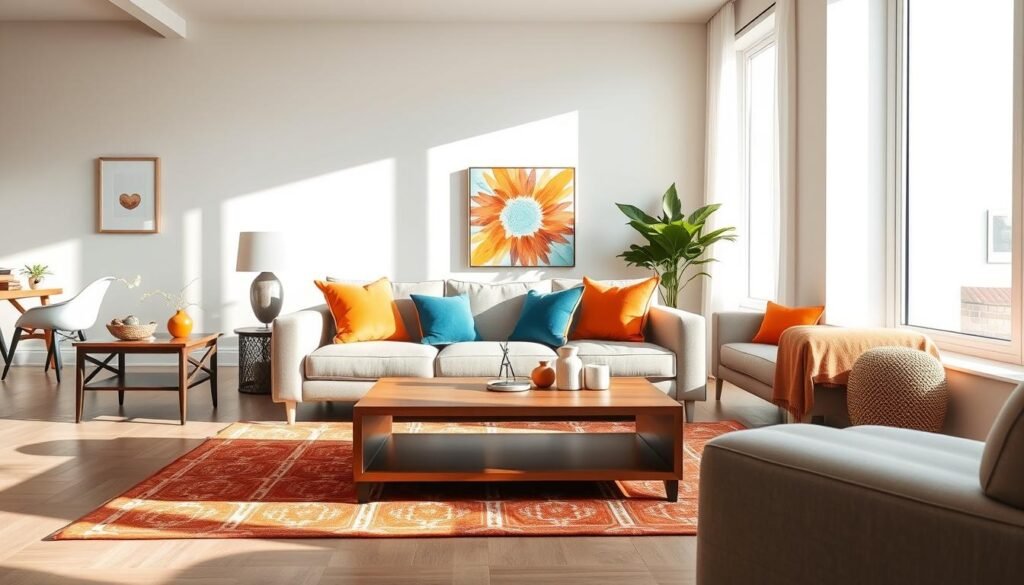
Mixing patterns can make your living room interesting. But, too many patterns can be too much. Stick to three main patterns: one big, one medium, and one small. This makes your space balanced and fun to look at.
Warm Color Palettes for Inviting Spaces
Warm color palettes can make your living room cozy. Colors like terracotta, golden brown, and soft beige are great for a welcoming feel. To keep it balanced, mix warm colors with neutral ones.
By carefully balancing color and pattern, you can make your living room both inviting and beautiful.
8. Symmetry vs. Asymmetry: Understanding Different Types of Visual Balance
The secret to a beautiful living room is knowing aboutsymmetryandasymmetry. Visual balance makes a space feel cozy and good-looking.
There are two main ways to get visual balance in a living room:symmetryandasymmetry. Symmetry means making a mirror image on both sides of a center point. It often looks formal and traditional.
Traditional and Formal Living Room Arrangements
Symmetrical setups are common in traditional and formal living rooms. This method places the same or similar things on both sides of a central point. For example, two armchairs on either side of a fireplace bring order and stability.
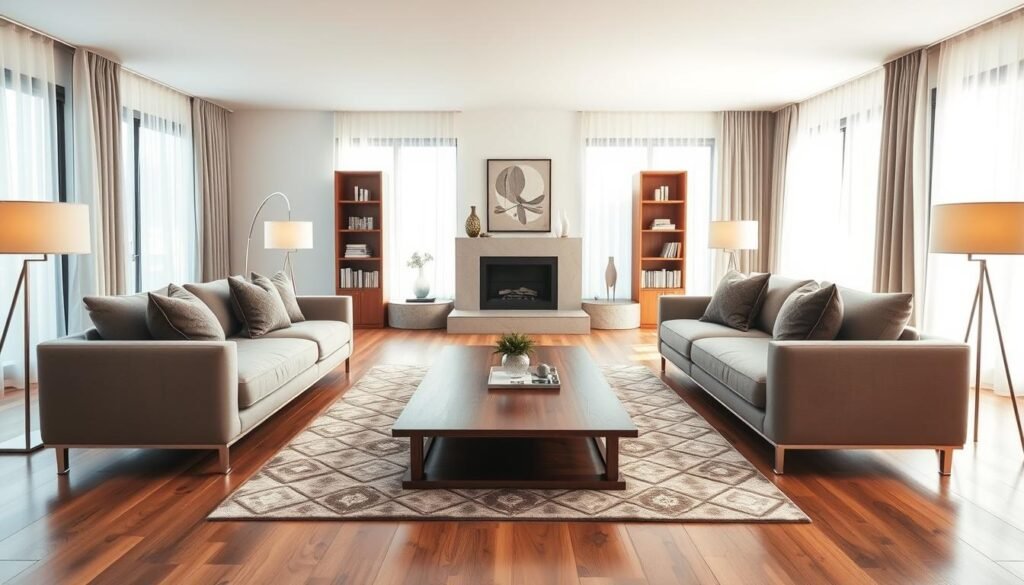
Asymmetry, on the other hand, balances without mirroring. It needs a good grasp of visual weights. This can make a space more lively and interesting.
Creating Equilibrium with Different Elements
To getequilibriumin an asymmetrical setup, balance different things like color, texture, and size. A big piece of furniture can be balanced by smaller items.
- Use a large piece of furniture as an anchor.
- Balance it with a group of smaller decorative items.
- Play with different textures and colors to create visual interest.
All Weight on One Side of the Room
Having all the visual weight on one side can make a room feel off-balance. This can be fixed by spreading out visual elements wisely.
To avoid this, try these tips:
- Distribute furniture and decorative items thoughtfully.
- Use rugs and lighting to create separate areas within the room.
- Balance heavy elements with lighter ones.
By grasping the concepts of symmetry and asymmetry, you can make a living room that looks great and feels right.
9. The Functionality Check: Does Everything Actually Serve a Purpose?
A harmonious living space is all about functionality. It’s not just about having the right furniture. It’s also about making sure each piece has a purpose.
Think about what you use often and what’s just for show. The 80/20 rule for decor is key here. It says 80% of the time, only 20% of your decor is noticed or used.
The 80/20 Rule for Decor
Using the 80/20 rule helps you see which decor adds real value. Here are some tips:
- Find your favorite decorative pieces that you love or use often.
- Store or rotate items you don’t use much to keep things tidy.
- Be honest about which items you can do without.
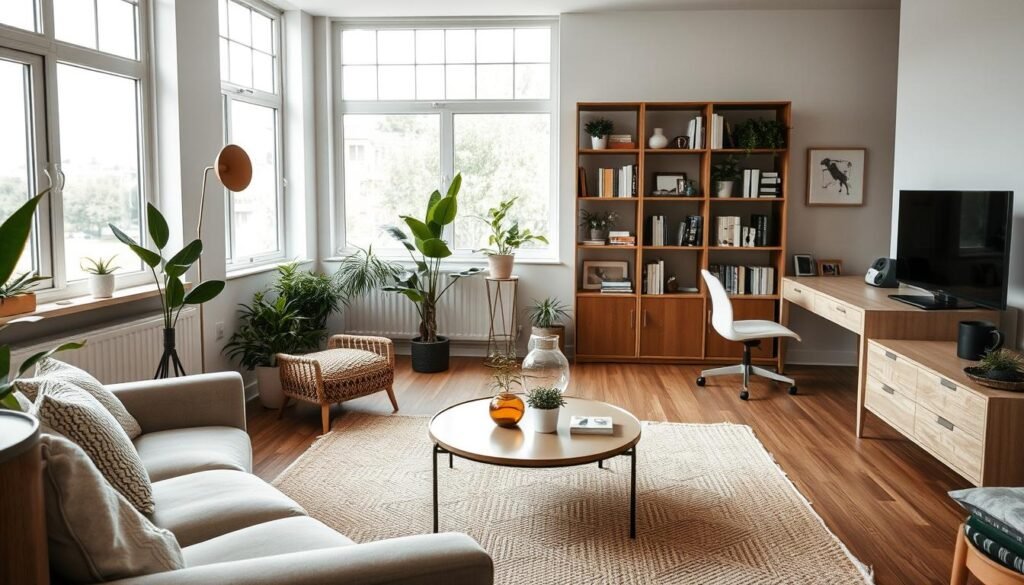
The one-in-one-out strategy is also great for keeping your living room tidy. For every new item, get rid of an old one to keep things balanced.
Here are some benefits:
- It stops clutter from building up.
- It encourages you to think before buying.
- It keeps your space looking balanced.
By using these strategies, you can make your living room both beautiful and functional. The goal is to make sure every item has a purpose, whether it’s useful or just adds to the look.
10. Lighting Layers: Is Your Room Properly and Evenly Illuminated?
To see if your living room is lit right, think about the different lighting layers. These layers work together to make your space inviting and useful.
Ambient, Task, and Accent Lighting Explained
A good lighting plan has three main parts: ambient, task, and accent lighting. Ambient lighting gives the room a general glow. This can come from ceiling lights or table lamps.
Task lighting focuses on areas where you do things, like reading or working. It’s about lamps for reading or lights under cabinets in bars. It helps your eyes and makes things easier to do.
Accent lighting highlights special things, like art or details in the room. It adds depth and makes the room more interesting.
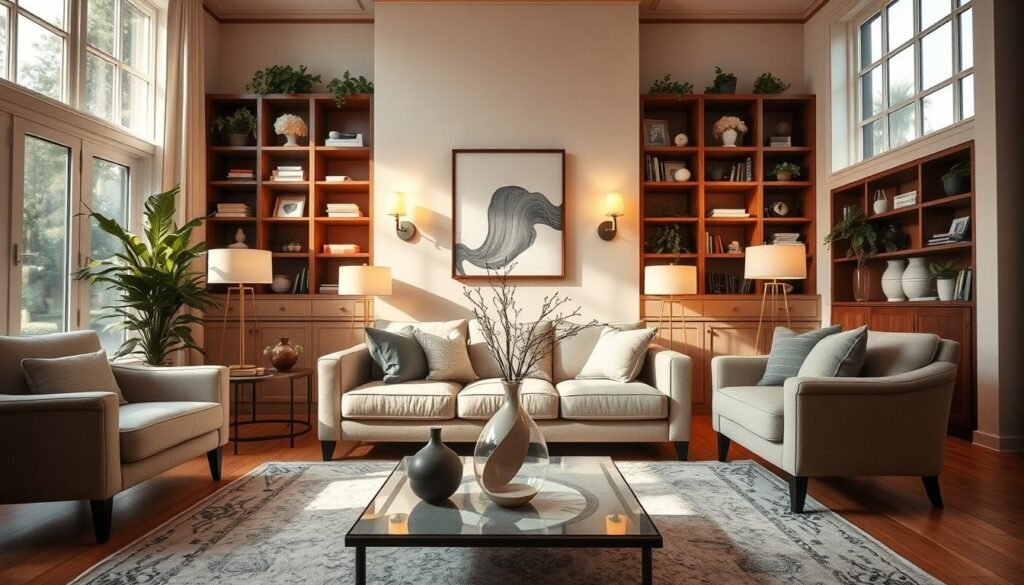
Many living rooms have dark spots or areas that are missed. These spots can make the room feel tight or unwelcoming. To fix this, mix different lighting types for better light everywhere.
- Use floor lamps or corner lamps to brighten dark corners.
- Install LED strips under furniture or along baseboards to create a warm glow.
- Adjust the position or direction of existing light sources to better cover overlooked areas.
By mixing different lights and focusing on dark spots, you can make your living room feel bigger, more welcoming, and cozy.
11. The Cohesion Test: Does Your Design Tell One Consistent Story?
A well-designed living room tells a story. The cohesion test checks if this story is consistent and engaging. It looks at whether all elements in your living room create a unified look.
Transitional Living Room Elements
Transitional design is key to cohesion. It mixes traditional and modern styles for a timeless look. This design is elegant and comfortable.
- Neutral color palette: A neutral base lets you add color with furniture and decor.
- Classic furniture shapes with clean lines: Mixing traditional and modern furniture styles balances the look.
- Mix of textures: Adding different textures, like velvet and wood, makes the space richer.
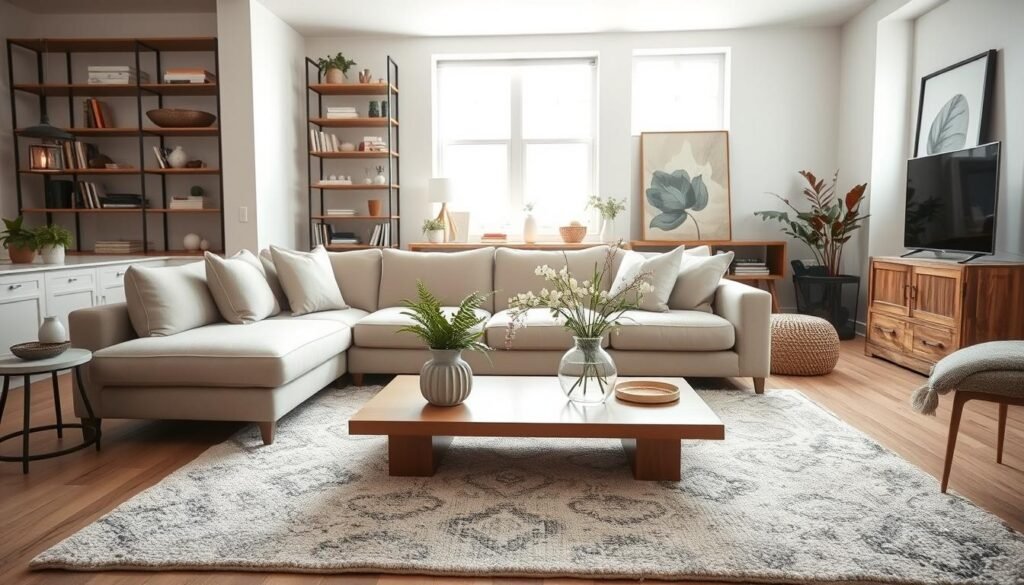
In modern apartments, embracing contemporary design is essential. This includes:
- Minimalism: A minimalist approach keeps the space clean and uncluttered.
- Monochromatic color schemes: Using different shades of one color creates a cohesive look.
- Statement pieces: Adding bold art or colorful rugs adds interest.
The Fine Line Between Collected and Cluttered
It’s easy to confuse a collected look with clutter. To avoid clutter, consider these tips:
- Edit your decor: Remove items that don’t fit your aesthetic.
- Use storage: Good storage keeps clutter away.
- Group similar items: Grouping items together creates cohesion and flow.
By following these tips, you can make your living room harmonious and inviting. It will truly reflect your personal style.
12. Storage and Organization: Is Your System Working or Just Hiding the Problem?
Storage and organization are more than hiding clutter. They make your living space functional and beautiful. A good system can improve both the look and feel of your living room.
Built-In vs. Standalone Storage Options
Homeowners often struggle with built-in versus standalone storage. Built-in storage like custom shelves or cabinets fits well with your room’s design. It saves space and keeps things tidy.
Standalone storage items, like bookshelves or ottomans, are flexible. They can be moved or changed as your needs evolve. Your choice depends on your storage needs, room layout, and personal taste.
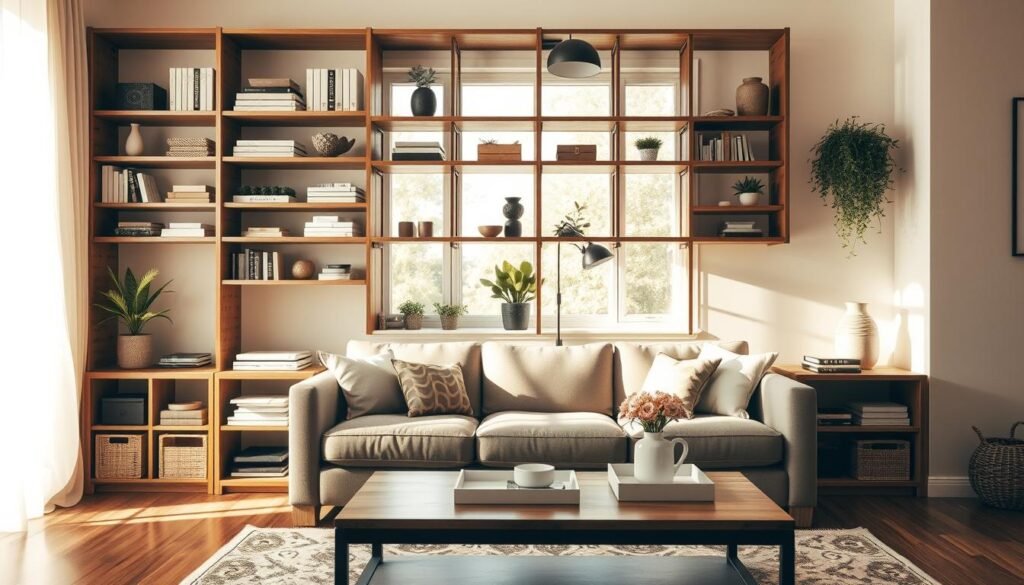
Good home organization is about making life easier. Here are some tips:
- Know what you need to store and how to access it.
- Use your walls with tall shelves or units.
- Choose furniture that does more than one thing to cut down on clutter.
- Keep your belongings in check with regular maintenance.
By using these tips and picking the right storage, you can make your living room both stunning and practical.
Conclusion
A well-designed living room layout is key for a balanced and inviting space. By using the design tips from this article, you can make your living area both harmonious and functional. It will show off your personal style.
To get a balanced living room, think about the visual weight of your furniture and decor. Make sure there’s a clear path to walk. Also, balance the size and shape of your items. And, don’t forget to add storage and organization to keep things tidy.
Following these design tips will help you create a beautiful and useful space. A well-balanced living room can really improve your daily life. It makes it easier to relax and enjoy time with loved ones.
Start making your dream living space by checking out your current layout. Then, make changes using the tips from this article. With a bit of creativity and planning, you can have a clutter-free and welcoming living room. It’s a place you’ll love to be in.