Ever walked into your home and felt something was off? It’s not just about the furniture or layout. Sometimes, it’s the air quality that needs a boost.
Good indoor air quality is key for your health. Bad air can cause allergies and breathing issues. Regular hvac maintenance helps, but there’s a simpler way: indoor plants.
Indoor plants do more than look good. They can really improve your home‘s air. By doing a home air assessment and adding plants, you can make your home healthier.
The Hidden Connection Between Indoor Air and Your Well-being
The air in your home can impact your health in surprising ways. Indoor air quality is key to your well-being. Poor air quality can cause many health problems, so it’s important to know the signs.

Do you often get allergies, breathing issues, or headaches without a reason? It could be due to indoor air pollution. These symptoms suggest your home’s air quality needs work. For tips on bettering your indoor space, check out indoor plants decor and its health benefits.
Changes in Your Home Environment
Seeing changes in your home can mean air quality problems. For example, too much dust or mold means it’s time to improve indoor air. Fixing these issues improves air quality and makes your home more comfortable. It also adds to a nice house plants aesthetic.
Knowing how indoor air affects your health is the first step to a healthier home. By noticing symptoms and changes, you can start improving air quality solutions. This will help your health and comfort.
When the Air Feels Off at Home: Identifying the Problem
When your home’s air doesn’t feel right, finding the problem is key to a healthy home. Indoor air quality can be affected by many things. This includes everyday items and hidden toxins in modern homes.
Everyday Household Sources of Pollution
Many household items can harm indoor air quality. These include:
- Cleaning products: Many cleaning supplies have harsh chemicals. These chemicals release VOCs into the air.
- Cooking fumes: Cooking, like with gas stoves, can release pollutants. These include nitrogen dioxide and particulate matter.
- Building materials: Some building materials, like plywood and adhesives, can release harmful chemicals. One of these is formaldehyde.
Hidden Toxins in Modern Homes
Modern homes often hide toxins that harm indoor air quality. Some of these include:
- Pesticides and insecticides: Residues from pest control can stay in the air and on surfaces.
- Radon: A gas that can build up in homes, mostly in basements and crawl spaces.
- Mold and mildew: Moisture can cause mold to grow. This releases spores into the air.
Understanding these sources is important for better indoor air. By knowing the pollutants in your home, you can reduce their impact.
Finding the problem is the first step to a healthier home. By tackling common and hidden pollutants, homeowners can improve their home’s air quality.
Nature’s Air Purifiers: How Plants Clean Your Home’s Atmosphere
Plants are more than just decorations; they are powerful air purifiers. They can greatly improve the air quality in your home. By adding air-purifying plants to your decor, you make your living space healthier. For ideas on how to add plants to your home, see these fresh plant decor ideas.

Plants help control humidity levels in your home. They do this by releasing moisture into the air through transpiration. This is great for keeping your home’s humidity balanced, which is good for your skin and breathing.
Dust and Allergen Reduction
Plants also help cut down on dust and allergens in the air. Their leaves act as natural filters, catching dust and allergens. This makes the air cleaner and can help with allergy and asthma symptoms.
Adding plants to your home does more than make it look good. It also makes it healthier by controlling humidity, reducing dust, and cutting down on allergens. By picking the right plants and placing them well, you can enjoy a cleaner, healthier home.
Top 10 Air-Purifying Plants for Cleaner Home Air
Choosing the right plants can make your home air cleaner and healthier. With many options, picking the best air-purifying plants can be hard. Here, we’ll look at the top 10 plants that clean the air, making it easy for you.
Money Plant and Philodendron Options
Money plants and Philodendron are great for indoor spaces. They are easy to care for and clean the air well. Money plants remove toxins like formaldehyde and benzene. Philodendron, with its heart-shaped leaves, is both beautiful and air-purifying.
Ferns, Ivy, and Monstera Varieties
Ferns, ivy, and Monstera bring nature indoors and clean the air. Ferns remove pollutants like xylene and toluene. English ivy cuts down airborne fecal particles and allergens. Monstera, with its unique leaves, purifies the air and looks stylish.

If you often forget to water your plants, drought-resistant air purifiers are perfect. Succulents and some cacti are hardy and purify the air. They’re great for busy people.
Colorful and Strange Plants That Clean Air
For colorful and unique indoor spaces, choose colorful and strange plants that clean the air. Plants with vibrant leaves or unusual shapes can decorate your home and improve air quality. Look for plants with bright leaves or unusual flowers that also purify the air.
Adding these top 10 air-purifying plants to your home can greatly improve air quality. This makes your living space healthier and more enjoyable.
Beyond Clean Air: Additional Benefits Plants Bring to Your Home
Plants do more than just clean the air. They can make your home feel better in many ways. They help control the temperature and soak up sound.
Temperature Regulation Benefits
Plants help keep your home cool by releasing moisture into the air. This can cut down on the need for air conditioning in summer. They keep the temperature steady, making your home more comfortable.
Natural Sound Absorption Properties
Some plants can block sound, making your home quieter. This is great for homes with hard floors or open-plan areas. Adding plants can make your space feel calmer and more peaceful.
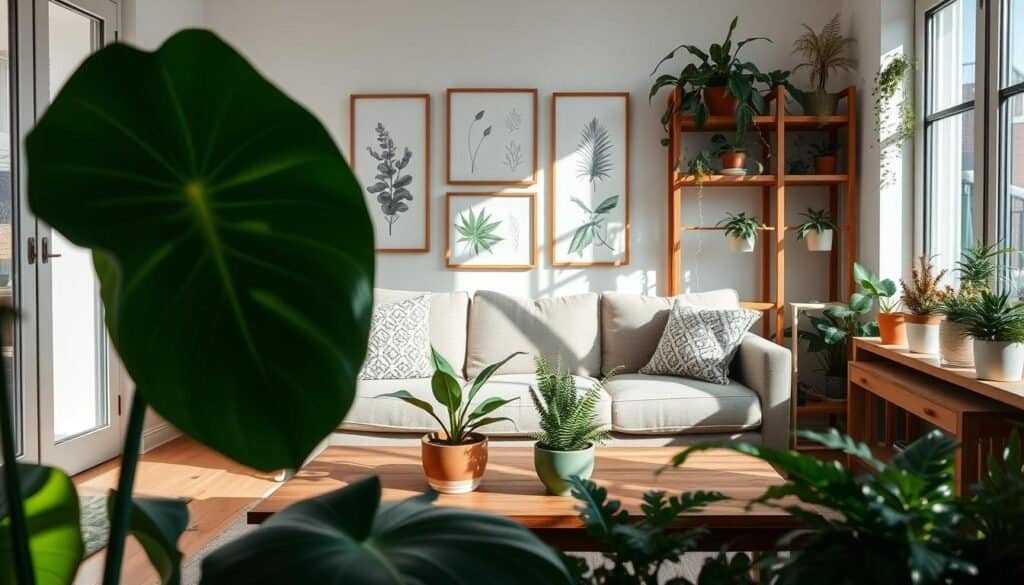
Indoor plants benefits go beyond just cleaning the air. They add to your home’s beauty and make it healthier. By picking the right plants, you can make your home more welcoming and comfortable.
Strategic Plant Placement: Where to Position Plants for Maximum Air Impact
To get the most out of your air-purifying plants, think about where you place them. The right spot can really improve your home’s air quality. This makes your home a healthier place for everyone.
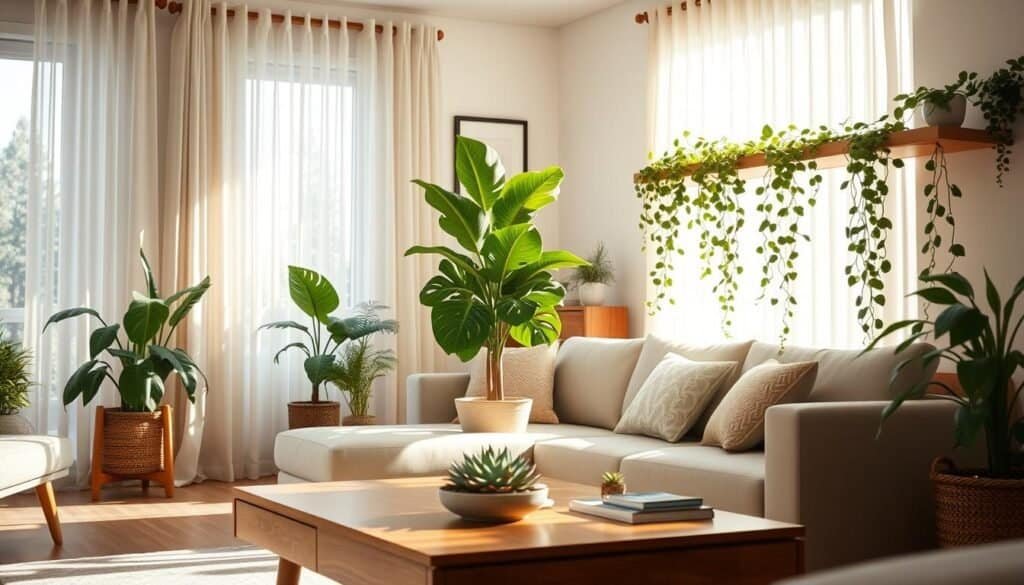
Bathrooms and kitchens are humid and can have moisture problems. Placing plants like ferns or peace lilies in these rooms can help soak up extra moisture and clean the air. For kitchens, choose plants that like warm temperatures and can handle the humidity.
Living Room and Bedroom Arrangements
In living rooms and bedrooms, plants not only clean the air but also make the space feel calm. Snake plants and spider plants are good for bedrooms because they release oxygen at night. For living rooms, big plants or a plant accent wall can be both useful and pretty.
Corner Plant Arrangements
Corners are often wasted spaces that are perfect for plants. Corner plant setups can make the most of space and add beauty to a room. Mix different plant sizes and textures to make it interesting.
Plant Accent Walls for Living Rooms
For a bold look, try a plant accent wall in your living room. You can use plants on shelves or a vertical garden. This not only cleans the air but also adds a special touch to your home.
By placing plants wisely around your home, you can enjoy cleaner air and a more inviting space. Whether you want to improve one room or your whole house, the right plant placement can make a big difference.
- Choose plants that fit the room’s conditions (light, temperature, humidity).
- Think about the size and growth of plants when picking for different spots.
- Be creative with plant setups to boost air quality benefits.
Plant Care Essentials: Keeping Your Air Purifiers Thriving
Proper care is key to making your plants work best. Healthy plants not only clean the air better but also look great.
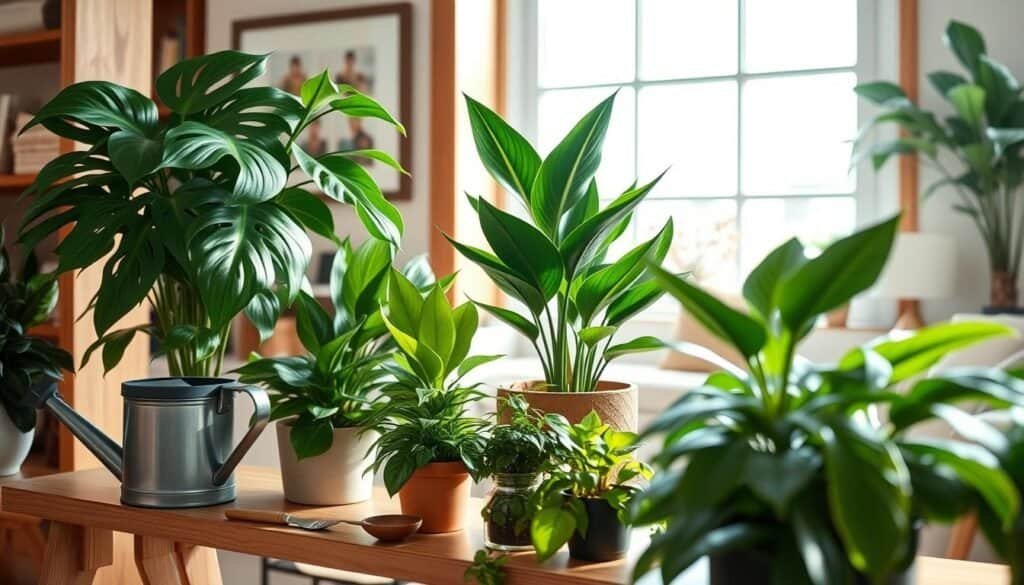
Creating a watering schedule is vital. Most plants need watering once a week. But, this can change based on the plant, soil, and environment. To check if it’s time to water, stick your finger into the soil up to the first knuckle. If it’s dry, it’s time to water.
- Water plants in the morning to minimize evaporation.
- Use room-temperature water to avoid shocking the roots.
- Adjust the watering frequency based on the plant’s response.
Seasonal Care Adjustments
Seasonal changes impact how you care for your plants. In spring and summer, plants need more water and food to grow. But, in fall and winter, water less and don’t fertilize to let them rest.
- Increase watering during active growth periods.
- Reduce watering during dormant periods.
- Monitor temperature and humidity levels.
Printable Plant Care Resources
For a structured care plan, use printable plant care resources. These often include charts and schedules to keep your care routine consistent.
Troubleshooting Common Plant Health Issues
Issues like yellow leaves, pests, or slow growth can be fixed with simple care changes. Yellow leaves might mean you’re watering too much. Pests can be handled with insecticidal soap or neem oil.
- Inspect plants regularly for signs of stress or disease.
- Adjust care practices based on observed issues.
- Consult with local nurseries or online resources for specific advice.
Styling with Purpose: Decorative Ideas That Maximize Air Benefits
Adding plants to your home decor not only cleans the air but also adds elegance. By picking and placing plants wisely, you can boost both your home’s look and air quality.
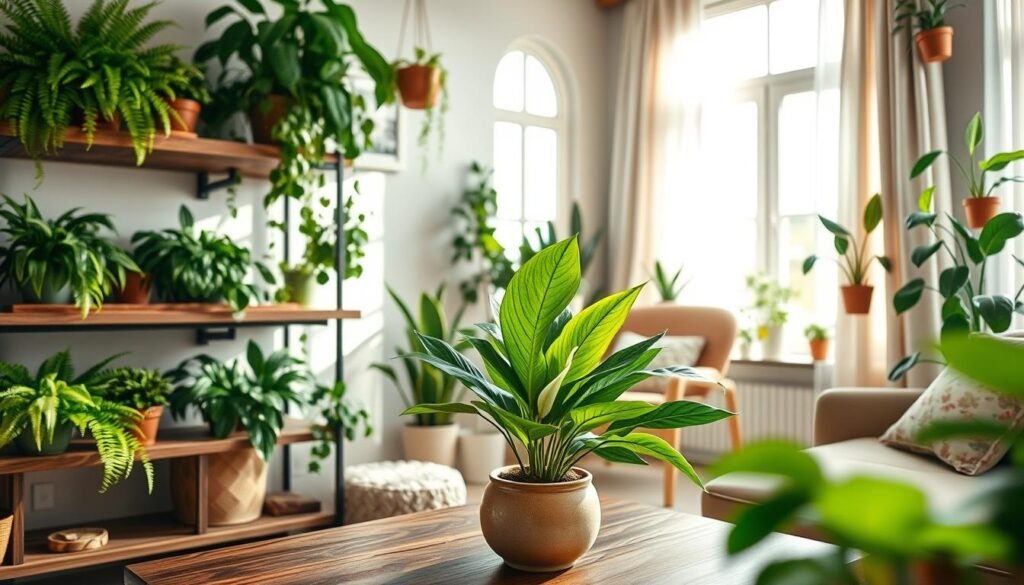
Using plant shelving and stand ideas can make the most of your space while adding style. Think about multi-tiered plant stands or floating shelves to show off different plants. This creates a beautiful display that also improves air flow.
- Choose stands that match your home’s style.
- Go for adjustable shelving for plants of all sizes.
- Group plants together for a lush, green look.
Wood Accent Walls with Plants
Wood accent walls with plants bring warmth and nature inside. This idea not only looks great but also helps clean the air. Hang planters or attach plant holders to the wooden wall for a special touch.
- Pick a wall that gets enough light for your plants.
- Use a mix of plant sizes and textures for depth.
- Add other decorations like fairy lights or artwork around the plants.
Indoor Flower Pots and Tall Plant Options
Indoor flower pots and tall plants can change a room’s feel. Tall plants make ceilings seem higher. Pick pots that match your decor and plants that do well indoors.
- Choose pots with good drainage for healthy plants.
- Think about the plant’s mature size when picking a pot.
- Play with different pot styles for a unique look.
Creating a Plant Corner Aesthetic
Creating a plant corner involves grouping plants in a cozy spot. This not only purifies the air but also makes a calming spot in the room. Use plants of different textures and sizes for interest.
- Find a corner with the right light for your plants.
- Use a plant stand or shelves for layers.
- Add things like rugs or pillows to make it cozy.
Complementary Solutions When Plants Aren’t Enough
Even with plants, indoor air quality can be a problem. Plants are great at purifying the air, but they might not solve all issues.
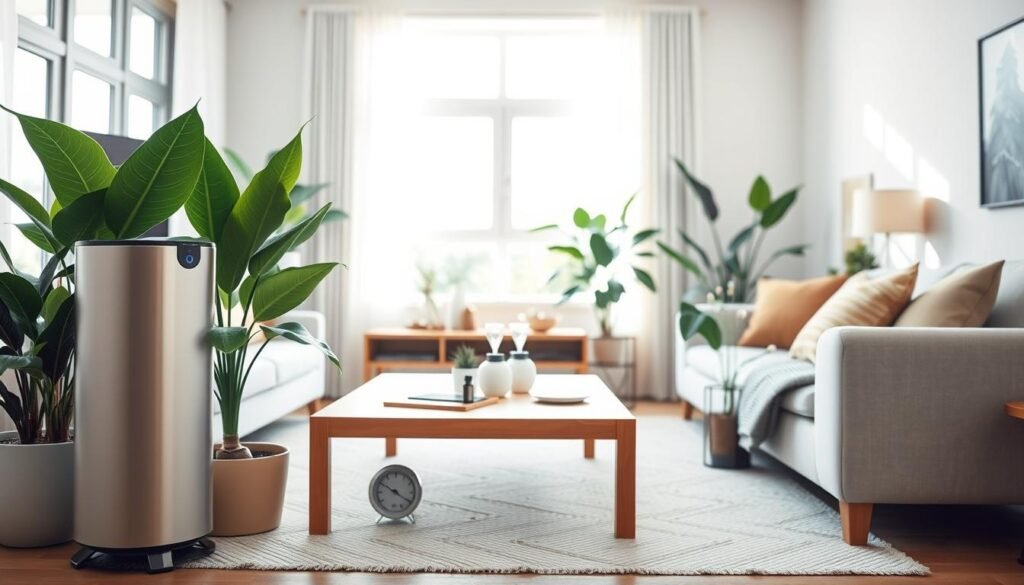
To really improve indoor air quality, think about using plants along with other solutions.
HVAC Maintenance and Air Purifiers
Keeping your HVAC system in good shape is key. It makes sure your air isn’t filled with pollutants. Also, air purifiers can catch particles and gases that plants can’t.
Some benefits include:
- Reducing allergens and irritants in the air
- Removing odors and gases
- Capturing fine particles that plants can’t
Professional Air Quality Testing Options
For a deep look at your air quality, get professional air quality testing. It finds specific pollutants and helps you fix them. Key points are:
- Identifying hidden sources of pollution
- Measuring the effectiveness of current air quality measures
- Providing data-driven recommendations for improvement
By mixing these solutions, you can make your indoor air much better. This creates a healthier place to live.
Conclusion: Breathing New Life Into Your Home with Plants
Turning your home into a fresh and peaceful space is simple. Adding indoor plants to your home decor boosts air quality and well-being.
Some plants for home clean the air better than others. You can find house plants indoor for any light condition. There’s a indoor plants aesthetic for every style and room.
Placing plants wisely makes your home healthier and more stunning. So, why not bring life to your home today? Pick your favorite plants, start planting, and enjoy the many benefits.