Starting a woodworking journey can be thrilling yet scary, mainly for beginners. The biggest hurdle is often the first step. Working with wood might seem overwhelming, but it doesn’t have to be.
Begin with simple wood projects to build your confidence and skills. This approach makes the journey easier and more enjoyable.
Looking for inspiration? Check out The Sawdust Man. They have a range of DIY projects to help you get started. These resources teach the basics and spark your creativity.
Why Starting Small with Woodworking Makes Perfect Sense
Woodworking can seem daunting, but starting with small projects makes it more manageable. For beginners, diving into complex woodworking projects can be overwhelming. Starting small allows you to build confidence and develop your skills gradually.
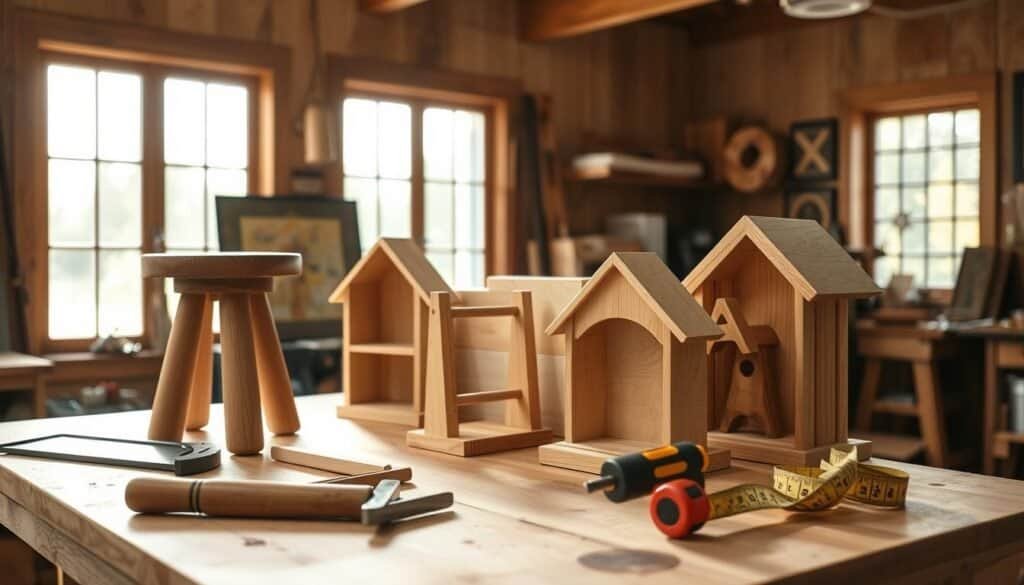
Simple woodworking projects are perfect for beginners. They require minimal equipment and materials, making them cost-effective. By completing these projects, you gain hands-on experience and understand the basics of woodworking, such as measuring, cutting, and assembling. Crafting small wooden pieces can be a great starting point.
- Reduced waste and cost, as projects require fewer materials.
- Increased confidence with each project completion.
- The ability to learn and apply new skills gradually.
As you progress, you can take on more complex projects, applying the skills you’ve learned. This gradual growth is essential for mastering woodworking. Starting small doesn’t mean you’re limited to small projects forever; it’s about laying a solid foundation for more significant endeavors. By growing gradually, you’ll be able to tackle more complex woodworking projects with ease.
Starting small with woodworking projects is a practical approach to learning and enjoying the craft. It’s about taking the first step, being patient, and grow gradually as you become more comfortable with your skills.
Getting to Know Your Materials: Wood Types for Beginners
The world of woodworking is vast, and it starts with understanding the basics of wood types. As a beginner, it’s essential to familiarize yourself with the different materials available, their characteristics, and their uses.
Wood is broadly categorized into two main types: softwoods and hardwoods. Understanding the difference between these two categories is key for selecting the right material for your project.
Softwoods vs. Hardwoods
Softwoods come from coniferous trees, which are typically evergreen and have needles instead of leaves. They are generally softer and less dense than hardwoods.
- Pine
- Cedar
- spruce
Hardwoods come from deciduous trees, which lose their leaves annually. They are usually denser and harder than softwoods.
- Oak
- Maple
- Cherry
When choosing between softwoods and hardwoods for your project, consider factors like durability, cost, and the desired finish. Softwoods are often less expensive and easier to work with, making them a great choice for beginners. Hardwoods, while more challenging to work with, offer greater durability and a more luxurious finish.
Understanding these basics will help you make informed decisions as you start your woodworking journey. This ensures that your projects turn out as envisioned.
Reading Plans and Diagrams: The Blueprint to Success
Understanding woodworking plans and diagrams is key to a successful project. Plans are detailed guides for building, and diagrams show what the project will look like. They help you see the final product.
Understanding the Components of Woodworking Plans
Woodworking plans have a list of materials, step-by-step instructions, and diagrams. The materials list helps you prepare before starting. The instructions guide you through building the project.
- Cut lists: Detailed lists of the wood pieces needed, including dimensions.
- Assembly diagrams: Visual guides showing how the pieces fit together.
- Step-by-step instructions: Clear, sequential instructions for assembling the project.
To read plans well, first look over the whole plan. Then, check the materials and cut lists. As you build, use the diagrams and instructions to stay on track.
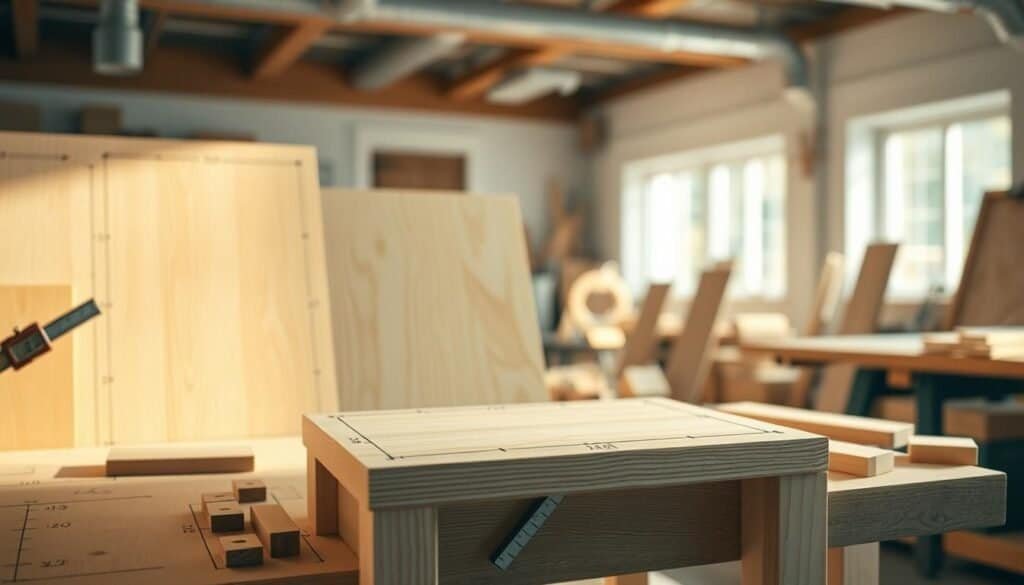
Learning to read plans and diagrams is essential for woodworking success. It improves your project understanding and helps solve building problems.
Practicing with Simple Projects
Start with simple projects to improve your plan-reading skills. As you get better, tackle more complex projects. This way, you’ll create more detailed and interesting pieces.
Project 1: Rustic Picture Frames – The Perfect First Project
Rustic picture frames are a great first project for beginners. They introduce you to woodworking in a simple way. Plus, they let you get creative, making them perfect for starting your woodworking journey.
To get started, you’ll need some basic stuff. You’ll need reclaimed or rustic wood, a saw, sandpaper, a frame kit or hardware, and a hammer. You can also add special touches like wood carvings or metal embellishments for a personal flair.
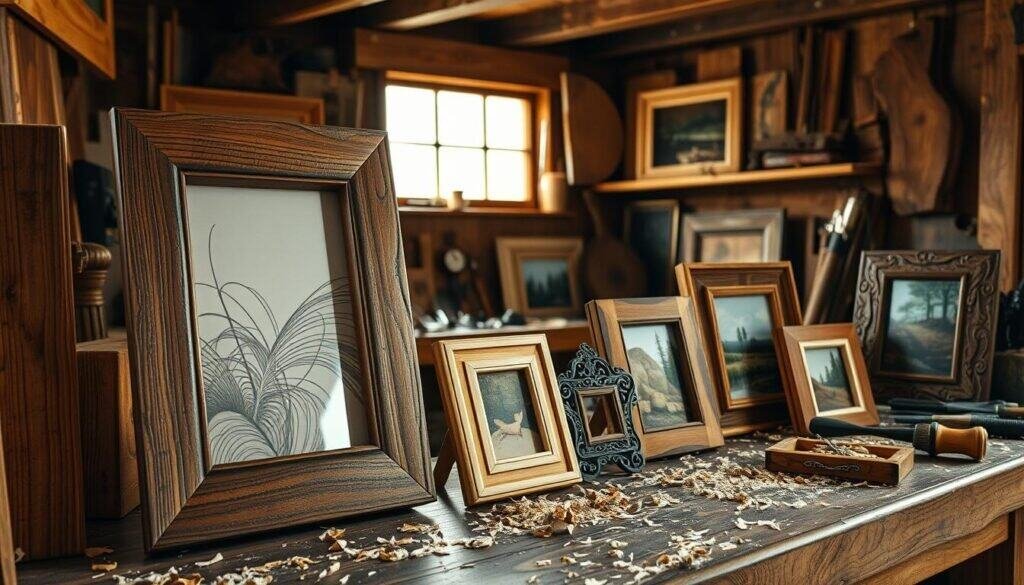
- Measure and cut your wood to the desired size for your frame.
- Sand the cut edges to smooth them out.
- Assemble the frame using your frame kit or hardware.
- Add a personal touch with stains, paints, or other decorative elements.
If you want to try more complex projects or explore new ideas, check out other woodworking projects. You can find more at this link.
Building rustic picture frames is a fantastic way to start your woodworking adventure. It’s a simple woodworking project that requires little equipment. Plus, it gives you a sense of pride and accomplishment.
Project 2: DIY Wall-Mounted Shoe Rack
Make your entryway more spacious with a DIY wall-mounted shoe rack. It’s not just useful but also brings a modern touch to your home.
A messy entryway can make your whole house seem disorganized. A wall-mounted shoe rack is a smart way to organize your shoes. It uses your wall space well and keeps your floors clean.

To build this DIY shoe rack, you’ll need some basic materials and tools. Here’s how to do it:
- Measure the space for your shoe rack.
- Cut a piece of wood to the right length.
- Attach shoe holders to the wood, spacing them out.
- Mount the rack on the wall with strong brackets.
This wall shoe holder is both useful and simple to make. By following these steps, you can make a shoe wall rack that fits your home’s style and keeps your shoes tidy.
This DIY project helps you get rid of messy entryways and brings style and order to your home. It’s perfect for beginners or experienced woodworkers looking to add something practical to their home.
Project 3: Welcome Sign with Planter Box
A welcome sign with a planter box is both functional and decorative. It’s great for adding a personal touch to your home’s entrance or any room.
First, plan your project. Choose the size of your welcome sign and the planter box. Pick wood that matches your home’s style. Use durable woods like cedar or pine for outdoor use.
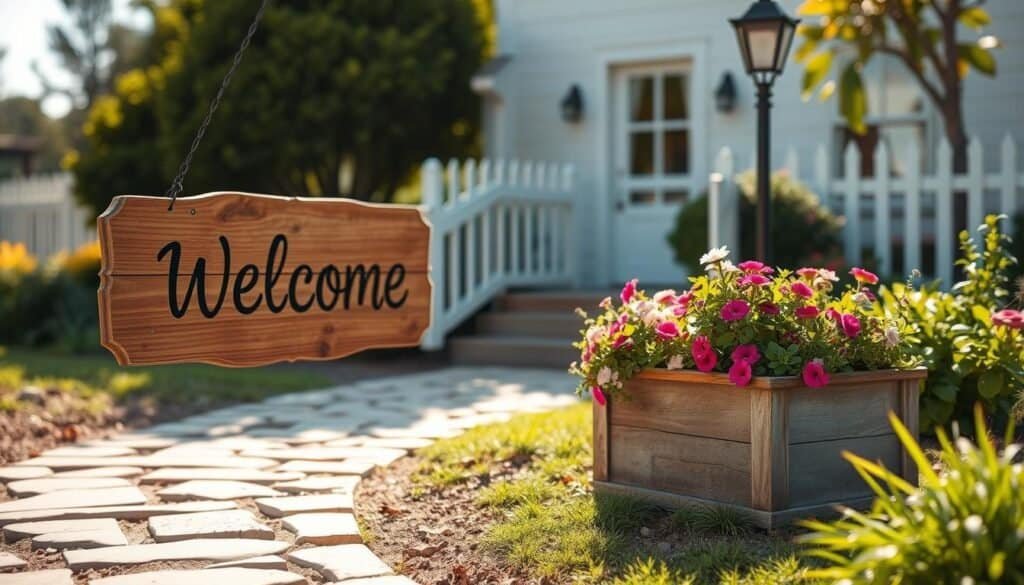
After getting your materials, start making the welcome sign. Use a template or stencil for the letters. Attach the sign to the planter box or make it standalone. The planter box can match the sign or be separate.
Here are some steps to follow:
- Cut the wood according to your plan.
- Assemble the planter box, making sure it’s sturdy with drainage holes.
- Create or attach the welcome sign to the planter box.
- Finish and stain the wood to protect it and make it look better.
This project is all about customization. Pick the color, size, and plants for the planter box. It shows off your woodworking skills and adds a personal touch to your home.
By doing this project, you’ll have a stunning DIY welcome sign. It welcomes guests and decorates your home beautifully.
Project 4: Bathroom Storage Tower and Linen Cabinet
Make your bathroom better with a DIY project that’s both useful and stylish. A bathroom storage tower and linen cabinet can help clear up cluttered counters and messy linens.
A bathroom storage tower lets you use your bathroom’s vertical space well. It keeps important items within reach while keeping things neat. A linen cabinet gives a special place for towels, toiletries, and more. It keeps them hidden and organized.
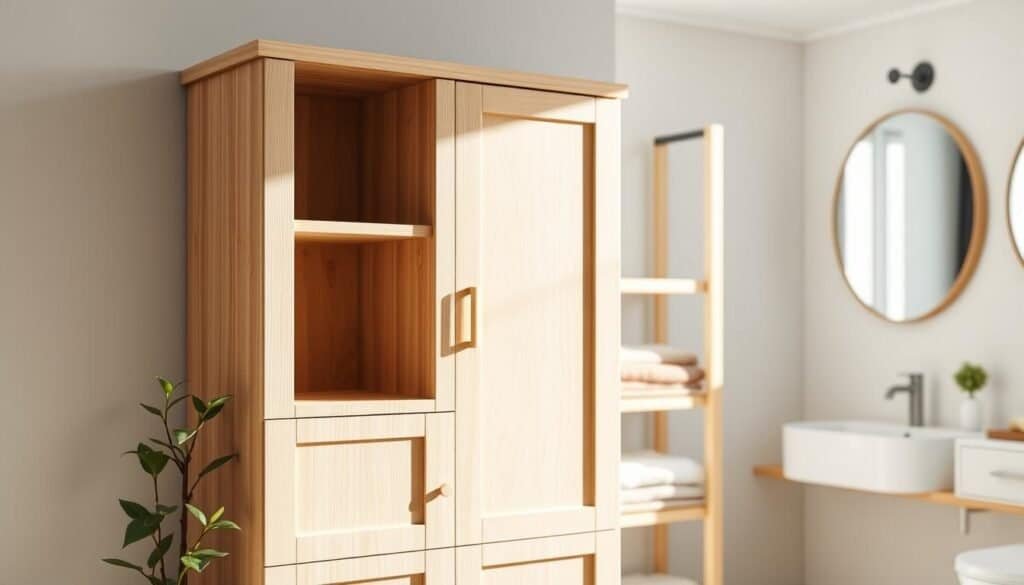
To begin your DIY bathroom storage project, pick the right wood for your bathroom’s look. Think about how well the wood handles moisture, as bathrooms can be humid. Pine or cedar are good choices because they’re durable and look nice.
You can design your linen tower to fit your needs. Add adjustable shelves for different sizes. For the bathroom linen cabinet, think about doors to keep things hidden. This keeps your bathroom looking clean and simple.
- Measure your bathroom space carefully to determine the optimal size for your storage tower and linen cabinet.
- Choose a design that complements your bathroom’s style, whether modern, traditional, or rustic.
- Consider the height and width of the units to ensure they fit comfortably in the available space.
By doing this DIY linen tower and cabinet project, you’ll make your bathroom more useful and look better. You can customize it to fit your storage needs and style.
These woodworking projects can make your bathroom more organized and peaceful. A storage tower and linen cabinet are a smart and stylish way to solve common storage problems.
Start Small, Think Big: Turning Scrap Wood into Treasures
Scrap wood is not just waste; it’s a treasure trove of possibilities for creative woodworkers. With a little imagination, you can transform leftover wood into unique and functional pieces. These pieces add character to your home.
Working with scrap wood is exciting because it challenges you to see the best in what’s often seen as trash. DIY upcycling is not just about saving money. It’s about creating something with a story, something that shows your creativity and resourcefulness.

- Build a wooden coat rack using reclaimed wood.
- Create a mirror frame from scrap wood for a rustic touch.
- Make a wooden planter box to add some greenery to your space.
These projects not only reduce waste but also give you the satisfaction of creating something beautiful and useful. Whether you’re a seasoned woodworker or just starting out, wood scraps can be the beginning of something amazing.
The key to successful scrap wood projects is to start small and think big. Begin with simple projects and gradually move on to more complex ones as your skills and confidence grow.
Some other cool wood projects to consider include:
- Wooden candle holders.
- Custom shelving units.
- Decorative wall art.
By embracing wood crafting ideas and giving new life to scrap wood, you’re not only crafting items. You’re crafting memories and stories that will be cherished for years to come.
Conclusion: Your Woodworking Journey Begins with Small Steps
Starting your woodworking journey can be thrilling yet scary. But, the best way to begin is with small steps. Simple DIY projects help you build confidence and skills for bigger tasks.
Beginner woodworking is very rewarding. You can make rustic picture frames or a bathroom storage tower. Each project helps you improve and brings your ideas to life.
Starting small doesn’t mean you’re stuck with small projects forever. As you keep working, your skills and confidence will grow. This lets you take on bigger DIY projects. Woodworking offers endless possibilities, and each project brings joy.
So, take the first step today. With patience, practice, and persistence, you’ll make beautiful pieces you’ll love for years. You’ll become a skilled woodworker, ready for any beginner project.