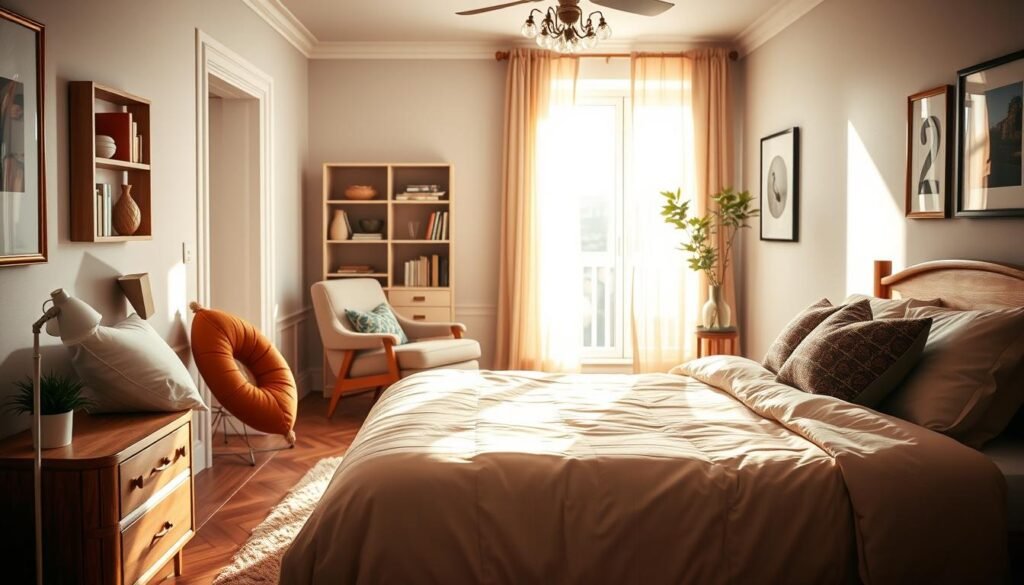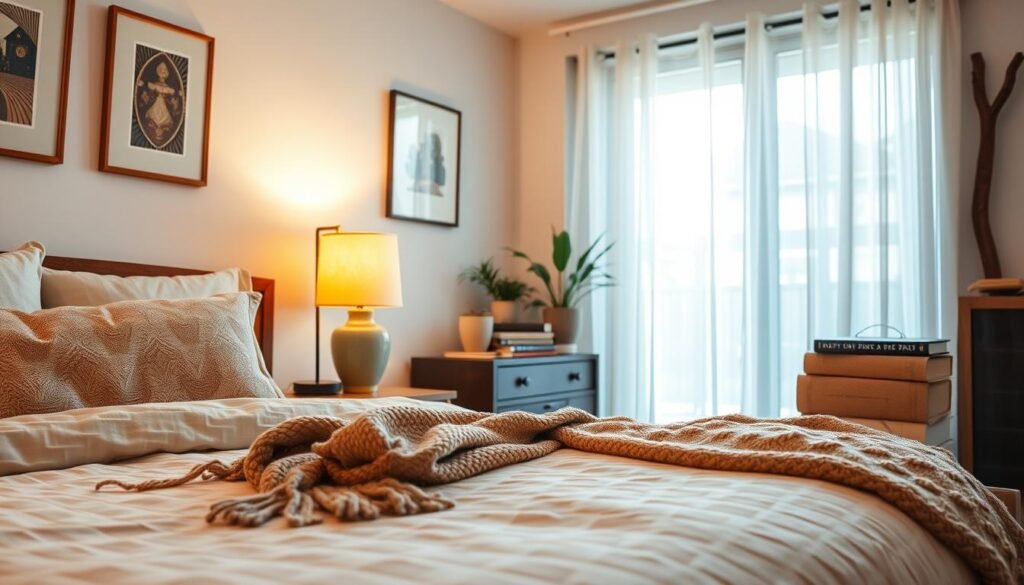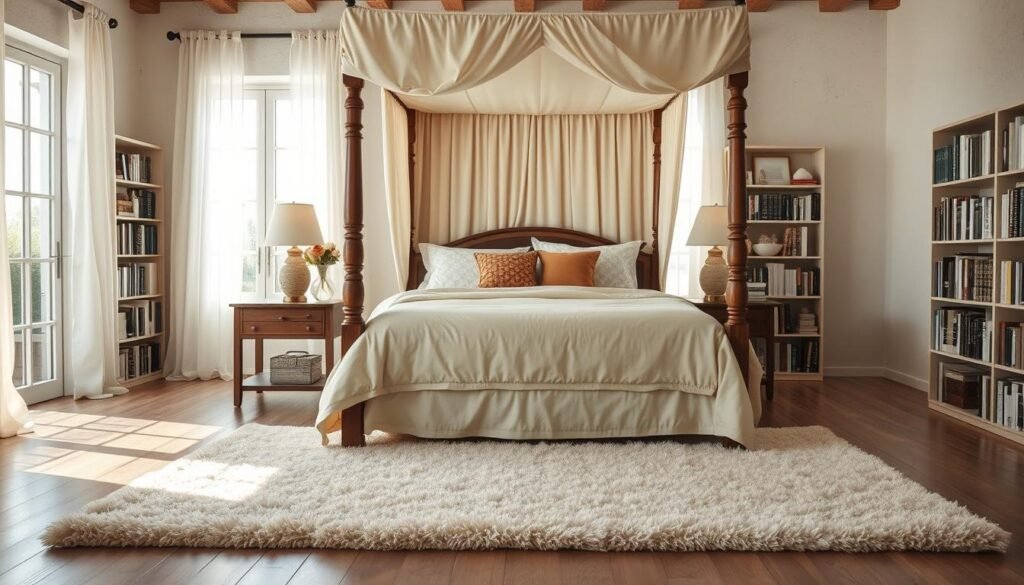
A home should be a place where everyone feels connected. But, making every part of the house feel like one big family can be tough.
Creating warm shared spaces is a great way to fix this. A cozy living room, for example, can be the center of your home. It’s where family and friends come together.
By using living room ideas that bring people closer, you can make your house feel like a real home. In this article, we’ll share tips on making your living room a place of warmth and connection.
Understanding Home Disconnection: Signs Your Living Space Lacks Cohesion
If your home doesn’t feel like a unified space, you’re not alone. A lack of cohesion can show in many ways. It makes your living space feel disjointed and uninviting.
Some common signs of home disconnection include:
- Disjointed decor that doesn’t flow from room to room
- Lack of a central theme or style that ties the space together
- Insufficient lighting or inconsistent lighting styles
- Poor furniture arrangement that creates barriers
These living space issues can make your home feel cold and uninviting. When your home lacks cohesion, it’s hard to relax and feel connected.
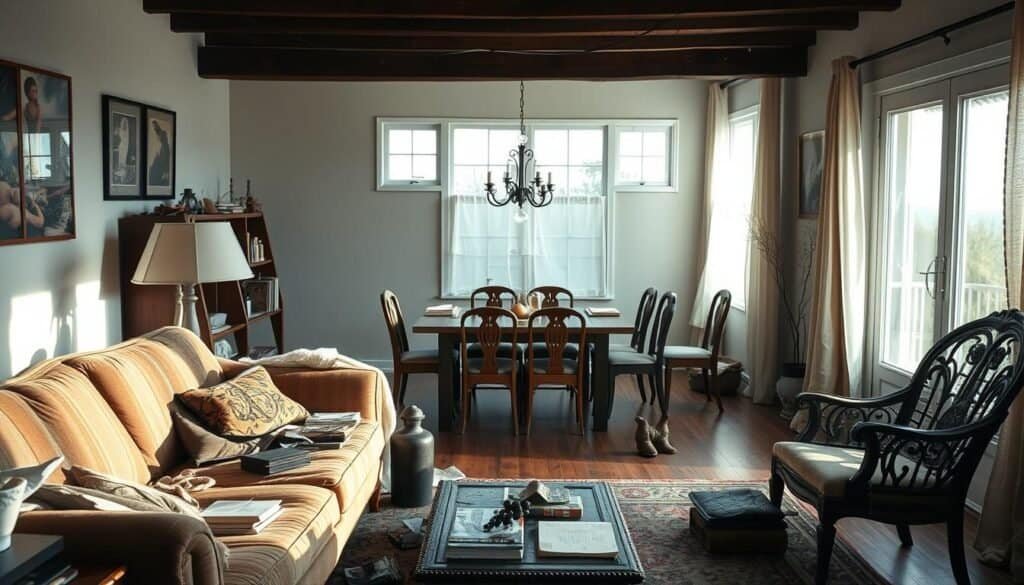
To improve home connection, add elements that promote unity and flow. Use a consistent color palette or add a personal accent piece, as suggested in this article. Rearrange furniture to make the space more open and inviting.
By addressing these home disconnection signs, you can make your living space warm and welcoming. It will feel truly connected.
The Power of Shared Spaces in Creating Home Harmony
Shared spaces are the heart of a home, creating warmth and harmony. Living rooms and kitchens are where families spend most of their time. They foster connection and community.
Creating cohesion in these spaces is key for home harmony. Thoughtful design encourages social interaction and togetherness. For example, a well-designed living room is a home’s central hub. It’s where everyone relaxes and shares experiences.
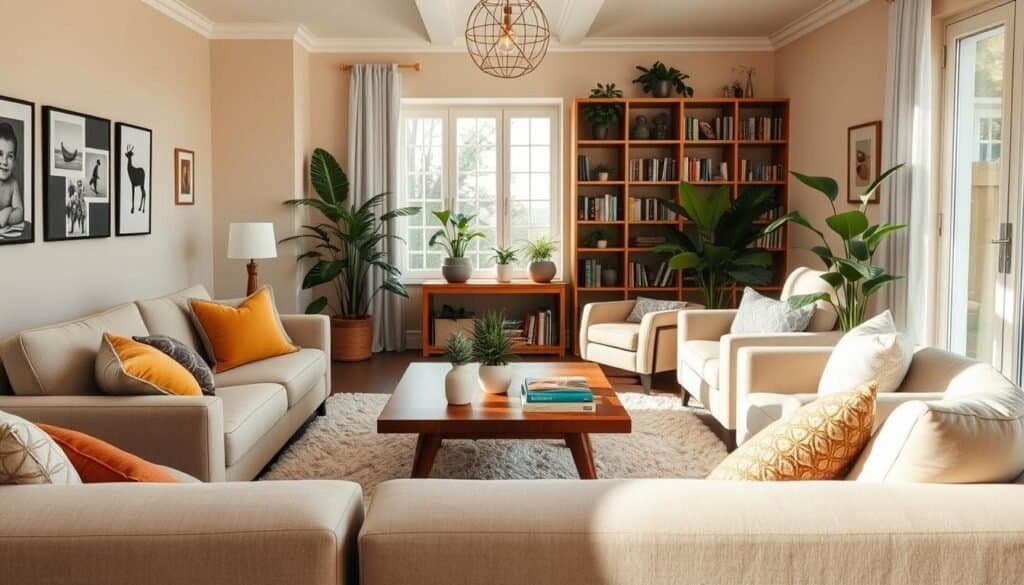
- Open layouts that facilitate interaction and visibility
- Comfortable seating arrangements that encourage gathering
- Incorporating family-friendly interior design elements that cater to all ages
- Using lighting and color schemes that create a warm and inviting atmosphere
Homeowners can make living rooms both beautiful and family-friendly. Kitchens that double as dining areas or flow into dining spaces also boost togetherness. Mealtime becomes more enjoyable and communal.
The power of shared spaces is in bringing people together. They create a harmonious home environment. By focusing on these areas and adding elements that foster connection, homeowners can improve their living spaces.
Creating a Warm Living Room as Your Home’s Central Hub
To make your home feel connected, focus on crafting a warm living room as its central gathering place. This space is where family and friends come together, share stories, and create memories. A well-designed living room can transform your entire home, making it feel more inviting and cohesive.
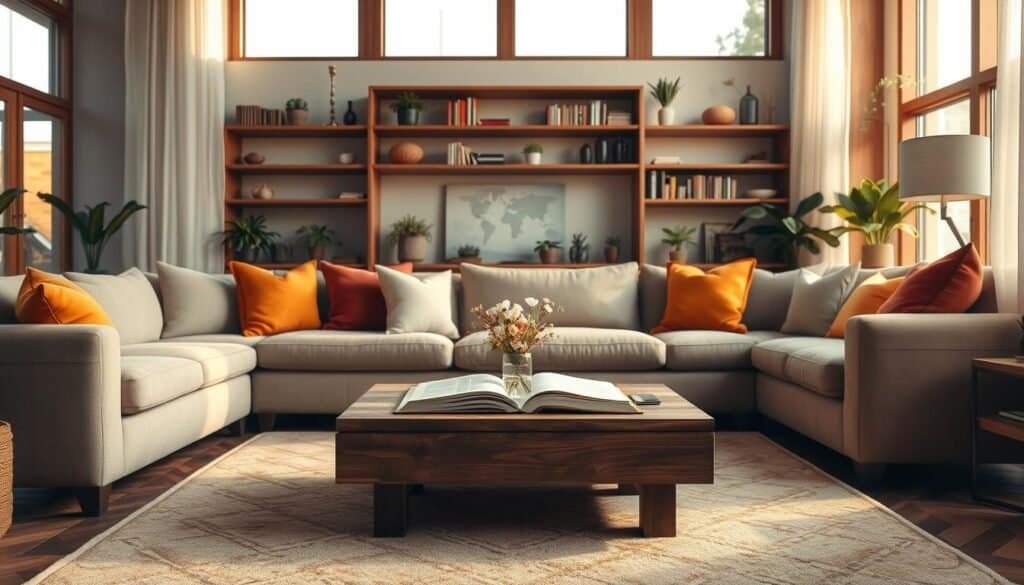
Using neutral and beige color palettes is a great way to create a unified look in your living room. These colors are timeless, versatile, and provide a calm backdrop for your furniture and decor. Neutral tones such as beige, cream, and soft gray can help to reflect light, making the room feel larger and more spacious.
Neutral color schemes also offer the flexibility to add pops of color through accessories like throw pillows, blankets, and artwork. This approach allows you to easily update your decor without undergoing a major renovation. For a cohesive look, consider choosing a few core colors and using them consistently throughout the room.
Modern Boho Sitting Room Elements That Add Character
Incorporating modern boho sitting room elements can add a unique character to your living room. Bohemian style, with its emphasis on free-spirited eclecticism, can bring a sense of warmth and personality to your space. To achieve a modern boho look, mix and match different textures, patterns, and furniture pieces. Consider combining vintage or second-hand items with newer, more contemporary pieces.
- Layer different textures such as velvet, linen, and wood.
- Use a variety of patterns, including geometric shapes and organic motifs.
- Incorporate plants and greenery to add a natural touch.
By blending these elements, you can create a living room that feels both stylish and deeply personal. Remember, the key to a successful boho look is embracing individuality and having fun with the design process.
By focusing on creating a central hub in your home through a warm and inviting living room, you can enhance the overall sense of connection and harmony within your living space.
If Your Home Feels Disconnected, Consider Open-Concept Solutions
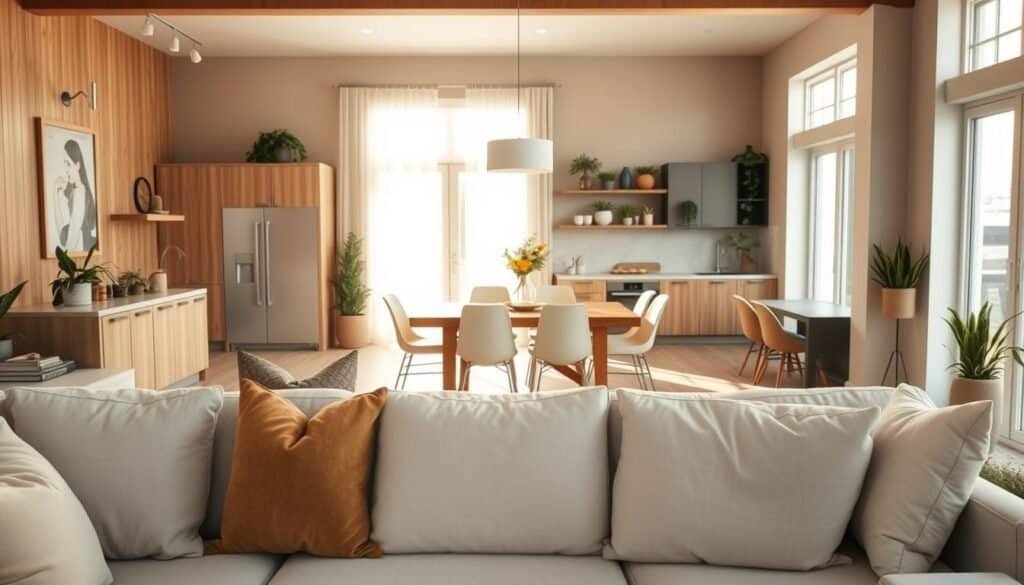
For homes that lack cohesion, an open-concept layout can change everything. By removing walls, open-concept living areas make your home feel connected. They create a flow between different parts of your home.
Using consistent color schemes is key to a cohesive look in open-concept spaces. A unified color palette ties different areas together, creating harmony.
Color Schemes That Connect Spaces
Choosing the right color scheme is vital. Pick a few core colors and use them in different shades across rooms. This creates a sense of continuity.
- Select a dominant color and use it as the primary hue in your open-concept area.
- Use secondary colors to add depth and interest.
- Apply these colors consistently across furniture, decor, and accents.
Flooring Choices That Create Cohesion
Flooring choices also play a big role in cohesion. Using the same or similar flooring materials in your open-concept area connects the space visually.
Here are some flooring options:
- Hardwood flooring for a classic, timeless look.
- Laminate or engineered wood for a more budget-friendly alternative.
- Tile flooring for areas that require more durability, such as the kitchen.
By using these strategies, homeowners can make their living space feel connected and harmonious.
The Kitchen-Dining Connection: Heart of the Home
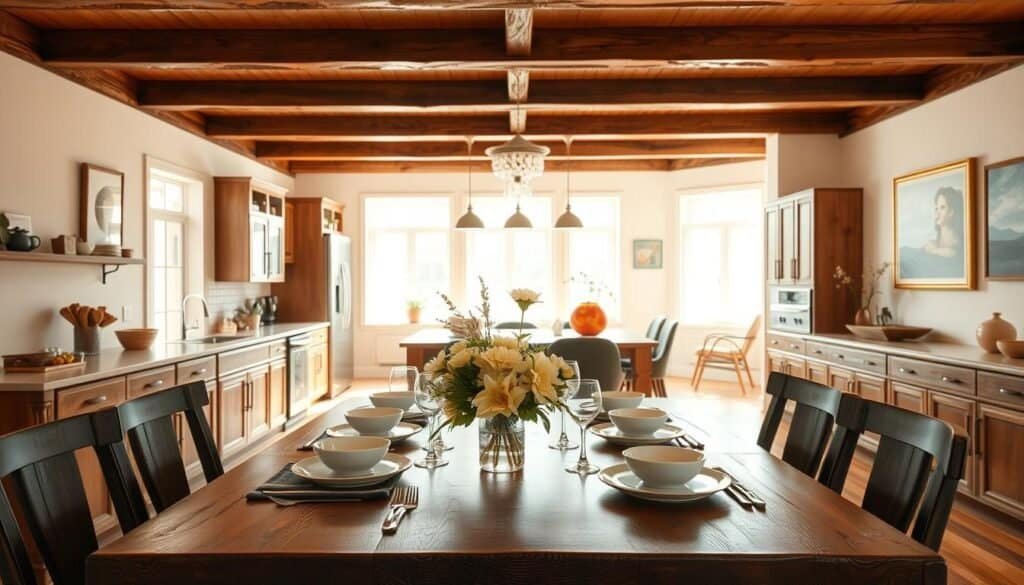
A well-designed kitchen-dining area is key to a welcoming home. It’s where meals are made and memories are created.
Island and Peninsula Designs That Bridge Spaces
Island and Peninsula Designs That Bridge Spaces
Islands and peninsulas link the kitchen and dining areas. They offer extra counter space and storage. Plus, they make the two spaces look connected.
- Islands help define the kitchen while keeping it open.
- Peninsulas make the kitchen and dining areas feel like one.
- Both can have seating, making them useful in many ways.
Lighting Choices That Define Areas Without Dividing
Smart lighting choices can highlight the kitchen and dining without splitting them. Mixing different types of lighting works well.
- Ambient lighting lights up the whole area.
- Task lighting shines on specific spots, like countertops.
- Accent lighting adds flair or sets a mood.
With these design elements, homeowners can make a kitchen-dining area that’s both useful and beautiful. It becomes the heart of the home.
Entertainment Spaces That Bring Family Together
A well-designed entertainment area can become the heart of your home. It fosters family connections and creates lasting memories. In today’s fast-paced world, having a cozy space for family gatherings is more important than ever.
Small Living Room Designs with TV
Designing a small living room with a TV can be a challenge. But, with the right layout and decor, even the coziest spaces can become inviting. Consider wall-mounted TVs and compact furniture to maximize space.
To enhance the ambiance, add finishing details like textured throw pillows and area rugs. Layered lighting also adds warmth and makes the space visually appealing. These elements encourage family bonding.
Modern Living Room with TV and Wooden Decor
Wooden decor adds warmth and sophistication to your living room. A modern living room with a TV and wooden accents balances technology and nature. Use reclaimed wood for shelving or a wooden TV console to add character.
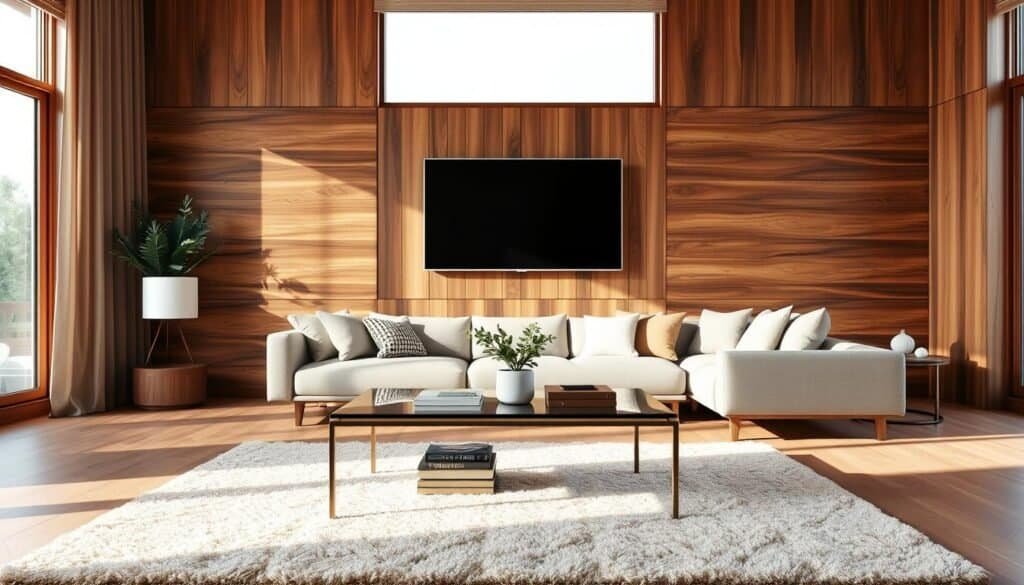
When designing your entertainment space, balance functionality and aesthetics. Incorporate wooden decor, comfortable seating, and a well-placed TV. This creates a space that’s inviting and functional. It enhances family bonding and makes your home feel more connected and warm.
The key to creating an effective entertainment space is understanding your family’s needs and preferences. Design a space that brings everyone together. This fosters a sense of unity and warmth in your home.
Apartment and Small Space Solutions for Cohesive Living
Creating a cohesive living space in small areas needs careful planning and creativity. Apartment dwellers can make their homes warm and welcoming with smart decorating choices.
Corner Sofa Living Room Beige Arrangements
Using a corner sofa arrangement is a great way to make a small living room look bigger and more inviting. A beige-colored corner sofa can help achieve this. To enhance the look, consider adding:
- Accent pillows in complementary colors
- A statement piece of art or a mirror
- A minimalist coffee table to complete the look
In a beige living room, it’s key to balance colors. Adding different textures like throw blankets, rugs, and wooden furniture can add depth.
Warm Apartment Aesthetic on a Budget
Creating a warm apartment aesthetic doesn’t have to cost a lot. Here are some budget-friendly decor ideas:
- Use soft lighting to create a cozy atmosphere
- Incorporate natural elements like plants or a vase with branches
- Rearrange your furniture to create a more intimate setting
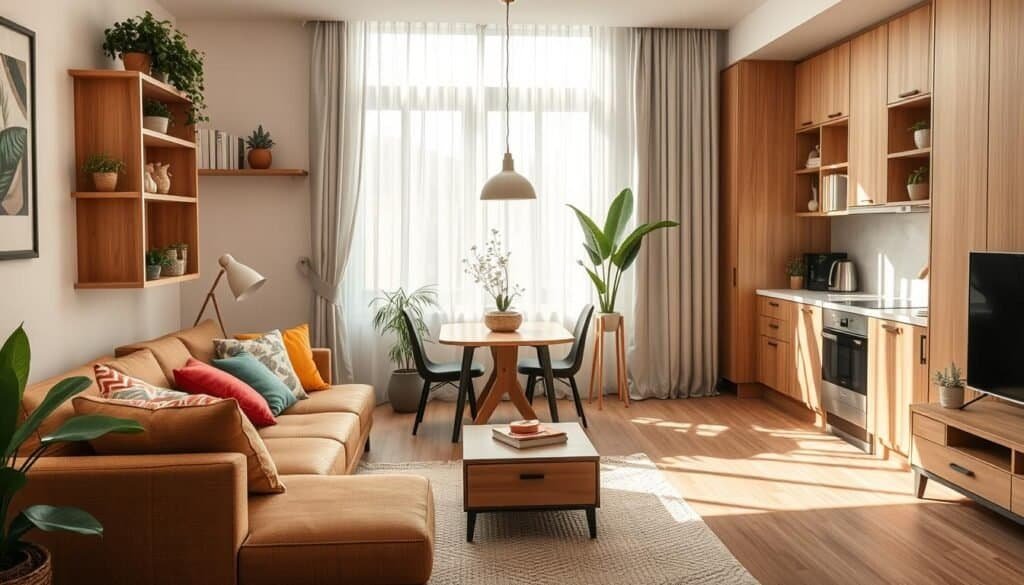
For small apartment decorating, choose furniture that serves more than one purpose. Keeping clutter away is also important. This way, you can keep the space open while enjoying its comforts.
By using these strategies, you can make a small apartment feel cohesive and warm. Focus on a few key pieces and arrangements that promote harmony and comfort.
Transitional Spaces: Hallways and Entryways That Unite
Turning hallways and entryways into unified spaces can greatly improve your home’s feel. These areas are key in setting the decor tone for your home.
Creating a Unified Look in hallways and entryways is more than picking colors. It’s about making a flow that connects your home’s different parts. Using gallery walls that share your home’s story is a great way to do this.
Gallery Walls That Tell Your Home’s Story
Gallery walls can make your hallways and entryways more personal. By picking frames that show your style or family history, you create a story that ties your home together.
- Choose frames that match your home’s decor.
- Mix and match frame sizes and styles for a dynamic look.
- Include personal items like heirlooms or artwork to add depth.
Lighting Choices That Guide Movement Through Spaces
Good lighting can really change how transitional spaces feel. The right lighting can lead you through your home and enhance its look. Check out modern lighting ideas to update your hallways and entryways.
For a cohesive look, think about the style and finish of your lighting. Modern hallway designs often use sleek, simple lighting that fits well with the decor.
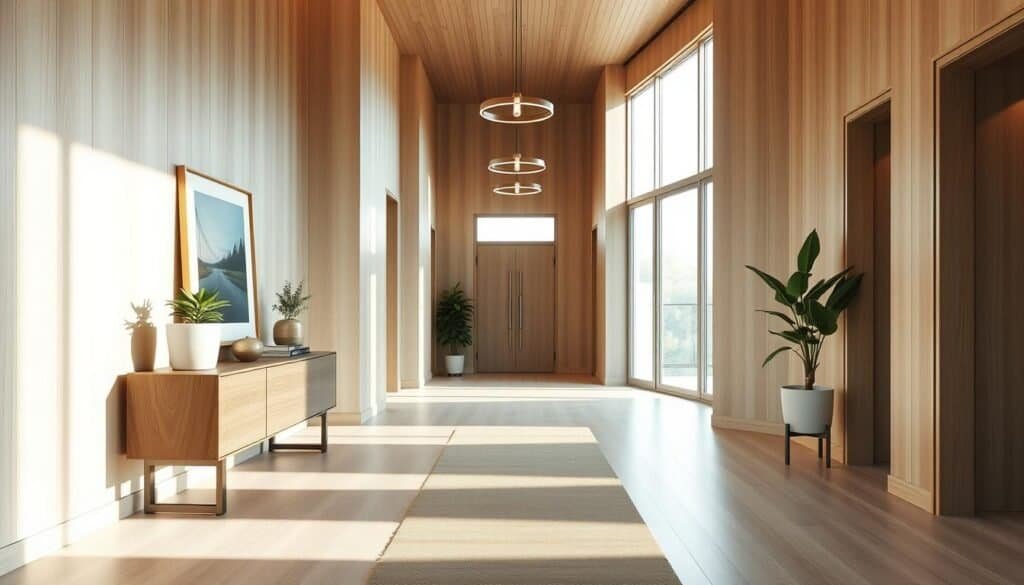
By focusing on these often-overlooked areas, you can make your home more welcoming. Whether through gallery walls or smart lighting choices, improving your transitional spaces leads to a more harmonious home.
Conclusion: Embracing Warmth and Connection in Every Corner of Your Home
Creating a home that feels connected and harmonious is within reach. Focus on warmth and connection in your decor. This can turn your living space into a cozy and inviting place.
Shared spaces, like a warm living room or an open kitchen-dining area, are key. They help bring people together, making your home feel more connected.
To achieve cohesive living, add elements that unite and flow well. Use living room inspiration to arrange furniture and decor that shows your style.
Embracing these ideas can make your home warm, welcoming, and truly yours. Whether you have a big home or a small apartment, focus on connection and warmth in every corner.