Turning your home into a green oasis is now simpler than before. Many city folks are growing their own food right at home. This new way of gardening is changing how we see home gardening.
The main indoor farming benefits are getting fresh herbs and veggies all year. This method uses much less water, making it great for today’s homes. It also keeps your space clean and tidy, bringing nature indoors.
Starting with indoor hydroponics makes anyone a great gardener, no matter the outdoor space. It’s a fun hobby that gives lots of rewards with little effort. If you want to grow your own food, this path offers a new way to live sustainably.
Understanding the Basics of Indoor Hydroponics
Getting to know indoor hydroponics is key to growing plants all year. This method uses water instead of soil, filled with nutrients. Plants grow faster and produce more because they get nutrients directly.
Hydroponic gardening lets you control everything. No more worries about pests or bad weather. You can grow food anywhere, anytime.
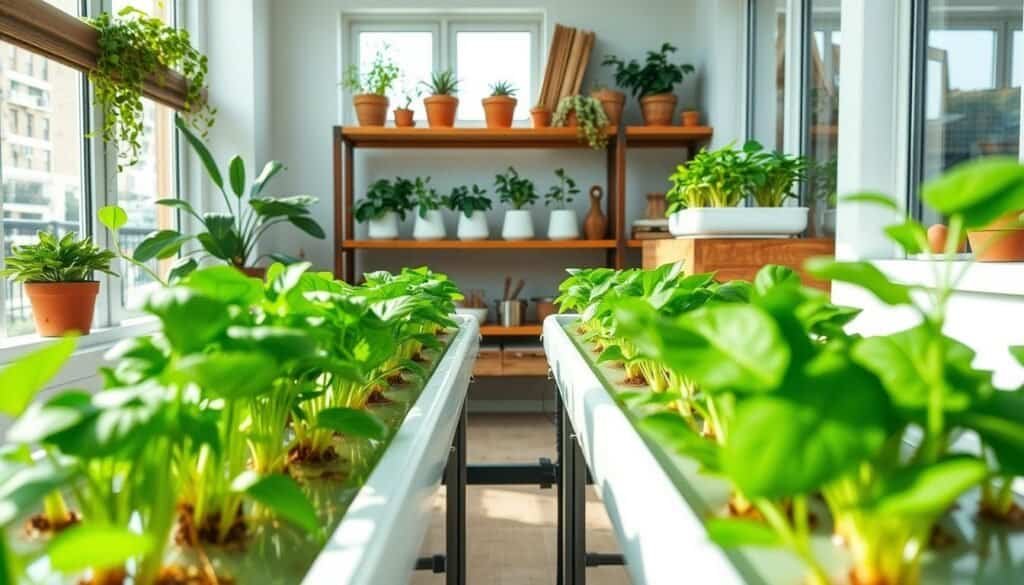
For hydroponic gardening beginners, the science is easy. Plants need light, water, and nutrients to grow. In a hydroponic system, you give them these in a smart way.
Learning indoor hydroponic gardening is rewarding. It’s easy once you understand the basics. You can have a garden in your home with the right setup.
Essential Components for Your Hydroponic Setup
Starting your hydroponic gardening journey means picking the right parts for your setup. Whether you’re new or have experience, the right tools are key. A good setup makes sure your plants get the oxygen, water, and nutrients they need indoors.
The nutrient solution is at the heart of a successful garden. Unlike soil, your plants get all their minerals from this liquid. It’s important to pick a high-quality mix for fast growth and health. Always check the pH levels to help your plants absorb nutrients well.
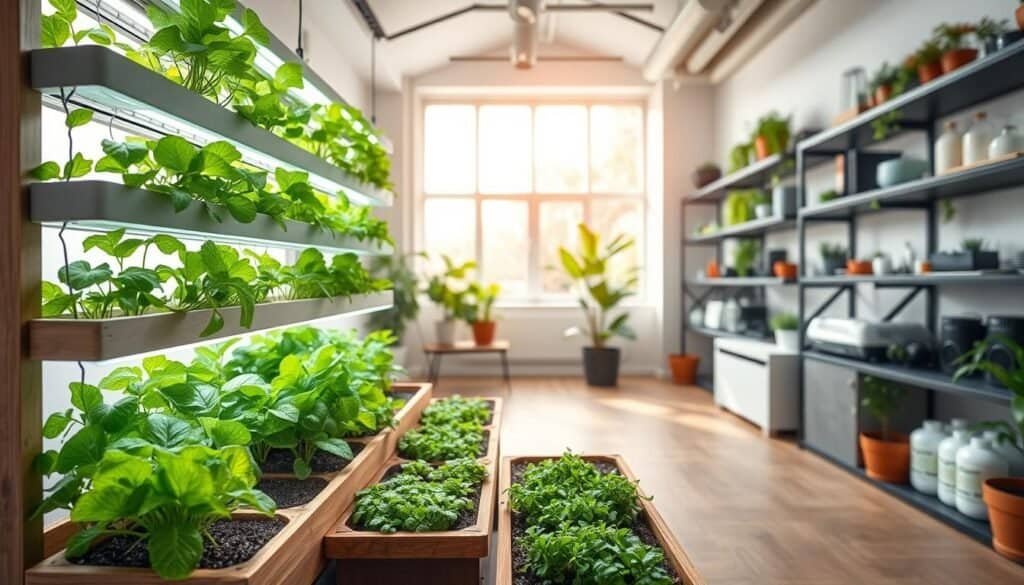
To set up your hydroponic system, you’ll need some important equipment. These pieces work together to create a controlled space that’s like nature but more efficient. Here are the main things you’ll need:
- Reservoir: A container that’s lightproof to hold your water and nutrient mix.
- Water Pump: Needed to move the solution to the roots.
- Air Pump and Stones: These add oxygen to prevent root rot.
- Grow Trays or Net Pots: These keep your plants in place.
- Growing Medium: Stuff like clay pebbles or coco coir that supports roots.
Setting up your hydroponics system needs careful planning and detail. First, test your pump and tubes for leaks before adding plants. A clean, organized space makes upkeep easier as your garden grows.
Choosing reliable hydroponic grow systems saves time and trouble later. Durable parts create a stable environment for steady yields. With these supplies, you’re ready to learn indoor growing.
Selecting the Best Vegetables for Your Indoor Garden
Choosing the best vegetables for hydroponics is key to a successful indoor garden. Starting with the right crops boosts your success and keeps you excited. A well-thought-out indoor food garden lets you enjoy fresh food all year, no matter the weather.
Leafy greens and herbs are great for beginners. They grow fast and need little care. They also do well in small spaces and give a lot of yield. Start with these popular ones:
- Butterhead or Romaine lettuce
- Fresh basil, cilantro, or mint
- Baby spinach and kale
- Compact varieties of chili peppers
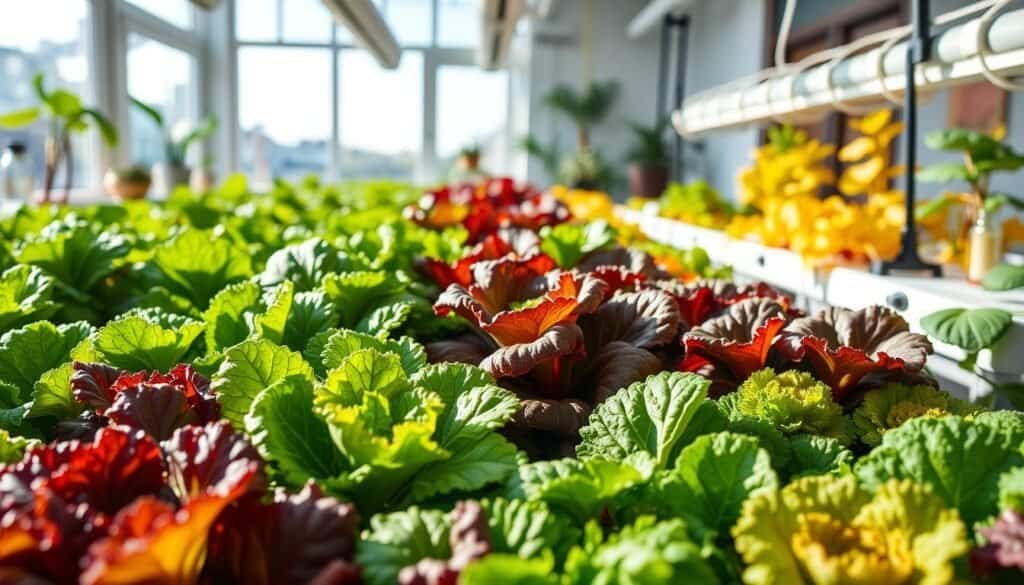
To make your hydro garden the best, group plants by their needs. Plants that need the same light and nutrients can be adjusted together. This keeps your garden healthy and balanced.
Growing vegetables indoors is rewarding and brings nature home. Quality seeds and consistent care make your indoor food garden thrive. The right plants in your hydro garden will give you a tasty harvest.
Growing vegetables indoors takes patience as you learn about your plants. Watch for signs of stress or nutrient needs. With these tips, you’re on your way to growing without soil.
Mastering Grow Lights for Indoor Plant Cultivation
Mastering grow lights is key to making a dark spot into a green oasis. Your plants can’t get sunlight, so you need a good light that acts like the sun. This is vital for growing plants indoors.
Choosing your gear, you have two main options. Each has its own perks based on your space and budget:
- LED Lights: These are super energy-saving and don’t get hot, great for small areas.
- Fluorescent Lights: A budget-friendly pick for seedlings and greens that don’t need strong light.
- Full-Spectrum Bulbs: They give a balanced light that helps plants grow at every stage.
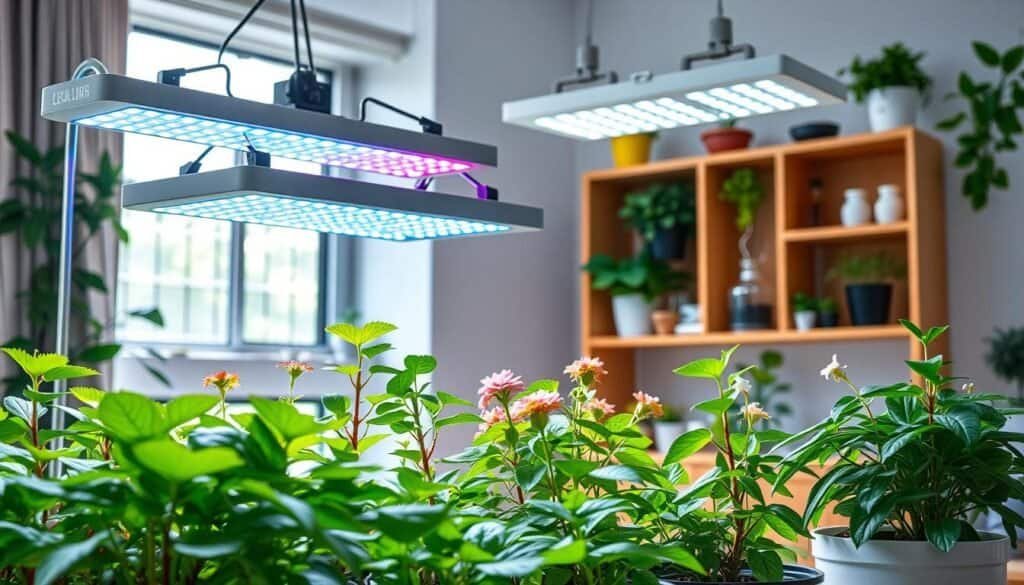
It’s important to place your grow lights right to keep plants healthy. Make sure they’re not too close to burn the leaves but not so far they’re weak. As plants grow, adjust the light’s height to keep them healthy.
Lastly, figure out how long to light your plants. Most veggies need 12 to 16 hours of light daily. A timer can help keep this routine going all year without stress.
Indoor Hydroponics — What You Need to Know Before You Start: System Types
Hydroponic farming has many ways to grow plants, from simple water tanks to complex misting systems. The right method depends on your space and tech comfort. Beginners often start simple, while experts go for advanced setups.
Deep Water Culture is great for newbies. It has plant roots in a nutrient-rich water solution. This method is simple and low maintenance.
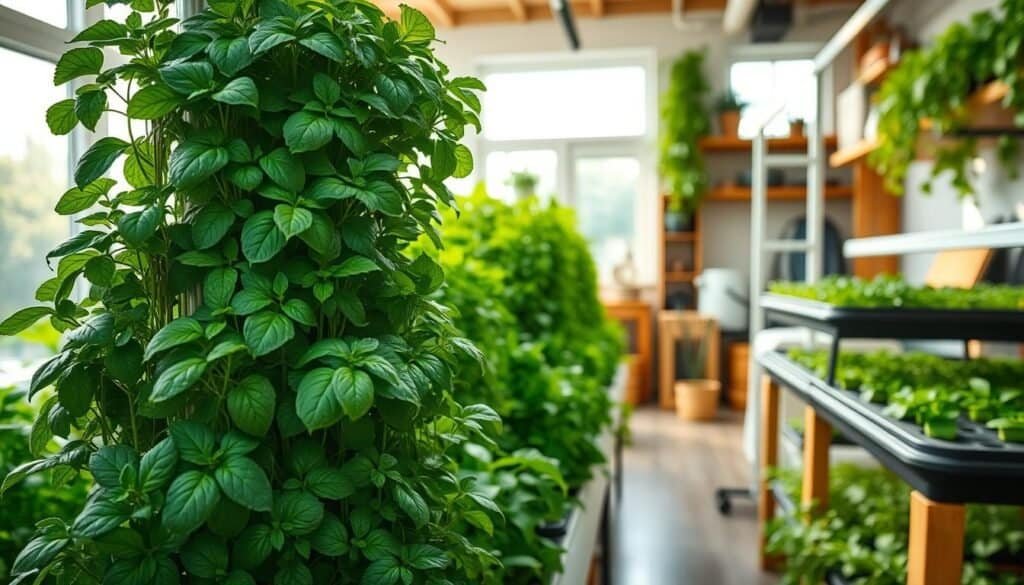
For faster growth, indoor aeroponics is a good choice. It suspends roots in the air and mists them with nutrients. This method gives roots lots of oxygen, leading to faster growth.
When picking a system, think about these points:
- Space Efficiency: Vertical systems save space in small areas.
- Oxygenation: Aeroponic gardening gives roots lots of oxygen.
- Ease of Use: Simple water culture systems are easy to clean and manage for beginners.
- Growth Speed: Advanced misting systems grow plants faster.
Learning about aeroponic gardening helps you grow more efficiently. As you get better, you can move to more complex setups. Choose a system that fits your goals and environment.
Designing Your Vertical Hydroponic System
Vertical farming is a smart way to grow more when space is limited. It lets you grow more plants in a smaller area than regular gardens. A good vertical hydroponic system makes the most of your indoor space by stacking plants.
When picking a design, think about a diy hydroponic tower or an a-frame garden. Towers are great for leafy greens and herbs. A-frames are better for bigger plants because they’re stable. These projects can be tailored to fit your room perfectly.
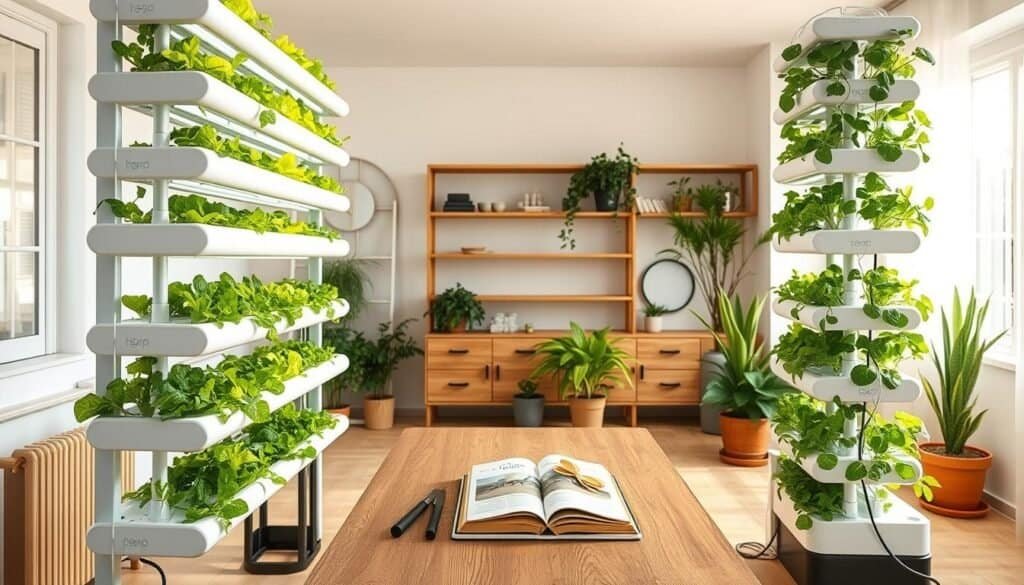
Building a vertical hydroponics system needs focus on strength and water flow. Stability is key to avoid accidents or leaks. Make sure your pump can reach the top of your tower for even nutrient delivery.
For a more advanced setup, try vertical garden aquaponics. It uses fish waste to feed plants, creating a closed-loop system. An aquaponic garden is a fun challenge that boosts your hydroponic farming skills. It balances fish and plants for a healthy, self-sustaining environment at home.
Maintaining Your Hydroponic Environment
Success in controlled environment agriculture depends on your daily routine. Watch your system closely to avoid big problems. Being consistent is key for long-term growth.
Check the pH levels and nutrient solution regularly. If the pH is off, plants can’t get the minerals they need. This can cause growth issues and yellow leaves.
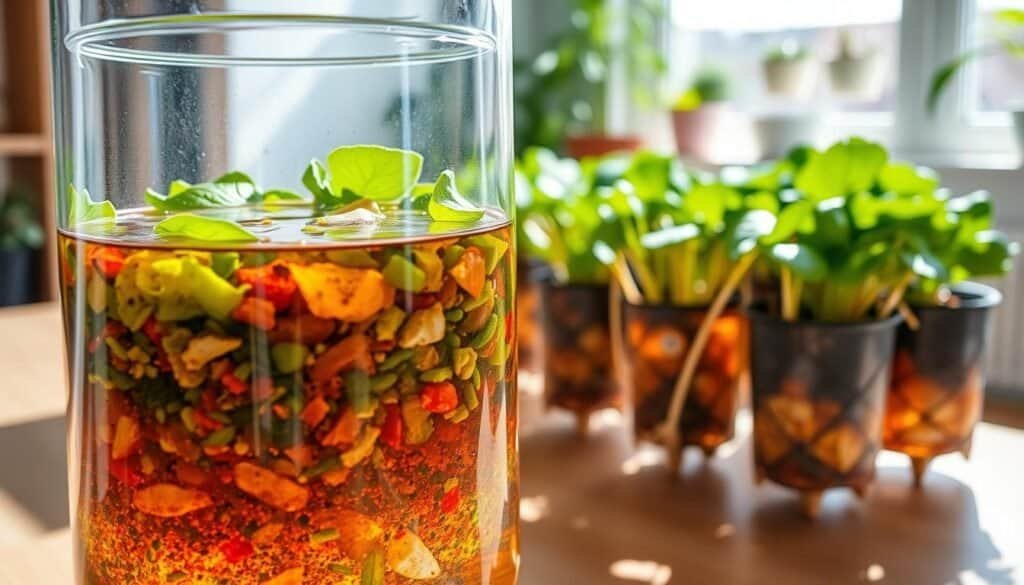
Keeping things clean is also important to avoid root rot. Check your reservoir and pump systems weekly. A clean setup helps your plants grow well.
Think about these greenhouse floor ideas for a better space:
- Use gravel or crushed stone for excellent drainage.
- Install heavy-duty weed mats to prevent unwanted growth.
- Keep greenhouse interiors organized with vertical shelving.
- Ensure all walkways remain clear for easy access to plants.
- Use non-slip surfaces to improve safety in wet conditions.
Whether it’s a small green house hydroponics or a big hydroponic greenhouse, stay organized. A clean space helps you find pests or diseases quickly. For an aquaponics greenhouse, water quality needs frequent checks.
Budget-Friendly DIY Hydroponic Projects
Creating a DIY hydroponics system is a fun way to grow plants without spending a lot. You don’t need a big budget to start a homemade hydroponic system at home. By picking the right materials, you can make a top-notch setup for less than store prices.
Many beginners succeed by following simple hydroponic garden plans online. These guides offer great hydroponic design ideas to use your space well. Whether you have a tiny balcony or a bright kitchen corner, there’s a plan for you.
If you have more space, try an outdoor DIY hydroponic garden. A well-designed DIY hydroponic system uses sunlight and controls nutrients. It’s great for growing more during warmer months.
For apartment dwellers, a DIY hydroponic wall is a smart choice. It turns a blank wall into a green space. It’s a good way to grow herbs and greens without taking up floor space.
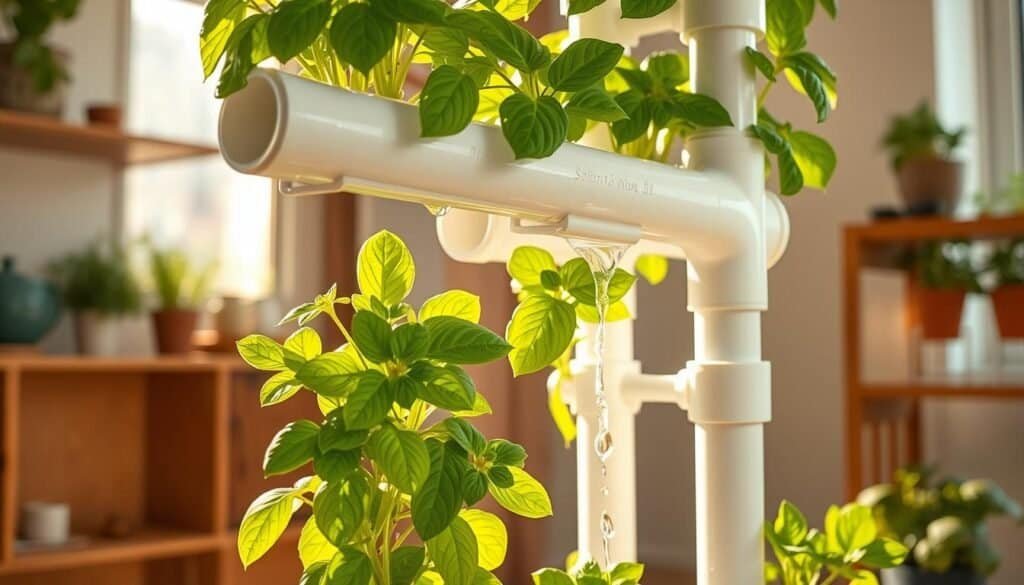
A DIY hydroponic garden tower using PVC pipes is very popular. It’s perfect for a PVC vegetable garden because it fits a lot of plants in a small area. You can adjust its height and ports to fit your needs.
Working with a plastic pipe garden is easy, even for beginners. A PVC pipe garden design is like building a modular system that grows with you. There are many PVC pipe garden ideas that focus on being durable and easy to care for.
Starting a garden with PVC pipe is a budget-friendly way to learn about water circulation. A simple pipe garden can be set up in a few hours with tools from your local store. These systems are reliable and give consistent results for your favorite veggies.
Finding the right design inspiration for hydroponics is key to success. Whether you’re into hydroponic gardening DIY or aquaponics DIY, there’s a lot to explore. Here are some tips for your project:
- Make sure your pipes are food-grade for safety.
- Use a reliable water pump to keep nutrients moving.
- Check your pH levels regularly for healthy growth.
- Start with easy crops like lettuce or basil.
Smart Technology in Modern Indoor Growing Systems
Technology has changed indoor gardening a lot. Now, indoor farming is for anyone, not just experts. Automated tools make sure your plants get the right care every day.
A smart hydroponic system is like a personal plant assistant. It checks water and light levels for you, so you don’t have to. This means your plants can grow well even when you’re busy.
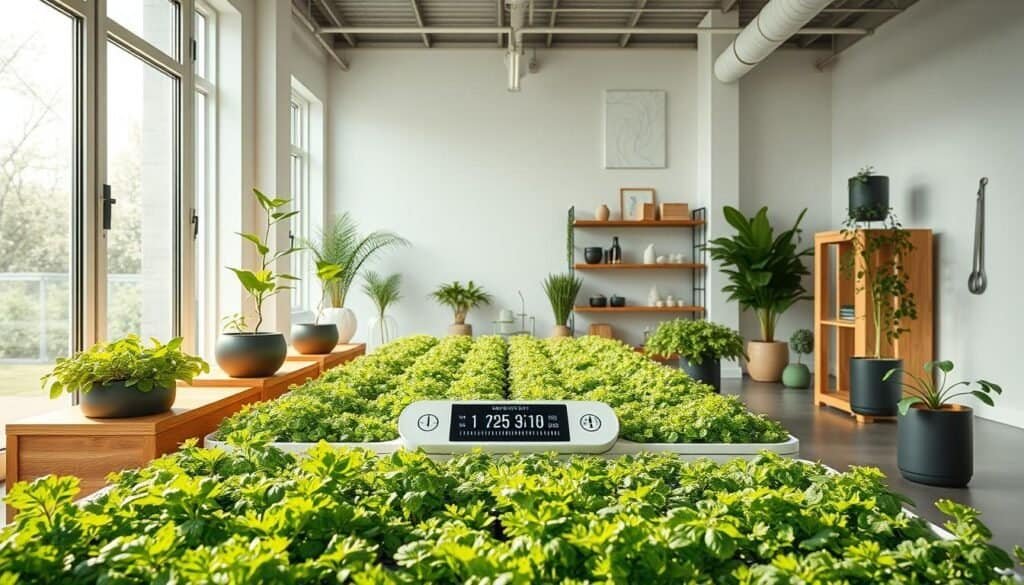
For beginners, a modular hydroponic system is very flexible. The vegebox hydroponics growing system is great because it’s small and easy to use. You can grow your setup as you get more into gardening.
Using a top-notch indoor growing system makes gardening easier. These systems offer many benefits for home gardeners:
- Consistent growth rates thanks to perfect light cycles.
- Water efficiency with automated nutrient delivery.
- Space-saving designs that fit on kitchen counters.
- Reduced maintenance for those with busy lives.
With these tech advancements, you can have fresh herbs and veggies all year. Smart tech keeps your indoor garden healthy, productive, and fun to care for.
Conclusion
Creating a thriving indoor garden turns your home into a place where you can grow fresh food. You now know how to handle light, water, and system design. This knowledge will help you grow your plants well.
Brands like AeroGarden and General Hydroponics have great tools for you. They help keep your plants happy all year round.
Start with a small garden to begin. Watch how your plants do with different nutrients and light. This experience will help you grow bigger gardens later.
Share your garden journey with others. Join local gardening groups or online forums. You’ll get new ideas and tips for your garden. Your efforts will help your family and the planet.
Choose a spot in your home for your garden today. Enjoy picking fresh lettuce or herbs from your kitchen. Your indoor garden is ready for your touch.