
Creating beautiful outdoor spaces starts with solid foundations. A well-placed gravel garden path can turn a plain backyard into an inviting spot. These paths guide guests through yards, adding style and charm to your home.
- Proper preparation: Focus on base setup, edging, and drainage for professional results.
- Material choice: Select stones that complement your existing landscape and functional needs.
Before starting, homeowners plan for long-lasting results. A good yard walkway idea needs more than just stones on dirt. You must think about base setup, edging, and drainage.
This ensures the path stays level and clean. It’s all about the details for a lasting look.
Smart outdoor pathway ideas blend style with stability. A sturdy base prevents sinking, and solid edging keeps stones in place. By focusing on these details, your walkway will stay beautiful for years.
Choosing the right garden path ideas is key. Whether you prefer rustic trails or modern designs, planning is essential. A little effort now saves a lot of time later.
1. Understanding the Benefits of Gravel Garden Paths
Gravel garden paths are gaining popularity for good reasons. They are cost-effective compared to other materials like concrete or brick. This makes them a great choice for those watching their budget.
Another big plus is how easy they are to install. You can do it yourself, saving money on labor. They also help with good drainage, which is key in wet areas.
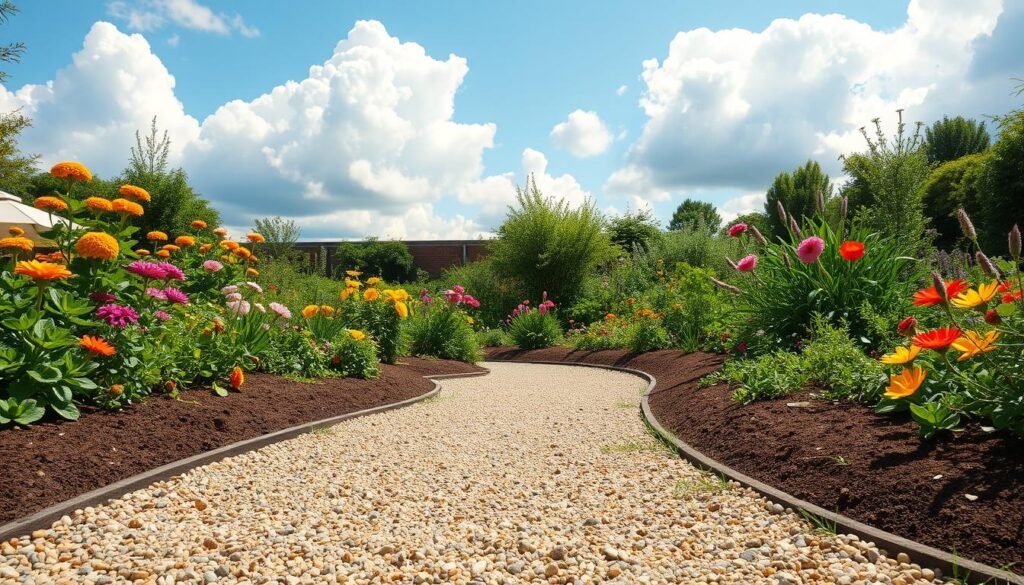
Gravel paths are versatile and fit many garden styles. They’re easy to fix and keep up, which is a big plus. If you’re looking for gravel path landscaping ideas or cheap walkway ideas diy, gravel paths are a smart pick.
Some main benefits of gravel garden paths are:
- Cost-effectiveness
- Ease of installation
- Good drainage
- Versatility in design
- Easy maintenance and repair
Knowing these benefits can help you decide if a gravel path is right for your garden. It can add a simple walkway that makes your outdoor space better.
2. Choosing the Right Location for Your Path
The success of your garden pathway ideas depends on picking the right spot for your gravel path. You need to look at your garden’s layout and find the spots you want to connect. This will help you plan your path.
Think about how people will move through your garden. Your path should be easy to get to and look good, making your outdoor space more beautiful.
Considering Sunlight and Drainage
When picking a spot for your gravel path, think about sunlight and drainage. Too much sun can make it hot, and bad drainage can make it muddy.
Assessing sunlight means figuring out how much sun your garden gets and when. This helps you choose the right gravel or add shade if needed.
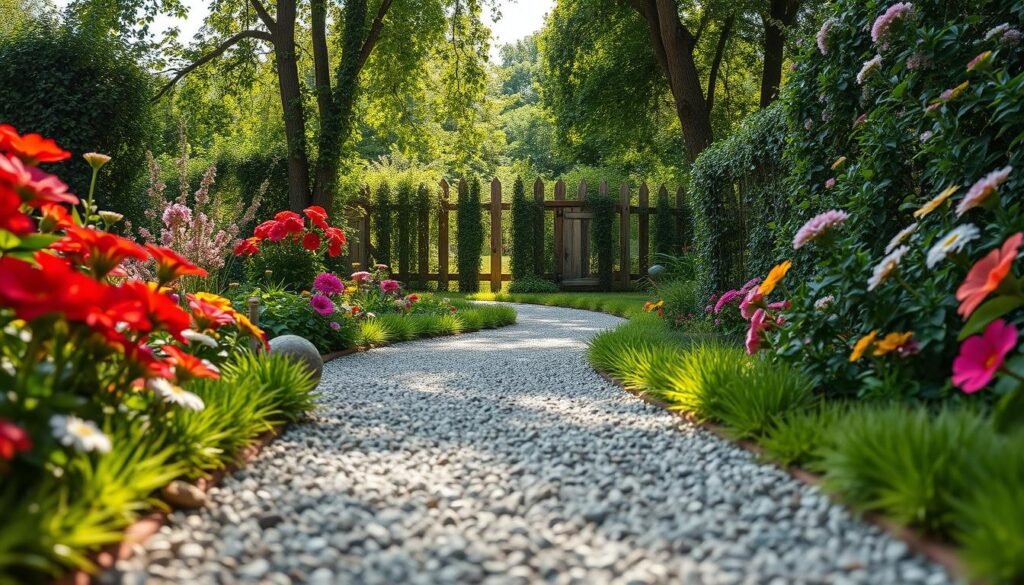
Drainage is key too. You want water to drain well to avoid puddles and erosion. You might need to slope your path or add drainage features to your design.
- Find areas in your garden that get waterlogged.
- Look at your garden’s slope and how it affects water flow.
- Plan your path to skip areas where water collects.
By thinking about these things, you can make a yard pathway that looks great and works well. It will make your side yard pathway ideas better and make your outdoor space more inviting.
3. Selecting the Best Gravel Type and Size
The success of your gravel garden path depends on the right gravel type and size.
Different gravels have unique textures and colors. These can greatly change your garden’s look.
Common gravels for paths include pea gravel, decomposed granite, and crushed stone.
- Pea Gravel: Small, rounded stones that are comfortable to walk on and provide good drainage.
- Decomposed Granite: A compact, fine-textured material that is ideal for paths that need to be stable and less prone to weed growth.
- Crushed Stone: Available in various sizes and colors, crushed stone can add a decorative touch to your garden path.
The gravel size matters too. Larger gravel is more stable, while smaller gravel is softer underfoot.
Choose based on the path’s use and your preference.
When picking gravel, think about:
- The color and texture that will complement your garden’s design
- The size that is appropriate for the path’s intended use
- The drainage properties of the gravel
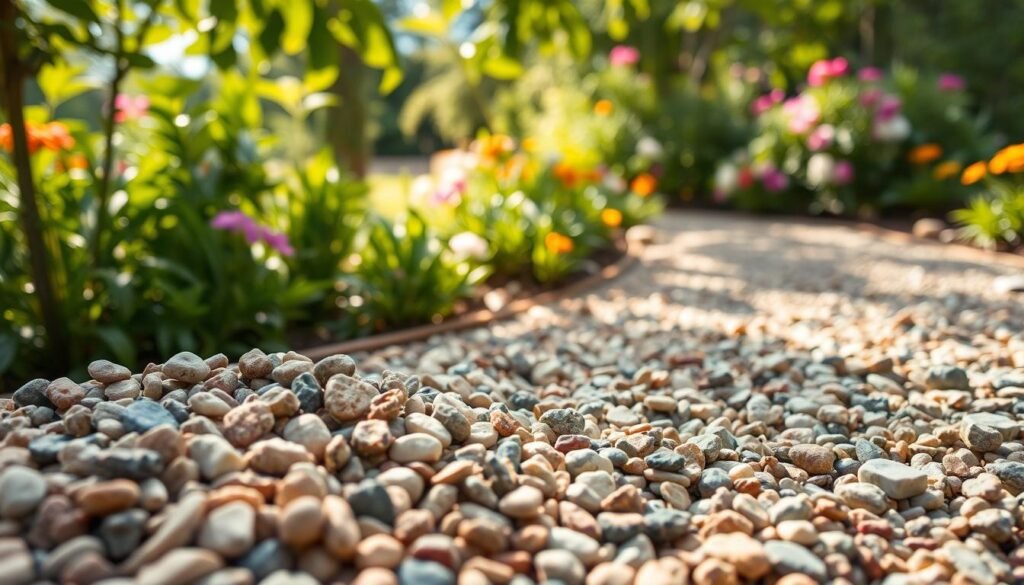
By choosing the right gravel, you can make a beautiful and useful garden path. It will improve your outdoor area.
4. Planning Your Path Design and Dimensions
A well-planned gravel path can make your garden look better. It’s key to get the design and dimensions right.
Think about your garden’s style and theme when planning your path. You can use gravel path design tips to make a unique and attractive path.
Determining the Width and Length
The path’s width and length depend on its use and your garden’s space. Here are some things to think about:
- The path should be wide enough for easy walking, usually 2-4 feet.
- The path’s length depends on how far it goes from start to end.
- Think about your garden’s slope when deciding on the path’s size.
For a small garden walkway, a narrower path might be better. A longer path needs more planning and materials.
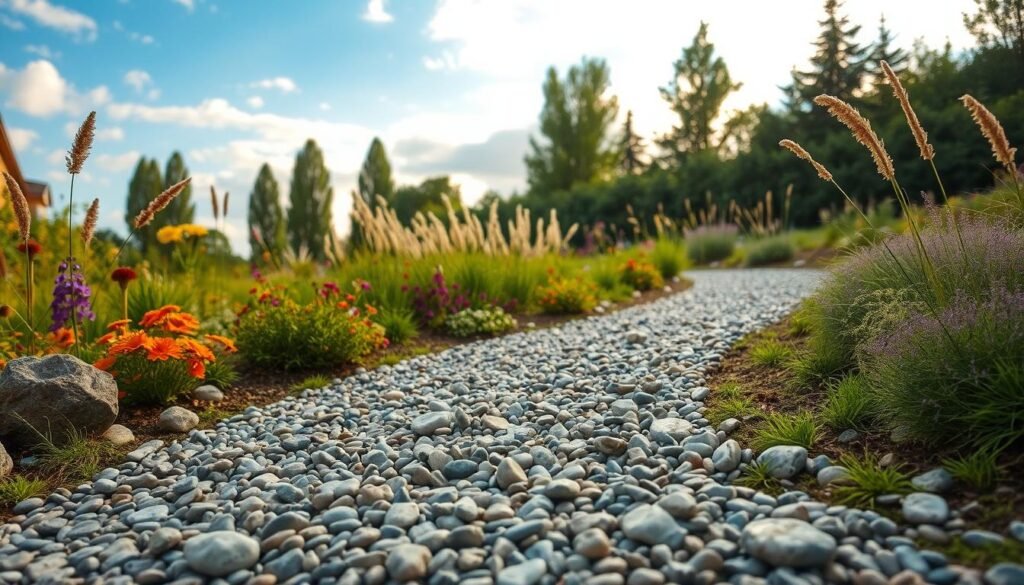
Some great stone pathway ideas include a winding path, using different gravel colors, or adding stepping stones.
By planning your path’s design and size carefully, you can make a beautiful and useful garden road design. It will improve your outdoor area.
5. Thinking About a Gravel Garden Path? Do Some Research First on Drainage and Slope
A gravel garden path needs more than just gravel. It requires careful planning, focusing on drainage and slope. Good drainage stops waterlogging and erosion, keeping your path safe and looking good.
Look at your garden’s natural slope. If it slopes, you might choose to follow it or make a level path. Researching drainage options like French drains or soakaways can help manage water.
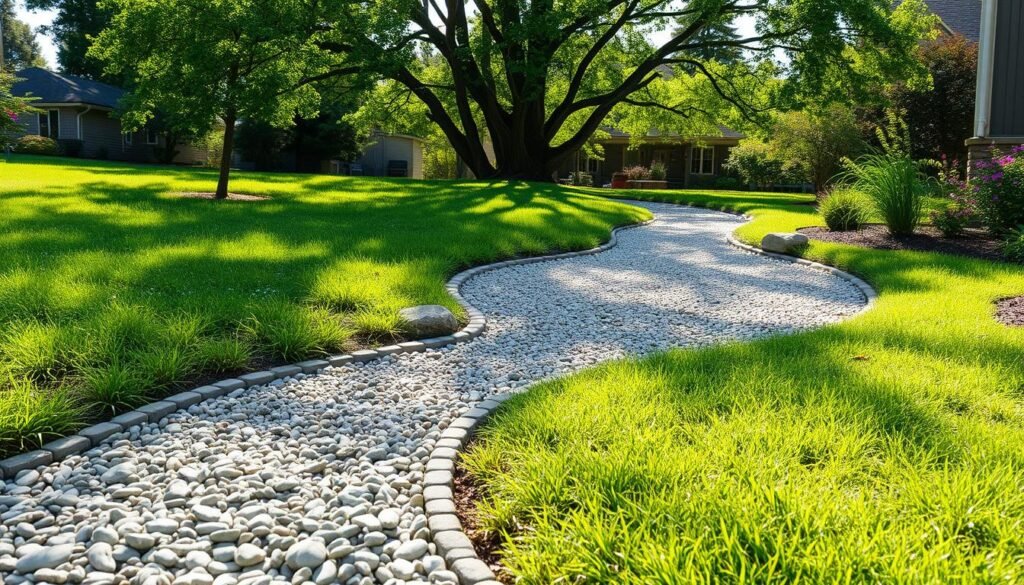
The path’s slope is also key. A steep path is hard to walk on, wet or dry. A flat path might not drain well. Aim for a slight slope to let water run off. You can follow the land’s slope or use steps.
To make your gravel path last, think about these important points:
- The natural slope and drainage of your garden
- The gravel type and its drainage
- The path’s design, including its slope and edges
With careful planning, you can have a beautiful, lasting gravel path.
Knowing about drainage and slope is key for a great gravel path. Research and plan well to avoid problems. This way, your path will add beauty and function to your garden.
6. Budgeting for Materials and Installation Costs
When planning a gravel garden path, budgeting is key. You need to think about the cost of gravel, edging, and drainage. Also, consider the labor cost if you hire a pro.
The price of materials changes based on the gravel and edging you pick. Going for a DIY walkway can cut costs. But, adding a brick pathway with a garden border can make it look better but cost more.

To budget well, look up and compare prices for materials and services. Don’t forget to think about future upkeep costs. This way, you can make a path that’s both beautiful and affordable.
- Research and compare prices for materials and labor.
- Consider DIY options to save on installation costs.
- Plan for long-term maintenance costs.
7. Preparing the Ground and Base Layers
A well-prepared base is key for a durable and attractive gravel path. This involves several important steps. These steps ensure your path stays stable and drains well over time.
Clearing the Area is the first step. Remove any debris, plants, or obstacles to start fresh. This makes your path look better and saves you from future upkeep.
Then, leveling the ground is essential. Use a rake or leveling tool to make the surface even. This is important to stop water from pooling, which could damage the path.
Laying the Base Layers means adding a layer of compacted material like crushed stone or recycled brick. This layer should be 4-6 inches deep. Use a hand tamper or plate compactor to pack it down and prevent settling.
- Choose the right aggregate material for your base layer.
- Ensure the layer is evenly spread and compacted.
- Check the level of the base layer to avoid any drainage issues.
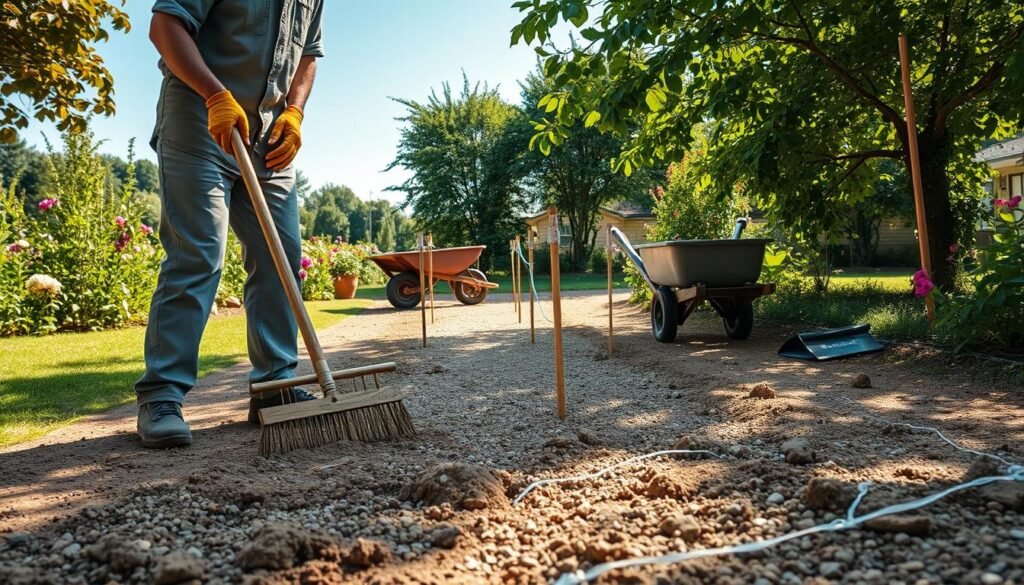
By following these steps, you can make a strong foundation for your gravel path. Proper preparation of the ground and base layers is vital for a successful path.
8. Choosing and Installing Edging Materials
Edging materials are key in making your gravel garden path look good and work well. The right edging keeps the gravel in place and makes your garden look better.
You can choose from brick, stone, and wood for your edging. Brick stepping stones walkways and brick walkways to front door are favorites for their timeless beauty and strength. On the other hand, log stepping stones garden paths bring a cozy feel to your garden.
The edging you pick can really change how your path looks. Brick edging gives a neat, clean look. Wooden edging fits well in gardens that are more natural or rustic.
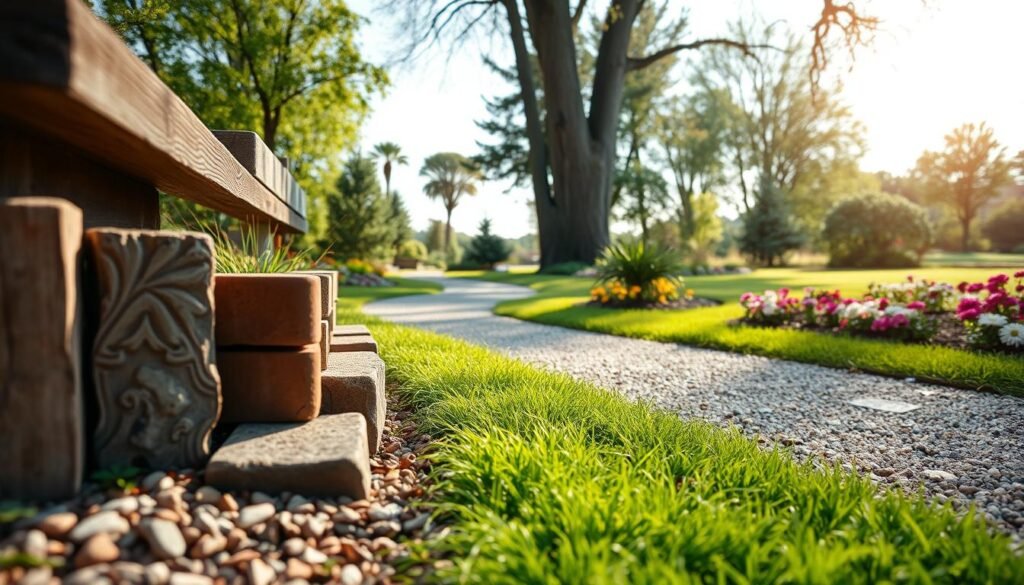
To put edging materials in right, you need to get the ground ready. Dig a trench for the edging and make sure it’s even with your gravel path. Doing this right keeps the edging in place and keeps your path looking good.
Here are some common edging materials and what they offer:
- Brick: Durable, classic look, can be arranged in various patterns.
- Stone: Versatile, can be used to create complex designs, durable.
- Wood: Rustic appearance, can be more prone to weathering and rot.
9. Understanding Maintenance Requirements
Keeping a gravel garden path in good shape is key to its beauty and life span. Like any garden feature, it needs regular care to stay looking great.
Key Maintenance Tasks:
- Raking the gravel to maintain an even surface and prevent uneven settling
- Replenishing gravel as needed to maintain the desired depth and appearance
- Inspecting the path for any damage or erosion, such as potholes or washaway
Regular checks and upkeep can stop weeds and gravel from moving. Weeds can be kept away with a weed barrier fabric under the gravel. To stop gravel from shifting, use edging materials.
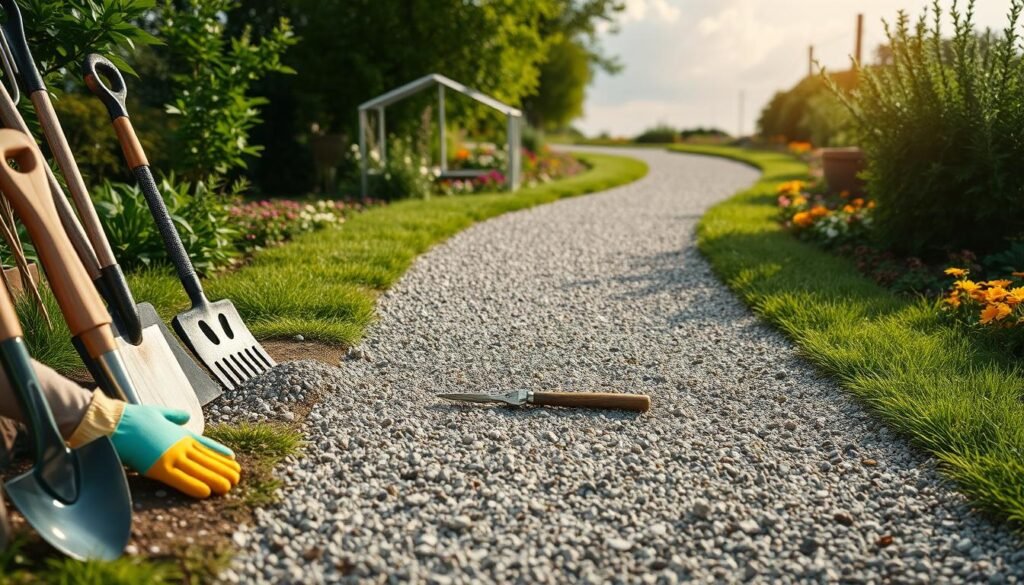
- Regularly rake the gravel to maintain its appearance and prevent compaction
- Check for and repair any damage or erosion promptly
- Consider using a weed barrier to reduce weed growth
By following these tips and knowing what your gravel path needs, you can have a beautiful and lasting path. It will add to your garden’s rustic and natural stone path decor.
10. Conclusion
A well-designed gravel garden path can make your outdoor space look better and be more useful. It adds beauty and function to your yard.
Think about where you want the path, what kind of gravel to use, and how to keep it dry. This way, your patio rock pathway will match your garden’s special features.
Choosing the right stone pathways ideas can lead to a stunning and long-lasting gravel stone walkway. It will increase your property’s value.
Looking for simple or complex ideas, a gravel garden path is a smart choice. It’s a unique and attractive option for any homeowner.


