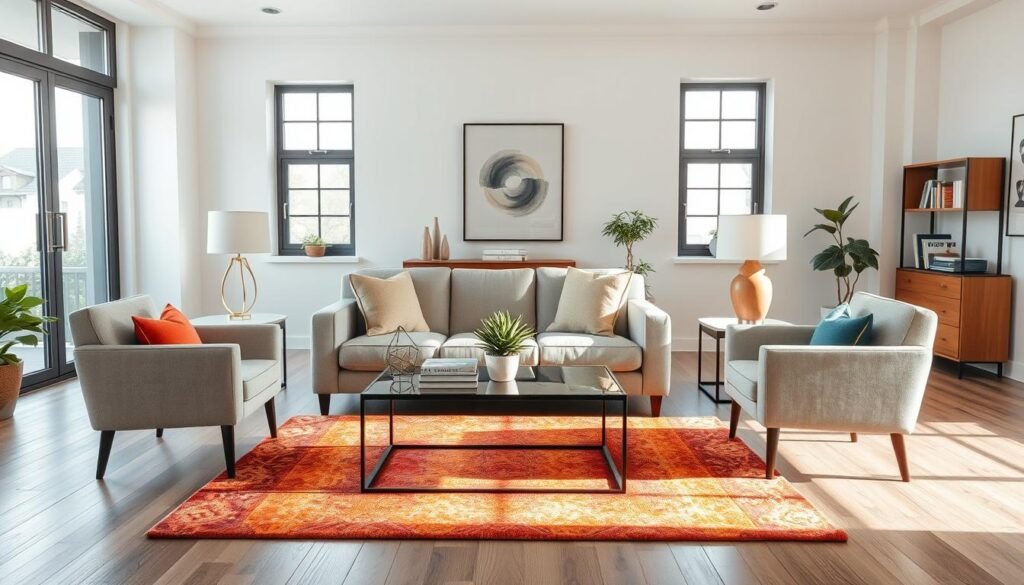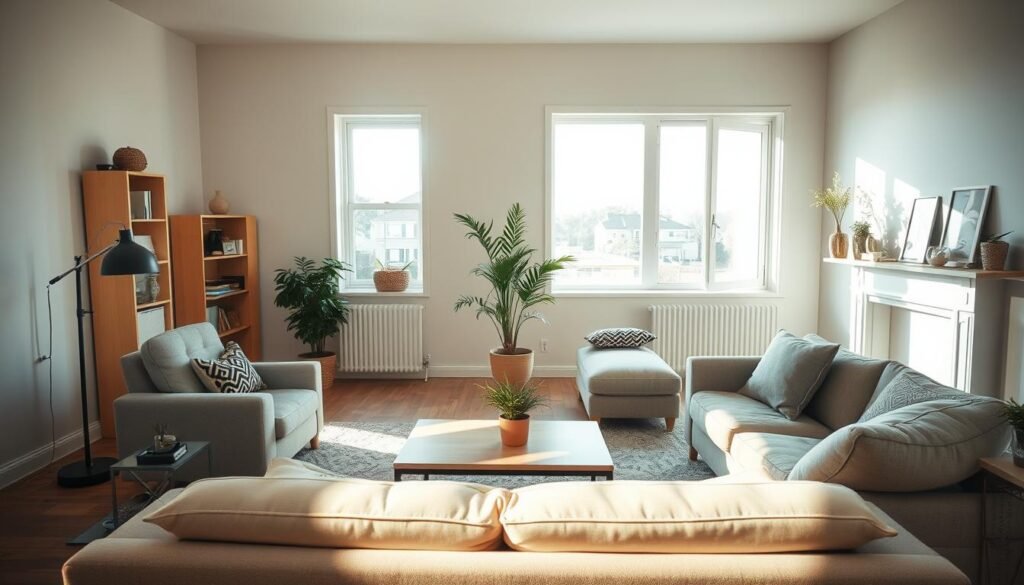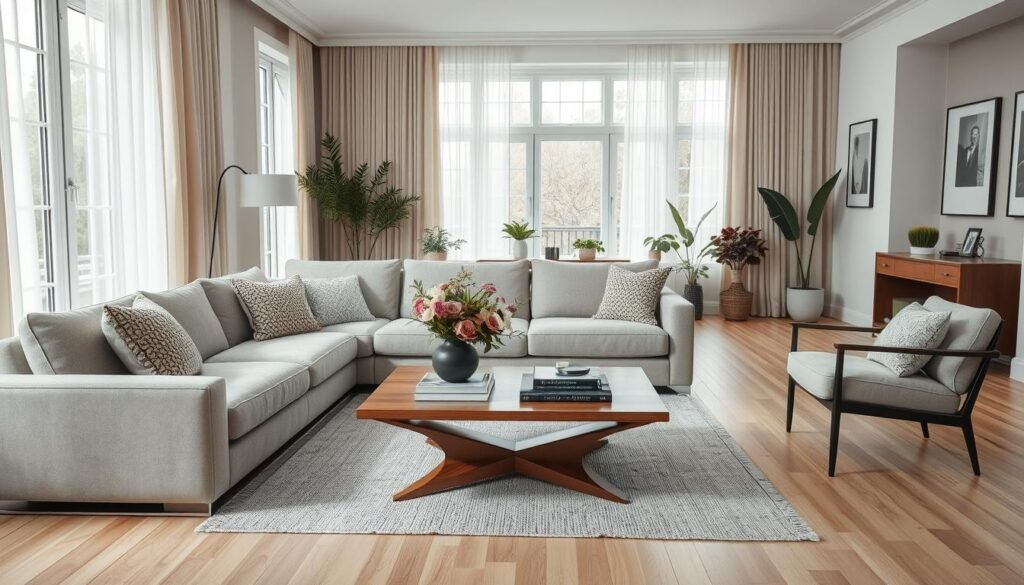
Creating a cozy living room design is more than looks. It’s about making a space that invites you to relax and feel at home. A calm living room is the heart of a peaceful home, where family and friends gather to share moments.
A comfortable living room is about finding the right balance. It’s about choosing furniture and decor that look good and make you feel calm and comfortable.
By using living room ideas that bring warmth and balance, you can make a space that feels lived-in and loved. This means planning carefully and focusing on creating a welcoming atmosphere.
Living Rooms That Feel Calm and Lived-In: The Foundation
Creating a calm living room starts with the right foundation. A serene atmosphere is key for relaxation and time with loved ones.
Neutral colors are vital for a calm room. Soft hues like beige, cream, and pale gray create a soothing feel.
Setting the Tone with Neutral Colors
Neutral colors aren’t just for walls. They can also be used in furniture and decor. For example, a beige sofa or gray throw pillows can make the room calmer.
To boost the calm, consider these elements:
- Use a mix of light and dark neutral shades for depth.
- Add natural textures like wood and woven fibers.
- Stay away from bold patterns and bright colors.
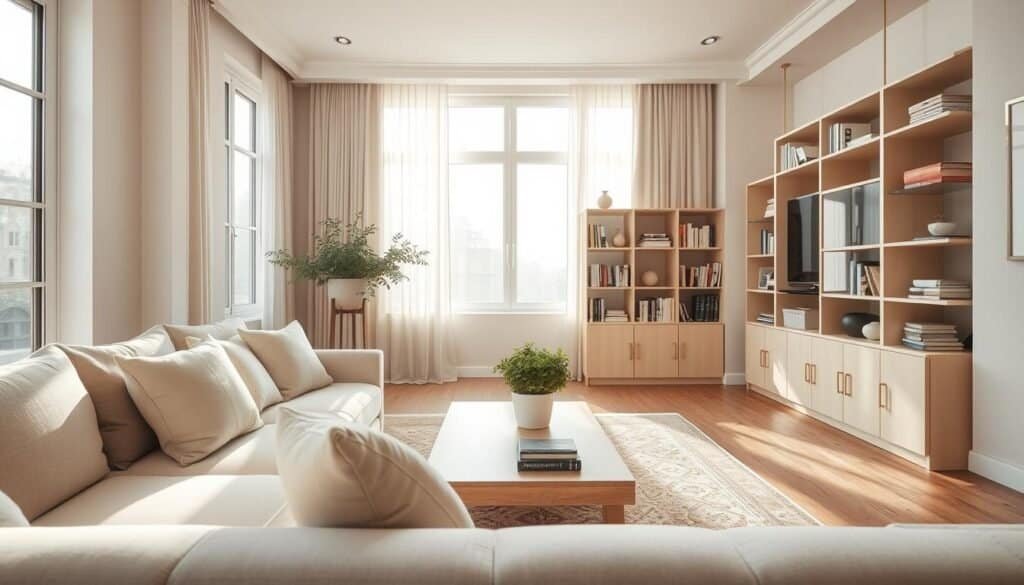
A calm living room is all about balance. Start with a neutral base for a peaceful, inviting space.
Color Palettes That Create a Serene Atmosphere
A well-designed color palette is key to a serene living space. The colors you pick greatly affect your room’s feel. They can make you feel calm or energized.
Soothing color combinations are essential for peace. Soft blues and greens bring calmness. Neutral tones like beige and cream add warmth without being too much.
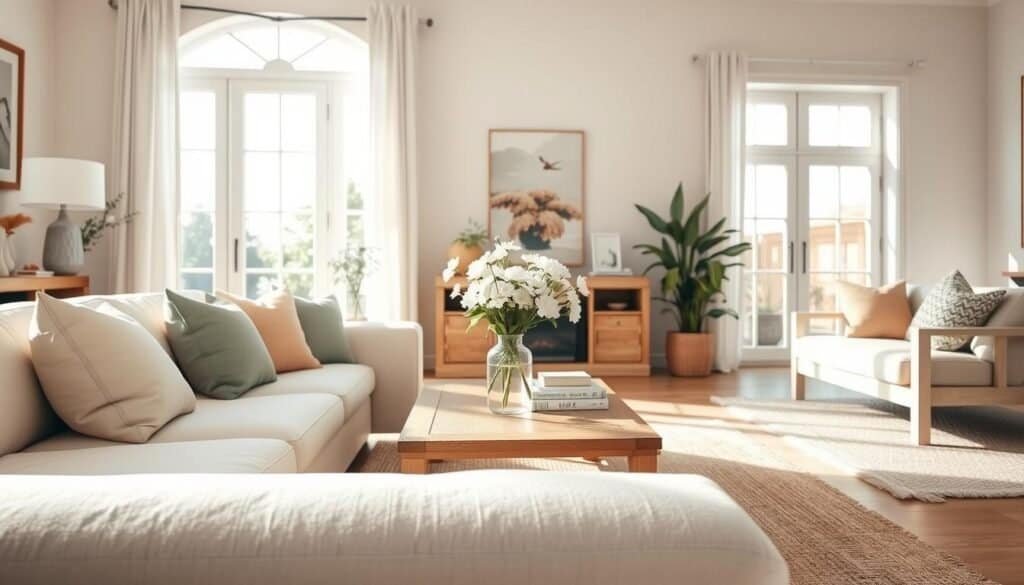
Think about your living room’s natural light when picking colors. Rooms with lots of natural light can handle more colors. Darker rooms do better with lighter shades to avoid feeling trapped.
Effective color palettes for a serene atmosphere include:
- Monochromatic neutrals for a cohesive look
- Soft pastels with creamy whites for a calming effect
- Earth tones like sage green and sandy beige for a natural feel
Choosing your colors wisely can make your living room cozy and relaxing. It becomes the perfect place to unwind after a long day.
Furniture Selection: The Comfort-First Approach
A cozy living room begins with the right furniture, focusing on a comfort-first approach. It’s about picking pieces that look good and feel great. Think about how comfortable and stylish each item should be.
Prioritizing Comfort in Your Living Room
Start by choosing a luxurious sofa design that invites you to relax. Look for ones with soft cushions and strong, quality materials. Your sofa is the room’s main attraction, so it must be both stylish and comfy.
Don’t forget about other furniture that adds to the room’s coziness. Think about big armchairs, ottomans, or trendy sofas that are both stylish and comfy.
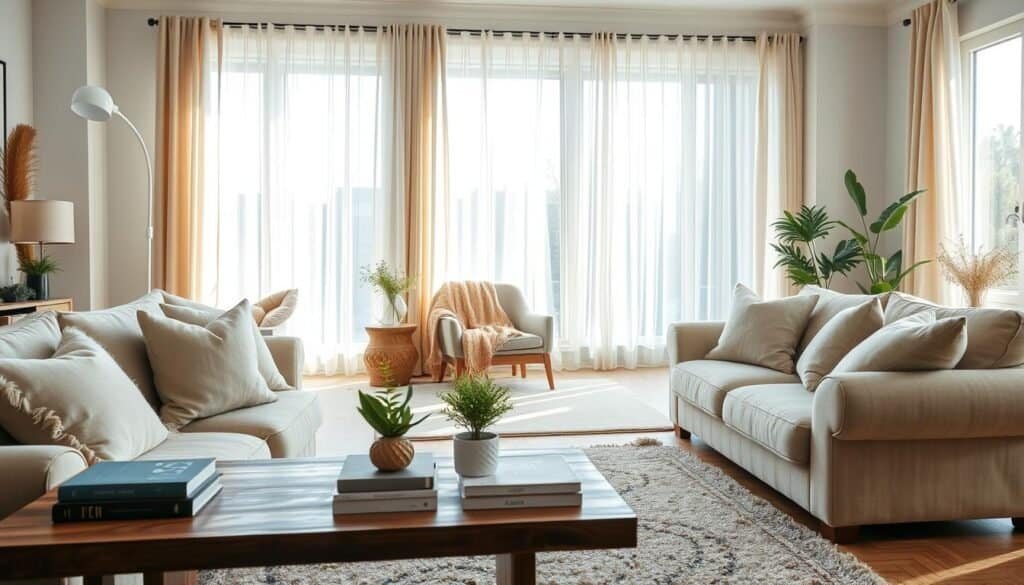
Remember, a comfort-first approach also means thinking about size. Make sure your furniture fits well in your room. Too big, and it feels cramped. Too small, and it looks empty.
To make your living room cozy, mix comfort with style. Choose comfortable furniture and pick items thoughtfully. This way, you’ll have a space that’s both welcoming and stylish.
- Invest in a high-quality, comfortable sofa.
- Consider oversized armchairs and ottomans for added coziness.
- Ensure your furniture is proportional to the room size.
Textile Layers for Depth and Warmth
Layering textiles is an art that can make your living room cozy. It adds depth and warmth, making your space inviting.
Begin with the basics: throw blankets, rugs, and pillows. Mix and match them in different textures and patterns. For example, velvet pillows with chunky knit blankets create a striking contrast.
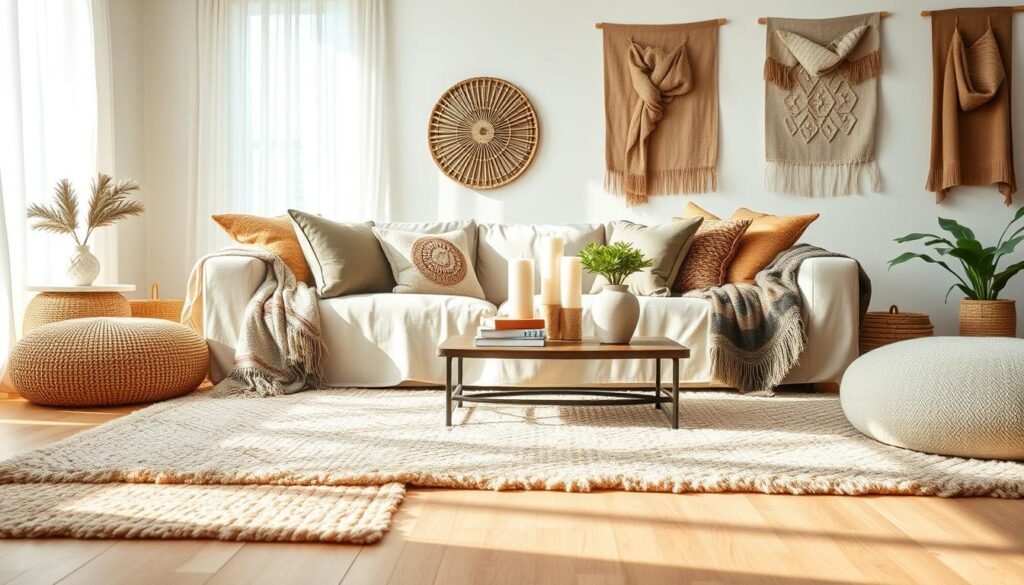
Layering different textures is essential for depth. Use natural fibers like wool and linen with softer materials like cotton and fleece. This mix adds warmth and visual interest.
- Start with a foundational layer like a rug to anchor the space.
- Add throw blankets and pillows in complementary colors and textures.
- Consider layering curtains or drapes to control light and add softness.
Thoughtful textile layering makes your living space warm and welcoming. It feels genuinely lived-in and comfortable.
Lighting Design for a Peaceful Living Environment
Lighting is key in making a home peaceful. It affects the mood and how well the space works. A good lighting plan can make your living room welcoming and calm.
To achieve a calm ambiance, mix different light sources. You might use overhead lights, table lamps, and floor lamps. Each one has its role, from general lighting to cozy spots.
- Use dimmable lights to adjust the brightness according to the time of day and activity.
- Select fixtures with soft shades to diffuse the light and reduce harshness.
- Incorporate LED candles or fairy lights for a warm, ambient glow.
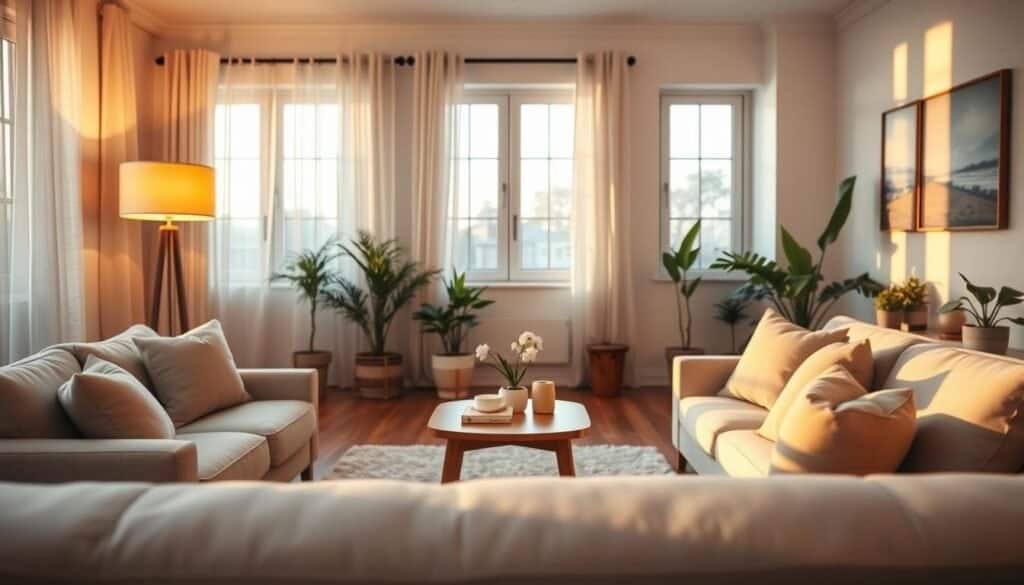
When picking lights, think about your living room’s style and size. For a cozy living room design, choose lights that match your decor. Also, consider the bulb color; warm white is more relaxing than cool white.
Good lighting ideas include using accent lights to highlight features or art. This adds depth and beauty to the room.
Designing your lighting well can improve your peaceful home decor ideas. It makes your living space calm, cozy, and truly yours.
Front Door to Living Room: Smart Layout Solutions
Designing a lived-in living room starts with the front door. A well-planned layout makes your home feel cozy and inviting. It’s all about creating a sense of warmth and welcome.
Smart layout solutions are key to connecting the front door to the living room. Think about traffic flow, furniture placement, and the look you want. It’s all about creating a seamless transition.
Creating a Seamless Transition from Front Door to Living Room
Here are some living room entryway ideas to help:
- Use the same flooring from the front door to the living room for continuity.
- Arrange furniture to guide visitors into the living area without blocking the way.
- Try open concept entryway ideas by using room dividers or curtains instead of walls.
For traditional homes, consider front sitting room ideas entrance. A small seating area near the door can act as a buffer. It makes the transition from outside to inside smoother.
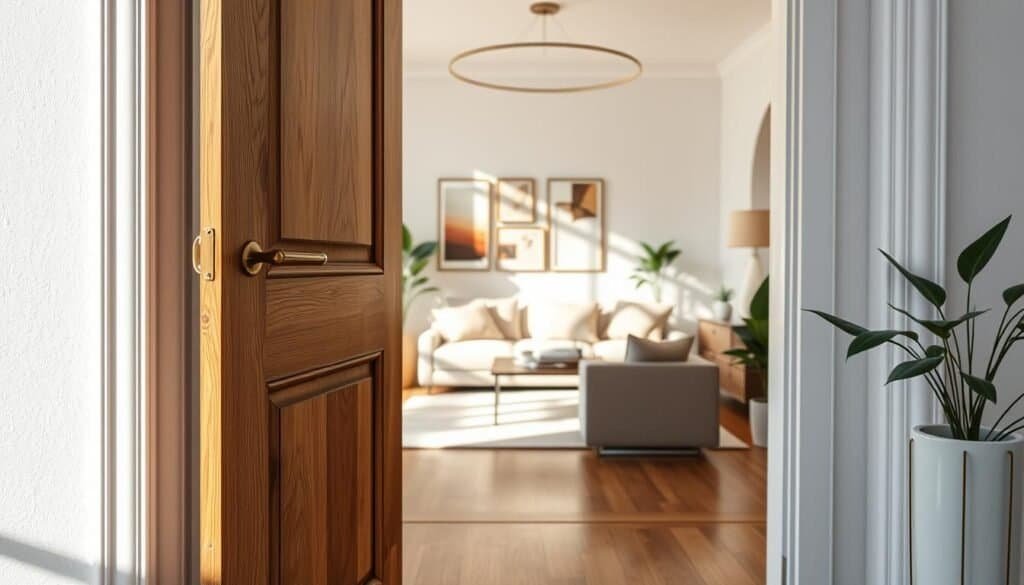
By using these smart layout solutions, your living room will feel connected to the rest of your home. It keeps its own character while improving your home’s look and function.
Personal Touches That Tell Your Story
To make your living room feel lived-in, adding personal decor is key. It’s about showing your story through the items you display.
Displaying Personal Items adds character to your living room. Think about showing:
- Family photos and heirlooms
- Travel souvenirs that reflect your adventures
- Personal artwork or collections that speak to your interests
These touches make your space welcoming. They also spark interesting conversations with guests.
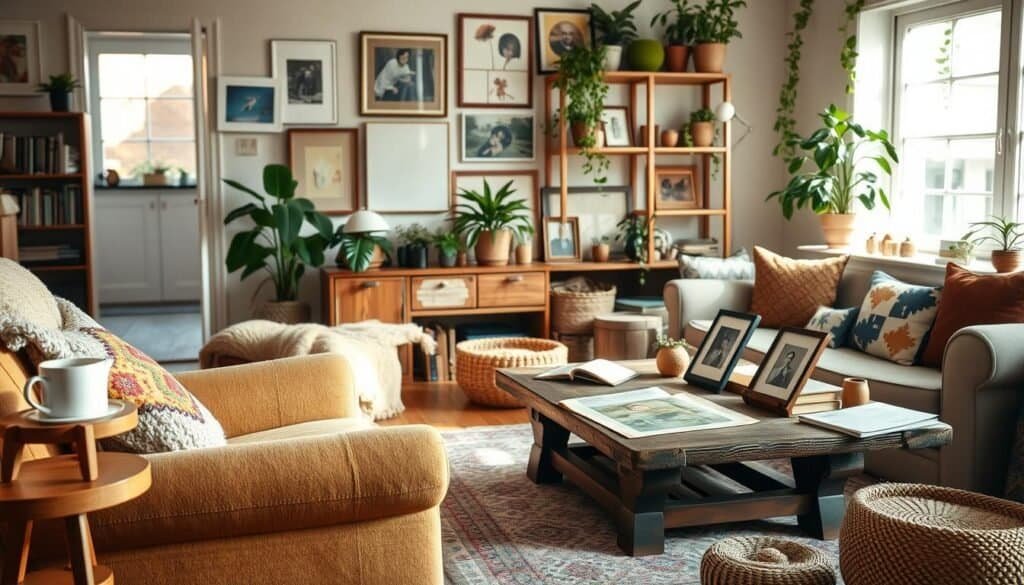
When adding personal decor, think about the look you want. You can group similar items or create a gallery wall with different frames and sizes.
Storytelling Through Decor is more than just showing items. It’s about telling a story that shows your personality and experiences.
Small Space and Storage Solutions for Lived-In Comfort
Even with limited square footage, a lived-in living room can feel spacious and inviting. The right storage strategies are key. Creating a comfortable and clutter-free living room in a small space requires thoughtful planning and effective storage solutions.
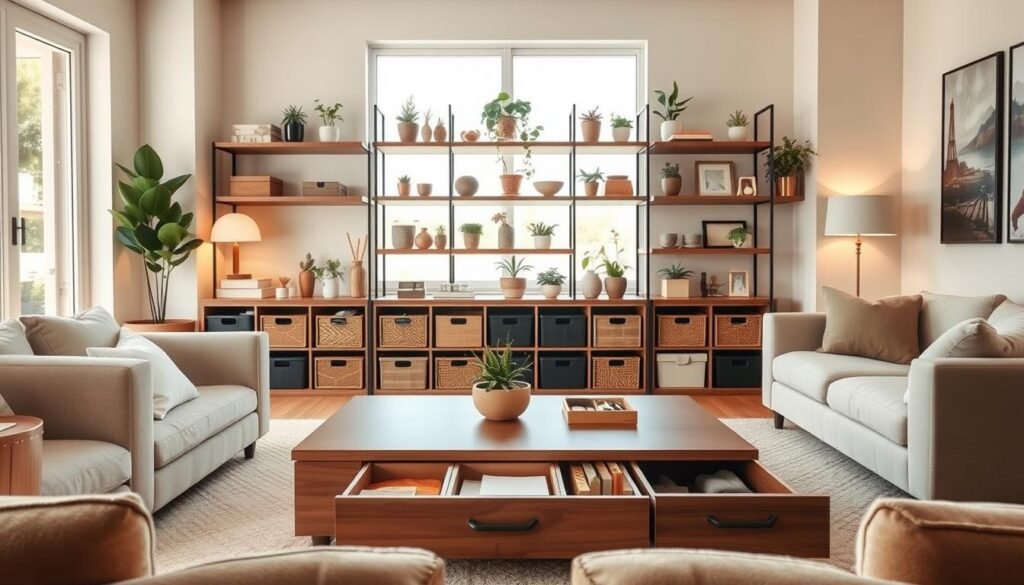
For long term, practical storage is essential for a cozy living room design. By using multi-functional furniture and clever storage ideas, you can create a serene atmosphere. This is possible even in the smallest of spaces.
Practical Storage Solutions for a Comfortable Living Room
To maximize storage in small living rooms, consider these ideas:
- Opt for furniture with built-in storage, such as ottomans or coffee tables with storage compartments.
- Utilize vertical space by installing shelves or storage units that go up to the ceiling.
- Choose multi-functional pieces, like a storage console table that can serve as both a storage unit and a display surface.
By implementing these small space solutions and storage ideas, you can create a lived-in comfort zone. This zone feels spacious and relaxing. Effective storage solutions keep the room clutter-free and contribute to a cozy living room design. This design invites relaxation and comfort.
For small living room ideas that prioritize both form and function, blend storage into your decor seamlessly. This approach ensures your living room remains a comfortable and inviting space, no matter its size.
Farmhouse Boho: Blending Styles for Relaxed Living
To get a cozy living room, mix farmhouse warmth with boho’s free spirit. Farmhouse boho living rooms are special. They combine rustic charm with eclectic elegance.
Creating this look means combining vintage furniture, natural fabrics, and earthy colors. For a cozy living room design, add plush throw blankets, layered rugs, and comfy seats.
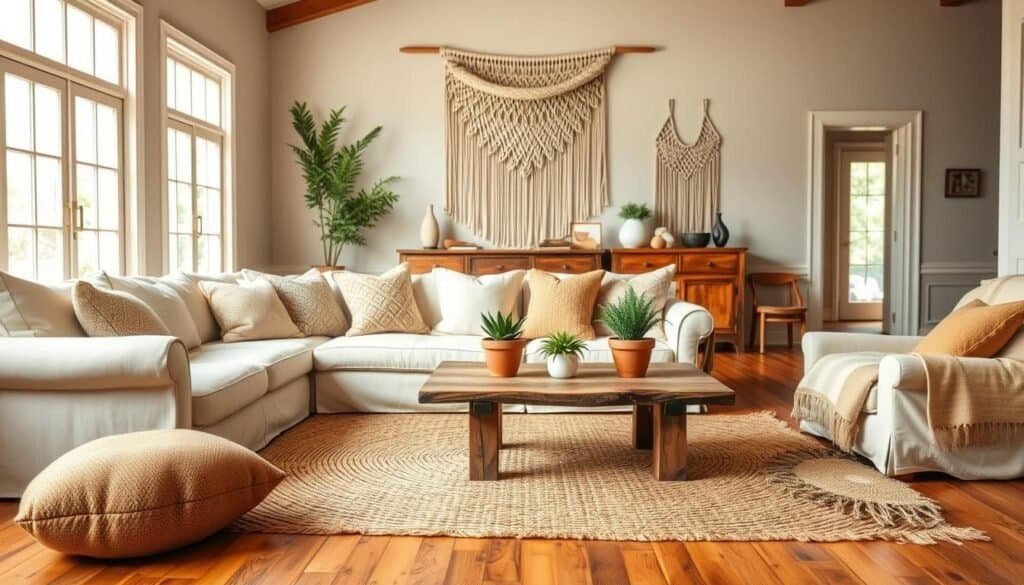
A great farmhouse boho space has vintage items, lush plants, and unique art. It’s all about balancing farmhouse’s ruggedness with boho’s whimsy.
This mix makes a relaxed living area that’s inviting and real. It’s ideal for chilling out with loved ones.
Conclusion: Embracing Imperfection in Your Calm Living Space
Creating a calm living space is more than just looks. It’s about making a place that feels real and lived-in. Accepting imperfections is essential for this cozy design.
A calm space isn’t just about being minimal or perfect. It’s about feeling peaceful and welcoming. Using natural textures and soft colors can help achieve this. The beauty of a lived-in room is in its imperfections, telling your story.
When designing your living room, it’s okay to leave things undone or imperfect. This approach makes your space feel more yours. It creates a cozy, inviting atmosphere for relaxation and connection.