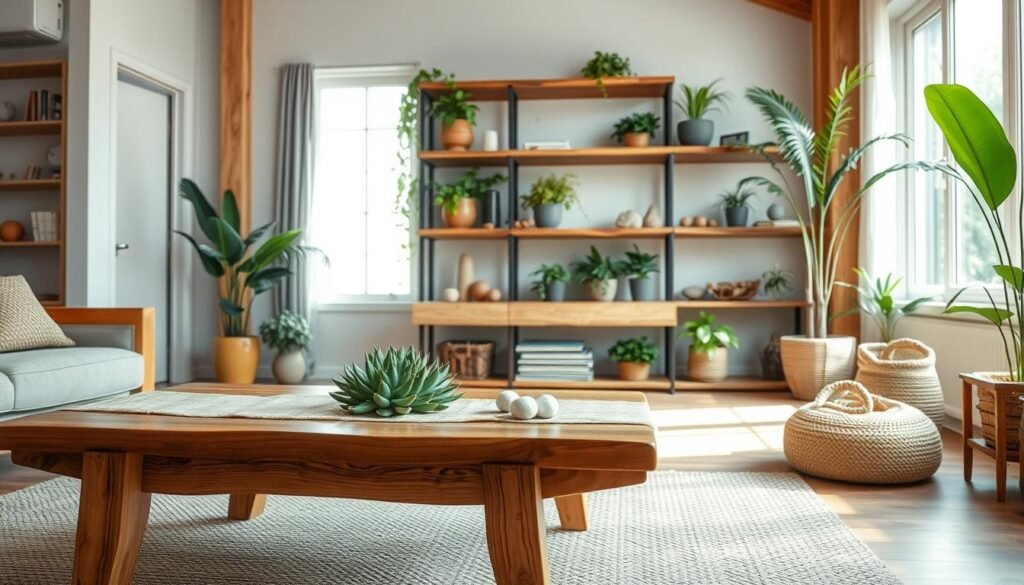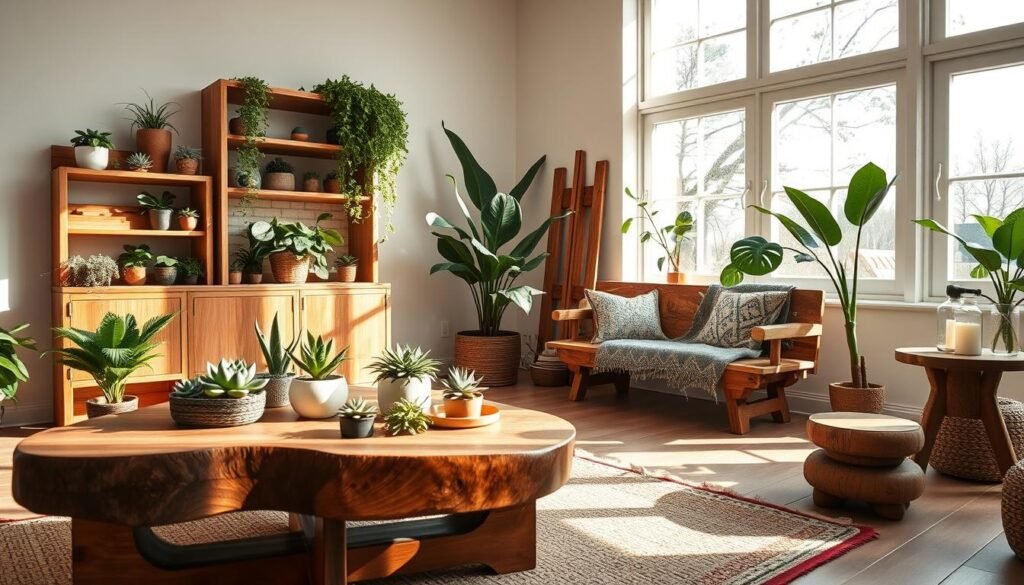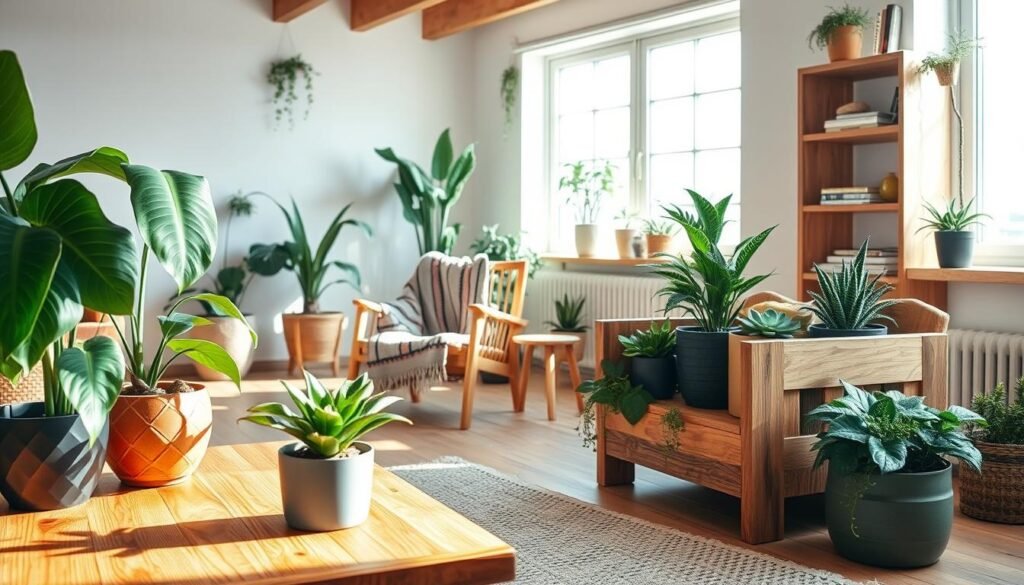
Many homeowners want their homes to feel warm and calming. One great way to do this is by using biophilic design. This style brings the outdoors into your home, making it feel more welcoming and connected to nature.
Adding indoor plants and nature-inspired design can turn your home into a peaceful retreat. It makes your home look better and feel healthier and more relaxing.
Exploring how to bring nature into our homes shows its power. It can change how we live and connect with our environment.
The Science Behind Nature’s Impact on Our Well-being
Studies show that being in nature lowers stress and boosts mood. Environmental psychology research finds that nature scenes calm us. They help reduce anxiety and depression symptoms.
Adding green spaces and sustainable interiors to our homes and offices is science-backed. Plants and natural materials improve air and reduce noise. They also make us feel calmer, leading to a healthier environment.
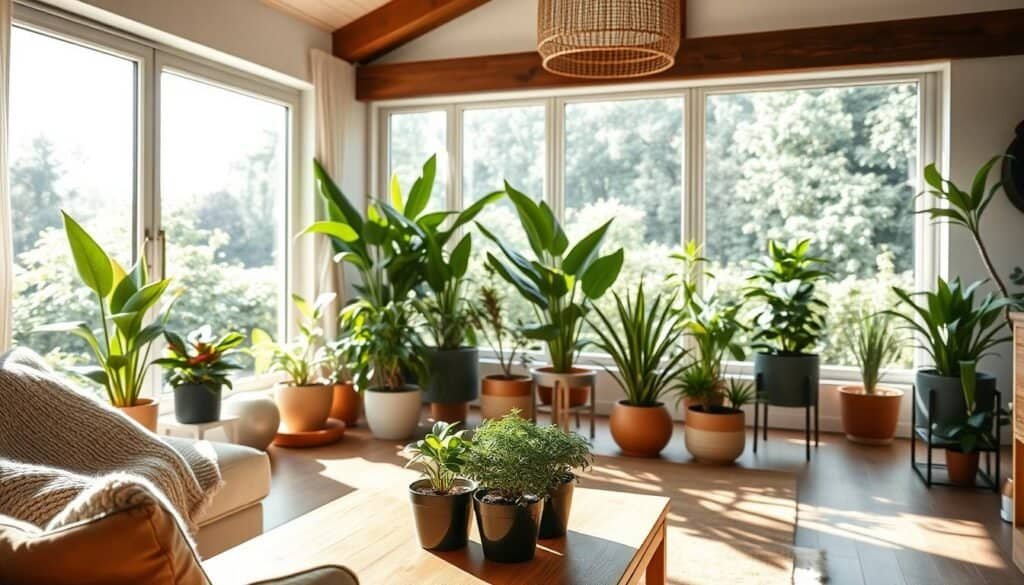
Natural light greatly affects our well-being. It improves mood, reduces tiredness, and lowers depression risk. Architects and designers now aim to bring in more natural light through bigger windows and skylights.
Using earthy tones in design also helps create a calming atmosphere. These tones, from soft greens to warm browns, are soothing and pleasing to the eye.
For more ideas on refreshing your space with nature-inspired accents, visit Instantly Refresh a Room with Nature-Inspired. It’s a great resource for turning your living space into a well-being haven.
Bring Nature In: A Complete Guide
Creating a natural feel in your home is more than just adding plants. It’s about making a space that feels connected to the outdoors. This guide will show you how to bring nature into your home design.
Indoor Plants Decor is a good place to start. The right plants can make your home look better, clean the air, and boost your mood. Choose easy-to-care-for plants like succulents or air plants for a stress-free experience.
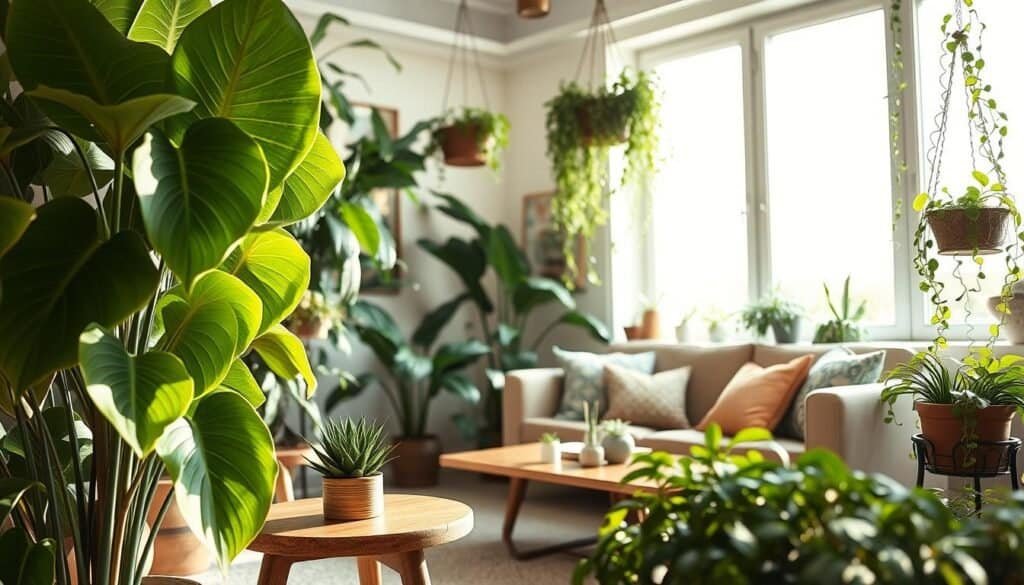
Adding natural materials to your decor also helps. Wood, stone, and bamboo can warm up your space and add texture.
For a unified look, pair home plants indoor with earthy colors. Green, brown, and beige can make your home feel calm and connected to nature.
Enhance your house plants decor with the right containers. Use terracotta or woven baskets to match your plants and add to the natural feel.
By following this guide, you can blend nature and your indoor space. Your home will feel more welcoming and peaceful.
Indoor Plants: The Living Heart of Natural Design
Adding indoor plants to your home makes it more beautiful and healthy. Green plants clean the air, lower stress, and improve mood. They are key to modern home decor.
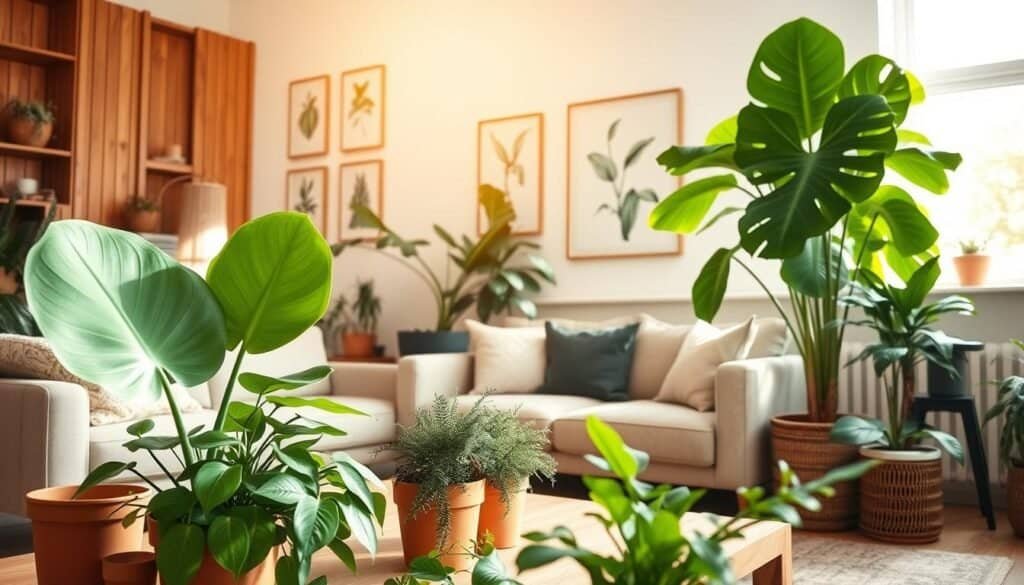
Beginners should start with easy-to-care-for plants. Monstera and Philodendron are great because they need little care. Pothos, or the “money plant,” also does well in different light.
- Monstera: Its unique leaves bring a tropical vibe to any room.
- Philodendron: With heart-shaped leaves, it’s versatile and can climb or trail.
- Pothos: It’s known for cleaning the air and grows well in low light.
Statement Plants: Monstera Albo, Fiddle Leaf Fig, and Adenium
For a bold look, choose Monstera Albo, Fiddle Leaf Fig, and Adenium. These plants are eye-catching and add elegance to any room.
- Monstera Albo: This variegated Monstera has leaves with white patches, making it stand out.
- Fiddle Leaf Fig: Its large, violin-shaped leaves are perfect for modern homes.
- Adenium: With its thick trunk and vibrant flowers, it brings drama to indoor gardens.
Choosing the right indoor plants can make your home beautiful and healthy. Whether you pick easy plants or statement pieces, adding green plants makes your home more natural and welcoming.
Creating an Effective Plant Care System
A well-planned plant care schedule is key to a healthy indoor garden. To keep your plants thriving, it’s important to know their specific needs. Then, create a routine that meets those needs.
Understanding Your Plants’ Needs is the first step in developing an effective care system. Different plants need different amounts of water, light, and nutrients. Researching each plant’s needs helps you tailor your care schedule.
Creating a houseplant watering schedule is essential. Overwatering can cause root rot and other problems. By scheduling watering based on your plants’ needs, you can avoid these issues. An indoor plant watering chart helps keep track of when each plant needs water.
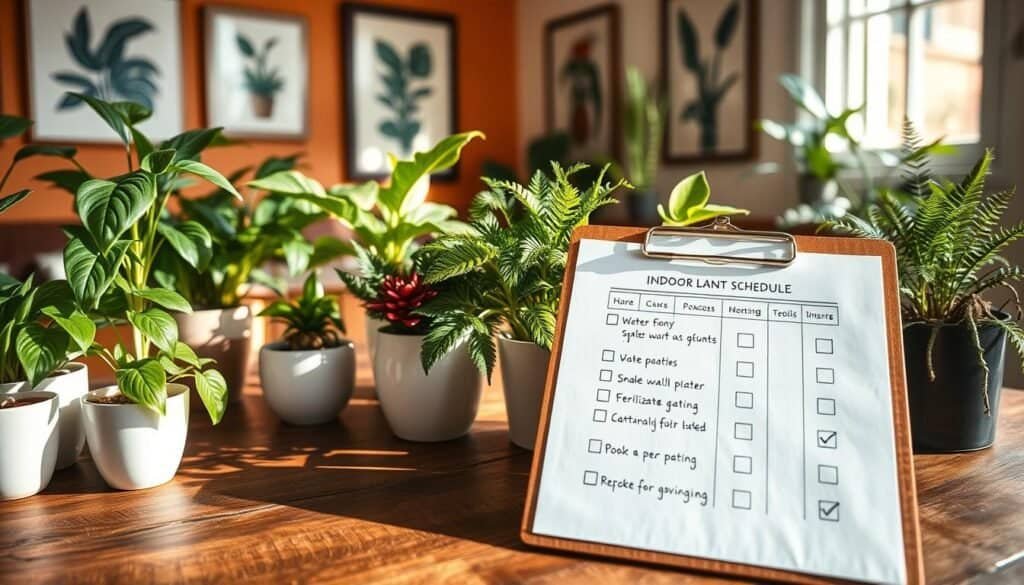
Keeping a healthy environment for your plants also means ensuring they get the right light and temperature. Regularly check your plants for signs of stress or disease.
By following a detailed plant care schedule and paying attention to your plants’ needs, you can enjoy a lush, vibrant indoor garden. This garden will make your living space more beautiful and inviting.
For a more organized approach, consider a routine that includes regular tasks like fertilizing, pruning, and repotting. These tasks keep your plants healthy and add to the beauty of your indoor garden.
Natural Light: Maximizing the Sun’s Presence
Using natural light can change your home, making it feel bigger and more welcoming. It’s not just good-looking; it also helps your health and the plants indoors.
Maximizing natural light means a few things. You can use mirrors to bounce light into dark spots. Light-colored curtains let more sunlight in. And placing plants where they get lots of light is key.
For living room plants decor and home plants indoor decor, put plants near windows. Or use sheer curtains to let more light in. This helps the plants and makes your living room brighter and more welcoming.
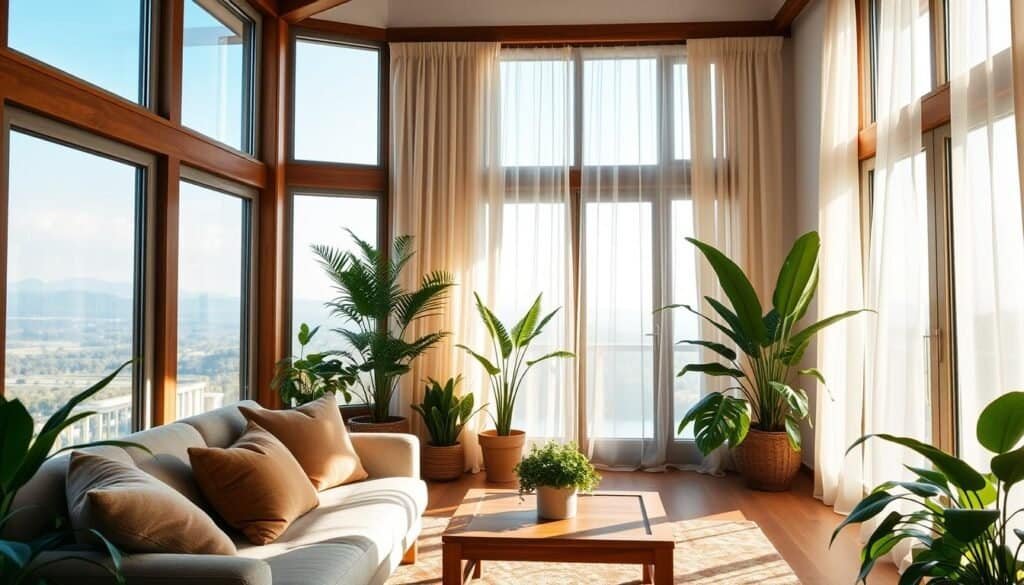
In the bathroom, bathroom decor ideas that use natural light make it feel bigger and calmer. Skylights or big windows can really improve the feel of the space.
When picking house plant ideas, think about the light in different parts of your home. Plants need the right light to grow well. This makes your home healthier for everyone.
By using natural light well, you can make your home look better and be better for your plants.
Natural Materials and Earthy Tones in Home Design
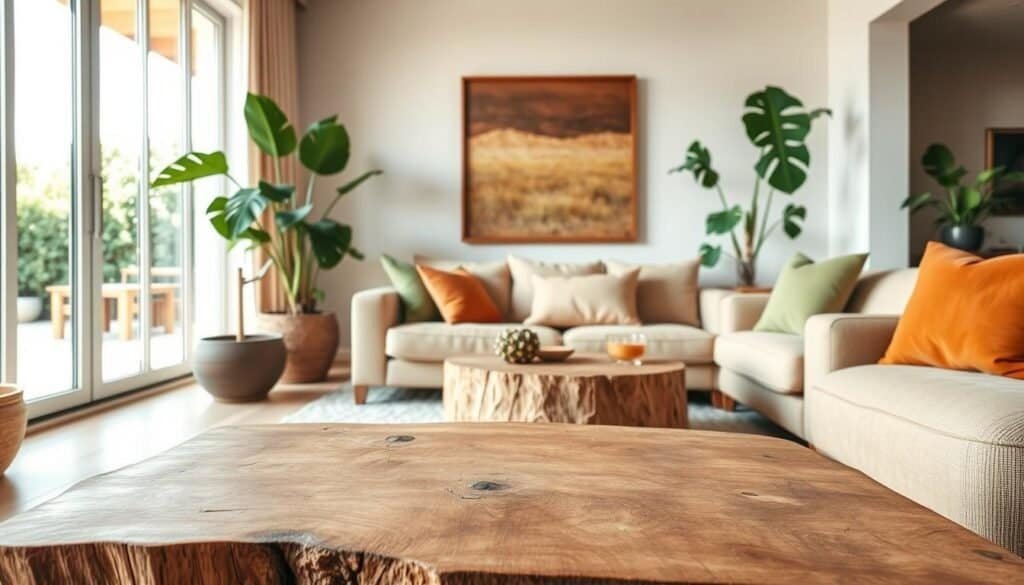
Earthy tones and natural materials are key for sustainable interiors that boost well-being. They help create spaces that feel like they’re part of nature. This is done by using wood, stone, and colors that remind us of the outdoors.
Wood is a great way to add nature to your home. A wood accent wall with plants or a modern wooden wall with plants brings warmth and life to any room. For more ideas on mixing natural elements with plants, see this article on pairing natural plants with wood.
- They make a space cozy and welcoming.
- They help us feel calm and well.
- They add beauty with their natural textures and colors.
To use these elements well, follow these tips:
- Begin with a base that’s neutral and has earthy tones.
- Add natural materials like wood and stone with accent pieces or walls.
- Pair natural elements with modern decor to keep things balanced.
By choosing natural materials and earthy tones, you can make a home that’s both modern and natural.
Room-by-Room Guide to Plant Integration
Bringing nature indoors is easier than you think. The right plant in the right room makes a big difference. Different rooms have different conditions, and choosing the right plants can make all the difference in creating a harmonious and inviting space.
Living Room Plants are often the centerpiece of home decor. For a sunny living room, consider plants like succulents or cacti that thrive in bright light. For rooms with less natural light, plants like the Snake Plant or ZZ Plant are ideal. They not only purify the air but also add a touch of greenery to your living room plants decor.
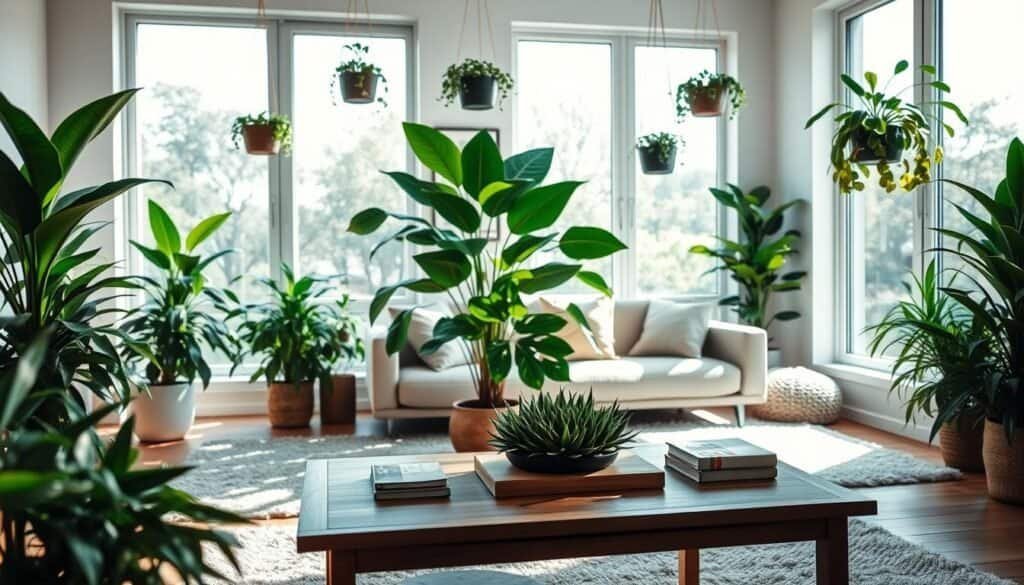
When it comes to Home Plants Indoor Decor, the kitchen is another area where plants can flourish. Herbs like basil, mint, and rosemary can be grown on a windowsill. They add freshness to your cooking and a pleasant aroma to your kitchen.
In the Bathroom, plants that thrive in humid conditions, such as ferns or orchids, can turn this space into a relaxing oasis. Bathroom decor can greatly benefit from the presence of greenery, making the space feel more spa-like.
For House Plant Ideas that work well in bedrooms, consider plants that promote relaxation and improve sleep quality, such as lavender or peace lilies. These plants not only beautify the space but also contribute to a restful environment.
Indoor Plant Shelving Ideas can also enhance the visual appeal of your plants. Using tiered shelving or hanging planters can add depth and interest to your indoor garden, making it a focal point in any room.
- Choose plants that fit the specific lighting conditions of each room.
- Consider the humidity levels when selecting plants for bathrooms or kitchens.
- Use shelving and hanging planters to maximize space and add visual interest.
By thoughtfully integrating plants into each room, you can enhance your home’s decor. This creates a more welcoming and healthy living environment.
Creative Display Ideas for Your Indoor Garden
Displaying your indoor plants in a creative way adds beauty and personality to your home. There are many ways to show off your plants, making it easy to match your home decor and style.
Using shelves made for indoor plants is a popular choice. Indoor plants shelf ideas include modern floating shelves and traditional wooden or metal units. These shelves not only hold your plants but also enhance your room’s design.
Setting up a dedicated plant corner is another great idea. Indoor plant corner ideas involve placing plants of different sizes and textures together. This creates a lush, vibrant display. You can use plant stands or tiered planters to make the most of space and look.
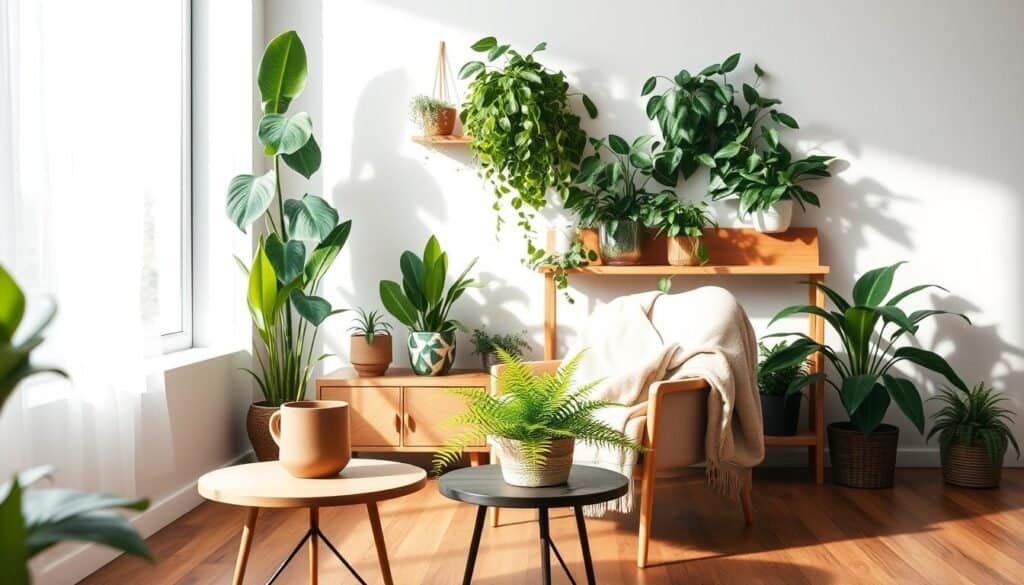
- Hanging plants from the ceiling to create a sense of floating greenery.
- Using plant stands of different heights to add depth to your plant display.
- Incorporating plants into your home decor by placing them on side tables, mantles, or windowsills.
For more specific ideas, plant stand ideas indoor include minimalist metal stands and decorative wooden or ceramic planters. These planters can also serve as decorative pieces.
By using these creative display ideas, you can make your indoor garden a stunning centerpiece in your home. It will enhance both the look and feel of your space.
Beyond Plants: Other Ways to Incorporate Natural Elements
Natural elements can change your home in many ways, beyond just plants. Plants are a great start, but adding other natural elements can make your space feel better and more sustainable.
Using natural materials in your home design is a smart move. Materials like reclaimed wood, bamboo, and stone warm up your space and help it last longer. For example, reclaimed wood can make your floors, walls, or furniture look unique and full of history.
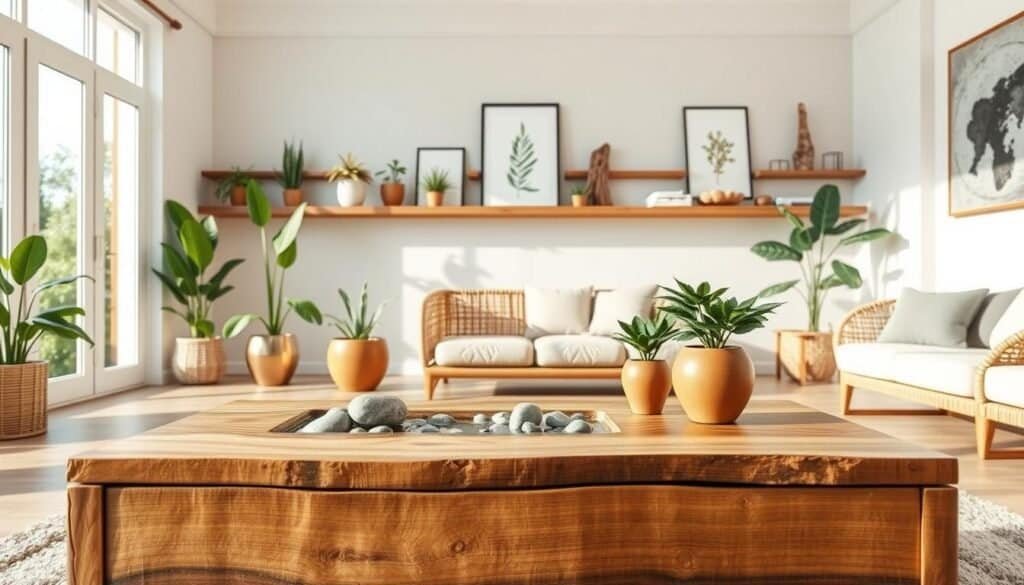
Water features are another great way to bring nature inside. The sound of water can make your home feel peaceful. You can have a small fountain or a big aquarium, adding movement and life to your decor.
Nature-inspired art is also a fantastic choice. It can include paintings, sculptures, or prints that show off nature’s beauty. This art can tie your home’s design to the natural world, creating a beautiful connection.
Here are some ideas to get you started:
- Use natural fibers like wool or jute for your rugs and upholstery.
- Incorporate natural stone or brick into your walls or fireplace.
- Choose furniture made from sustainable materials.
- Add a statement piece of nature-inspired art.
By adding these natural elements, you can make your home feel more connected to nature. This improves both how your home looks and how sustainable it is.
Conclusion: Transforming Your Space with the Power of Nature
Incorporating nature into our homes is more than a trend. It’s a way to improve our well-being and make our spaces sustainable. By using biophilic design, we can turn our homes into peaceful retreats.
Indoor plants are a great starting point. They clean the air and add beauty to our homes. By adding natural elements and lots of light, we can make our homes feel like the outdoors.
Ready to make your home more natural? Use the room-by-room guide and creative garden ideas. With a bit of creativity, you can make your home a peaceful and sustainable place.