Woodworking is a calming hobby that lets you create something special. It’s a great way to relax and show your creativity. Crafting with wood can be very therapeutic.
Starting with small wood projects or DIY wood crafting is great for beginners. These projects help you learn new skills. They also make beautiful wood accents or wooden crafts for home that can make your space unique.
For more ideas, check out simple DIY wood projects perfect for beginners.
The Therapeutic Benefits of Working with Wood
Working with wood can greatly reduce stress and improve mental health. It’s a calming activity that lets people express their creativity. This hands-on approach can be very fulfilling.
Many see woodworking as a way to relieve stress. It offers a break from everyday worries. The act of creating something from wood can be very relaxing, especially for your bedroom. Studies show it can lower stress hormones and heart rate.
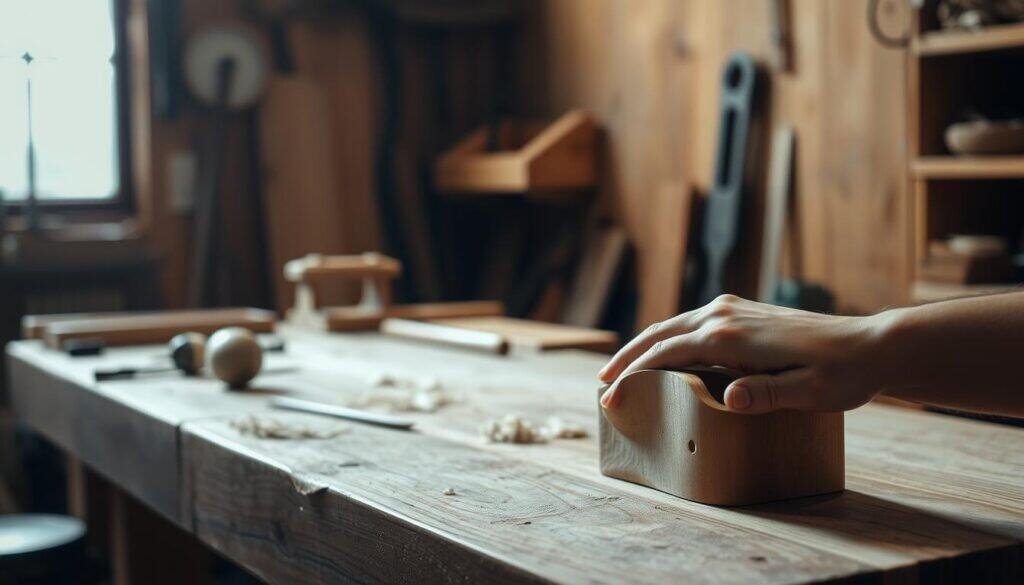
If you’re interested in woodworking’s benefits, there are many resources. You can learn more about stress relief and creativity on The Sawdust Man. It’s perfect for those starting with DIY home crafts and wood art ideas.
Woodworking offers many benefits:
- Reduced stress and anxiety
- Improved focus and concentration
- Enhanced creativity
- A sense of accomplishment and pride in one’s work
By adding woodworking to your hobbies, you can enjoy these benefits. It’s a rewarding way to craft with wood and make something useful and meaningful.
Essential Tools for Beginner Wood Carvers
Beginner wood carvers need the right tools and safety gear. The right tools improve work quality and keep you safe.
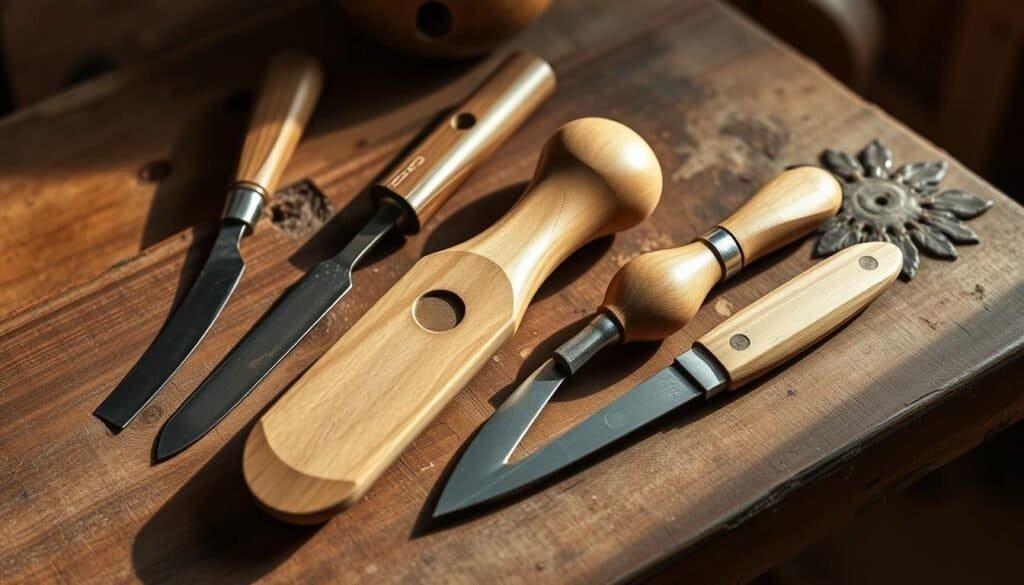
The basic toolkit includes gouges, chisels, and mallets. Gouges help remove small wood pieces and add details. Chisels are good for many tasks. A mallet is key for hitting chisels and gouges without damage.
Safety is key in beginner woodworking. You’ll need safety glasses, hearing protection, and a dust mask. Safety glasses protect your eyes from wood chips. Hearing protection keeps your ears safe from loud tools. A dust mask stops you from breathing in wood dust.
- Safety glasses
- Hearing protection (earplugs or earmuffs)
- Dust mask
- Work gloves
Learning woodworking techniques and using tools right is important. Beginners should take classes or watch tutorials to learn.
Getting the right wood carving tools and safety equipment is essential. It makes woodworking safe and fun. This foundation lets beginners tackle more DIY wood projects furniture and get better over time.
Types of Wood Best Suited for Beginner Projects
Choosing the right wood is key when you start woodworking. There are two main types: softwoods and hardwoods. Each has its own traits and uses.
Softwoods, like pine and cedar, are softer and easier to work with. They’re perfect for beginners. They’re also less expensive and great for many projects, including decorations and furniture.
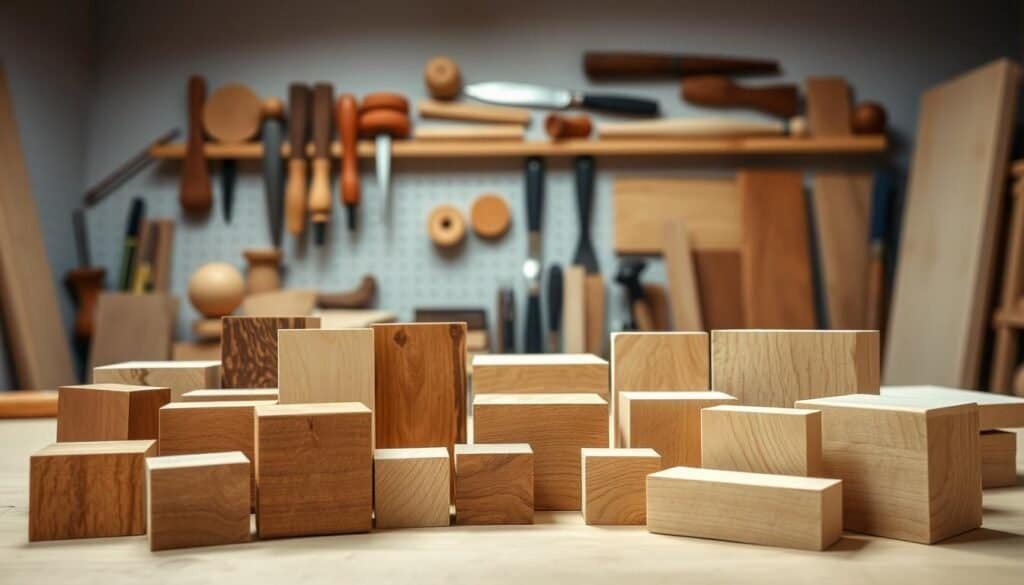
Hardwoods, such as oak and maple, are denser and harder to work with. But they look beautiful and last long. Beginners can try hardwoods, but start with simpler projects.
Knowing about the different types of wood helps beginners pick the right one for their projects. This ensures a fun and successful woodworking journey.
Need a Gentle Project Today? Try Carving or Shaping a Little Wood Object
Working with small wood pieces is a great way to start woodworking. It’s a gentle project that lets you make something beautiful, even if you’re new.
For beginners, starting with small projects is best. You can try simple tasks like wood shaping or making small decorations. These projects help you learn and feel proud of what you’ve done.
Here are some ideas for small wood projects:
- Crafting wooden coasters
- Creating small wooden figurines
- Making decorative wooden boxes
- Shaping wooden kitchen utensils
For more ideas, check out weekend woodworking projects for beginners. It has lots of gentle projects perfect for beginners.
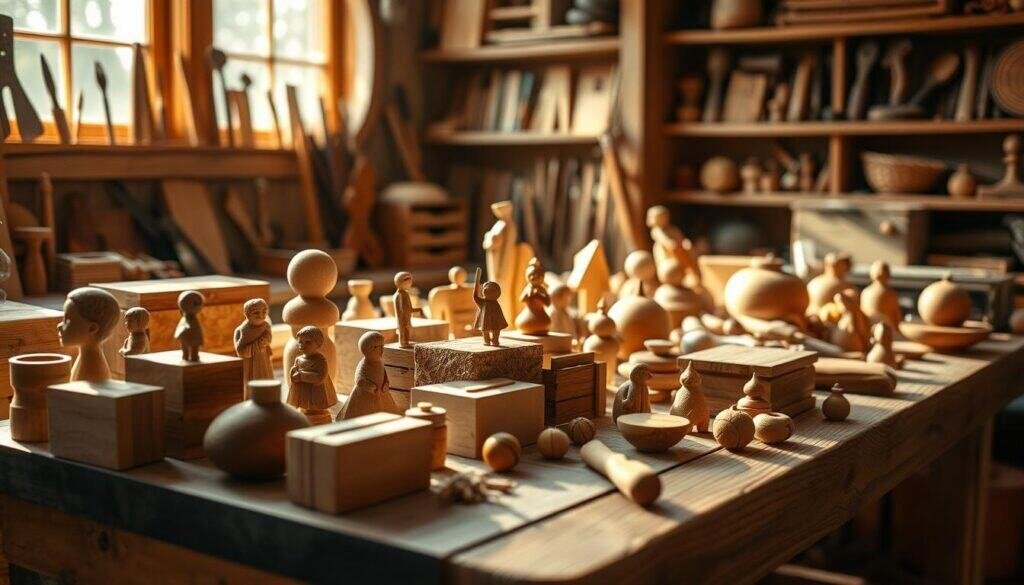
Working with wood can be very calming. It lets you relax while making something with your hands. It’s a great way to enjoy creating something from raw wood.
As you get better, you can try harder projects. But starting with small, easy woodworking tasks is a good way to build your confidence and skills.
Simple Wooden Spoons and Kitchen Utensils
Wooden spoons and kitchen utensils make your kitchen warm and cozy. They are also very useful. Making them is a great way to improve your whittling skills.
To begin, you’ll need a few basic tools. You’ll need a carving knife, a gouge, and wood for whittling. Choose wood that’s easy on your tools and safe for the kitchen, like birch or maple.
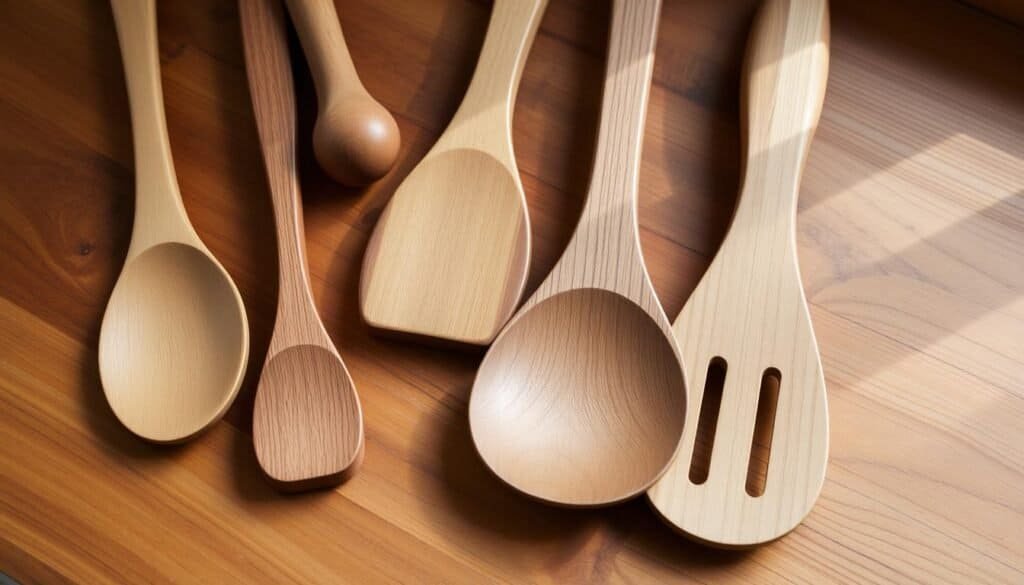
- Select a suitable piece of wood and rough out the shape of your utensil.
- Use a carving knife to refine the shape and smooth out the surface.
- Add any decorative elements, such as intricacies or patterns.
- Apply a food-safe finish to protect the wood and make it look better.
Some popular wooden kitchen utensils to make include:
- Wooden spoons
- Spatulas
- Cutting boards
By following these steps and practicing your whittling, you can make beautiful and useful wooden kitchen utensils. They will add a personal touch to your kitchen.
Decorative Wooden Trinket Dishes and Bowls
Decorative wooden items like trinket dishes and bowls are both useful and add charm. They can hold small things like jewelry, keys, or coins. This keeps your space tidy and adds natural beauty.
Making trinket dishes and bowls means working with various woods. Choosing the right wood is key. Cherry and walnut are favorites for their rich colors and lasting quality.
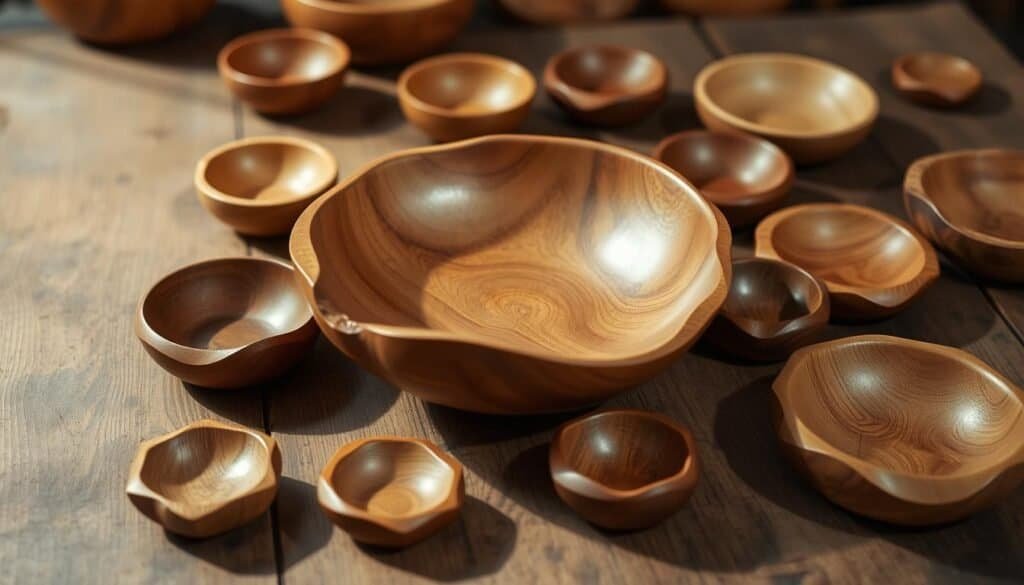
You’ll need basic tools like a lathe, chisels, and sandpaper to start. First, turn the wood on the lathe to shape it. Then, sand it to make the surface smooth. A finish like oil or wax adds beauty and protection.
Popular designs range from simple to complex. You can also add personal touches by engraving or carving. This makes each piece special.
Creating decorative wooden trinket dishes and bowls is rewarding. You make beautiful items that are also useful. It’s a great way to express your creativity and hone your woodworking skills.
Whittling Animal Figures and Figurines
Whittling animal figures is a fun hobby that mixes creativity with woodwork. It lets people make cute and detailed figurines. These can be decorations or special gifts.
To begin, you need a sharp knife and wood for carving. Choosing the right wood is key. It affects how easy it is to carve and the figurine’s look.
There are many ways to whittle animal figures. You can use different knife cuts for texture and detail. For instance, a smooth cut works for the body, and a textured cut for the fur.
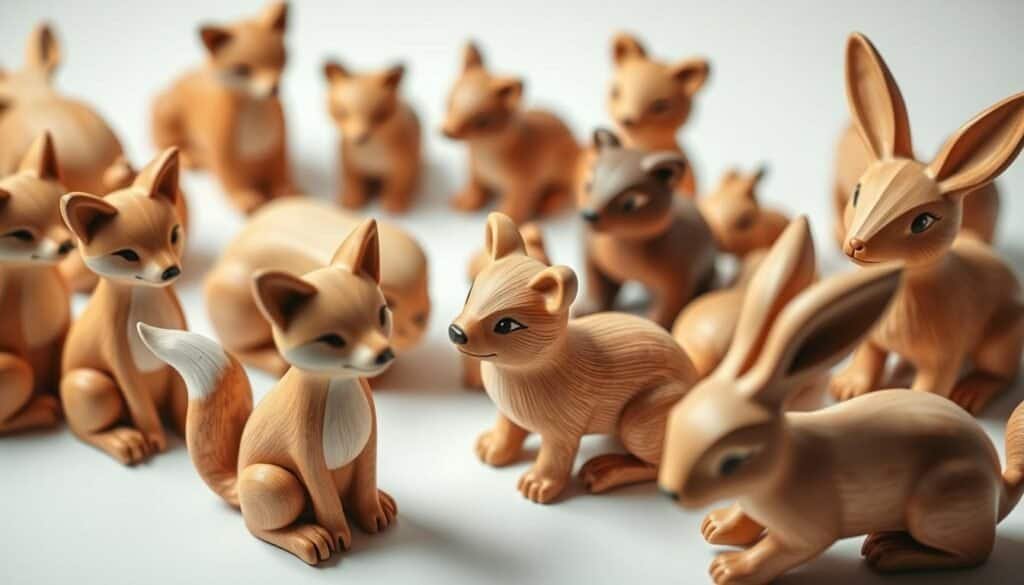
You can make birds, rabbits, and deer through whittling. Each figurine can have its own special touches. This makes every piece unique.
With practice, you can make stunning animal figures. They show off your skill and creativity.
Wooden Jewelry and Accessories
With simple tools and imagination, you can make unique wooden accessories. Wooden jewelry is now trendy, and making it yourself is a fun DIY wood crafting project.
You’ll need basic tools like a wood carving knife, sandpaper, and a drill. Choose from woods like cedar, pine, or walnut for different looks. Create wood art that shows your style or interests.
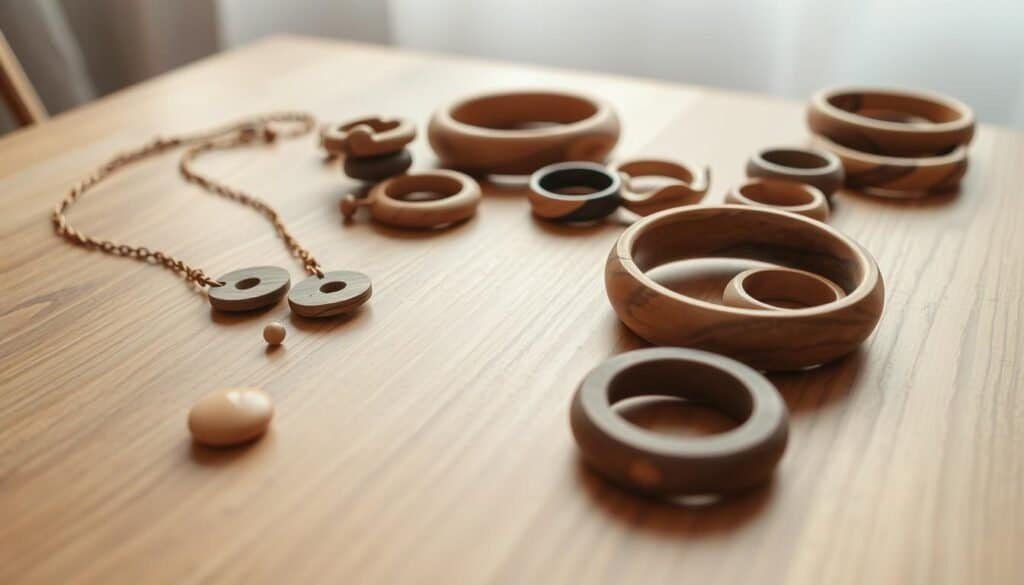
- Pendants made from intricately carved wooden shapes
- Earrings crafted from small wooden beads or slices
- Bracelets featuring wooden charms or patterns
These pieces are not just accessories but also great gifts. By doing DIY wood crafting, you create something beautiful and learn a new skill. It’s a fun way to express yourself, whether you’re experienced or new to crafting.
Practical Home Items: Key Holders and Small Shelves
Adding handmade charm to your home is easy with wooden key holders and small shelves. These practical home items make your space more functional and personal.
Making a key holder is a great DIY wood project for beginners. You can use reclaimed wood or a simple plank. Add a small hook, and you have a spot to hang your keys by the door.
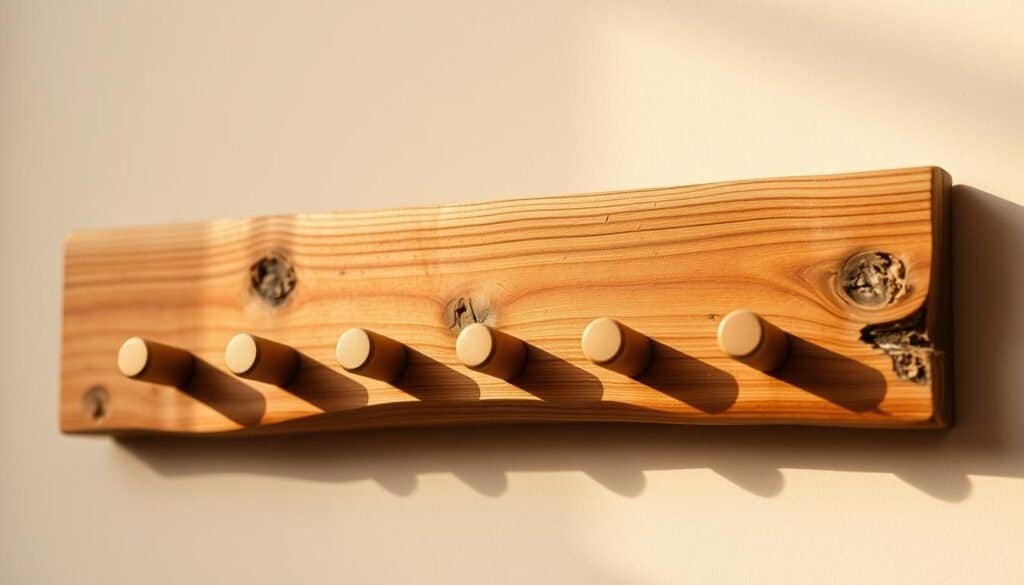
Creating small shelves is also a fun woodworking for beginners project. They’re perfect for showing off decorative items or storing books and small things. With basic tools and skills, you can make a beautiful, useful piece for your home.
By making these items, you improve your home and your woodworking skills. So, start your next DIY wood project and enjoy making something useful and beautiful.
Rustic Wooden Ornaments and Decorations
Rustic wooden ornaments and decorations add warmth and character to any room. They make your home decor unique, unlike mass-produced items.Creating your own rustic wooden ornaments can be a fun and rewarding DIY project. It lets you customize the look and feel to your liking.
To start, you’ll need basic woodworking tools and wood that fits your rustic theme. Look for reclaimed or distressed wood.Simple designs often work best. They highlight the natural beauty of the wood. You can make ornaments in many shapes, from simple to complex, showing off your creativity.
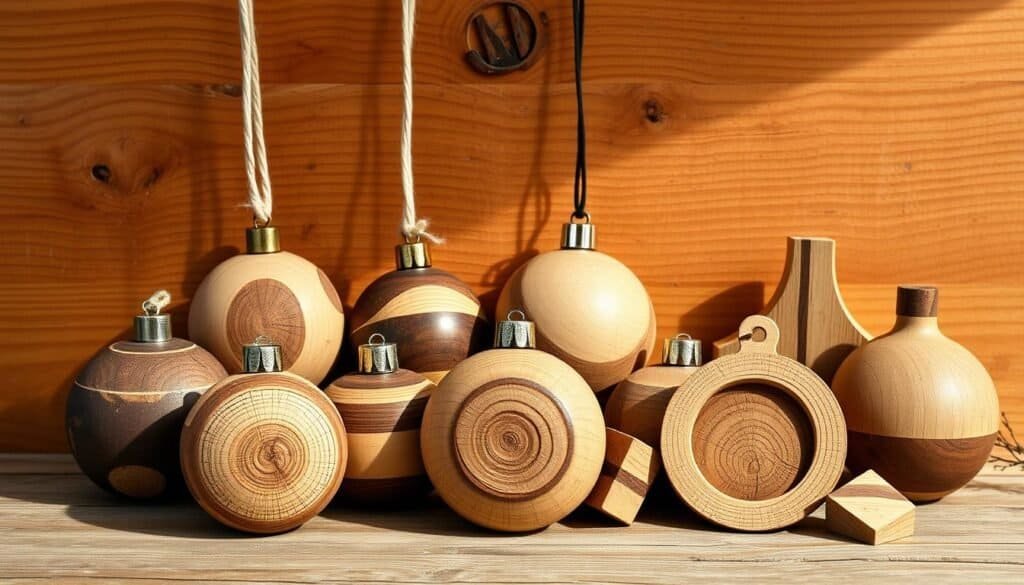
- Create wooden stars or hearts to hang on your walls or use as gift toppers.
- Make decorative wooden coasters that add a rustic touch to your living room.
- Craft a wooden Christmas tree or other seasonal decorations to celebrate the holidays.
By making your own rustic wooden ornaments and decorations, you enhance your home’s look. You also create meaningful, handmade pieces that tell a story. Whether for a special occasion or everyday decor, these wooden ornaments will impress.
Upcycling Wood Scraps into Meaningful Objects
With a little creativity, wood scraps can be turned into meaningful objects that tell a story. Upcycling is not just about reusing old materials; it’s about giving them a new life and purpose.
One of the simplest ways to start upcycling wood scraps is by creating decorative items for your home. For example, you can make a beautiful wooden coat rack or a set of coasters using small pieces of wood. These projects not only reduce waste but also add a personal touch to your living space.
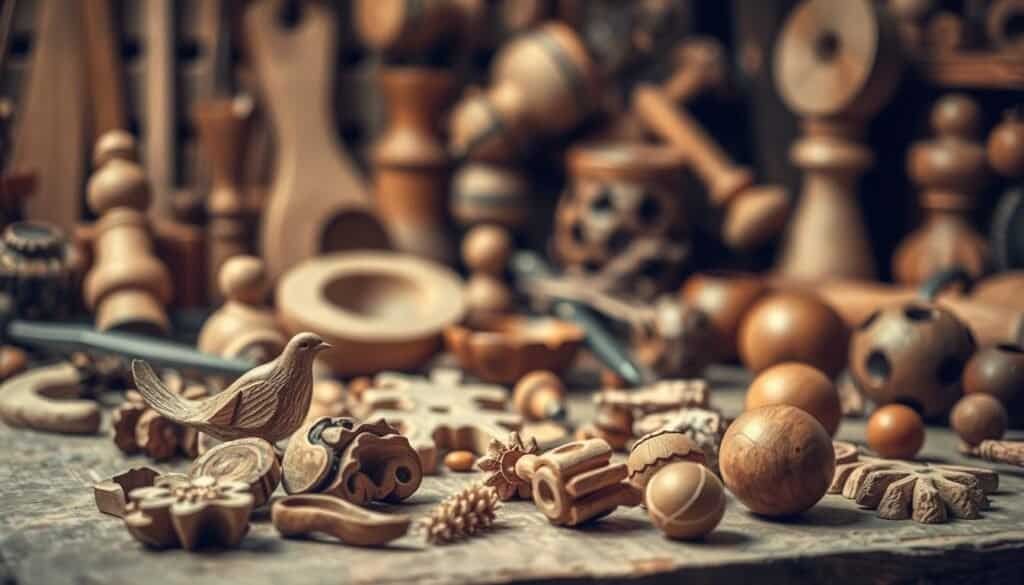
For those looking for more challenging projects, consider crafting DIY wood crafts like wooden picture frames, candle holders, or even a wooden star decoration for your garden. The possibilities are endless, and the process can be very therapeutic.
To get started with scrap wood projects, you’ll need some basic tools like a saw, sandpaper, and a drill. You can then let your imagination run wild, creating unique pieces that reflect your personality and style.
Upcycling wood scraps is a rewarding hobby that combines creativity with sustainability. By giving old wood a new purpose, you’re not only reducing waste but also creating something truly special.
Conclusion: Finding Joy in Simple Woodworking
Simple woodworking projects can be very rewarding. They bring joy when you create something with your own hands. This could be a decorative item or something you use every day.
Working with wood lets you show your creativity and learn a new skill. Starting with projects like wooden spoons or trinket dishes is a great way to begin. It introduces you to the basics of woodworking.
Woodworking is more than just making things. It can also be calming and help reduce stress. As you work on more projects, you’ll feel proud of what you’ve made.
Exploring woodworking can lead to finding a new passion. It doesn’t matter if you’re experienced or just starting. Simple projects offer a chance to enjoy the process and see the benefits.