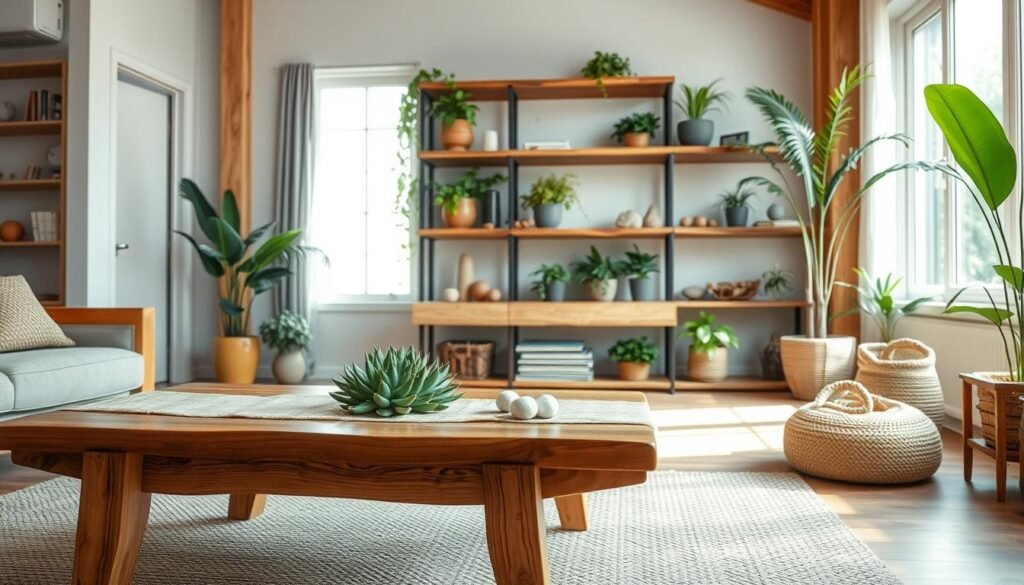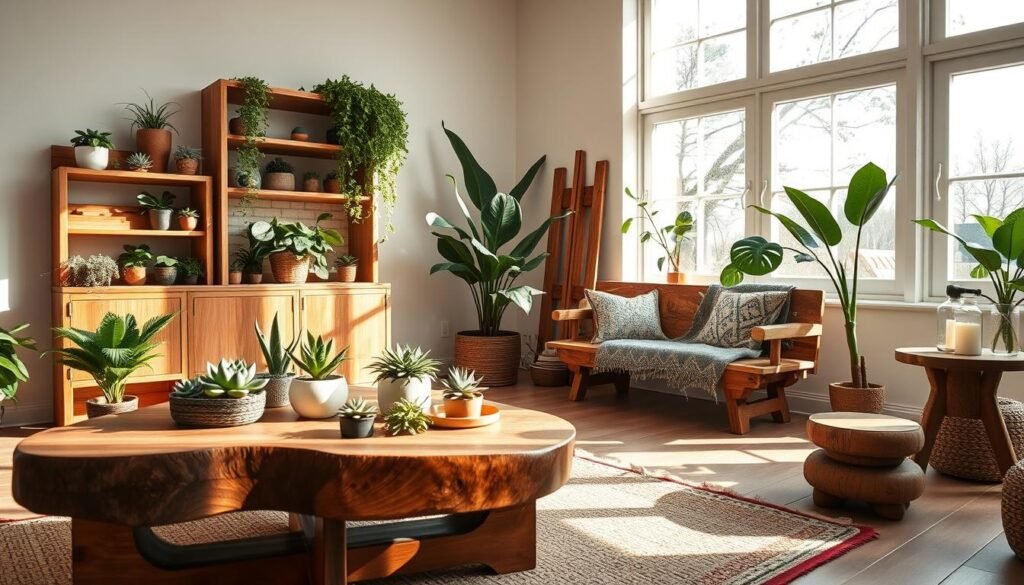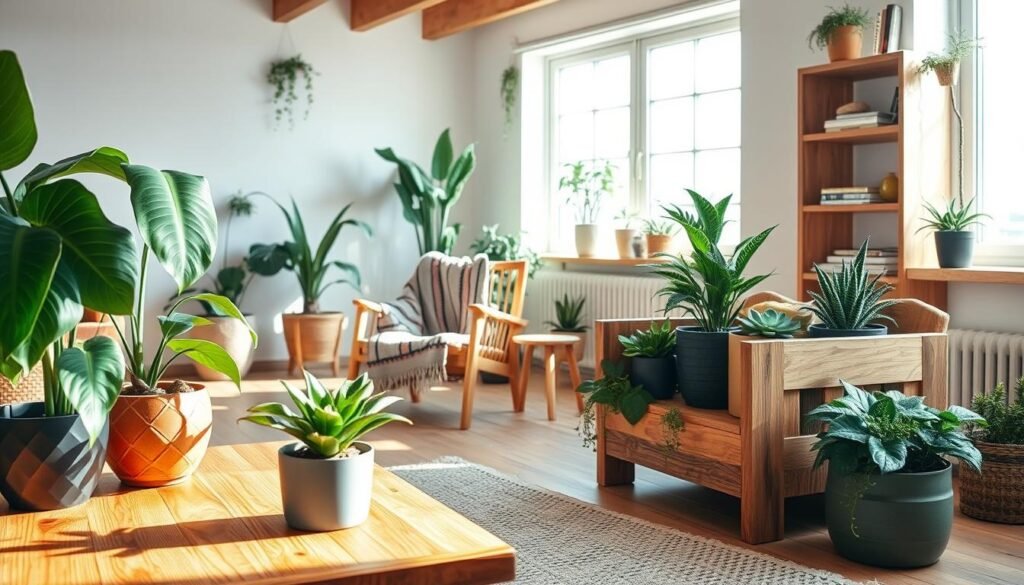
Some homes feel disconnected not because of their layout, but because they’re missing a natural touch. Adding plants to your home decor can change this. It makes your living area feel more cohesive and welcoming.
Plants are more than just decorations; they can turn a house into a home. By adding living room plants, you create a sense of connection and warmth. This makes your home a more enjoyable place to be.
With the right indoor plants decor, any room can become a cozy retreat. It’s about finding the perfect balance between your home decor and the natural beauty of plants.
Understanding the Challenge of Disconnected Space?
In today’s world, the problem of disconnected spaces is getting bigger. These are areas in our homes or offices that feel separate and lonely. This can make us feel isolated.
Many things can cause these spaces, like how a place is built or decorated. For example, a living room that’s not laid out well or a kitchen that’s far from the rest of the house can make us feel disconnected.
The effects of disconnected spaces can be big, affecting our mental and emotional health.
When spaces don’t feel connected, it’s hard to feel like we belong together. This is where using home plants comes in. Plants can help connect different areas.
- Creates a sense of continuity
- Enhances aesthetic appeal
- Contributes to a more cohesive environment
By understanding the problem of disconnected spaces, we can start looking for ways to make our living or work spaces more connected and peaceful.

The Natural Bridge: How Plants Transform Divided Areas
Plants can turn separate spaces into one welcoming area. By adding green plants to your decor, you make different areas feel connected.

Plants are great at making spaces feel like one. For example, using the same house plants aesthetic in rooms can link them together.
- Choose plants with similar textures and colors for a unified look.
- Use plants of different sizes to add depth and interest.
- Think about the lighting in each area and pick plants that do well there.
When it comes to indoor plants decor, there’s a lot to choose from. Plants can fit any decor style, from modern to traditional. In the living room plants decor, a big fern or a group of small plants can be a highlight.
By carefully picking and placing plants, you can link divided areas. This makes your space look better and feel more welcoming.
Selecting the Right Plants for Disconnected Space Solutions
The key to a cohesive space is choosing plants that thrive in various environments. When picking plants for disconnected spaces, think about lighting and how much care they need.
Different areas have their own conditions that affect plant growth. For example, places with little natural light need plants like Chinese Evergreen or Pothos. But, areas with lots of sunlight are perfect for Succulents or Cacti.

It’s also key to think about how much care your plants need. Some, like Snake Plants, need little water and are great for busy people. Others, like Orchids, need more care.
Having an indoor plant care schedule helps you remember to water, prune, and fertilize your plants. By picking the right plants and caring for them, you can make your home feel more connected and peaceful.
- Assess the lighting conditions in your space
- Choose plants that fit your lifestyle and maintenance schedule
- Create a routine for plant care to keep your plants thriving
Living Room Transformation: Plants as Central Design Elements
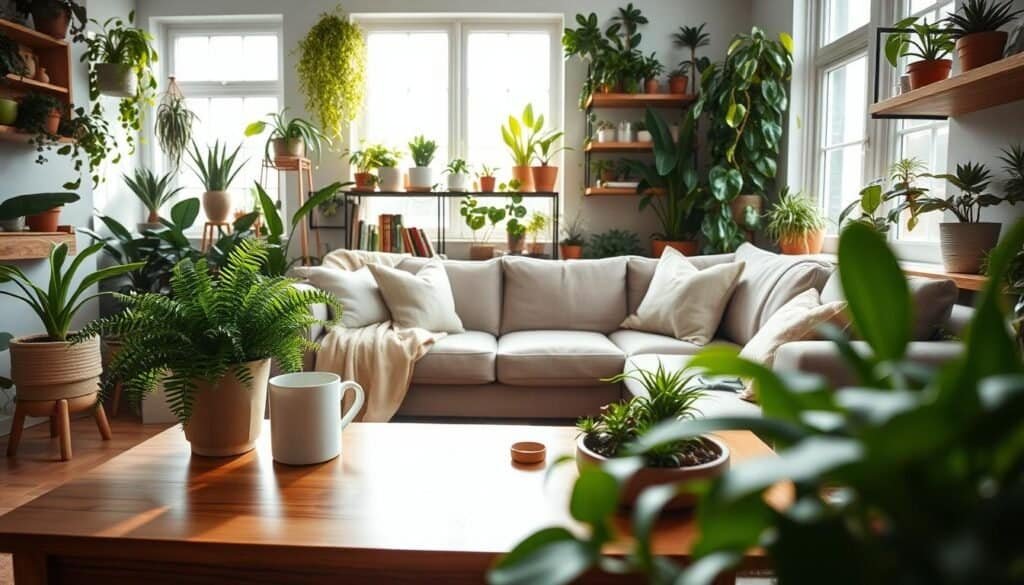
A well-placed plant can be a stunning focal point in your living room. It draws the eye and sparks conversation. By adding plants to your decor, you create a harmonious and inviting space.
Incorporating Plants into Living Room Decor
There are many ways to add plants to your living room design. You can place a large fern or a flowering plant on a coffee table. Or, group several smaller plants on a shelf for a lush display.
Tips for Styling with Plants:
- Choose plants with varying textures and shapes to add depth to your decor.
- Consider the scale of your plants relative to your furniture to maintain balance.
- Use planters that complement your existing decor to create a cohesive look.
For a bold look, use plants with striking foliage or vibrant colors. Try different arrangements, like floor plants or ceiling hangings, for visual interest.
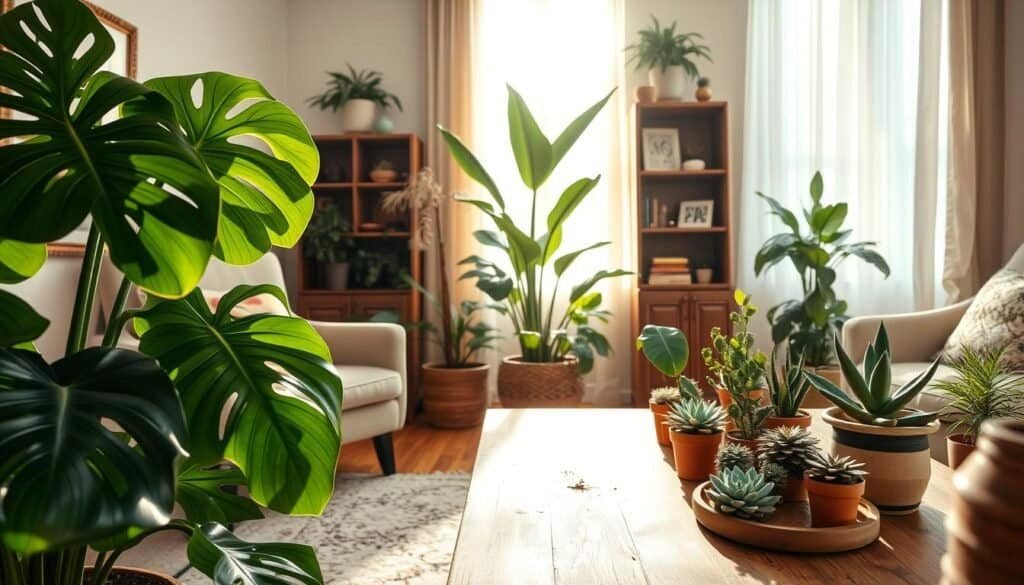
By carefully adding plants to your living room, you enhance its beauty. You also create a welcoming space that connects with nature and brings calm.
Beyond the Living Room: Plant Continuity Throughout the Home
Using plants in more than just the living room can make your home feel welcoming. By adding house plants decor in different rooms, you create a unified look. This makes your living space more beautiful.
Choose a few plants you love and use them in various rooms. For example, put some indoor plants decor in the kitchen, bedroom, and dining area. This creates a consistent look. You can also try different planters and pots to make your home plants indoor displays more interesting.
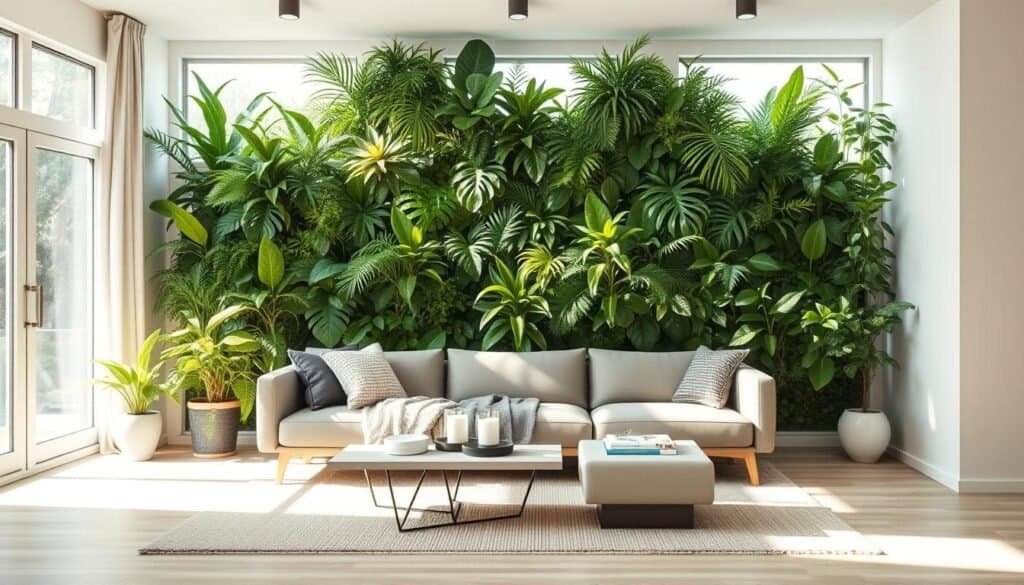
Another idea is to have a plant accent wall in a key area, like the living room. Then, add a smaller version in a hallway or a plant display in a bedroom. This ties the whole house together.
By carefully placing plants in your home, you connect different areas. This creates a peaceful and harmonious living space.
Vertical Solutions: Walls and Shelving That Connect Upward
Using vertical space is a big win for indoor gardens. It lets plants grow and connects areas in a beautiful way. Walls and shelves add height and interest, making rooms feel bigger.
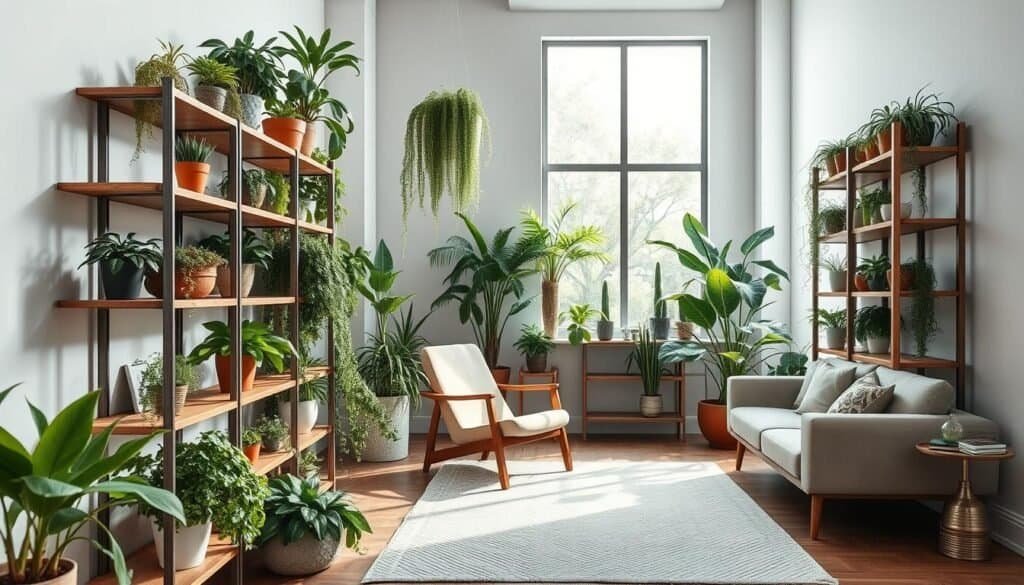
Indoor plant shelving ideas vary from simple shelves to fancy wall systems. They’re not just for plants; they also decorate the room. Think about your plants and the look you want when picking shelves.
Ideas for Vertical Plant Displays
- Layered shelving units for different plant sizes and types
- Accent walls with built-in shelves, a room highlight
- Modular stands that can change as you like
- Hanging planters for a playful touch and space use
An accent wall with plant shelf makes a bold statement. Mix shelving with decor like reclaimed wood or metals for a standout look. Adding indoor plants shelf ideas to your home improves its feel, making it more connected and peaceful.
Corner Strategies: Turning Disconnected Space Design into Opportunities
Using plants in corner spaces can make your home feel more connected and balanced. Often, corners are ignored, but they’re great for adding greenery and beauty to a room.
Indoor plant corner ideas can be simple or complex. A tall plant like a snake plant or peace lily can add height and interest. Or, a group of small plants can make a corner lush and vibrant.
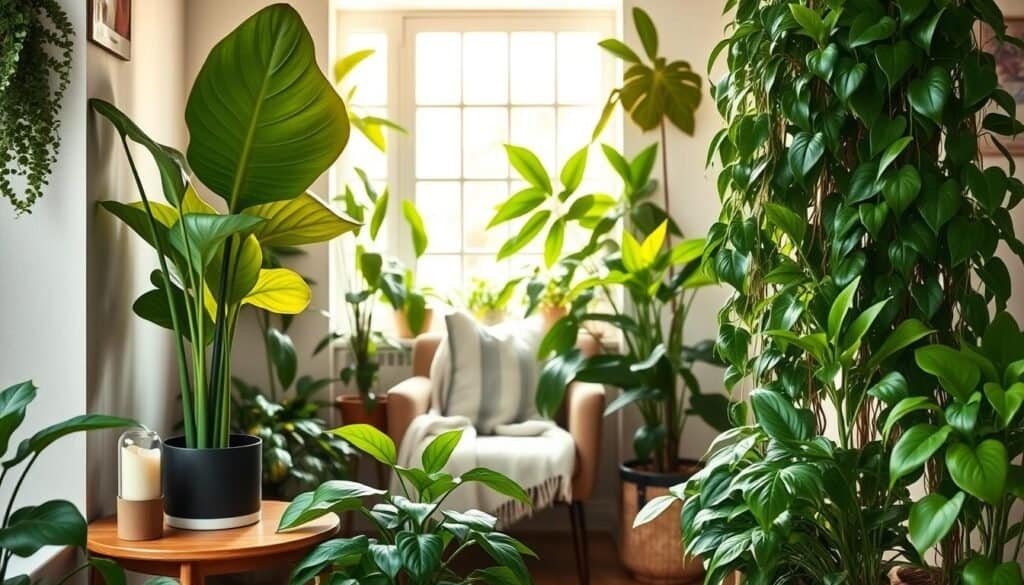
When picking corner indoor plant ideas, think about the corner’s light. Some plants do well in low light, perfect for dim corners. Others need more light, so pick wisely.
To achieve a plant corner aesthetic, match the plants and pots to your room’s style. Choose plants and pots that share textures or colors. This creates a cohesive look.
By using these plant corner decor tips, you can transform a forgotten space into a stunning feature. It will improve your home’s overall feel.
Indoor-Outdoor Harmony: Extending Your Connected Spaces
Creating a smooth transition between indoor and outdoor areas is easy with the right plants. By using plants in both spaces, you make your living area feel bigger and more connected.
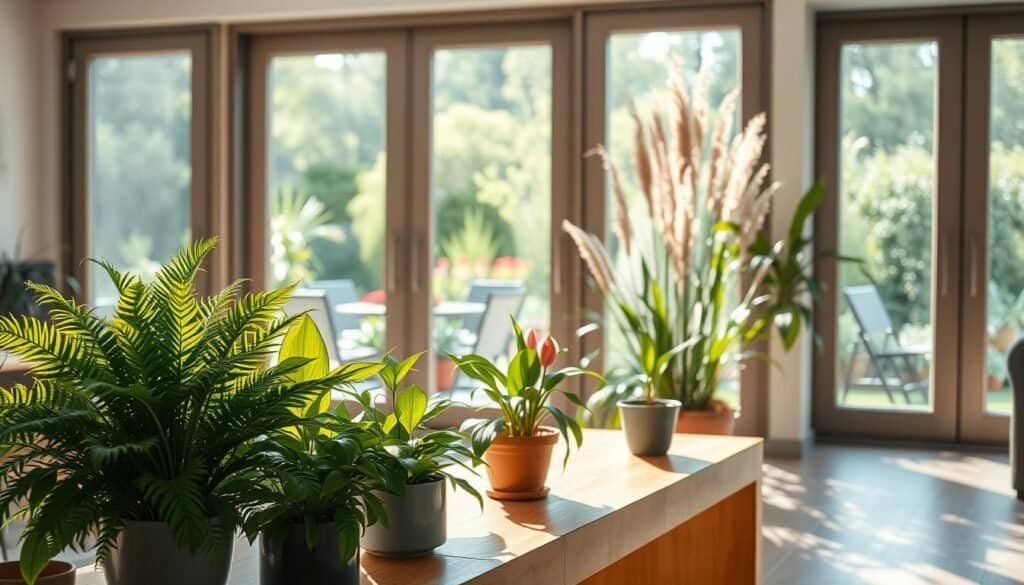
To get indoor-outdoor harmony, pick plants that do well inside and outside. Succulents or ferns work well in different light. Using the same planters indoors and outdoors helps too.
Here are some plant outdoor ideas to think about:
- Large planters with big plants like palm trees or ferns make a bold statement.
- Putting different plants outside your house makes it look lush and inviting.
- Pick plants that fit your climate and don’t need much care.
For a unified look, use gardening pots ideas that match your indoor and outdoor decor. Similar materials, colors, or styles in planters help tie everything together. This makes your indoor and outdoor spaces feel like one, boosting harmony.
By carefully choosing plants for your home garden and arranging them to connect indoors and outdoors, you get a more unified living space. It’s a harmonious and connected place to enjoy.
The Social Dimension: How Plants Bring People Together
Plants in our homes make socializing better for family and friends. They make our spaces welcoming, encouraging us to talk and connect.
Plants are great for starting conversations. For example, a well-kept indoor garden can be a big hit in a living room. It brings people together, sparking stories and plant discussions.
Enhancing Social Connections with Plants
- Plants help create a sense of unity at gatherings.
- They make indoor spaces feel warmer and cozier.
- Sharing plants or caring for them together can bond household members.
To make your home more social, try pairing plants with warm wood. It adds to the cozy feel of your home.
Practical Care for Your Connecting Plants
With the right care, your plants will keep your home connected. Proper plant care is more than just keeping them alive. It’s about creating a space that connects people and spaces.
Plant care includes watering, pruning, and fertilizing. Each task is vital for your plants’ health and beauty. Knowing when to water is key. Too much or too little water can harm your plants.
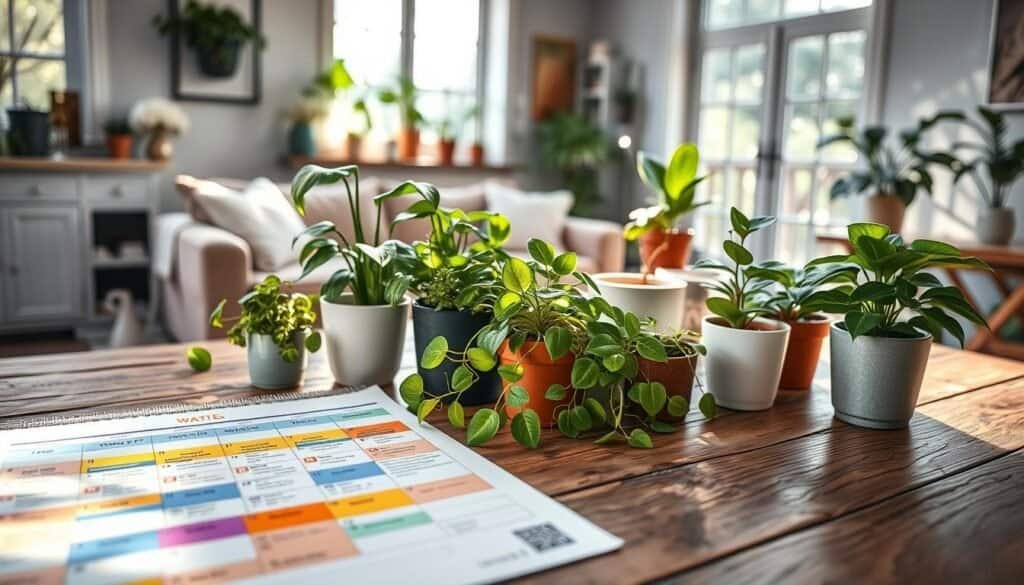
Creating an indoor plant care schedule is a great idea. It should include watering, pruning, and fertilizing tasks. Sticking to your schedule helps prevent problems and ensures your plants get what they need.
- Check the soil moisture before watering to avoid overwatering.
- Prune your plants regularly to maintain their shape and promote healthy growth.
- Fertilize your plants during the growing season to provide essential nutrients.
By following these tips and keeping a consistent houseplant care routine, you’ll enjoy many benefits. A well-cared-for plant beautifies your space and brings a sense of connection and well-being.
Small Space Solutions: Plants for Apartments and Compact Homes
Even in small spaces, plants can bring life and vitality to your home. For those living in apartments or compact homes, picking the right plants is key. It’s important to enhance the look without overwhelming the space.
Compact Plant Options include many species that do well in smaller places. Some great picks are low-maintenance plants like succulents and air plants. They need little care and can fit into tight spots.
For a touch of greenery, think about hanging plants or vertical gardens. These use your ceiling height well.
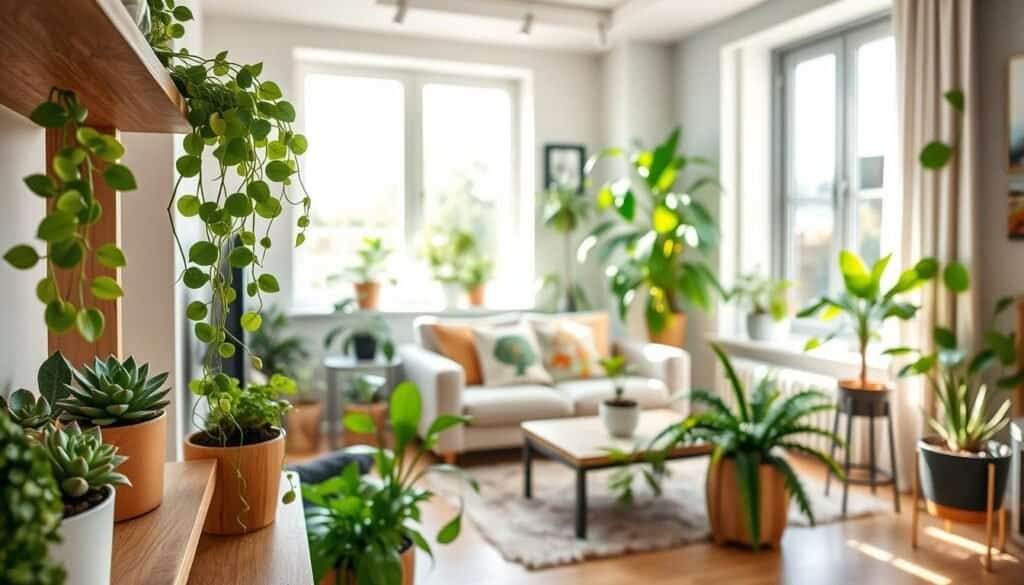
For more decor, check out fresh plant decor ideas. They can blend plants into your home’s design smoothly. Popular ideas include grouping small pots or using tiered planters to save space.
When picking plants for small spaces, think about lighting and air flow. Plants like Chinese Evergreen or Pothos do well in low light. Plants like Snake Plants or ZZ Plant are good for purifying the air.
Conclusion: Growing Connections Through Greenery
Plants have a special way to connect spaces and people. Adding greenery to your home decor makes it more welcoming. This is true, even more so in the living room where plants can be a key part of the design.
Plants are great for changing a room’s feel or adding natural beauty. For more ideas on using plants with other design elements, like warm wood accents, check out The Sawdust Man.
Using plants in your home can help create a sense of community. It makes your home a happier place for everyone.