
Giving old furniture a new look is easier than you think. It doesn’t have to be a long, hard process. Modern techniques let you get professional results without the hassle.
Think about updating your furniture in just a few easy steps. Whether it’s a worn-out chair or an old dresser, refinishing without sanding saves time and effort.
This method is great for DIY fans and homeowners. By avoiding sanding, you can get a beautiful, new finish on your furniture.
The Hidden Costs of Traditional Furniture Refinishing
Refinishing furniture the old way has hidden costs. A big part of this is the sanding needed. Sanding takes a lot of time and effort, adding to the cost.
The Labor Intensive Process of Sanding Furniture
Sanding furniture is more than just making the surface smooth. It involves removing old finishes and fixing imperfections. This process is time-consuming and physically demanding. It often needs multiple sanding steps with finer grits to get the right look.
Some big challenges with sanding include:
- Dealing with tricky designs or hard-to-reach spots that need extra care.
- Removing old finishes that are hard to get off.
- Sanding out dents, scratches, or uneven areas.
For those wanting to modernize old furniture, traditional sanding can be a big hurdle. But, there are easier and cheaper ways to do it.
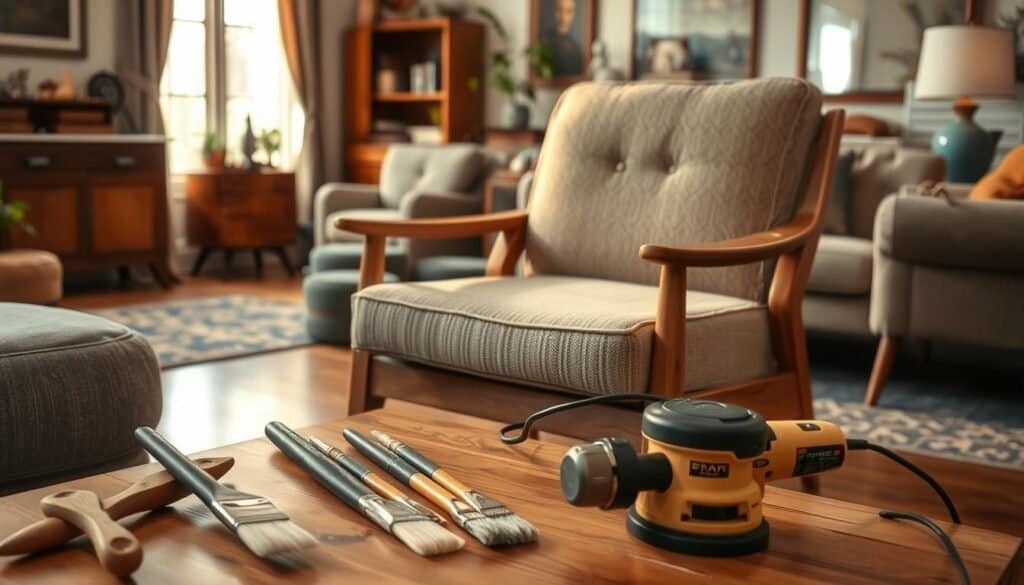
Knowing the hidden costs of traditional furniture refinishing helps find better options. No sand furniture refinishing methods are becoming popular. They are cheaper and easier. Tutorials and guides on easy furniture refinishing without sanding are helping DIY fans and homeowners achieve their goals.
How to Refinish Furniture Without Sanding Everything Off
Looking to refinish furniture without sanding? You’re in luck. There are many techniques to try. These non-sanding methods are simple and effective.
Alternative Methods to Sanding
- Using chemical strippers to remove old finishes
- Applying chalk paint for a smooth, direct finish
- Utilizing gel stains to transform wood tones without sanding
These methods open up a world of furniture flipping ideas and DIY old furniture makeovers. For example, chalk paint can cover imperfections and give a fresh look. Gel stains can also change wood tones without sanding.

For those into antique furniture makeovers or old furniture makeovers wood, these techniques are great. They let you achieve a beautiful finish without losing the piece’s original charm.
Some key benefits of non-sanding methods include:
- Reduced preparation time
- Less mess compared to traditional sanding
- The ability to achieve a professional-looking finish without extensive experience
By trying these alternatives, you can refinish your furniture easily. No need for the tedious sanding process.
Essential Supplies for No-Sand Furniture Makeovers
Refinishing furniture without sanding needs special supplies for a top-notch finish. You’ll need the right tools and materials for a stunning makeover.
Key Supplies for a No-Sand Makeover:
- Specialized paints, such as chalk paint or milk paint, designed for adhesion without sanding.
- Primers or bonding agents to enhance paint adhesion and durability.
- Gel stains or tinted polyurethanes for changing wood tones.
- Cleaning solutions for preparing the surface before painting.
- Paintbrushes or rollers suitable for the chosen paint type.
When painting old furniture ideas, the right supplies are key. For redoing furniture, use products made for no-sand applications. Always clean the furniture well before painting.
Knowing how to clean furniture before painting is vital for a great makeover. A good cleaning solution removes dirt and grime, helping paint stick better.
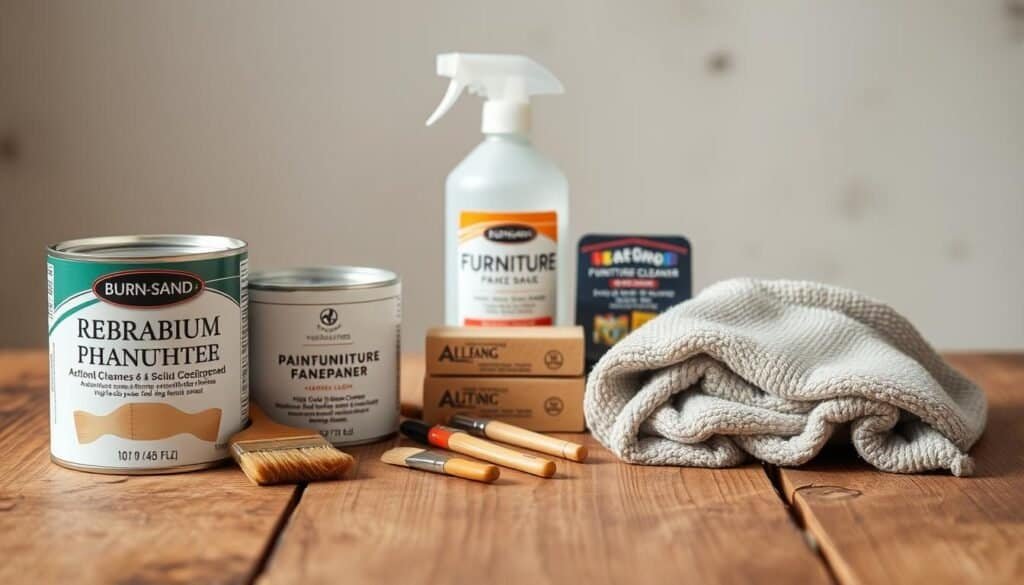
For a successful no-sand makeover, follow the product instructions. This includes how to paint & refinish furniture with the right techniques and materials. With the right supplies and steps, you can get a beautiful, professional finish without sanding.
Preparing Your Piece: Clean, Strip, and Prime
To get a professional finish without sanding, start by preparing your furniture. This step is key for a smooth, even finish. You can use paint, stain, or varnish.
First, clean the furniture well. Dust, dirt, and grease can ruin the new finish. Use a gentle cleaner for your furniture type. A mix of mild soap and water works for most wood.
Then, strip the old finish if it’s bad or you’re changing finishes. Choose a chemical stripper right for your furniture, and follow the instructions. This step is vital for a smooth finish.
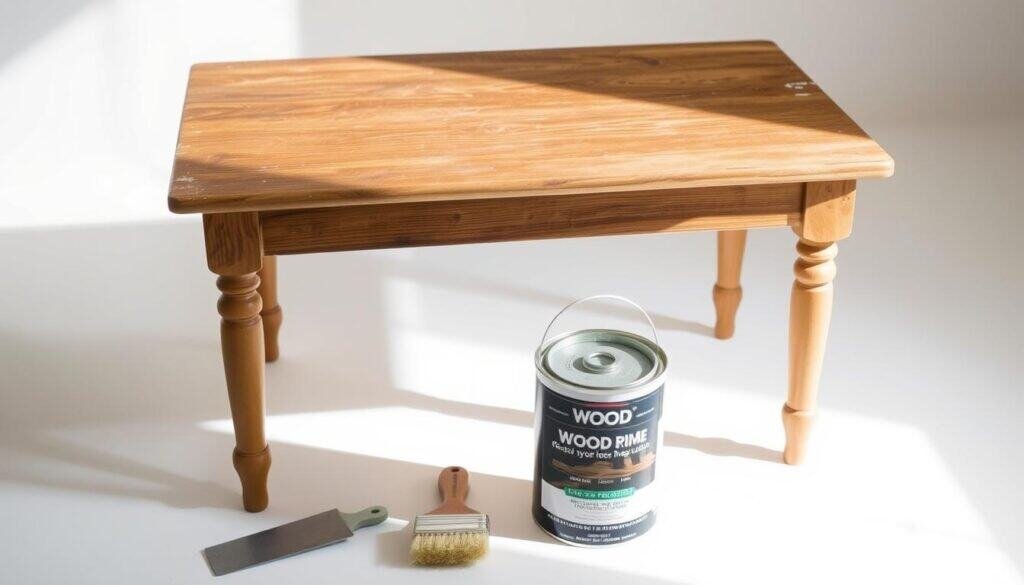
After stripping, prime the surface for a base for your new finish. This is key if you’re going from dark to light or if the surface has stains. Pick a primer that matches your finish.
Here are the main steps:
- Clean the furniture well
- Strip the old finish if needed
- Prime the surface for a uniform base
By doing these steps, you can get a beautiful, professional finish on your furniture. No need for sanding. Whether it’s an antique or a hand-me-down, proper prep is essential for a great DIY project.
Chalk Paint Transformations: The Ultimate No-Sand Solution
Using chalk paint to transform furniture is a big change. It skips the sanding step and gives finishes that look like they were done by pros. This paint sticks well to many surfaces, great for projects like updating old dressers or fixing up wooden chairs.
Chalk paint is easy to use, unlike old-school painting methods. It needs little prep work. Here are some no sanding furniture tips to help you start:
- Clean the surface to remove dirt and grime.
- Apply chalk paint directly to the surface, using a high-quality brush or roller.
- Allow the first coat to dry, then assess whether a second coat is needed.
A refinished wooden dresser can make any bedroom look amazing. With chalk paint, you can get a beautiful, distressed look that adds charm. To redo wood furniture like a pro, keep these tips in mind:
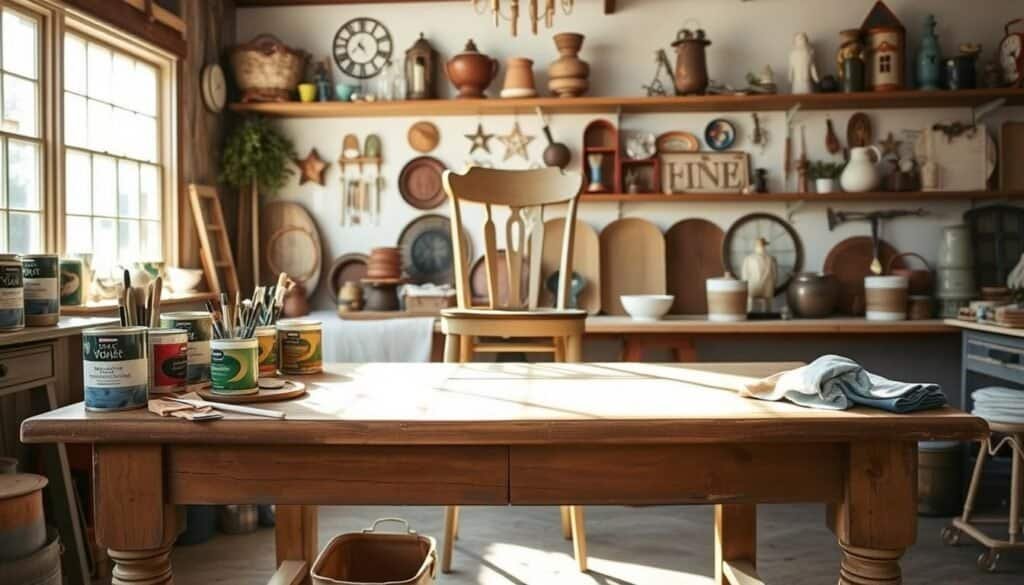
By following these simple steps and using chalk paint, you can breathe new life into old furniture without the sanding hassle. Whether you want to update one piece or redo an entire room, chalk paint is a smart choice. It gives you pro-looking results with little effort.
For more complex projects, like how to redo wood furniture with lots of details, chalk paint is perfect. It sticks well to detailed carvings and work, making it great for antique pieces.
Creating Vintage Charm with Milk Paint and Bonding Agents
For a distressed, vintage finish without sanding, try milk paint and a bonding agent. Milk paint is made from milk protein, lime, and pigments. It has a matte finish and is easy to use.
With a bonding agent, milk paint sticks well to most surfaces. This means you don’t need to prepare the surface a lot. It’s great for DIY furniture renovation projects where you want a vintage or distressed finish.

To get a unique, aged look, layer milk paint and then distress it. This reveals the surface underneath. Using bonding agents helps the paint stick, even on slick or previously painted surfaces.
- Choose your milk paint color and apply a bonding agent to the furniture surface.
- Apply the milk paint according to the manufacturer’s instructions.
- Distress the finish to achieve the desired level of vintage charm.
By following these steps, you can add vintage charm to your furniture. You won’t need to sand, making it perfect for those wanting a unique, aged look.
Transform Wood Tones with Gel Stains and Tinted Polyurethanes
Changing the wood tone of your furniture is now easy with gel stains and tinted polyurethanes. These products make it simple to update your furniture’s look without sanding.
Gel stains are great for changing wood colors. They are thicker than traditional stains, giving a more even finish. They’re perfect for staining orange oak cabinets or any wood that needs a new look.

Here are some key benefits of using gel stains and tinted polyurethanes for your DIY refinishing furniture projects:
- Easy application process
- Rich, vibrant colors
- No sanding required
- Durable finish
To get the best results, start by applying a gel stain to your furniture. Let it dry as the manufacturer says. Then, apply a tinted polyurethane to seal and protect the new finish. This combo will not only improve the wood tones but also last a long time.
Some popular techniques include:
- Using gel stains to darken or lighten the wood tone
- Applying tinted polyurethanes to add a subtle color shift
- Combining gel stains and tinted polyurethanes for a unique look
By using gel stains and tinted polyurethanes in your DIY refinishing furniture projects, you can get professional-looking results without needing to sand a lot.
No-Sand Painting Techniques for Stunning Results
Getting a smooth finish on furniture without sanding is simpler than you might think. First, make sure to clean the surface well. This removes dirt, grime, or wax that could stop the paint from sticking.
Then, think about using a bonding agent or primer made for no-sand jobs. These products help the paint stick to the old finish, making it last longer. For furniture with chipped wood, a primer is great. It fills in small gaps and makes painting easier.

When painting, remember a few tips for a smooth finish. Always stir the paint well before you start. Choose a good brush or roller for your paint type. Paint in thin layers, letting each dry before adding more. This avoids drips and uneven spots.
For an even smoother look, try chalk paint or milk paint. They stick well to surfaces without sanding. Adding a tinted polyurethane on top can make the color pop and protect the finish.
- Clean the furniture surface thoroughly
- Apply a bonding agent or primer for better adhesion
- Use high-quality paint and application tools
- Apply paint in thin, even coats
By using these no-sand painting tips, you can get amazing results without sanding. Whether fixing up chipped wood or refreshing an old piece, these methods will give you a pro finish.
Troubleshooting Common Issues in No-Sand Refinishing
Troubleshooting is key in any refinishing project, even without sanding. Issues can pop up, even with careful prep.
Common Problems and Solutions:
- Uneven Finish: If your finish is uneven, make sure your surface was clean and primed before painting or staining.
- Paint Adhesion Issues: Poor adhesion might mean a dirty or greasy surface. Clean your piece well before starting.
- Old Finishes: If old finishes are peeling or flaking, use a bonding primer. It helps your new finish stick better.
For tricky spots like carvings or moldings, use a small brush for paint or stain. Patience and detail are essential for a pro finish.
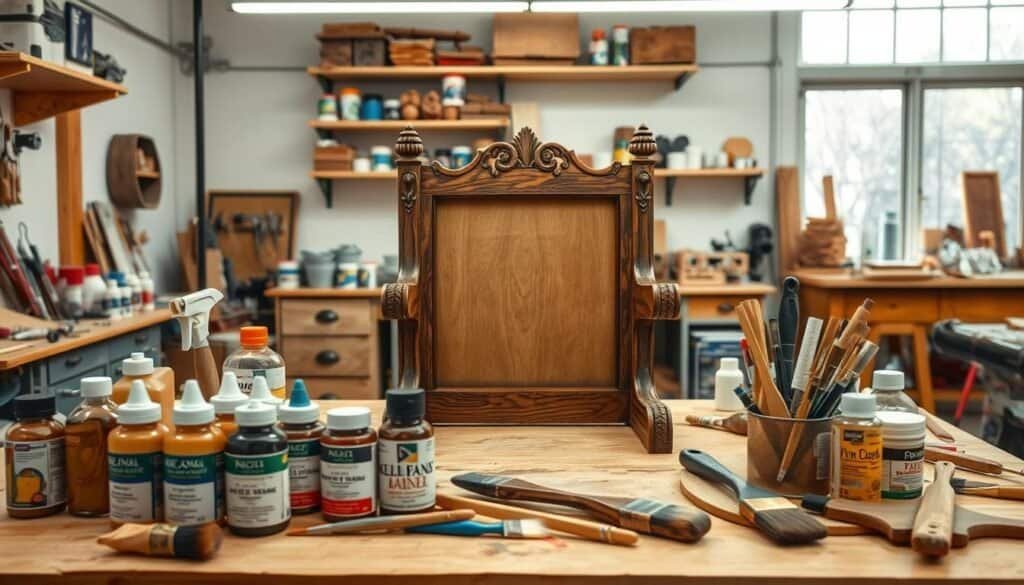
Knowing how to fix common problems ensures a great no-sand refinishing job. Whether it’s for yourself or a gift, the outcome will be worth it.
Conclusion: Enjoy Your Beautiful Furniture Without the Sanding Headache
Refinishing furniture without sanding is a big win for DIY fans and homeowners. It lets you make furniture look new without the usual sanding trouble.
No-sand refinishing is easy and lets you get creative with projects. You can use chalk paint, milk paint, and gel stains to make old furniture look amazing.
It doesn’t matter if you’re new to DIY or have lots of experience. No-sand refinishing is a great way to fix up your home. So, why not try it? Take an old piece and make it something special.
Choosing no-sand refinishing means you can enjoy your furniture without the sanding stress. Be creative, have fun, and start making your furniture look new today!