
Woodworking has changed a lot with precision jigs. These tools make hard tasks easier. They are key in modern woodworking, helping craftsmen work more accurately and quickly.
Jigs have always been important in woodworking. But now, they are even more vital. They help make projects better and faster. With jigs, woodworkers can work more consistently and precisely, making their projects easier and more fun.
Jigs make it easier to do many woodworking tasks. Whether you’re making furniture or wood carvings, jigs help you do it better and faster. This guide will show you how jigs can change your woodworking for the better.
The Power of Jigs in Modern Woodworking
Woodworking jigs have changed how craftsmen do complex tasks. They make it easier and more precise. Jigs help woodworkers get consistent results, cut down on waste, and work faster.
Enhancing Precision and Efficiency is a big plus of using jigs. They help woodworkers cut, drill, and assemble more accurately. This is important for projects needing fine details or exact joins.
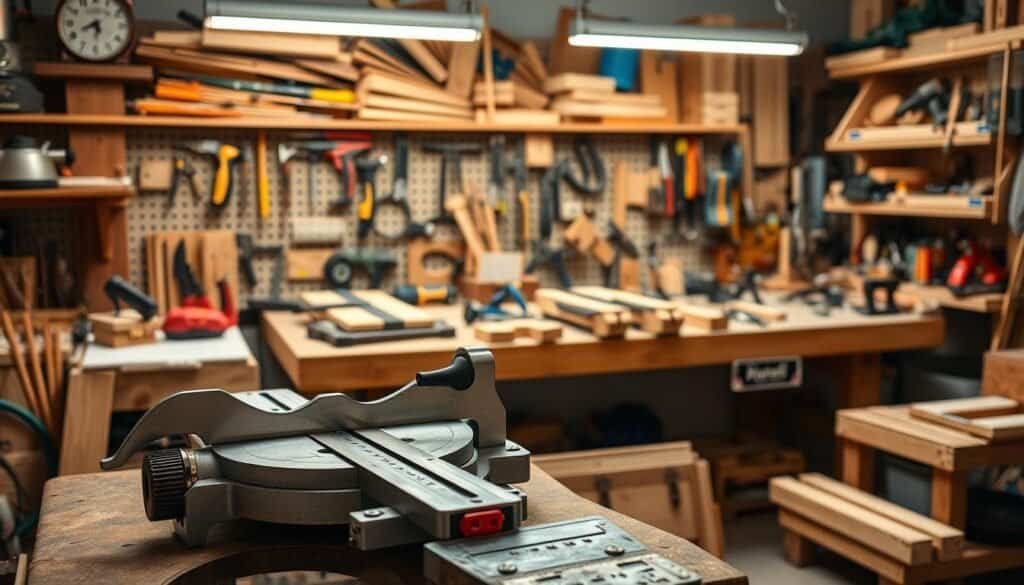
Jigs are great for doing the same task over and over. They keep the work consistent, which is key for making furniture, cabinets, and more. Uniformity is essential in these projects.
To get the most out of jigs, picking the right materials and tools is key. Knowing the Essential Materials and Tools for DIY Jigs is important. It helps make jigs that are both useful and long-lasting.
Essential Materials and Tools for DIY Jigs
To make effective DIY jigs, you need a few key materials. The right stuff depends on your project.
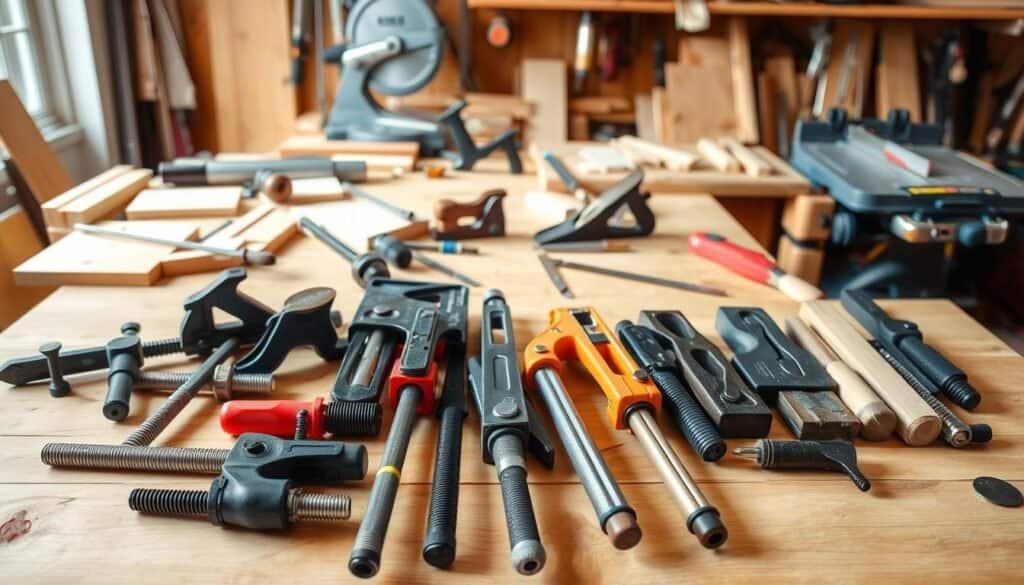
For woodworking, you’ll need a table saw or circular saw for straight cuts. A drill press is great for precise drilling. Use strong woods like maple or birch for your jigs. For more on woodworking tools, check our essential tools list.
Having the right tools and materials is key for making good jigs. You’ll need strong fasteners, accurate measuring tools, and a tidy workspace.
Table Saw Jigs
Enhance your woodworking projects with precision using table saw jigs.
Table saws are key in woodworking. With the right jigs, they become more versatile and efficient. For more info, check out our list of essential woodworking tools.
Setting Up the Perfect Spacing
Using jigs with your table saw helps achieve precise spacing for cuts. This is great for projects needing many identical pieces.
Mark cut positions on your jig with a combination square or ruler. For extra precision, use a jig that works with other tools, like router jigs.
Adjustability Features
Adjustability is key for different projects and cuts. Many table saw jigs are made to be adjustable. This lets you fine-tune for each task.
Some jigs have adjustable stops or sliding parts. These features help make precise cuts and save time.
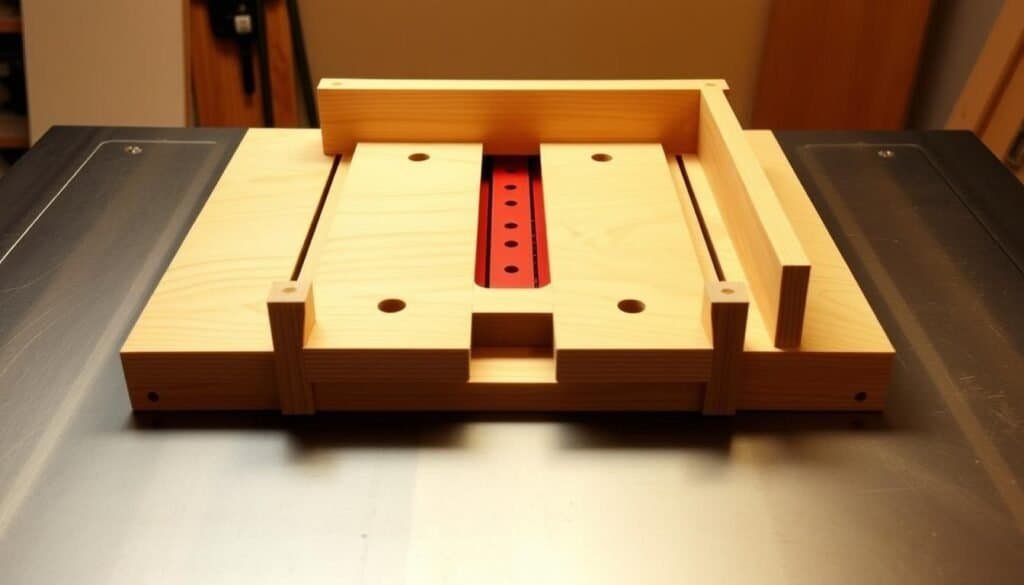
Router Jigs
In woodworking, router jigs are key for making detailed woodwork. They help woodworkers create complex patterns easily. This makes them vital for many projects.
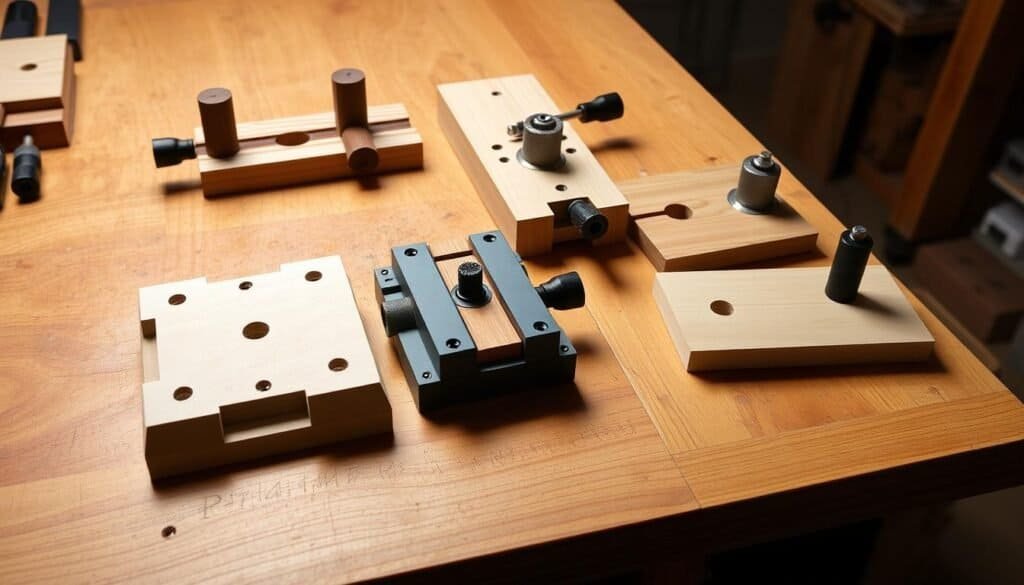
Router jigs are mainly used for decorative wood edges. They guide the router to make consistent, detailed edges. These edges can make a piece look amazing. You can use different router bits for various edge styles.
- Roman ogee bits for a classic, curved profile
- Covex bits for a decorative, concave edge
- Beading bits for a simple, rounded edge
Router Bit Selection
Choosing the right router bit is important. Different bits are for different tasks, like edge work or joinery. The right bit depends on what you want and the wood type. For example, straight bits are for dadoes, and spiral bits are for edges.
- Think about the wood you’re using (type, density)
- Decide on the edge or cut you want
- Pick a bit that fits your router
Learning to use router jigs and bits can improve your woodworking. They help in making decorative edges and precise joinery. Router jigs are a must-have for modern woodworking.
Drill Press Jigs
Drill press jigs are key in woodworking. They make drilling precise and repeatable. These jigs ensure holes are in the right spot and drilled to the correct depth.
Drilling Accurate Holes
Using a drill press jig that fits your project is vital. You need to set it up according to your workpiece’s specs. This includes the right drill bit size and type.
- Improved accuracy
- Increased efficiency
- Enhanced safety
For more info on tools and techniques, check out our recommended resources. Visit the article on essential woodworking tools.
Simple Jigs for Woodworking Projects
Simple jigs are a big help for woodworkers who want to get better at their craft. They make sure your work is precise and consistent in many woodworking tasks.
The Kreg Jig is a favorite among woodworkers. It’s great for making pocket holes. This is key for building cabinets, furniture, and other projects that need strong, hidden joints.
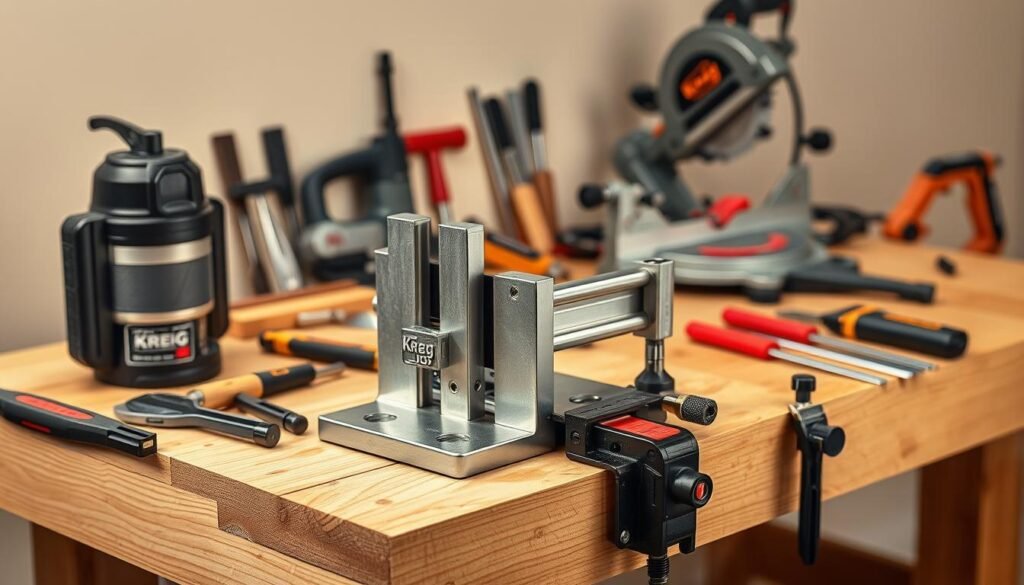
- Router jigs for precise routing
- Drill press jigs for accurate drilling
- Table saw jigs for making precise cuts
These jigs not only make your work better but also speed up the woodworking process. By spending time on these jigs, woodworkers can really boost their projects.
For example, a simple router jig can give you perfect edge profiles. A drill press jig makes sure your drilling is always spot-on and consistent.
Kreg Jig and Other Specialized Tools
The Kreg Jig is a must-have for woodworkers. It makes creating strong joints easy. Its ability to drill angled holes ensures a professional look.
Kreg Jig Features
The Kreg Jig works well with different types of wood. It’s great for creating pocket holes. These holes are key for building strong joints.
Other Specialized Tools
There are other tools that can help with your woodworking. Dado sets, coping saws, and special drill bits are some examples. Each tool has its own purpose and can improve your work’s quality.
Tips for Building Jigs
To make your woodworking better, follow these tips for building jigs. Good jigs make your projects more accurate and efficient.
First, plan your jig carefully. Think about what it will do and the materials you’ll use. This helps you avoid mistakes like making a jig too hard or not strong enough.
When making your jig, use the right materials. For example, plywood or MDF for the base makes your jig stable and useful for a long time.
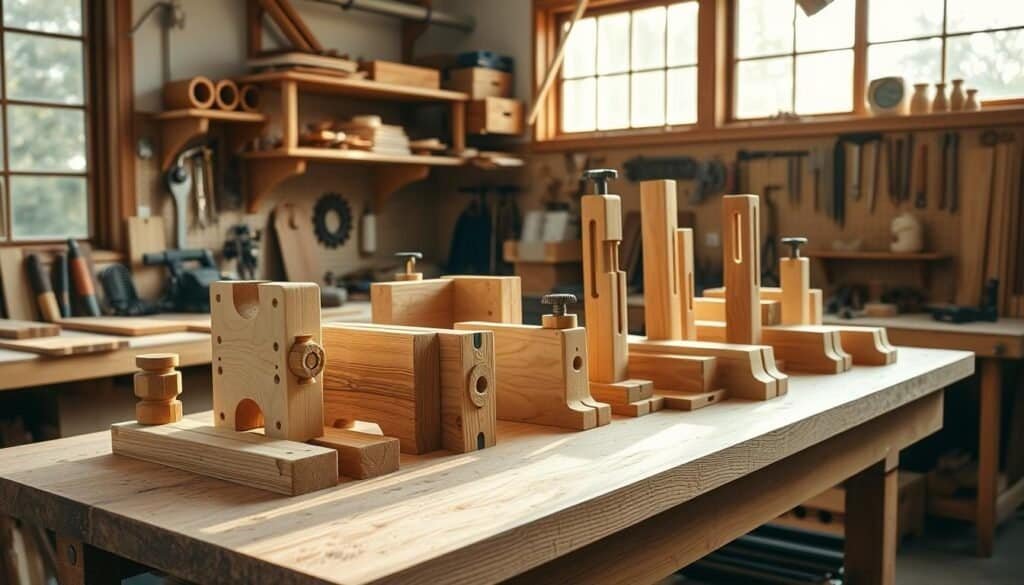
- Make sure your jig is aligned right with your tool or workpiece.
- Test your jig with a scrap piece before using it on your real project.
- Keep your jig clean and well-maintained to make it last longer.
By following these tips, you can make jigs that improve your woodworking. They help you avoid common mistakes.
Common Mistakes to Avoid
To make sure your woodworking projects are precise and efficient, it’s key to steer clear of common jig mistakes. Advanced jig techniques can greatly improve your work’s quality. But, some errors can mess up your efforts.
One big mistake is inaccurate measurement. This can cause joints to not fit right and waste materials. To prevent this, always double-check your measurements. Use top-notch measuring tools.
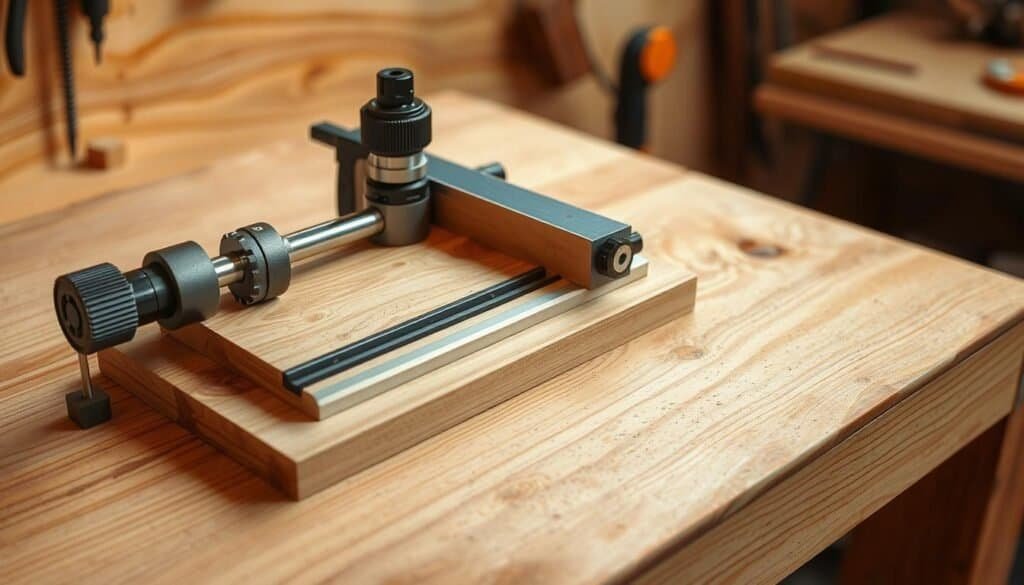
- Insufficient clamping, leading to jig movement during operation
- Using the wrong type of wood or material for the jig
- Failure to test the jig before using it for a critical project
- Not maintaining the jig properly, leading to wear and tear
Knowing these common mistakes helps you avoid them. This way, your jigs will help you succeed in your woodworking projects.
Advanced Jig Techniques
Once you’ve got the basics of jig-making down, it’s time to dive into more advanced techniques. These advanced methods are key for tackling complex woodworking tasks. They help you achieve both precision and efficiency.
Complex Jig Designs
Creating complex jig designs means making jigs that can handle multiple tasks or work with different materials. These jigs are essential for large-scale woodworking projects. They ensure consistency and accuracy are top-notch.
To make complex jig designs, you need to know your tools and materials inside out. This requires meticulous planning and precise craftsmanship. For example, a jig that can adjust to different angles or fit various material sizes boosts your workshop’s versatility.

Keeping your jigs in good shape is just as important as making them. Regular upkeep ensures your jigs work their best, cutting down on errors in your woodworking.
- Regularly check your jigs for wear and tear.
- Clean your jigs after each use to prevent residue buildup.
- Store your jigs properly to avoid damage.
By sticking to these maintenance tips, you can make your jigs last longer. This keeps them effective in your woodworking toolkit. Proper jig care is a critical aspect of advanced jig techniques. It directly affects the quality of your work.
In conclusion, mastering advanced jig techniques is a big leap in your woodworking journey. Understanding complex jig designs and keeping up with jig maintenance and repair strategies will take your projects to new heights. You’ll see better precision and efficiency in your work.
Conclusion
In conclusion, the right jigs can make your woodworking easier and more fun. They help you tackle complex tasks with ease. By using these tools, your work will look better and be more precise.
We’ve looked at different jigs, like those for table saws, routers, and drill presses. Each one is made for a specific task. The key to getting the most out of them is to know how to use them right.

- Always measure twice before cutting to ensure accuracy.
- Practice using different jigs to become familiar with their operations.
- Invest in high-quality jigs that are durable and precise.
By following these tips and improving your skills, you’ll make beautiful woodworking projects. Remember, the right jig can make all the difference in your project’s success.
Final Tips and Recommendations
Remember, jigs are key in woodworking. They help make your projects better by adding accuracy and efficiency. Using simple jigs can greatly improve your work’s quality.
When making your own jigs, choose the right materials and tools. High-quality materials, like those from Kreg Jig, can really make a difference. They ensure your projects turn out great.
Try out different jig techniques and designs to improve your skills. This will help you handle more challenging projects with ease. It’s a great way to grow as a woodworker.
Follow the advice in this article to make beautiful and precise woodworking projects. Happy building!