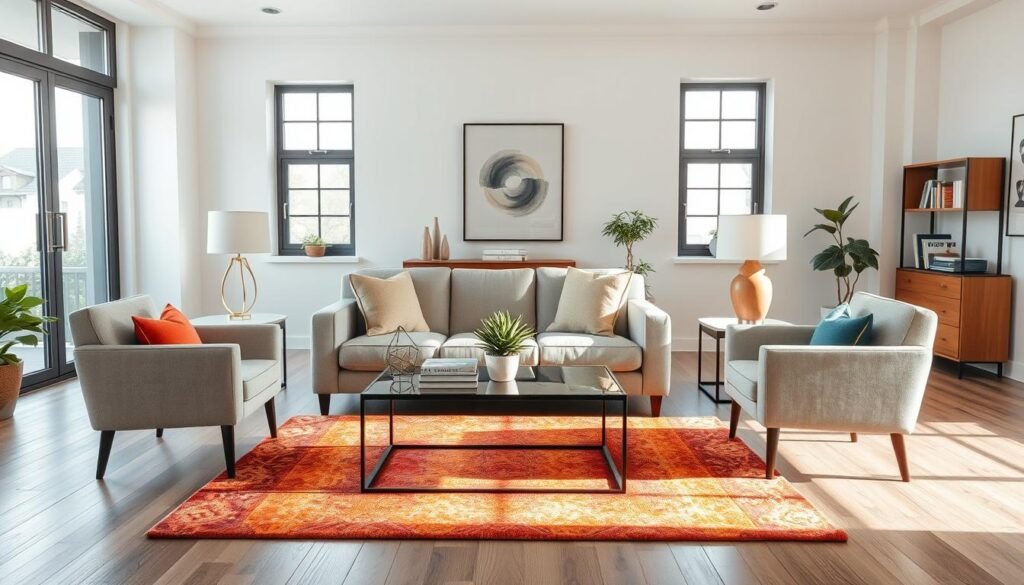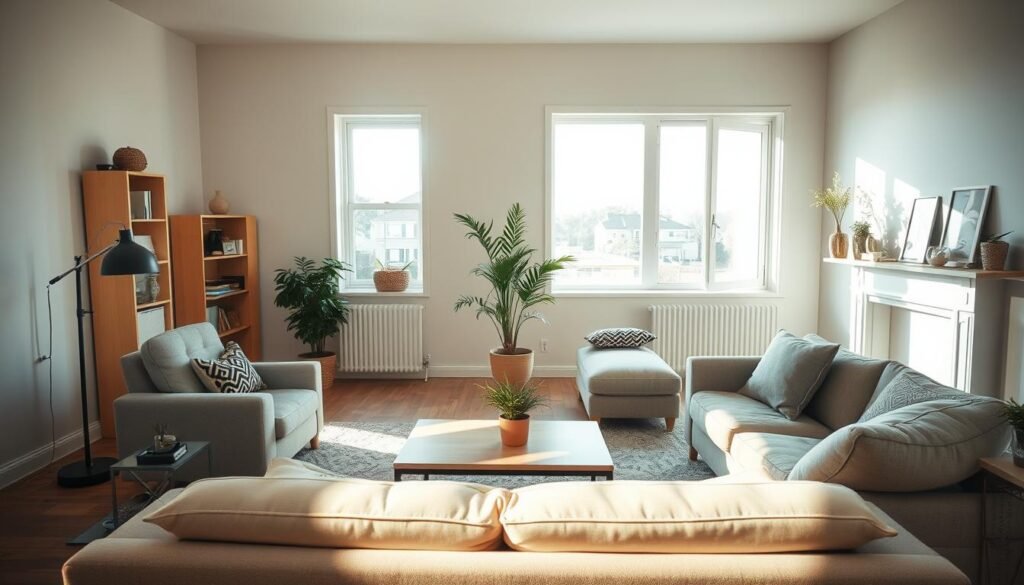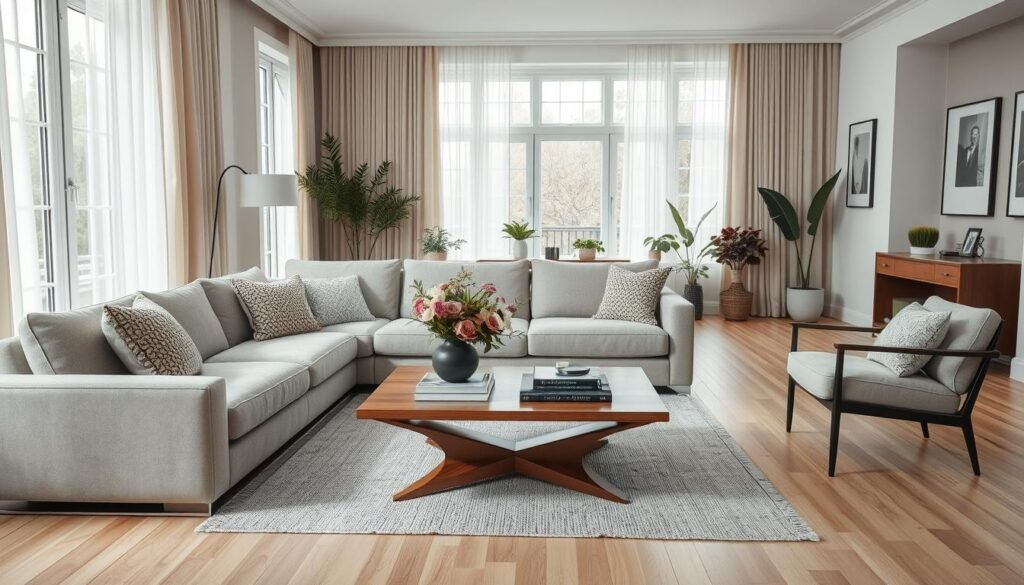
In today’s fast-paced world, having a calm living room is more important than ever. A cozy space to unwind can make all the difference after a long day.
Creating a comfortable space doesn’t have to be complicated. With a few simple living room ideas, you can transform your area into a haven of tranquility. Consider incorporating elements of minimalist living room design to promote relaxation.
By embracing cozy living room ideas, you can create a warm and inviting atmosphere. This makes you want to stay awhile. Let’s explore some easy ways to make your living room a calm and comfortable space.
The Essentials of a Simple, Relaxed Living Room
A relaxed living room starts with understanding the key elements that promote calmness. To create a simple living room, focus on the basics that bring peace.
The first step is to incorporate minimal decor. Too much clutter can make a room feel cramped and chaotic. Using a few decorative pieces can make a room feel open and calm. Some ideas include:
- Using a few statement pieces of art
- Incorporating plants for a touch of nature
- Selecting a few favorite decorative items that bring joy
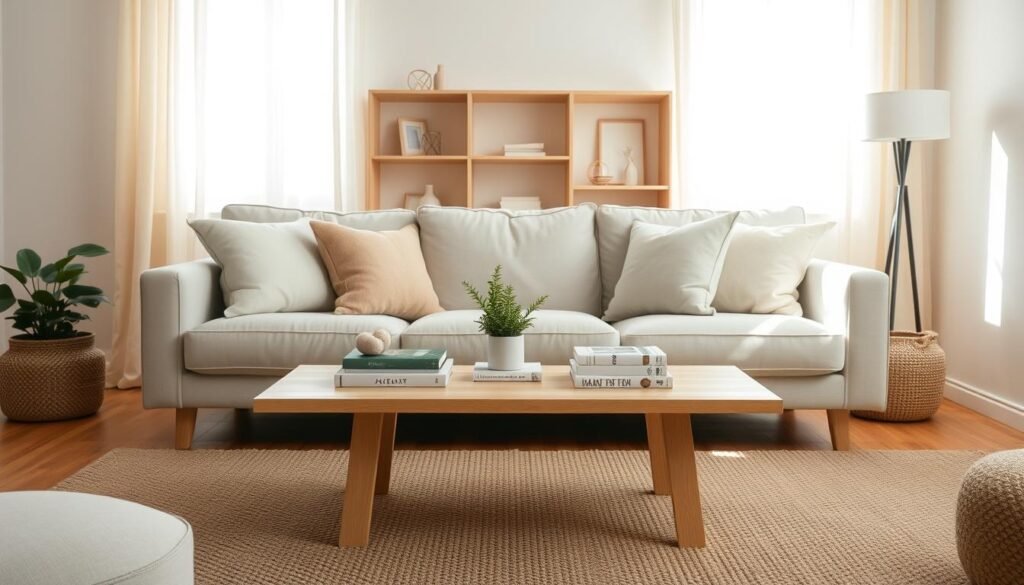
Another key element is comfortable furniture. A cozy living room is where you can relax fully. Choose sofas and chairs with plush cushions and soft fabrics. The layout should also encourage relaxation, with seating for easy conversation and comfort.
Lastly, soothing colors are vital for a relaxed living room. Soft hues like light blues, pale greens, and neutral tones create a calming atmosphere. Use these colors for walls, furniture, and decor to ensure a cohesive and serene look.
By focusing on these essentials, you can create a casual living room style that’s both welcoming and peaceful. Whether you’re seeking serene living room inspiration or just want to refresh your space, these tips will help you achieve a simple, relaxed living room.
Living Rooms That Just Feel Simple and Relaxed
A relaxed living room balances simplicity with comfort. It becomes a cozy spot for everyday life. This balance makes the space calming and welcoming.
A comfort-first approach is key in designing a simple living room. Choose furniture and decor that look good and feel comfortable. Plush sofas and armchairs are great for a cozy room.
Practical Minimalism for Everyday Living
Practical minimalism is more than just decluttering. It’s about making a space that improves your daily life. It means picking furniture that does more than one thing and keeping things tidy.
- Choose furniture that serves more than one purpose, like storage ottomans or coffee tables with storage.
- Keep decor simple, focusing on a few pieces that add character.
- Use a neutral color palette to create a calm atmosphere.
Embracing practical minimalism makes your living room simple, relaxed, and useful. It looks good and works well for you.
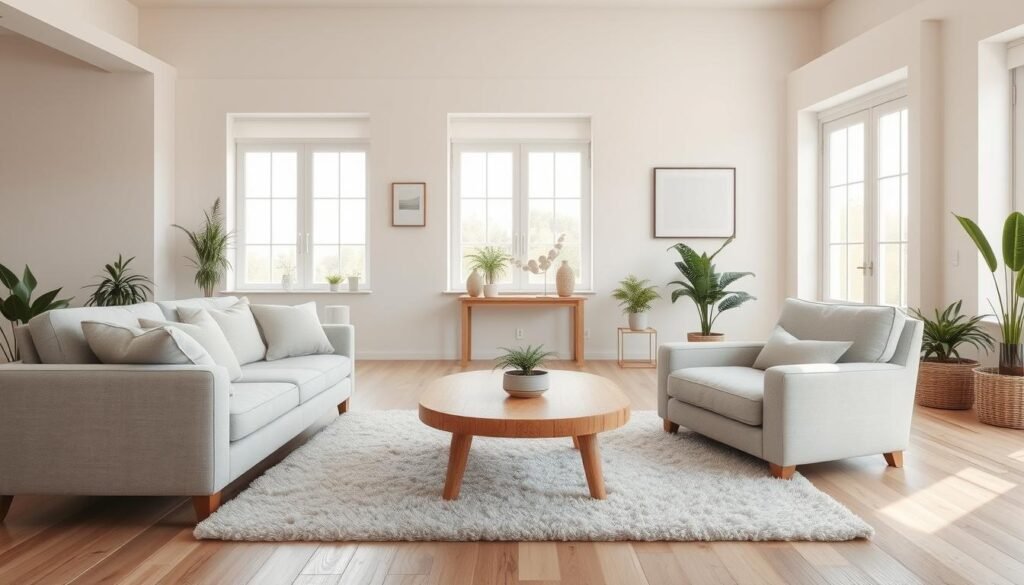
Adding a comfort-first approach to your simple living room design makes it both beautiful and cozy. Choose furniture that’s comfy and add throw blankets and pillows for warmth and texture.
Some ideas for a simple living room include soft lighting, natural elements, and calming colors. These elements help create a relaxing space.
- Use soft lighting to make the room warm and inviting.
- Add natural elements, like plants or a vase with branches, for a touch of nature.
- Choose calming colors like blues or greens for a soothing atmosphere.
By using these ideas and focusing on comfort, you can make a living room that’s both simple and relaxing. It’s perfect for unwinding after a long day.
Furniture Selection for a Calm, Comfortable Space
Furniture selection is key to creating a calm and comfortable living space. The right pieces can make your living room a peaceful retreat.
Sofa and Chair Considerations
The sofa and chairs are the heart of your living room. Choose a sofa that’s stylish and comfy, with soft cushions and good support. Make sure the sofa fits the room well; a big sofa can make a small room feel cramped, while a small sofa might get lost in a big room.
Key considerations for sofa selection include:
- Comfort: Look for sofas with deep seats and soft, durable fabric.
- Size: Measure your room to ensure the sofa fits comfortably, leaving space for movement.
- Style: Choose a style that complements your room’s decor, from modern to traditional.
Creating Conversation Areas
Arranging furniture to create conversation areas makes your living room more comfortable and social. Place chairs and sofas to encourage talking, like around a coffee table or fireplace.
Tips for creating effective conversation areas:
- Position seating to face each other, facilitating easy conversation.
- Use a coffee table or ottoman as a central gathering point.
- Consider the traffic flow in the room, ensuring there’s a clear path through the space.
By carefully choosing and arranging your furniture, you can make a calm, comfortable living room. It will be a place for relaxation and socializing.
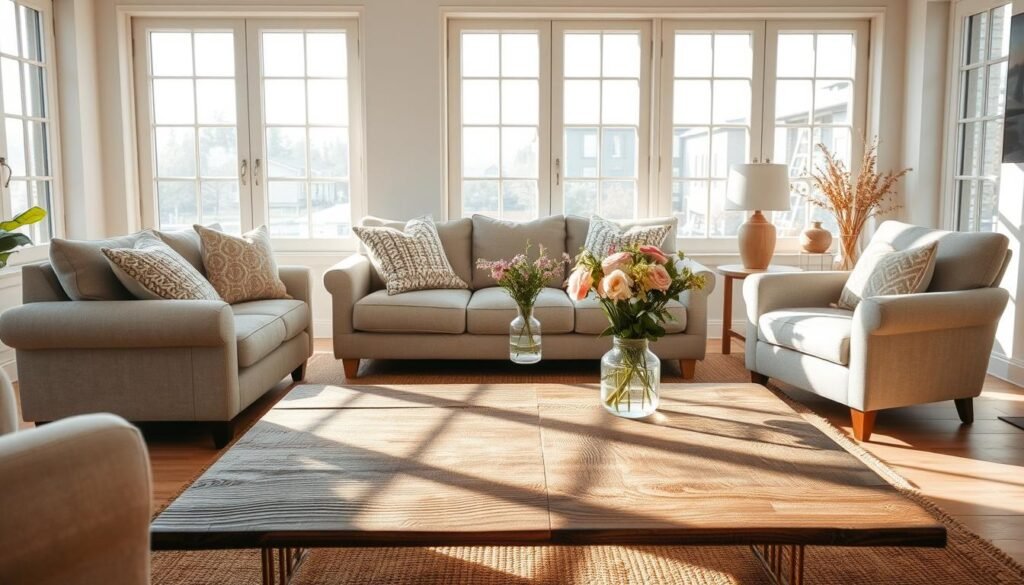
The ultimate goal is to create a space that feels welcoming and peaceful. It should be a true haven in your home.
Color Psychology for Serene Living Environments
Color psychology is key in making a living space calm and relaxing. The colors in your living room can change how you feel. By picking the right colors, you can make your space feel cozy and welcoming.
Neutrals are often chosen for a calm atmosphere. But, warm and cool neutrals have different effects on your space.
Warm vs. Cool Neutrals
Warm neutrals like beige and taupe make a space feel cozy. They bring a sense of comfort and relaxation. Cool neutrals, such as gray and blue-gray, have a calming effect, making your space feel tranquil.
Key considerations when choosing between warm and cool neutrals:
- Consider the natural lighting in your living room.
- Think about the color of your furniture and decor.
- Reflect on your personal preferences and the mood you want to create.
Creating Depth with Tonal Variations
To avoid a flat look, add depth to your color scheme. Tonal variations are a great way to do this. By using different shades of your chosen neutral, you can add layers to your space.
For example, mixing light, medium, and dark shades of gray can make your space interesting and dynamic. This approach adds depth and makes your space feel cozy and inviting.
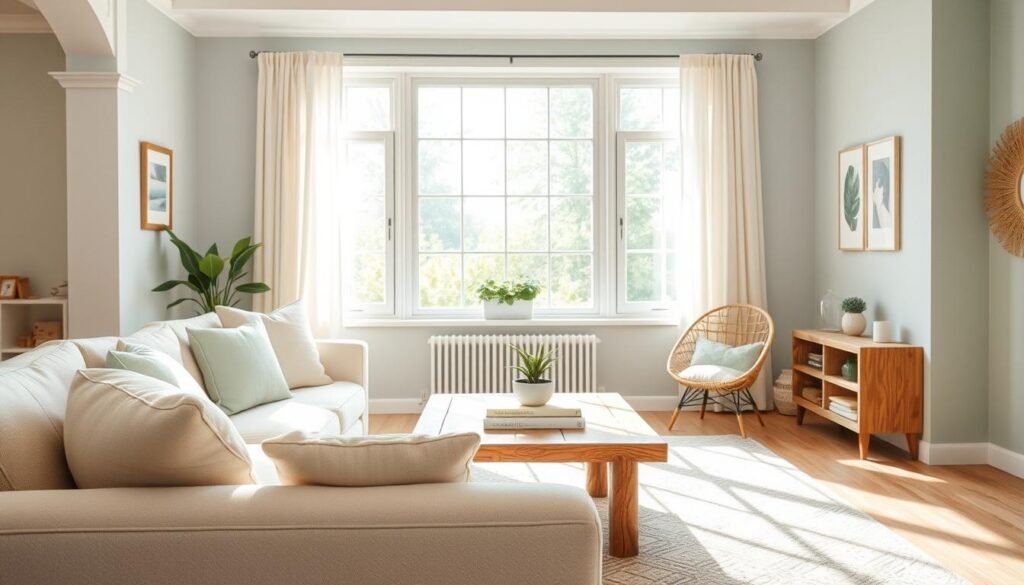
- Start with a base color and then select several shades lighter and darker.
- Use the 60-30-10 rule: 60% of the dominant color, 30% of the secondary color, and 10% of an accent color.
- Experiment with different textures and materials to enhance the visual interest.
Texture and Materials That Enhance Comfort
Texture and materials are key to a cozy living room. They make the space feel warm and look great. Mixing different textures and materials can really make a room stand out.
Wood elements add warmth and coziness. A wooden coffee table, flooring, or wall paneling can make a room feel welcoming. Wood brings a natural, inviting vibe.
Wood Elements, Stone and Ceramic Accents
Stone and ceramic accents also add to a room’s comfort and beauty. A stone fireplace or stone-tiled walls bring a rugged, natural look. Ceramic accents, like vases or tiles, add elegance and sophistication.
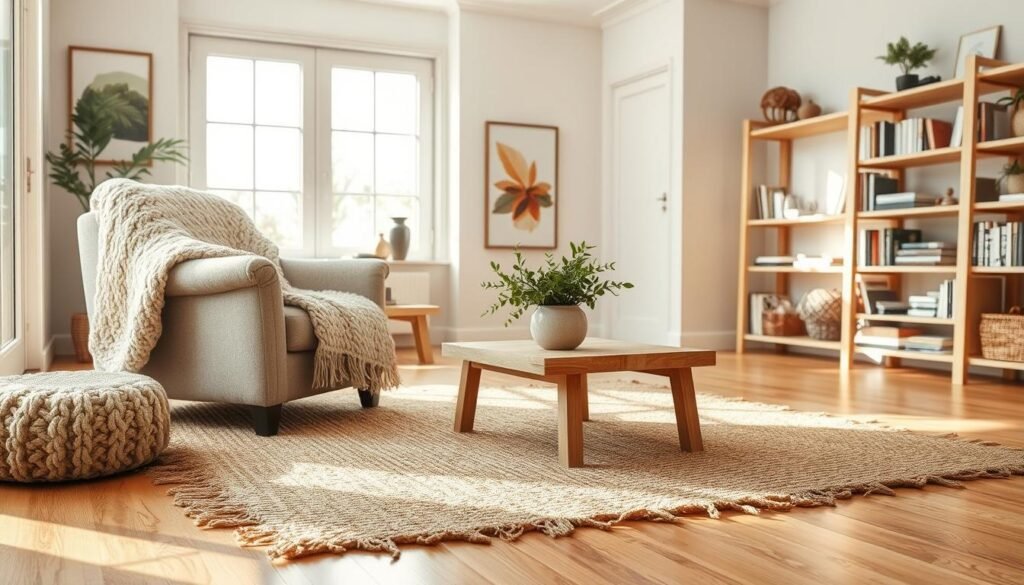
- Wooden furniture and paneling for a cozy atmosphere
- Stone features for a natural, rugged look
- Ceramic accents for elegance and sophistication
- A cozy house color palette that complements natural materials
A cozy house color palette with earthy tones can make a room even cozier. Colors like beige, brown, and taupe match well with wood. They create a wood apartment aesthetic that feels warm and inviting.
Choosing and mixing different textures and materials thoughtfully can make a living room both beautiful and comfortable. It becomes a place where you can relax and unwind.
Lighting Strategies for a Peaceful Atmosphere
Lighting is key to creating a calm and cozy living space. A good lighting plan can really make your living room feel like a place to relax.
Ambient Lighting Foundations
Ambient lighting is the base of your living room’s lighting. It lights up the whole room, making it welcoming. For a peaceful atmosphere, mix overhead lights with table lamps for a soft, warm light.
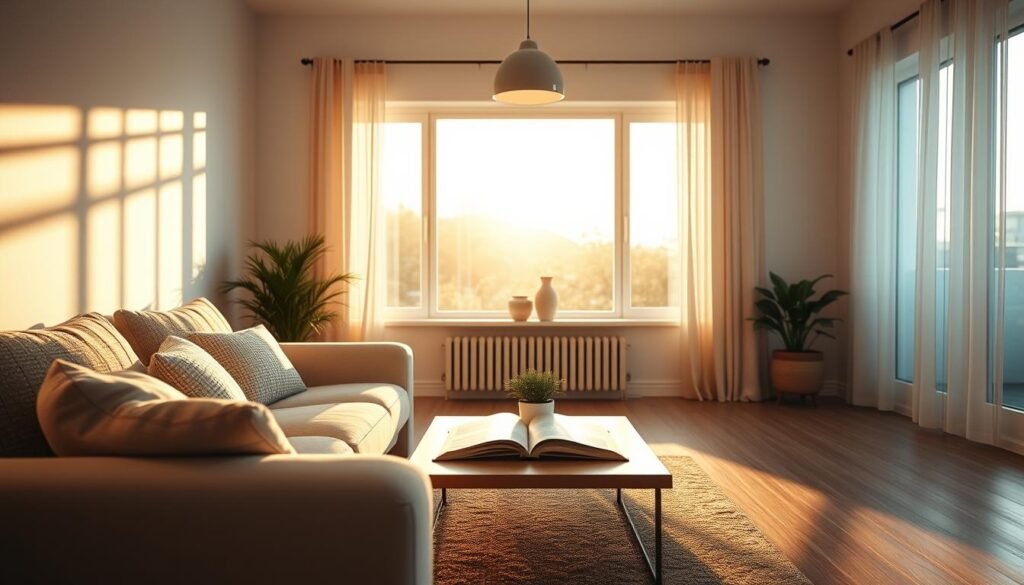
Task lighting and accent lighting are also important. Task lighting helps with activities like reading or working. Accent lighting brings out the beauty of your room’s features or decor.
- Use table lamps or floor lamps for task lighting.
- Employ accent lighting to draw attention to artwork or unique decor.
- Consider dimmable lighting options to adjust the ambiance according to different occasions.
By using these lighting strategies, you can make your living room cozy and inviting. It’s perfect for unwinding after a long day. Whether your space is big or small, the right lighting can transform it into a serene and comfy place.
Mindful Decor for a Tranquil Living Room
Mindful decor turns your living room into a peaceful haven. It adds elements that bring calm and relaxation. This makes your space feel serene.
Using plants is a simple way to bring mindfulness into your decor. Low-maintenance plants are great for those who are new to plants or are busy.
Low-Maintenance Plant Options
- Snake Plant: Known for its air-purifying properties and ability to thrive in low-light conditions.
- ZZ Plant: Requires minimal watering and can tolerate a range of lighting conditions.
- Pothos: Easy to care for and can be grown in various environments.
Natural accents also enhance your living room. They add warmth and texture. Think about using wood, stone, or woven fibers in your decor.
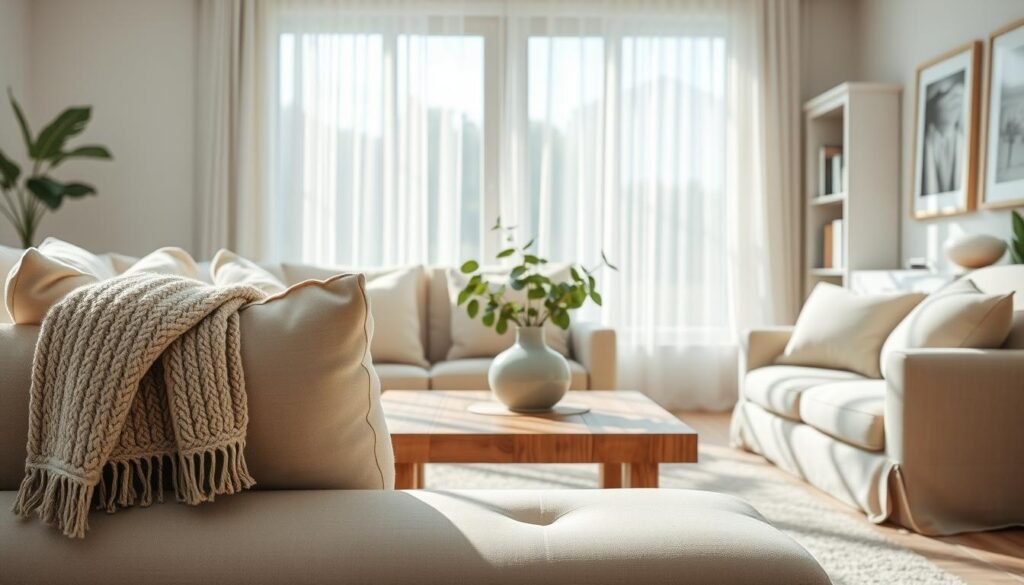
- Reclaimed Wood Furniture: Adds a touch of warmth and history to your space.
- Stone Decor: Can be used in vases, candle holders, or as a statement wall.
- Woven Baskets: Provides storage while adding a natural, earthy element.
Choosing decor that promotes mindfulness and calm creates a tranquil living room. It becomes a peaceful retreat from daily stress.
Simple Living Room Solutions for Small Spaces
Creating a simple living room in a small space can be tough, but it’s doable. The trick is to use the space wisely and keep it calm and comfy.
Using mirror placement strategies is a smart way to make a small living room look bigger. Mirrors can reflect light and views, making the room seem larger.
Mirror Placement Strategies, Creating Visual Flow
Strategic mirror placement can really improve a small living room’s look. Here are some tips:
- Put a big mirror opposite a window to reflect natural light and views.
- Use a mirror to make a room look bigger by placing it opposite a doorway or another mirror.
- Think about a mirrored console table or a decorative mirror to add depth.
Choosing the right color palette is also key for small spaces. A small apartment color palette with light, neutral tones can make a room feel bigger. Earthy tones can add a cozy, natural feel.
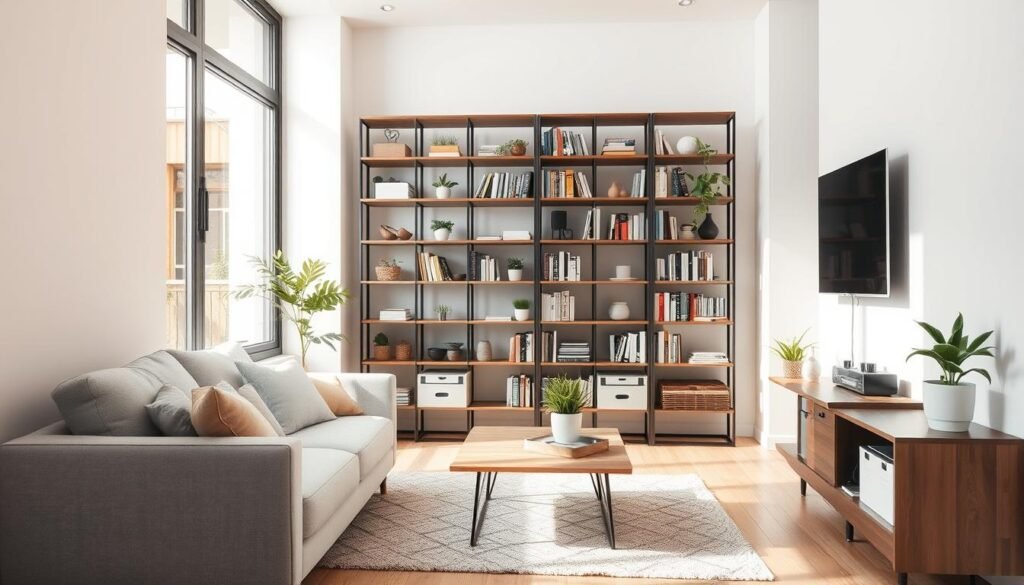
In a small earthy apartment, mix natural materials like wood and stone with soft colors. This creates a warm, inviting space without feeling cramped.
By using these simple living room solutions, you can turn your small space into a peaceful, cozy spot. The goal is to make the space feel open and flowing, using every inch wisely.
Conclusion: Creating Your Personal Haven of Simplicity
Creating a simple living room is more than looks; it’s about making a space that makes you feel good. By adding cozy living room ideas and comfortable living room ideas, you can turn your living room into a peaceful spot.
Choosing simplicity lets you focus on what’s important. Think about cozy textures, calming colors, and soft lighting. This way, you make a dream living room that looks great and works well.
Designing a simple yet welcoming living room takes thought. You need to pick the right furniture, colors, textures, and lighting. By doing this, you can make a personal haven that shows your style and helps you relax.
Begin making your living room a calm place today. Use these cozy living room ideas to make it a real sanctuary.