
Making your home feel serene is simpler than you might think. Soothing neutral wood tones can greatly help in making your living spaces more relaxed and calming.
Wood has been a key part of interior design for centuries. It’s not just for its durability but also for its psychological benefits. Wood can make a room feel warmer and cozier, making it more welcoming.
Adding calming wood tones to your decor can turn any space into a peaceful retreat. Neutral wood colors are versatile and timeless, perfect for creating a calm atmosphere.
The Psychology of Wood in Interior Design
Natural materials, like wood, are key in making spaces that help our mental health. Wood in design brings many psychological benefits. It helps create calm and serene areas in our homes.
Stress Reduction Properties
Wood’s natural beauty can greatly lower stress. Studies show it can reduce cortisol, heart rate, and blood pressure. This makes wood a great choice for a soothing atmosphere.
Cognitive Benefits of Natural Materials
- Improved concentration and productivity
- Enhanced creativity
- Better mood and reduced symptoms of depression
Evolutionary Preferences for Natural Materials
Humans naturally prefer natural environments, known as biophilia. Using wood in design meets this need. It makes us feel better and more connected to nature.
Wood’s Impact on Indoor Air Quality
Wood, when sourced sustainably, improves indoor air quality. It doesn’t release harmful chemicals like synthetic materials do. This makes our homes healthier.
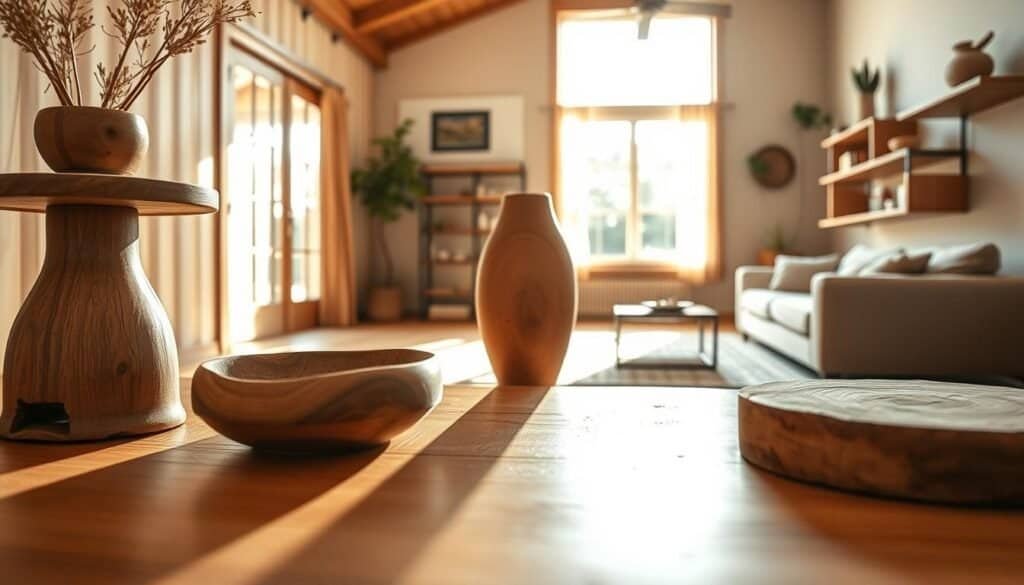
Knowing wood’s benefits in design helps us choose better for our homes. We can pick natural wood hues and accents. This boosts our well-being.
Soft Neutral Wood Tones That Calm Any Space
Neutral wood tones can make a room feel more serene. Soft neutral wood tones are great for creating a calm atmosphere. There are many types to choose from.
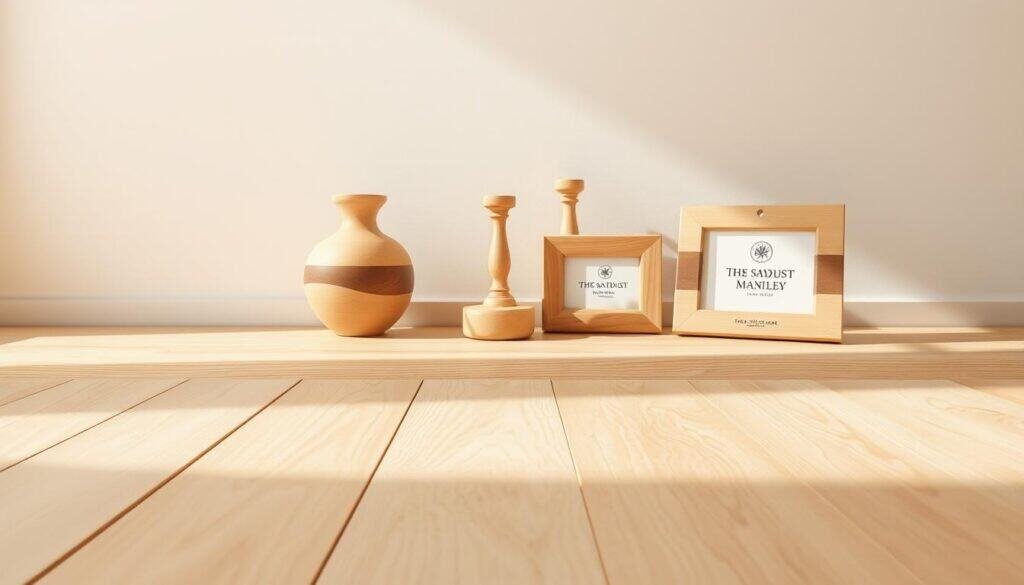
Scandinavian-inspired maple and birch wood tones have a light, airy feel. They are often used in modern design to make spaces feel open and clear. For more tips on using natural wood tones in your living room, check out The Sawdust Man.
White Oak and Its Versatility
White oak is a versatile wood tone that fits both traditional and modern settings. Its durability and attractive grain make it a favorite for furniture and flooring.
Cherry and Its Aging Properties
Cherry wood is loved for its rich, reddish-brown color that gets even deeper with age. As it ages, it develops a beautiful patina, adding charm to any room.
Light Walnut Variations
Light walnut variations offer a softer look compared to traditional walnut. These lighter tones keep walnut’s beauty but add a calming touch.
Driftwood-Inspired Treatments
Driftwood-inspired treatments give wood a weathered, beachy look. This style is ideal for a coastal or beach-inspired interior.
Cerused and Limed Wood Effects
Cerused and limed wood effects treat the wood to enhance its texture and look. This process creates a unique, rustic appearance that warms any space.
By adding these soft neutral wood tones to your home, you can make a calming and peaceful space. This space promotes relaxation and serenity.
Creating a Serene Living Room with Wood Accents
Turning your living room into a peaceful space is simple with wood accents. These details can greatly improve your room’s feel, making it a cozy retreat.
Coffee Tables and Console Designs
Coffee tables and console designs are key in your living room’s look. A wooden coffee table can be a centerpiece, while a console table adds depth. Opt for a reclaimed wood coffee table for a rustic vibe or a modern console for a sleek look.
Shelving Units and Entertainment Centers
Shelving units and entertainment centers in wood bring warmth and character. They help keep your space tidy and organized. Pick a shelving unit with a natural wood finish to match your decor.
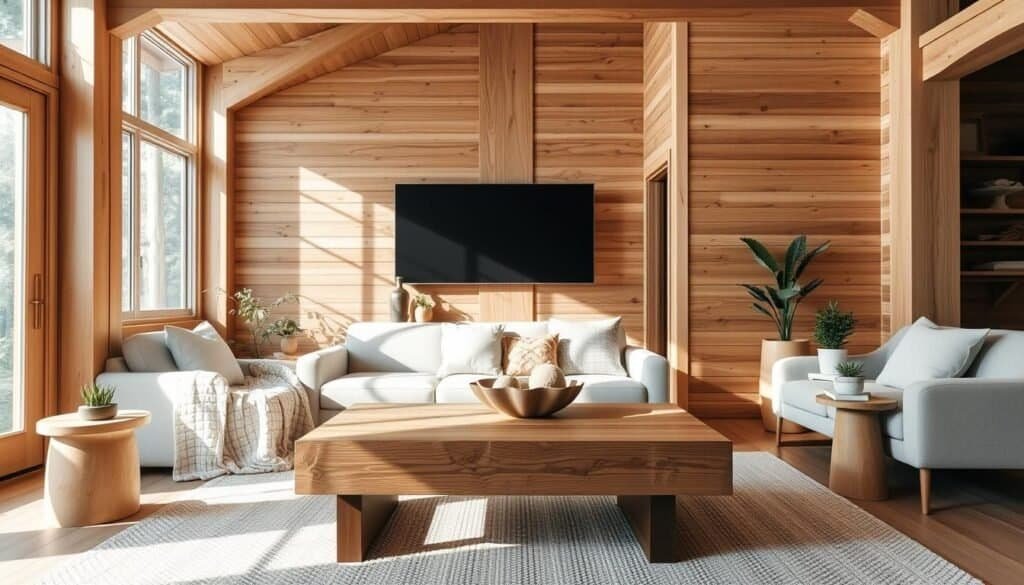
Shiplap and paneling are great for adding wood to your walls. Shiplap brings a cozy, rustic vibe, while paneling adds elegance. Both can make your living room more appealing.
Accent Walls and Architectural Details
An accent wall in wood can highlight a room area. Architectural details like wooden moldings or trims also add elegance.
Mixing Smooth and Rough-Hewn Finishes
Mixing smooth and rough-hewn finishes adds texture and interest. Pairing a smooth coffee table with rough wooden beams creates a striking contrast.
Incorporating Wood Grain Patterns
Incorporating wood grain patterns into your decor highlights wood’s natural beauty. Use wooden furniture with unique grain patterns to add interest to your room.
By carefully choosing these wood accents, you can make your living room serene and welcoming, showing off your personal style.
Calming Bedroom Retreats with Natural Wood Elements
Adding wood elements to your bedroom can make it more peaceful. It helps you sleep better and relax more.
Platform Beds with Integrated Nightstands
A platform bed with integrated nightstands is both useful and stylish. It keeps your room tidy by combining the bed and nightstands into one piece. This design saves space and looks clean.
- Convenient storage for bedtime essentials
- Sleek, modern design
- Variety of wood finishes available
Custom Headboard Designs
Custom headboard designs let you make your bedroom truly yours. You can use natural wood to create a standout piece that matches your style and decor.
- Choose a wood type that matches your existing furniture
- Consider adding upholstery for extra comfort
- Design it to be a focal point in the room
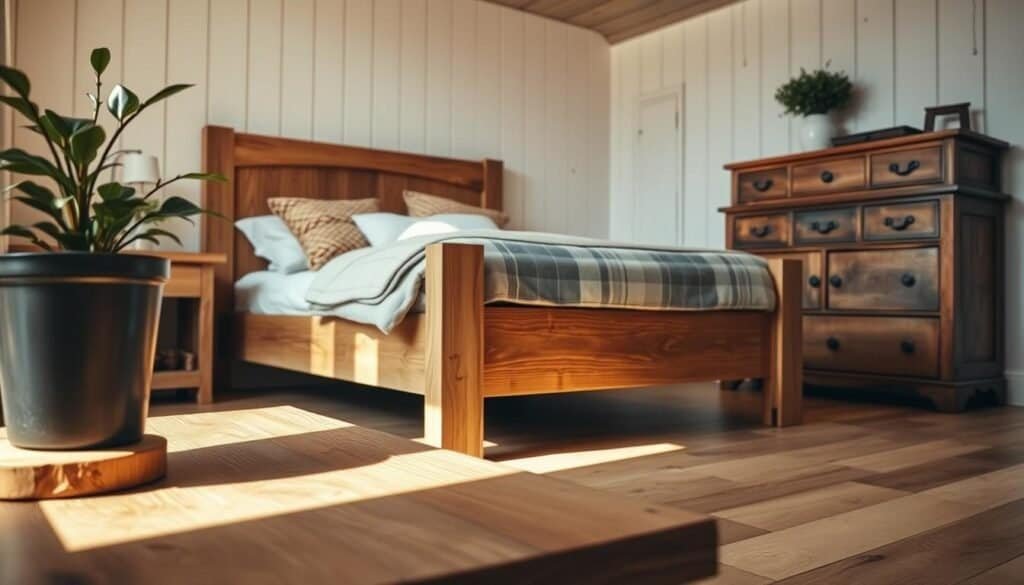
For a calm bedroom, minimalist storage solutions are key. Natural wood storage fits well with the room, giving you space for clothes and personal items without clutter.
Vintage and Antique Wood Pieces
Adding vintage and antique wood pieces brings character and warmth. These unique items can spark conversations and add history to your bedroom.
Exposed Beams and Rafters
Exposed beams and rafters make your bedroom feel open and airy. This design choice makes the ceiling seem higher and the room more spacious.
Wood Plank Ceiling Applications
A wood plank ceiling adds warmth and coziness. It also ties in with the room’s wood accents, creating a sense of continuity.
By carefully choosing natural wood elements, you can make a peaceful bedroom that’s both lovely and practical.
Neutral Wood in Kitchen Design
Neutral wood elements are great for kitchen design. They bring warmth and make the space inviting. This is perfect for cooking and hanging out.
Two-Tone Wood Cabinet Strategies
Using two-tone wood cabinet strategies is a smart move. It means using different wood tones for upper and lower cabinets. Or for the island and perimeter cabinets. This adds depth and interest to your kitchen.
Natural vs. Stained Finishes
Choosing wood for your kitchen means picking between natural and stained finishes. Natural finishes keep the wood’s original look. Stained finishes can change the color to fit your style.
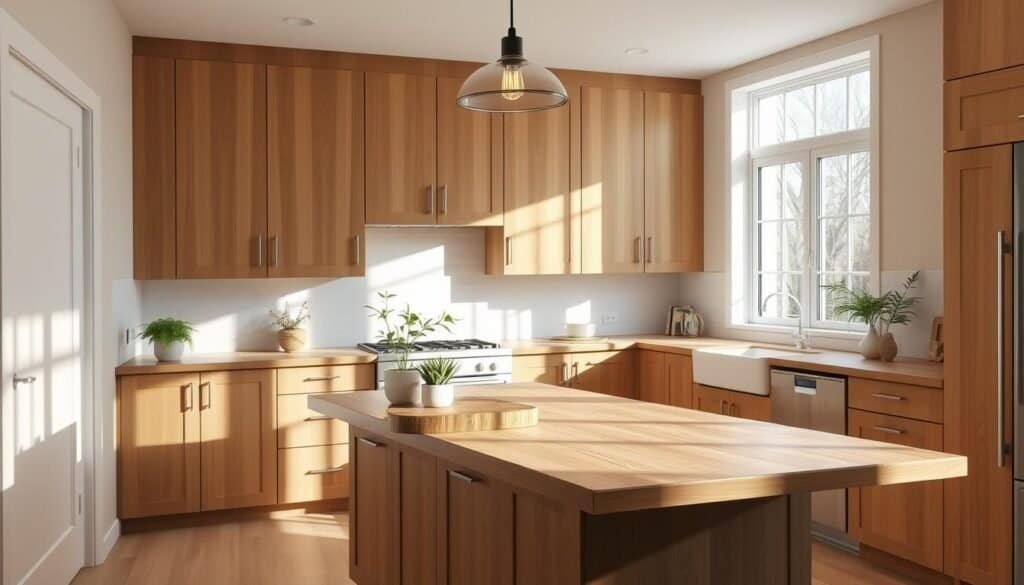
Butcher block and wood slab countertops are popular. They add warmth and a natural feel. Butcher block is great for food prep. Wood slabs can be countertops or a decorative backsplash.
Mixed Material Approaches
Using wood with other materials like stone or metal creates a unique kitchen. This mixed material approach combines the best of each. Stone for durability and wood for warmth.
Floating Shelf Designs
Floating shelf designs are perfect for showing off kitchenware. They keep the look clean and simple. Wooden floating shelves add warmth and coziness.
Display Strategies for Wood Shelving
Think about your display strategies when using wood shelving. You can show off decorative items, cookbooks, or kitchen essentials. This makes your kitchen both functional and beautiful.
Bathroom Sanctuaries Enhanced with Wood Tones
A bathroom with wood tones is the perfect place to unwind after a long day. Wood elements in your bathroom design create a calming atmosphere. It feels like a personal spa, thanks to the warmth and coziness wood tones bring.
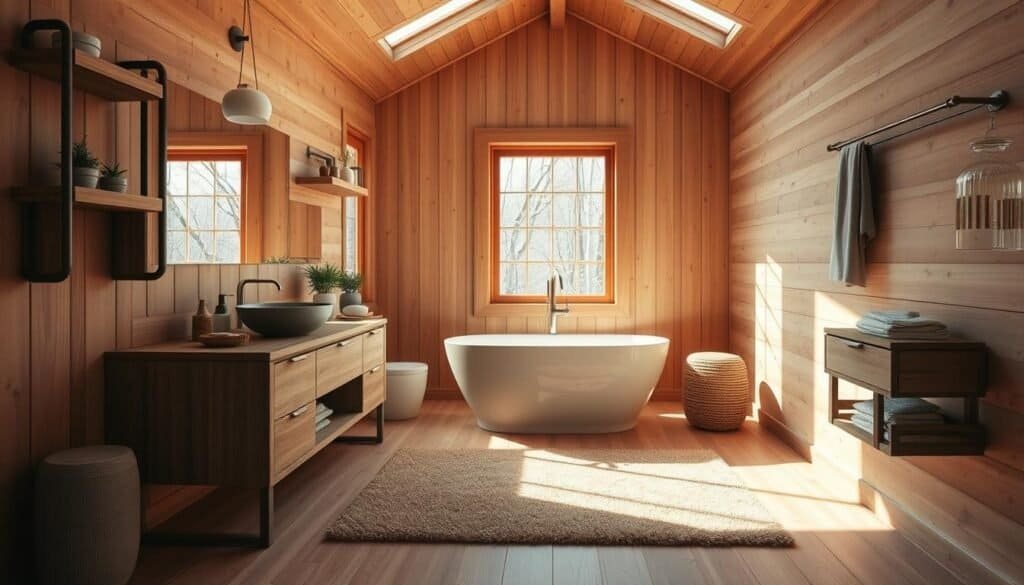
Teak and cedar are great for bathroom wood accents because they resist moisture well. Teak is very durable and can handle the humid bathroom environment. Cedar adds a nice scent to your bathroom with its aromatic properties.
Proper Sealing Techniques
To keep your wood accents looking good, use proper sealing techniques. Apply a waterproof sealant to protect the wood from moisture. Regular upkeep is also key to maintaining the wood’s appearance.
- Use a waterproof sealant to protect the wood from moisture.
- Regularly inspect the sealant for any signs of wear.
- Reapply the sealant as needed to maintain its effectiveness.
Design Options
You have many design options for adding wood to your bathroom. Choose between wall-mounted vs. freestanding designs for vanities or shelving. Wood-topped vanities also add warmth to your countertops.
Bath Caddies and Accessories
Wooden bath caddies and accessories add a cozy feel to your bathroom. They include wooden bath trays and toothbrush holders. They’re functional and enhance your bathroom’s look.
Wood-Framed Mirrors and Details
Adding wood-framed mirrors and details can enhance your bathroom’s wood tone theme. Wood-framed mirrors, in particular, can be a standout feature in your design.
Balancing Wood Tones with Complementary Materials
The secret to a cozy and inviting space is balancing wood tones with the right materials. Wood adds warmth and coziness. But, when paired with the right materials, it creates a perfect harmony.
Color Palettes That Enhance Wood’s Warmth
Choosing the right colors is key to making wood tones warmer. Soft neutrals and earthy tones go well with wood, making a room calm. For a lively look, try deep blues or greens that contrast yet match wood tones.
Texture Contrasts That Create Harmony
Texture is important in design. Mixing smooth wood with rough textures like stone or brick adds depth. For a gentle contrast, pair wood with soft textiles like linen or cotton.
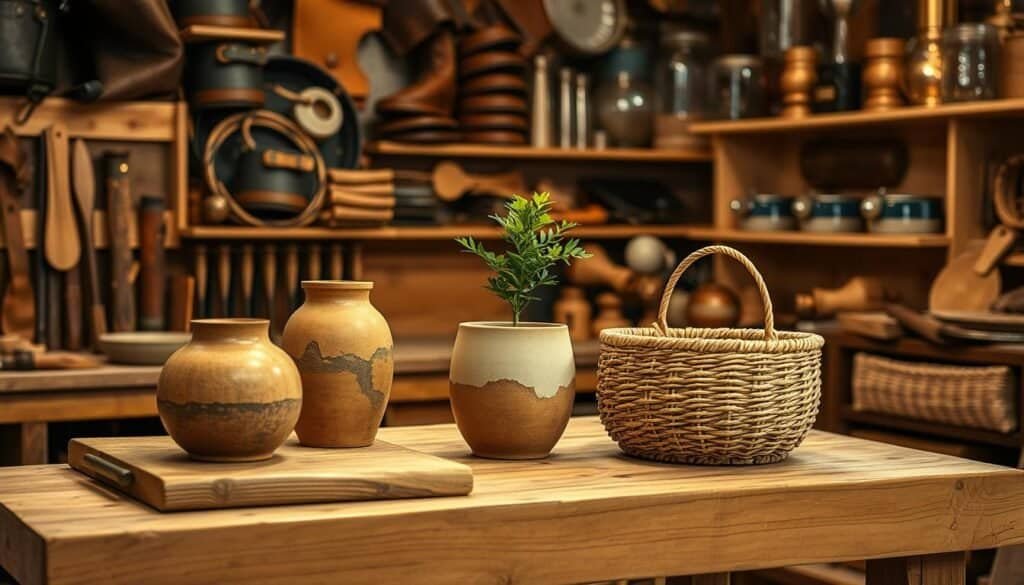
Marble and limestone add elegance with wood tones. It’s about balancing their cool tones with wood’s warmth. For example, a wooden coffee table looks great with a marble or limestone fireplace.
Concrete and Wood Juxtapositions
Concrete and wood make a modern, sleek combo. Concrete’s industrial feel meets wood’s natural warmth, creating a balanced look. Use concrete for floors or walls and wood for furniture or accents.
Brass and Bronze Elements
Adding brass or bronze brings luxury to a room. These metals work well in lighting, hardware, or decor, adding a touch of elegance to wood spaces.
Blackened Steel Contrasts
Pairing wood with blackened steel is dramatic. This contrast is perfect for modern, industrial interiors.
By carefully balancing wood tones with the right materials, you can make a space that’s both harmonious and inviting. It shows off your personal style.
Seasonal Adaptations for Wood-Toned Spaces
Seasonal changes can revitalize your wood-toned interiors. Simple adjustments can update your home’s feel to match the season.
Airy Accessories and Arrangements
In spring and summer, add light textiles and natural rugs to your wood tones. Move furniture to let in more light and open up the space.
Indoor-Outdoor Wood Connections
Warm months are perfect for blending indoor and outdoor wood tones. Use outdoor furniture that matches your indoor wood accents.
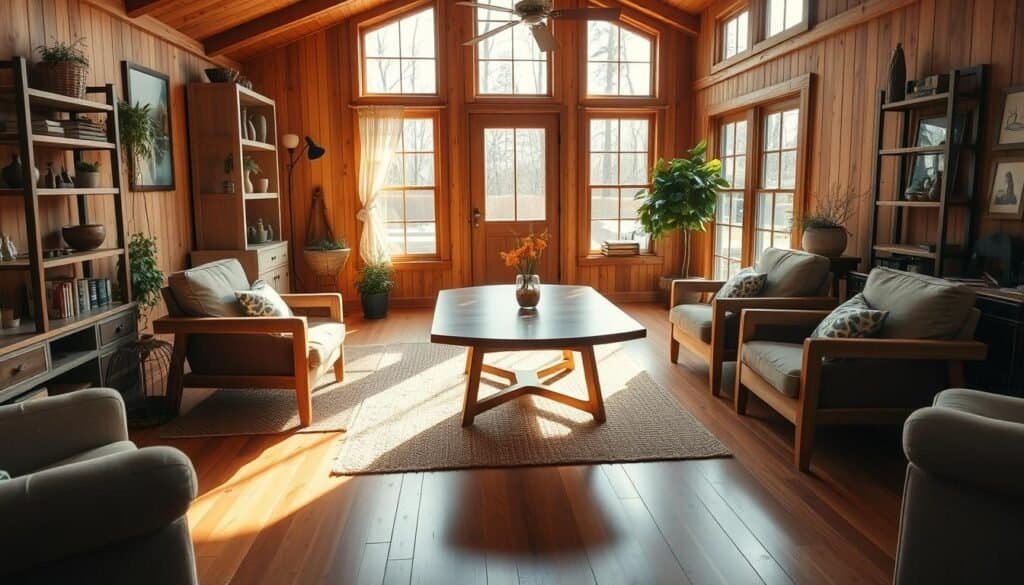
In autumn and winter, darker woods bring warmth. Add darker wood pieces to make your space cozy and inviting with wood tones..
- Use darker wood tones for accent pieces like coffee tables or wall art.
- Layer rugs with natural fibers and subtle patterns.
- Incorporate throw blankets in complementary colors.
Holiday Decorating with Natural Elements
For holidays, add natural elements like pinecones and evergreen sprigs to your wood spaces. For more ideas, visit The Sawdust Man.
Introducing Color While Maintaining Calm
To add color without losing calm, use soft pastels or muted tones. Try accessories like vases, pillows, or wall art.
Botanical Pairings with Wood Tones
Wood tones look great with plants or botanical prints. Choose plants with different textures to add depth and interest.
Sustainable and Eco-Friendly Wood Options
More people want a greener home. They look for wood that’s good for the planet but also looks great. They want wood that’s eco-friendly and adds character to their homes.
Barn Wood and Architectural Salvage
Barn wood and architectural salvage bring history and charm to any room. It’s eco-friendly and tells a story. You can use it for beams or create a stunning wall.
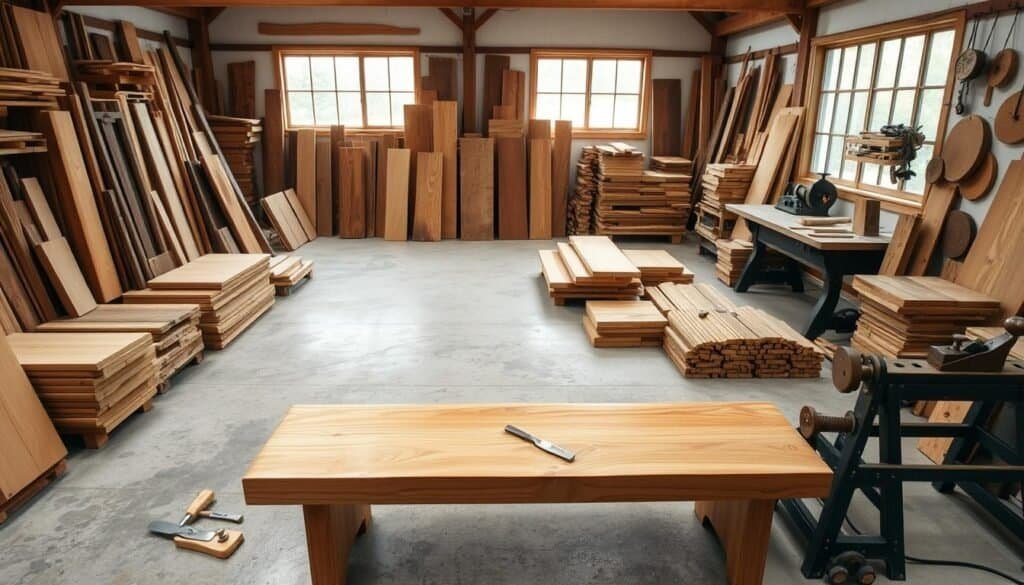
When picking wood, look for FSC (Forest Stewardship Council) certification. It means the wood comes from well-managed forests. PEFC (Programme for the Endorsement of Forest Certification) is another good standard.
Bamboo and Cork Applications
Bamboo and cork are great alternatives to regular wood. Bamboo is strong and can be used for floors, furniture, and more. Cork is good for floors and walls because of its texture and insulation.
Engineered Wood Products
Engineered wood products use wood fibers and adhesives. They’re a green choice that saves wood. They work well for floors and furniture.
Choosing eco-friendly wood lets homeowners make stylish, green spaces. It’s a way to be responsible and beautiful at the same time.
Conclusion: Embracing the Timeless Tranquility of Wood
Adding soft neutral wood tones to your home can make it calm and peaceful. We’ve seen how wood tones can make living rooms and bedrooms serene. This shows how wood can change your home’s feel.
Wood brings timeless peace to your home. It’s perfect for creating a relaxing space. Whether you’re planning a mood board or designing a room, wood offers many options. You can find the right wood to match your style.
When adding wood to your space, mix it with other materials for balance. This creates a calm and welcoming atmosphere. With the right mix, your home can become a place of peace and renewal.