Creating a home that feels like your own is more than decorating. It’s about transforming underutilized areas into inviting spaces. You might want a cozy reading nook or a functional home office. The goal is to find overlooked areas and make them special.
This effort, called placemaking, makes your home better and helps your community. It turns your home into a reflection of you and your needs. By using urban transformation, you can make spaces you love.
The Psychology Behind Comfortable Spaces
Understanding the psychology of comfortable spaces helps us design areas for relaxation and happiness. These spaces are more than just pretty; they’re about creating a sense of ease.
Creating Spaces That Reflect Your Personality
Adding personal items and artwork makes a space feel more welcoming. This personal touch greatly affects how comfortable you feel.
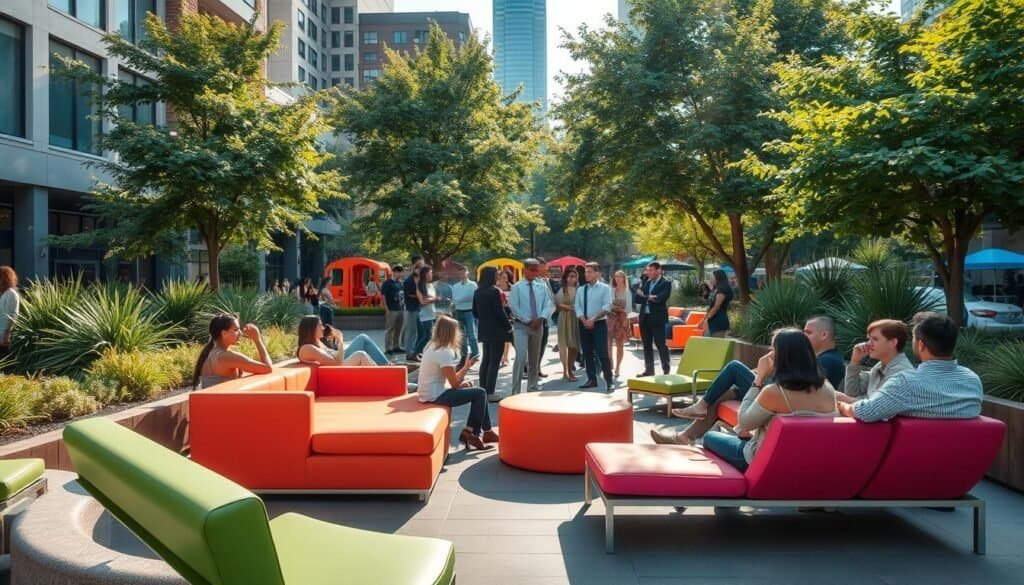
Balancing function and aesthetics is key in creating comfortable spaces. Mixing textures and colors adds depth and interest, making a space inviting. This balance is essential in urban development projects and neighborhood regeneration efforts, aiming to create vibrant communities.
By considering both the psychological and physical aspects, we can transform public spaces into places that are both functional and enjoyable.
Identifying Underutilized Areas in Your Home
To make your home more functional, find areas not being used well. Look at your home’s layout and how things move around.
Transitional Areas Between Rooms
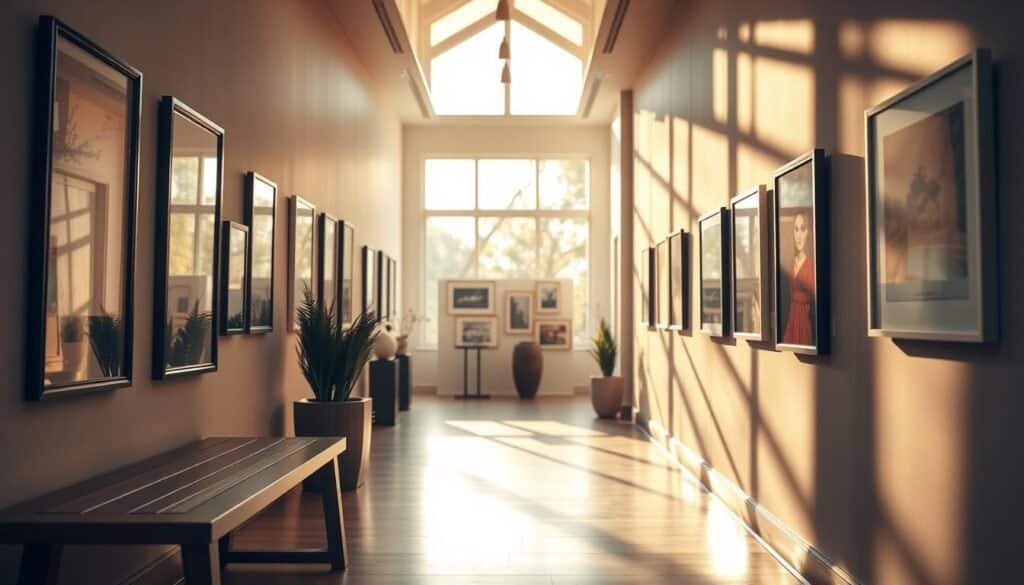
Spaces between rooms are often ignored. These transitional areas can be improved with smart decor or furniture that does more than one thing. For example, a narrow hallway can become a gallery with framed art and a slim console table, as shown in some stunning small space home decor ideas.
Dead Corners and Alcoves
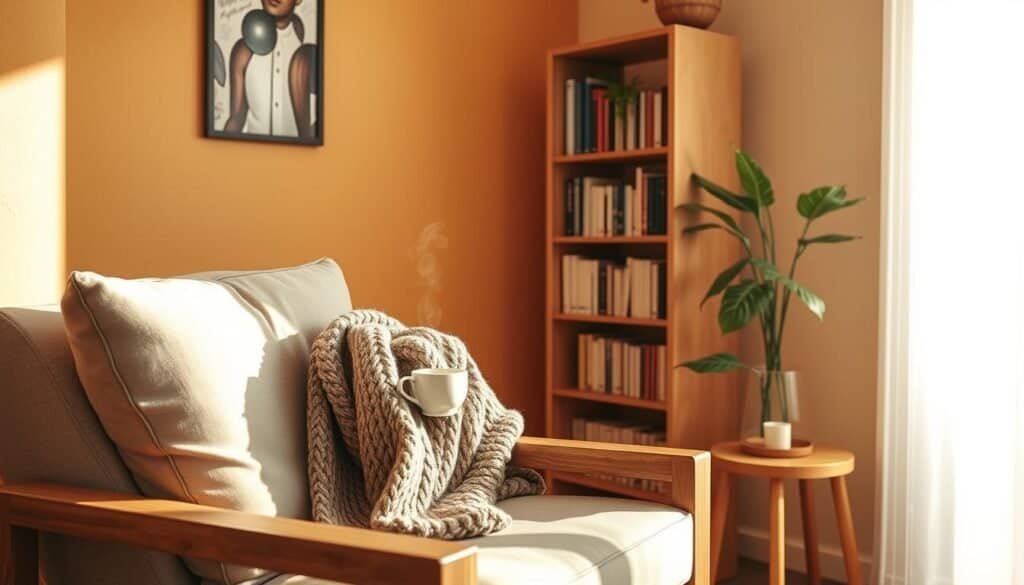
Dead corners and alcoves are common in many homes. They can be turned into cozy reading spots or display areas with the right furniture and lighting.

Doing a traffic flow analysis shows how you move through your home. It points out areas that could be better used for flow and function.
Light Assessment for Different Times of Day
Looking at the light in your home at different times can also show what needs work. Natural light can make a room feel more welcoming and cozy.
By understanding these points, you can start thinking about how to use these areas better. You can turn them into useful and beautiful parts of your home.
Hallways: From Passageways to Purposeful Galleries
Make your home look better by turning hallways into galleries. Hallways are more than just paths; they can show off your style. They can become beautiful spaces that reflect your personality.
Gallery Wall Techniques
Turning a hallway into a gallery wall is a great idea. First, pick a theme or color for your artwork and frames. Then, lay out the pieces on the floor before hanging them.
- Choose a mix of frame styles and sizes to add visual interest.
- Use a level to ensure straight alignment.
- Consider creating a focal point with a larger or more striking piece.
Lighting for Artwork Enhancement
Good lighting makes your hallway gallery stand out. Think about installing picture lights or track lighting to highlight your favorite pieces.
- Use LED lights for energy efficiency.
- Adjust the lighting to create a warm ambiance.
- Experiment with different light intensities to find the perfect balance.
Slim console tables or wall-mounted shelves can add functionality to your hallway. They provide a surface for decorative items or storage without cluttering the space.
Hidden Storage Ideas for Narrow Spaces
In narrow hallways, hidden storage is key. Think about wall-mounted cabinets or secret storage compartments behind decorative elements.
- Use under-shelf baskets for additional storage.
- Opt for slim, wall-mounted hooks for coats or bags.
- Invest in a storage ottoman that doubles as a seat.
By using these ideas, you can turn your hallway into a gallery that looks great and meets your needs.
Transforming Awkward Corners Into Cozy Nooks
Turning awkward corners into cozy nooks can change your small apartment. The right elements can make these spaces inviting. They add to your living room’s charm.
Comfortable Seating Options for Small Spaces
Choosing the right seating is key. Opt for plush armchairs or compact sofas that fit well in the corner. They offer comfort and create a cozy spot.
Lighting for Comfort and Function
Lighting is vital for your nook’s feel. Use table lamps or floor lamps for warm, inviting light. It’s good for both comfort and practical use.
For a nook that does it all, think about fold-down desks or wall-mounted shelving systems. They’re great for small spaces and can hold your work or decor.
Tech Integration for Modern Needs
In today’s world, tech in your nook is essential. Add USB ports or wireless charging stations to keep your devices charged.
Plant Selection for Different Light Conditions
Plants bring life and warmth to your nook. Pick plants that do well in your space’s light, like low-light plants like snake plants or ZZ plants for dim areas.
Wooden Accents for Warmth and Texture
Wooden accents add warmth and texture. Reclaimed wood shelves or wooden decorative boxes give your nook a cozy, farmhouse vibe.
With these tips, you can turn awkward corners into cozy spots. They’re great for relaxing, working, or enjoying quiet time. Whether your room is small or spacious, these ideas will make it welcoming and useful.
Entryways That Welcome and Function
The entryway of your home is key to its feel. It’s important to mix function with beauty. A good entryway makes your home feel more inviting.
Minimalist Solutions for Small Entryways
Small entryways look better with a minimalist style. Choose furniture with slim profiles, like a narrow console table. This keeps the space open and clutter-free.
Hidden Storage for Everyday Items
Hidden storage, like hooks or a storage bench, keeps things tidy. It keeps your entryway clean and organized.
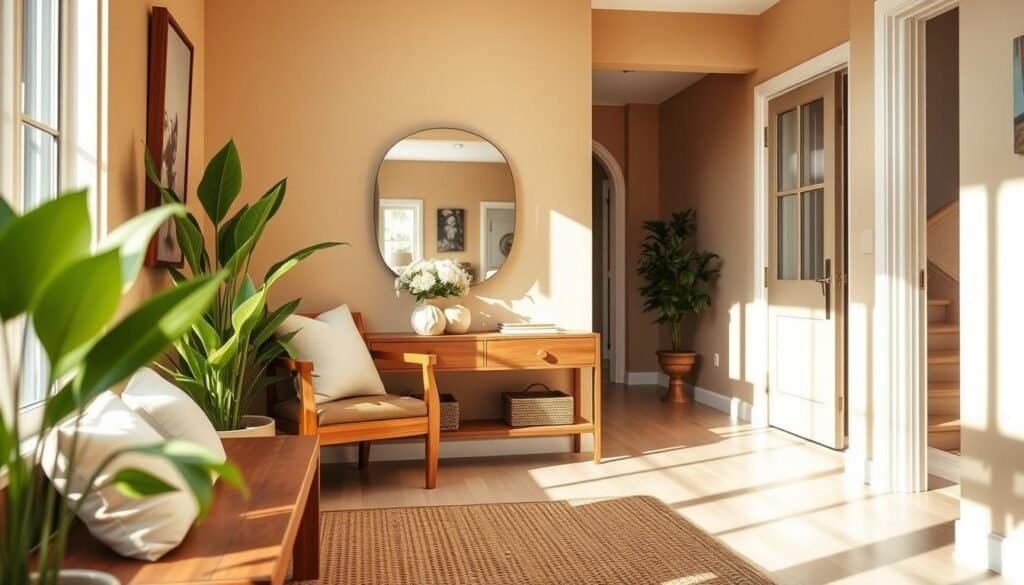
A statement piece, like a mirror or art, can set the mood for your home. It adds personality and makes a lasting impression.
Neutral Palettes with Personality
Start with a neutral color scheme and add decor that shows your style. This makes your entryway warm and inviting. It also makes it easy to change as your taste evolves.
With these tips, you can make an entryway that welcomes and works well. It will show off your style and prepare the way for your home’s interior design.
Living Room TV Areas: Balancing Technology and Style
Creating a harmonious living room TV area is all about mixing technology with style. This can be done through smart design and using space wisely. In a modern boho sitting room, the TV area can be a key feature that fits right in with the room’s unique look.
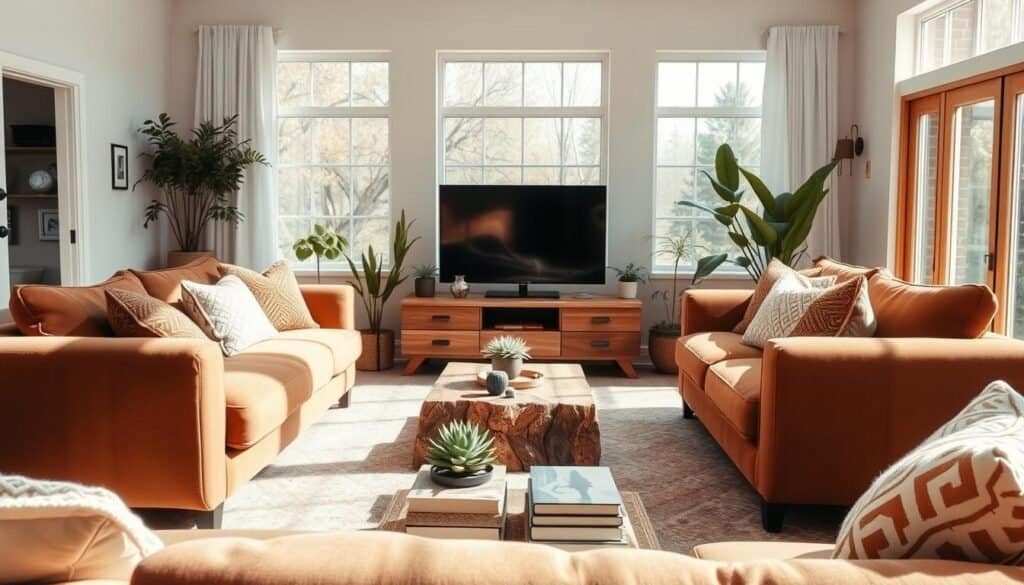
One big challenge in designing a TV area is dealing with tech clutter. Integrated storage solutions are key to keeping things tidy. For example, a media console with storage can hide cables and devices, making the area look cleaner.
- Use cabinets or shelves that match the room’s décor to store media devices and accessories.
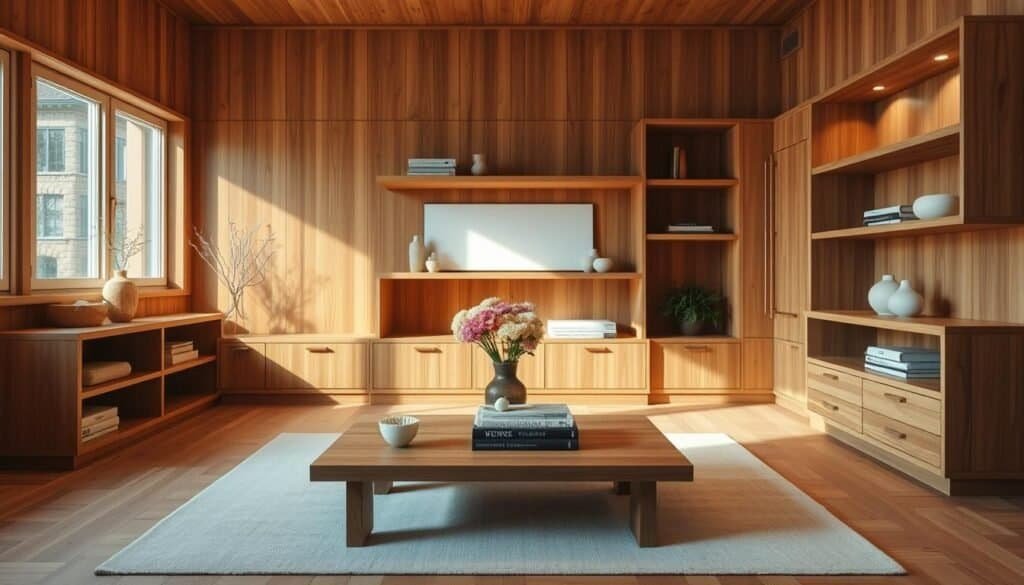
- Consider a wooden themed living room console table that adds warmth while providing storage.
Cable Management Strategies
Keeping cables organized is vital for a neat TV area. Use cable ties, run cables behind walls or furniture, and use cord organizers. This not only looks better but also keeps dust off cables.
Corner Configurations That Maximize Space
In many living rooms, corners can be used to make the most of space. A corner TV stand or shelving unit can turn a corner into a cozy spot for watching TV.
- Assess the room’s layout to find the best corner for the TV area.
- Choose a corner TV stand that fits the room’s décor and offers extra storage.
Furniture Arrangement for Optimal Viewing
How you arrange furniture around the TV is key for a good viewing experience. Think about the viewing angle, distance, and TV height when setting up seating. In a simple apartment living room design, a straightforward furniture setup can improve viewing.
Softening the Tech Presence with Organic Materials
Adding wood, plants, or woven textiles can make the TV area feel more inviting. This mix of technology and natural elements creates a welcoming space.
Balancing Screen Space with Decorative Elements
It’s also important to balance the TV with decorative items. Adding artwork, decorative vases, or sculptures around the TV can make the area beautiful even when the TV is off.
By using these strategies, you can make a TV area that looks great and works well. Whether it’s a cozy wooden themed living room or a spacious modern boho sitting room, the result will be stunning.
Turn Passing Spaces Into Places With Multifunctional Furniture
Multifunctional furniture is changing how we use our living areas. It makes them more efficient and stylish. In small apartments, it’s a big help. It saves space and adds function without losing style.
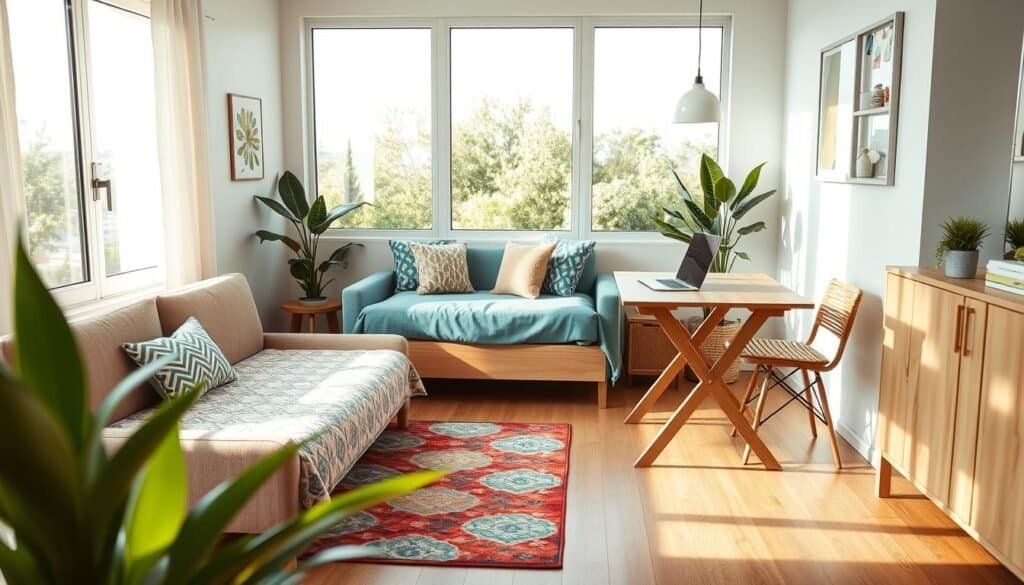
Nesting tables and expandable furniture are great for small spaces. They expand when needed and fold up when not. This makes them perfect for neutral living room apartment small spaces. For more ideas, check out this page.
Modular Systems That Grow with Your Needs
Modular furniture systems grow with you. They can change shape or size as your needs do. They’re a smart choice for families or changing lifestyles.
Quality Considerations for Dual-Purpose Furniture
When picking multifunctional furniture, quality matters most. Choose pieces that are both useful and stylish. A good storage ottoman, for example, can be a seat and a storage spot, boosting your living room’s function.
- Durable construction
- Stylish design
- Functional versatility
Stylish Options That Don’t Scream “Convertible”
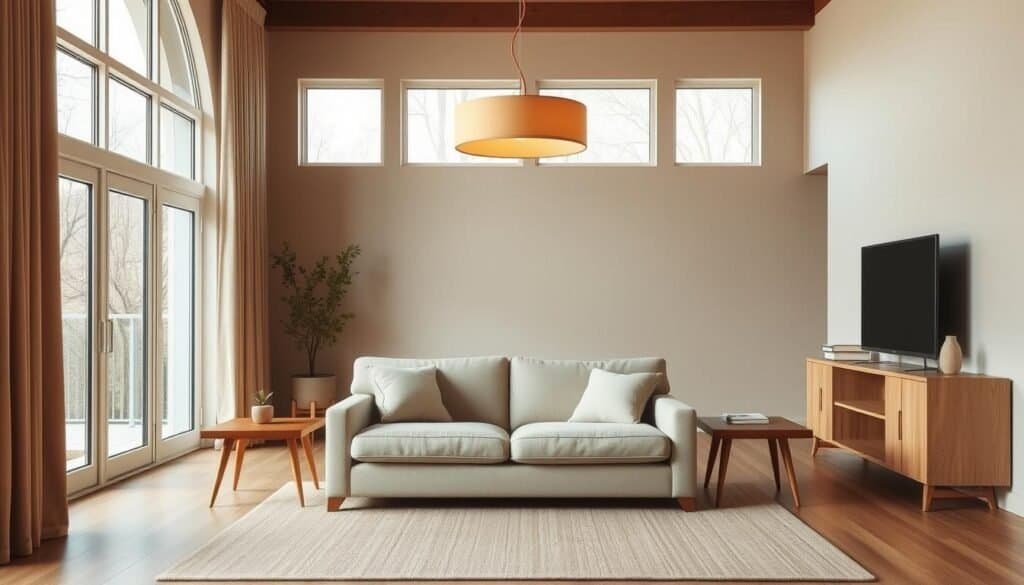
Many multifunctional pieces are stylish and subtle. They don’t look like they’re doing double duty. For a small apartment living room neutral look, find sleek designs that fit right in.
Working with Designers for Bespoke Solutions
For a unique space, team up with a designer for custom furniture. It’s a way to get furniture that fits your exact needs and taste.
DIY Customization Projects for Standard Furniture
If you’re on a tight budget or love DIY, try customizing regular furniture. A bit of creativity can turn a simple piece into something useful, making your neutral apartment living room cozy feel even better.
Creating Cohesive Open-Concept Spaces
Open-concept living areas are a blank canvas for creativity. They allow homeowners to create a space that is both useful and beautiful. The key is to make sure all parts of the space feel connected.
Furniture as Room Dividers
Using furniture as room dividers is a smart move. For example, a sectional sofa can mark the living area from the dining or kitchen. This method not only separates zones but also adds value to the space.
Using Rugs to Define Zones
Rugs are great for setting apart different zones in an open-concept space. Placing a rug under the dining table or in the living area can visually separate these areas. Pick rugs that match in color and texture to keep the look unified.
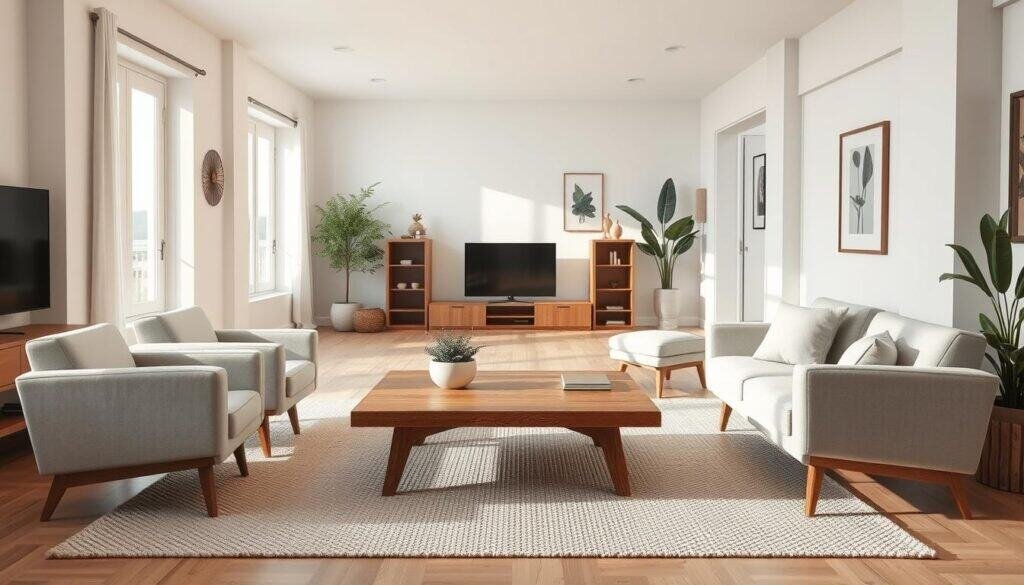
For a smooth flow between areas, use a consistent color palette. Picking a few main colors and using them throughout different zones helps tie everything together. For instance, if you have a bold rug in the living area, use that color in throw pillows or curtains in the dining area.
Texture Layering for Visual Interest
Adding different textures brings depth and interest to an open-concept space. Combine smooth surfaces like glass or metal with rougher textures like wood or woven fibers. This mix makes the space feel lively and welcoming.
Maintaining Style Consistency
Keeping a consistent style in an open-concept space is key to a cohesive look. Whether your style is modern, minimalist, or traditional, make sure all furniture, decor, and colors match your chosen aesthetic.
Functional Transitions Between Cooking and Living Areas
In open-concept spaces, where the kitchen, dining, and living areas are together, it’s important to have smooth transitions. Use a kitchen island or peninsula to act as a buffer between cooking and living areas. This improves both function and flow.
Small Apartment Solutions: Neutral and Natural Aesthetics
Neutral tones and natural elements are key to making small apartments welcoming. A thoughtful design can make a space feel bigger and more comfortable.
Working with Warm vs. Cool Neutrals
Choosing between warm and cool neutrals changes your apartment’s feel. Warm neutrals like beige and taupe make it cozy. Cool neutrals, such as gray and blue, make it calm and bigger.
Adding Depth Without Adding Clutter
To add depth without clutter, use layers of lighting and different textures. Also, add natural elements. For more ideas, check out stunning small space home decor ideas for.

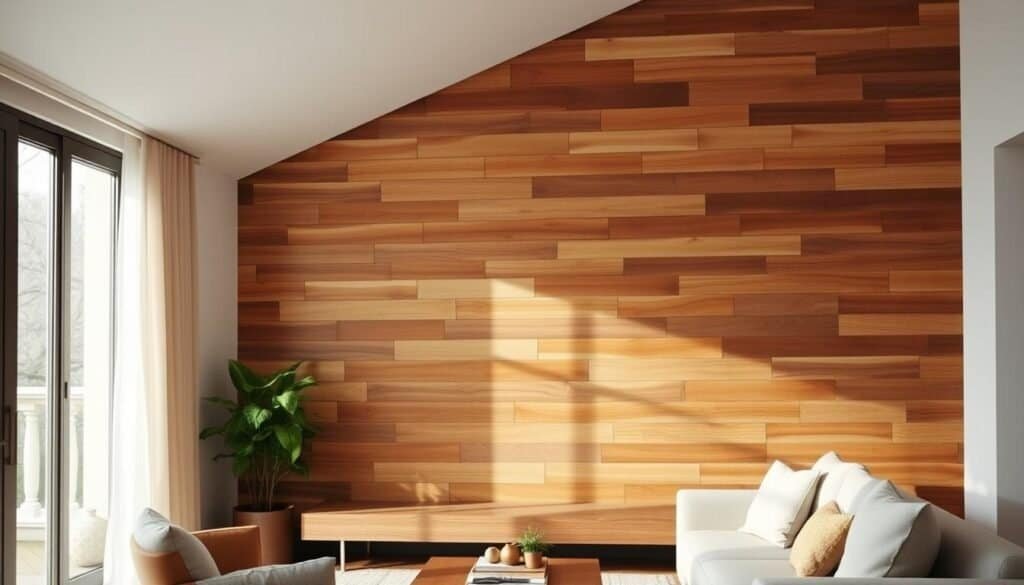
Wooden elements can warm up your apartment. Choose pieces that fit well, like a wooden coffee table or a reclaimed wood shelf.
Plant Integration for Small Apartments
Plants improve air quality and add nature to your home. Pick low-maintenance plants like succulents for indoor spaces.
Texture Without Excess
Texture makes a room more interesting. Mix textures with throw blankets, rugs, and pillows to add depth without clutter.
Statement Pieces That Earn Their Keep
Statement pieces should be both useful and stylish. A bold art piece or a colorful vase can add personality to your space.
By using these strategies, you can design a best apartment design that feels spacious and inviting. Whether it’s a small living room or a compact kitchen, neutral and natural aesthetics are key.
Seasonal Refreshes for Transitional Spaces
Don’t let transitional spaces get old; refresh them seasonally to keep your home lively. Hallways and entryways are often ignored but can greatly benefit from updates.
Seasonal changes in these areas can really change their vibe. Here are some tips to refresh your transitional spaces:
Textile Swaps for Different Seasons
Changing textiles is an easy way to update your spaces. For example, light fabrics and colors in spring can brighten up your entryway.
Lighting Changes for Mood Adjustment
Changing the lighting in transitional spaces can also change their mood. Bright lights can make hallways inviting, while soft lights can make them cozy.
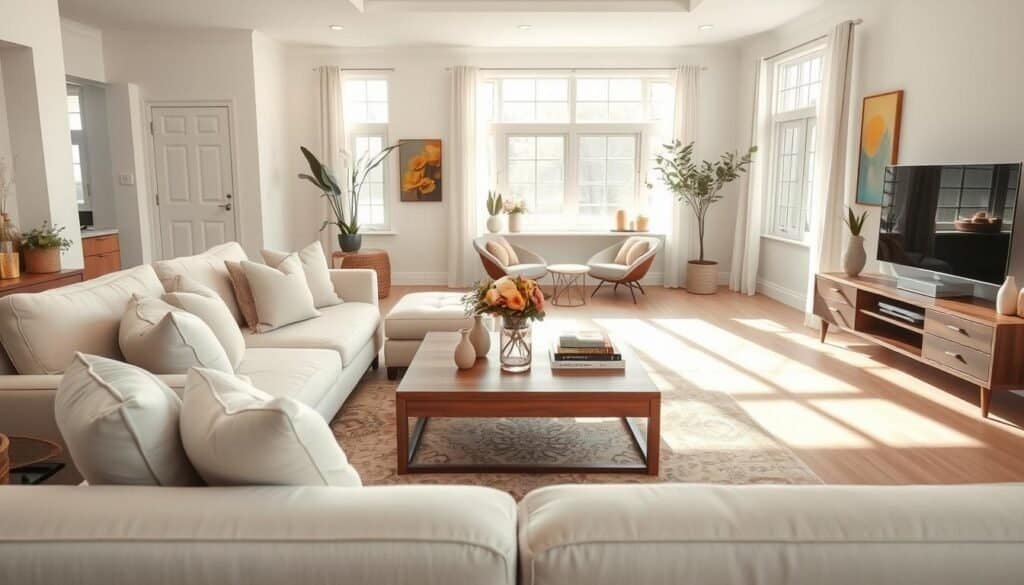
Doing DIY projects can add a personal touch. Creating a gallery wall in a hallway or a decorative wreath for your entryway can make these areas more interesting.
Repurposing Existing Items for New Functions
Repurposing old items is another way to refresh spaces. For instance, an old bench can be repainted and used as a storage bench in an entryway, adding both function and style.
By using these seasonal refreshes, you can make your transitional spaces both functional and enjoyable. This will enhance your overall living room designs and living space ideas.
Conclusion: Embracing the full potentia in every corner of your home
Transforming your home into a cozy and stylish haven is possible. Understanding the psychology behind cozy living rooms and finding hidden spots can unlock your home’s full potentia.
By turning hallways into galleries and making entryways welcoming, every room can be reimagined. Adding multifunctional furniture and blending tech with style in your living room can make it more inviting and useful.
Refreshing one room or your whole house interior requires creativity and a willingness to try new things. With these tips, you can turn ordinary spaces into places for relaxation, fun, and connection. So, start dreaming of the possibilities and let your home’s true beauty shine.