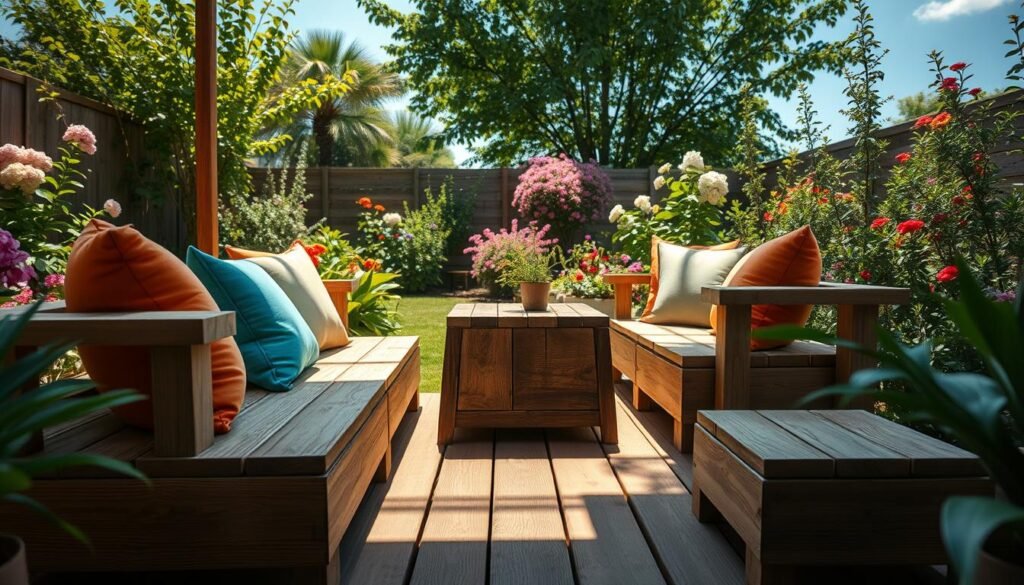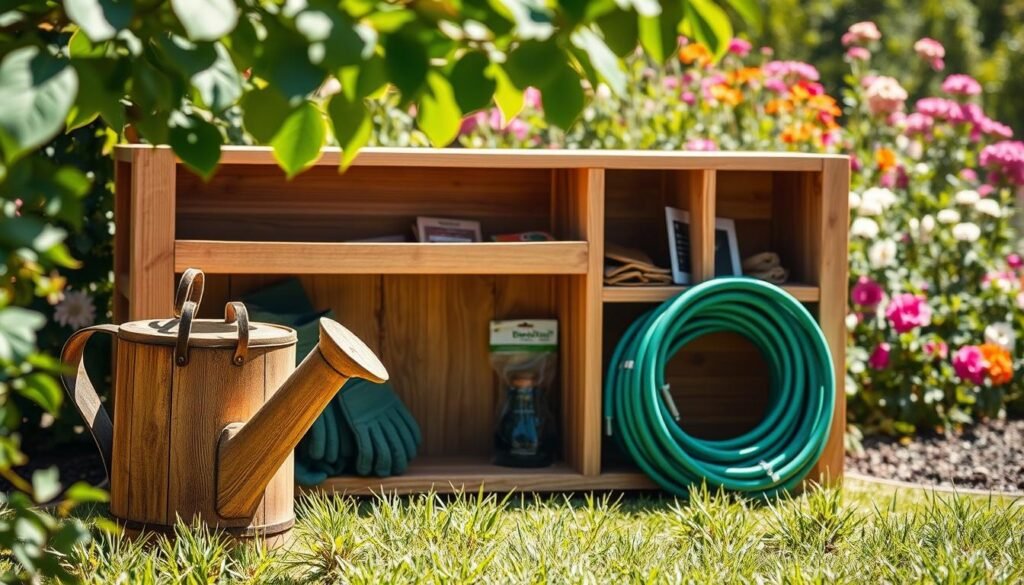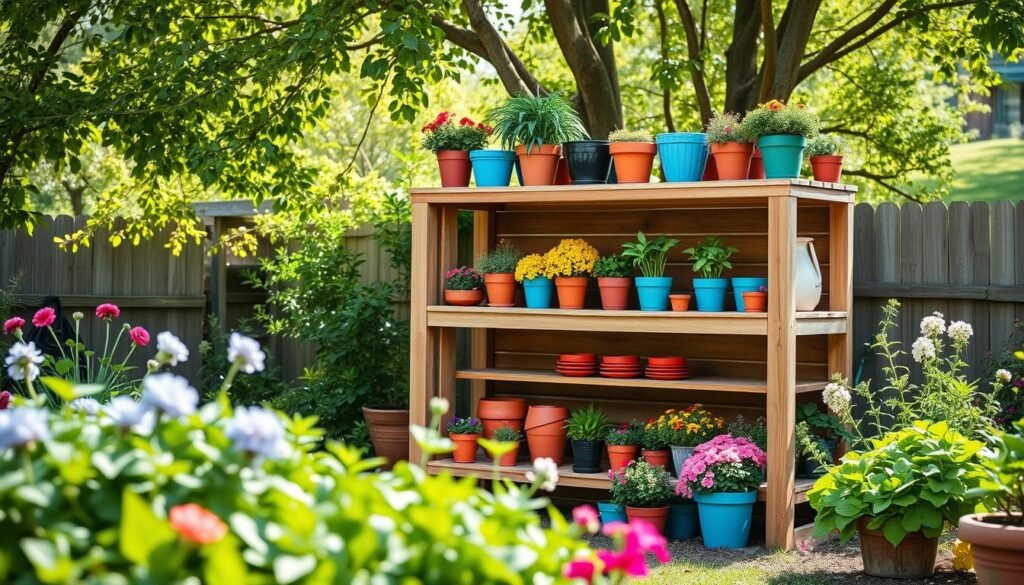
Creating something with your own hands is very rewarding. DIY wood projects mix usefulness with beauty, making your home better.
These woodworking plans are easy to follow, even if you’re new to woodworking. Beginner woodworking projects help you learn new skills and make useful items for your home.
Easy wood crafts can change your daily life for the better. They start with function, then add warmth and style.
The Joy and Value of DIY Woodworking
DIY woodworking is more than just a hobby. It’s a way to make useful items and enjoy the calm of working with wood. It lets people step away from screens and feel the joy of making something by hand.
Turning raw wood into something beautiful and useful is very rewarding. It makes you feel proud and lets you make things that fit your style. Plus, it’s a great way to relax and forget about daily worries.
The benefits of DIY woodworking are many:
- Creates functional and beautiful items for the home
- Offers a therapeutic outlet, reducing stress
- Provides a sense of accomplishment and pride in one’s work
- Can be cost-effective, as DIY projects can be made from reclaimed or affordable materials
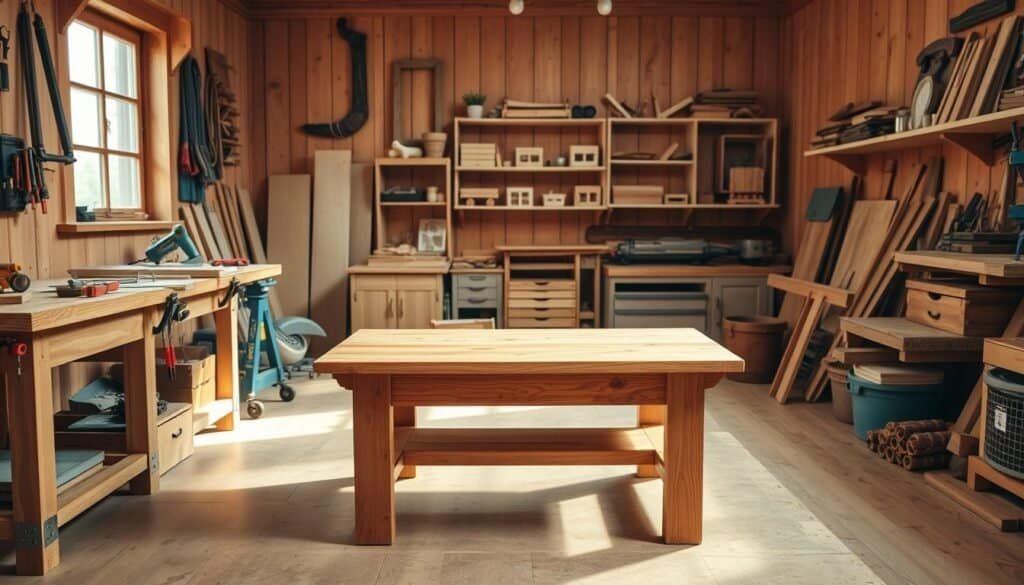
DIY woodworking also has practical benefits. Making things yourself can save money on furniture and decor. It lets you customize items to match your space and style, making your home both useful and beautiful.
In short, DIY woodworking is special because it mixes creativity, usefulness, and personal satisfaction. Whether you’re experienced or new, there’s something for everyone in DIY woodworking.
Functional Furniture Projects for Any Home
Make your home more useful with DIY furniture. These projects are both useful and stylish. You can make furniture that fits your needs and style perfectly.
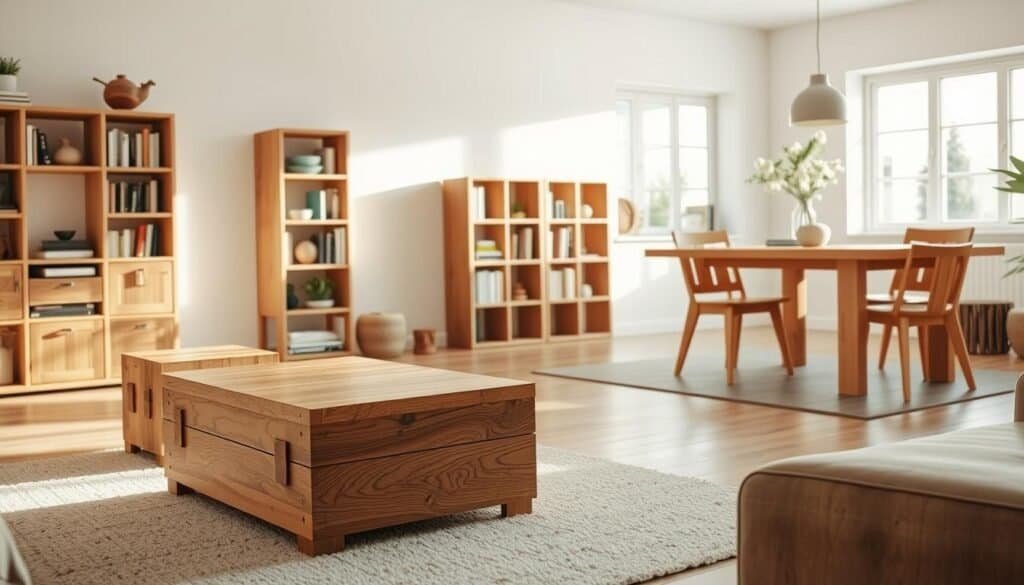
To begin, you’ll need some basic materials and tools. You’ll need wood like oak or pine, a saw, a drill, and sandpaper. You might also need screws, nails, or wood glue for certain projects.
Step-by-Step Building Process
The first step is to measure and cut your wood as planned. Then, put the pieces together with your chosen fasteners. After that, sand the furniture to make it smooth.
- Measure and cut wood
- Assemble the pieces
- Sand the furniture
Customization Options
DIY furniture lets you add your own touches. You can use unique finishes or decorative elements to make your furniture special.
Materials and Tools Needed for Advanced Projects
For harder projects, you might need more tools like a router or a jigsaw. Make sure you have everything you need before you start.
Step-by-Step Building Process for Complex Furniture
Complex furniture needs careful planning and doing. First, make a detailed plan and schedule. Then, follow your plan step by step, measuring and assembling with care.
- Create a detailed plan
- Measure accurately
- Assemble pieces carefully
Finishing Touches
The final touches are key. Spend time on a quality finish, like stain or polyurethane. It will protect your furniture and make it look better.
Smart Storage Solutions to Organize Your Space
DIY storage solutions can make your living space neat and clutter-free. A tidy home looks better and works better too.
Benefits of Smart Storage include a clean space, easy access to things, and a more efficient area. You can do various DIY projects to meet your needs.
Materials and Tools Needed
To start your DIY storage project, you’ll need basic stuff like wood, screws, a drill, and a saw. You might also need a hammer or sandpaper for more complex tasks.
- Wood (e.g., pine or plywood)
- Screws and a drill
- Saw (circular or hand saw)
- Sandpaper for finishing
Step-by-Step Building Process
The building process starts with measuring and cutting wood to size. Then, you assemble it with screws and sand it for a smooth finish.
- Measure and cut the wood according to your plan.
- Assemble the pieces using screws.
- Sand the final product for a smooth finish.
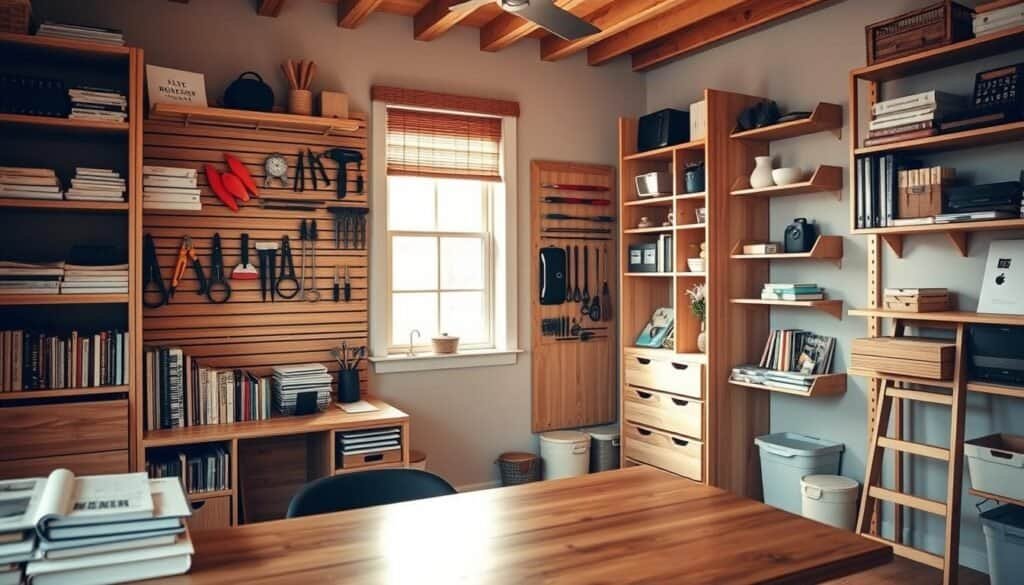
After building your storage, make sure it’s installed right. It should be level and securely attached to the wall to avoid tipping.
Materials and Tools Needed for Advanced Projects
For more complex storage, you might need metal brackets, advanced tools, or special fasteners.
Step-by-Step Building Process for Complex Projects
Complex projects need careful planning and execution. This includes precise measurements, possibly using jigs or templates, and ensuring all parts fit right.
Waterproofing Your Project
To make your storage last, think about waterproofing it. This is key if it’s in a humid spot like a basement or bathroom. A waterproof sealant can keep the material safe from moisture.
By following these tips, you can make smart storage solutions that improve your home’s organization and use.
Decorative Wooden Accents That Add Character
Adding warmth and character to your home is easy with decorative wooden accents. These pieces add a personal touch and make any room cozy.

To start, gather basic materials and tools. For a wooden shelf, you’ll need reclaimed wood, brackets, screws, a drill, and sandpaper. For more complex designs, mix different woods and textures for depth and interest.
Step-by-Step Building Process
First, measure and cut your wood to the right length. Sand the edges to smooth them out. Then, use screws or nails to assemble your piece. Finish with stain or paint to protect and enhance the wood.
- Measure and cut the wood
- Sand the edges
- Assemble the piece
- Apply a finish
Distressing Techniques for Rustic Appeal
To achieve a rustic appeal, try distressing techniques. Sand down edges, use a wire brush for texture, or apply a distressed finish. These methods add character and make your pieces look aged.
Materials and Tools Needed for Planters
For a wooden planter, you’ll need planks, a hammer, nails, and a waterproof liner. Choose durable wood for outdoor use.
Step-by-Step Building Process for Planters
Build the planter box by nailing planks together. Make sure it’s sturdy for soil and plants. Add a waterproof liner to prevent rot.
- Assemble the planter box
- Apply a waterproof liner
- Add soil and plants
Plant Selection and Care
Choose plants based on sunlight and water needs. Pick plants that fit your climate and planter conditions. Regular watering and fertilization keep plants healthy.
By following these steps, you can create beautiful decorative wooden accents. These projects are perfect for DIY enthusiasts or beginners, adding character and warmth to your home.
Useful DIY Wood Projects for the Kitchen
DIY wood projects for the kitchen add a personal touch and make the space more useful. One great project is making a wooden cutting board.
Materials and Tools Needed
You’ll need food-safe wood like maple or walnut, a table saw, sandpaper, and a food-safe finish. Make sure all materials are clean and ready before you start.
Step-by-Step Building Process
First, cut your wood to the size you want. Sand the surface until it’s smooth. If making a laminated cutting board, assemble the pieces.
Then, apply a food-safe finish and let it dry as the instructions say.
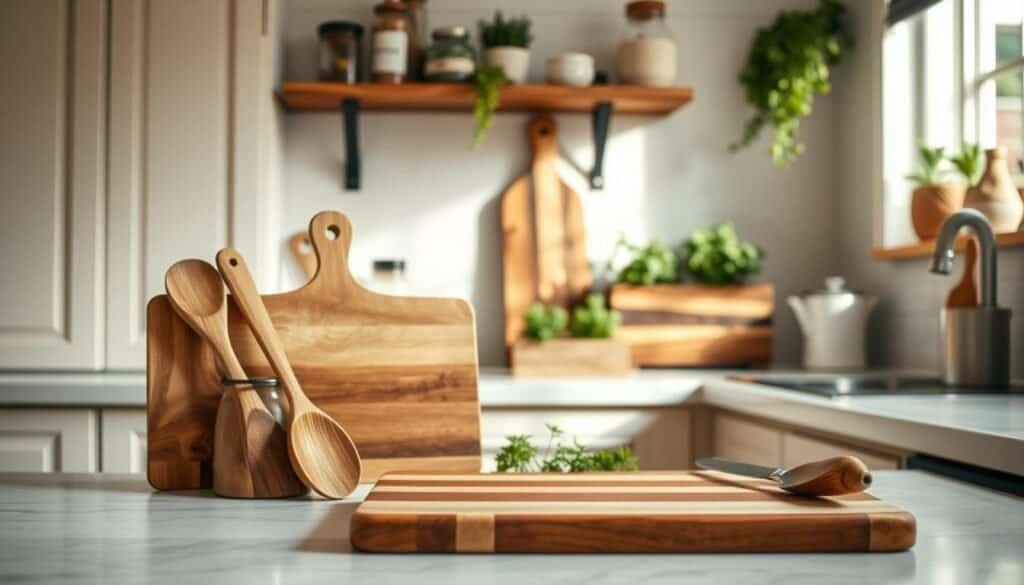
For finishing, use mineral oil or beeswax, both safe for food contact. Follow the product’s instructions to protect your cutting board and keep it safe for use.
Materials and Tools Needed for a Utensil Holder
For a utensil holder, you’ll need thinner wood strips, a drill press, and strong adhesive. Pick a design that matches your kitchen and the utensils you store.
Step-by-Step Building Process for a Utensil Holder
Cut the wood strips to the right length, then shape them with the adhesive. Use the drill press for holes for utensils. Sand the edges to make them smooth.
Maintaining Your Cutting Board
To keep your cutting board in good shape, apply mineral oil regularly to prevent cracks. Clean it well after each use. Don’t expose it to extreme temperatures.
By following these steps and using the right materials, you can make beautiful and useful DIY wood projects for your kitchen. They will last for many years.
Practical Woodworking Projects for Home Office
Woodworking projects can make your home office more organized and efficient. Custom wooden furniture and storage solutions improve both function and look. This makes your workspace better.
Materials and Tools Needed
You’ll need solid wood or plywood and basic tools like a table saw and sandpaper. Quality materials and tools are important for a professional look.
Step-by-Step Building Process
Start by measuring and cutting the wood accurately. Use joinery to assemble the pieces and sand for a smooth finish. Being precise and patient is key. Cut the wood, assemble, and then sand and finish.
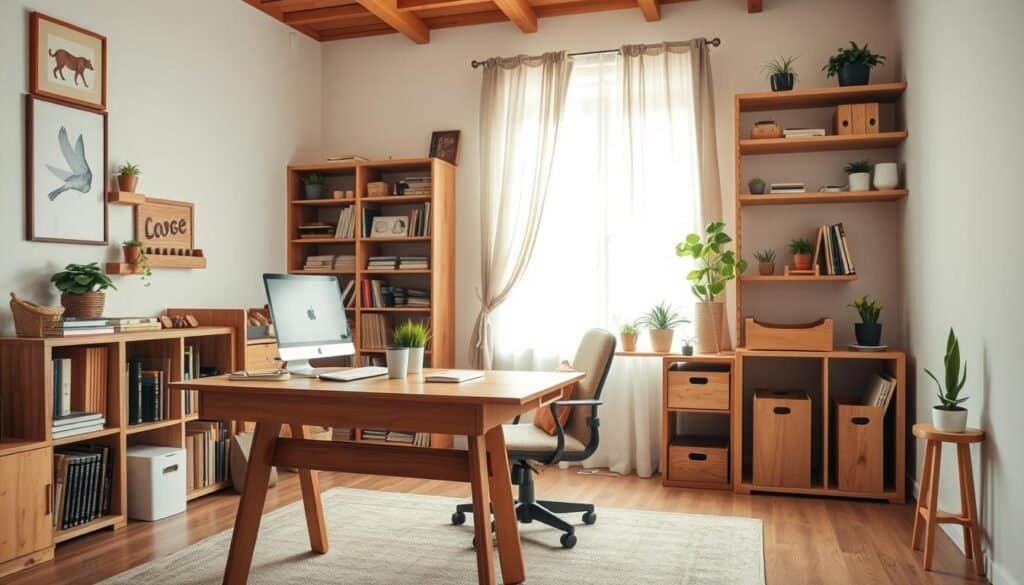
Keeping cables organized is key for a tidy home office. Use wooden channels or boxes for cable management. A good cable system makes your workspace more organized.
Materials and Tools Needed
You’ll need wooden strips, a drill, and cable ties for cable management. The wood and design should match your office decor. Choosing the right materials is important for a good fit.
Step-by-Step Building Process
Measure the cables you need to manage first. Cut the wooden strips, drill holes, and assemble the channels. This project can greatly reduce clutter.
Adding a Weathered Barn Wood Finish
A weathered barn wood finish adds a rustic charm. Use staining and distressing to achieve this look. A weathered finish makes your office unique and appealing. Apply a stain that looks like weathered wood and then distress it.
Outdoor Wood Projects to Enhance Your Yard
DIY outdoor wood projects can make your yard more beautiful and useful. You can build planters, benches, and birdhouses. These projects add charm and make your yard more welcoming.
Materials and Tools Needed
You’ll need strong materials like cedar or pressure-treated wood for your project. You’ll also need tools like a saw, drill, and sandpaper. Choosing the right materials is key to withstand weather.
Step-by-Step Building Process
First, design your project, thinking about the space and its use. Cut and put the wood together as your plan shows. Sand the wood to prevent splinters. Following a detailed plan ensures your project is strong and well-made. The steps include measuring, cutting, assembling, and finishing.
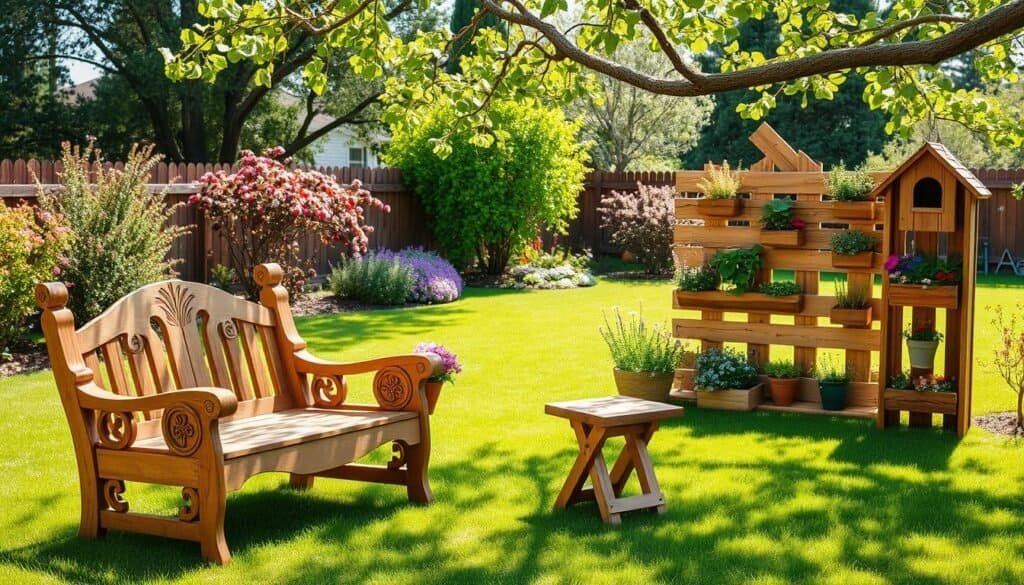
Using a weather-proof sealant or stain helps your project last longer. It protects the wood from rain, sun, and temperature changes. Check and reapply as needed to keep it protected.
Materials and Tools Needed
For bigger projects, you might need metal brackets or waterproof glue. Make sure you have all the tools and materials before you start. This avoids any delays.
Step-by-Step Building Process
For a planter box, cut the wood, build the box, and add legs or supports. Don’t forget to sand and apply a finish. Being precise with measurements and cuts is important for success.
Placement and Maintenance Tips
Put your outdoor wood projects in spots that fit your yard’s design and use. Regular care, like cleaning and reapplying sealant, keeps them looking great. Proper placement and regular care are vital for enjoying your projects for a long time.
Weekend Wood Projects Using Scrap Materials
Turning scrap wood into useful items is a fun weekend project. It’s a mix of creativity and being green. You get to make unique things for your house while cutting down on waste.
Materials and Tools Needed
To begin, collect scrap wood of different sizes. You’ll also need a tape measure, safety glasses, and basic tools like a saw and drill. Having lots of materials lets you be creative with your design.
Step-by-Step Building Process
First, measure and cut the wood to the right size. Use wood glue and nails or screws to put it together. Then, sand the edges to make them smooth. This method works for simple shelves to fancy decorations.
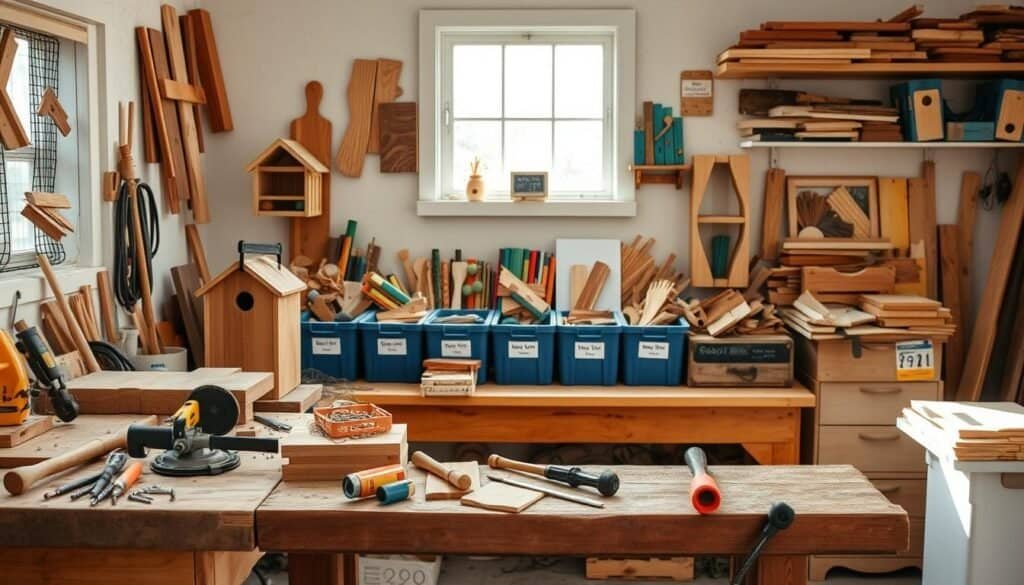
After building, think about adding a finish or decorations. Staining or painting can make it look better. Adding metal or fabric can make it even more special.
Materials and Tools Needed for Complex Projects
For detailed designs, you might need more tools. A jigsaw for curves or a router for fancy edges might be needed. Don’t forget safety gear like a dust mask and ear protection.
Step-by-Step Building Process for Intricate Designs
For detailed projects, be precise. Use templates or patterns for your cuts. Work slowly to keep your work accurate. Sanding between coats of finish can also make it look professional.
Secure Mounting Techniques
Make sure your project is mounted safely. For wall items, find the wall studs and use the right screws or anchors. This is key for your project’s stability and lasting quality.
By following these steps, you can make beautiful and useful items from scrap wood. It improves your home and helps the environment.
Conclusion: Starting Your DIY Wood Project Journey
Starting a DIY wood project journey can be very rewarding. You get to make useful and beautiful items for your home. This article showed how woodworking can be versatile and valuable, from making furniture to adding decorative touches.
If you’re new to woodworking, start with simple projects and then move to harder ones. DIY wood projects are a great way to improve your skills and make something with your own hands. You can make things to organize your space, improve your kitchen, or even create a home office.
When you start your DIY wood project journey, pick projects that match your skill level and interests. With time and practice, you’ll make beautiful and useful items that make your home special. So, begin your woodworking projects and enjoy making your ideas come to life with DIY wood projects.