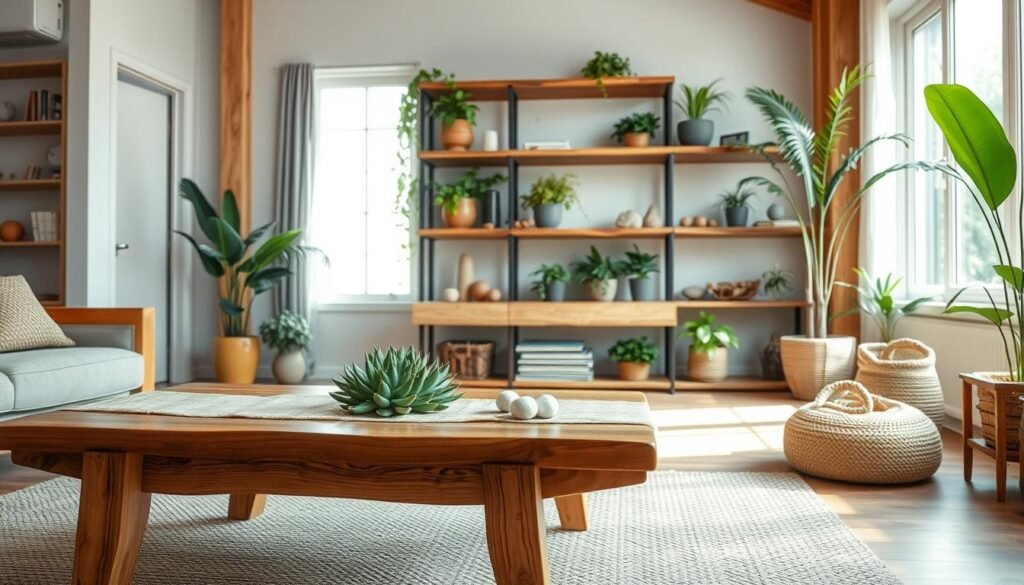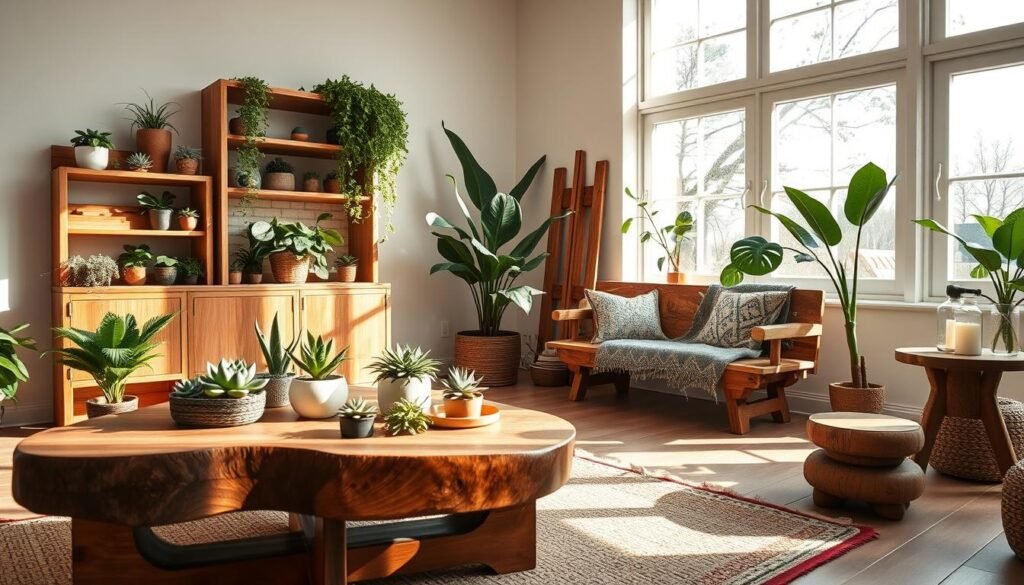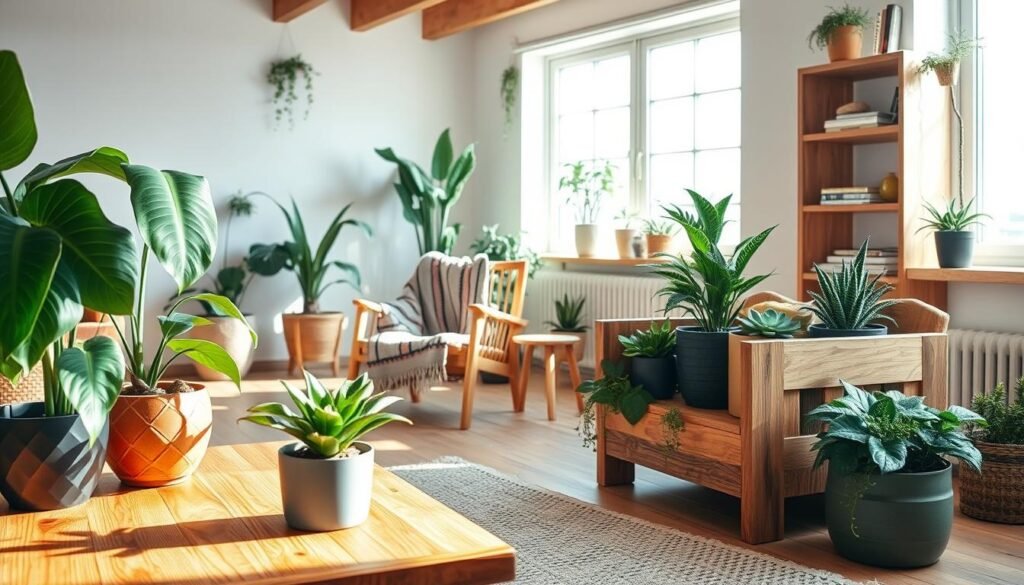
Doing creative activities can calm your mind and improve focus. Making indoor plant decor adds nature to your space and gives you a sense of achievement.
Working on DIY plant decor lets you show your creativity and care for your plants. This mindfulness is very soothing, helping you stay in the moment. If you’re looking for a hobby or a way to relax, plant decor ideas are a good place to start.
Adding plants to your decor does more than make your space look good. It also creates a calm area that helps clear your mind. Check out mindfulness plant projects and see how making something beautiful can improve your mental health.
The Mindful Connection Between Plants and Mental Focus
Plant care can help improve focus through mindfulness. Daily tasks like watering and pruning plants bring calm and serenity.
Plant care tasks like watering and pruning require focus. They help you stay in the moment, reducing stress and improving mental clarity.
Benefits of Mindfulness Plant Projects:
- Enhanced mental focus through regular care routines
- Reduced stress levels due to the calming presence of plants
- Increased sense of accomplishment from nurturing living things
Adding plants to your living room decor boosts mindfulness. Plants with different textures and growth patterns make your space interesting and engaging.
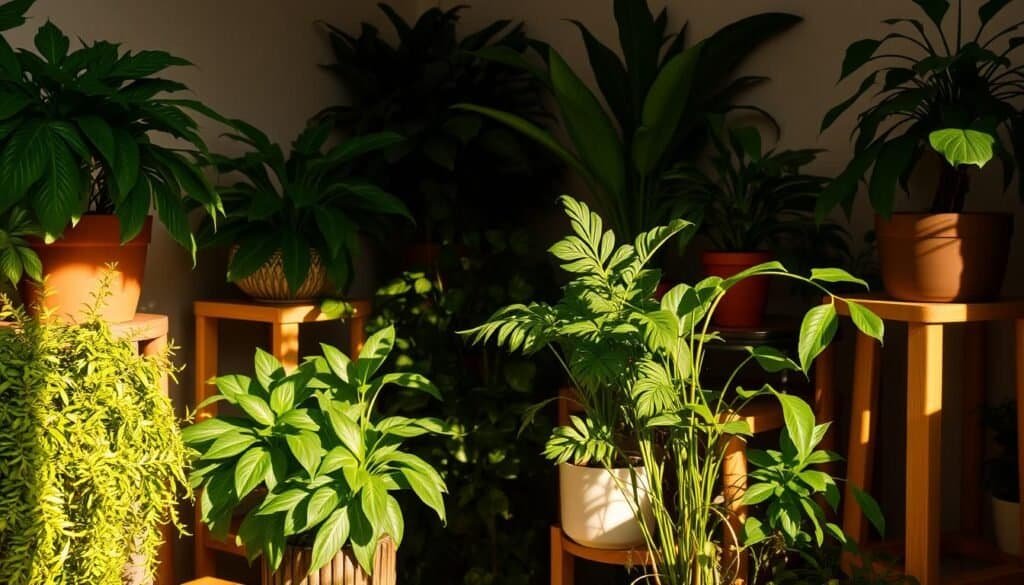
Consider low-maintenance plants like succulents or flowering plants for color. Choose plants that match your lifestyle and decor to create a peaceful space. This space promotes relaxation and mental focus.
Want a Small Project To Focus Your Mind? Try a Plant Décor Piece
Working on a small DIY project like a plant decor piece can be very calming. Doing creative things helps lower stress and clear your mind. By making a beautiful plant decor, you can make your space nicer and feel more relaxed.
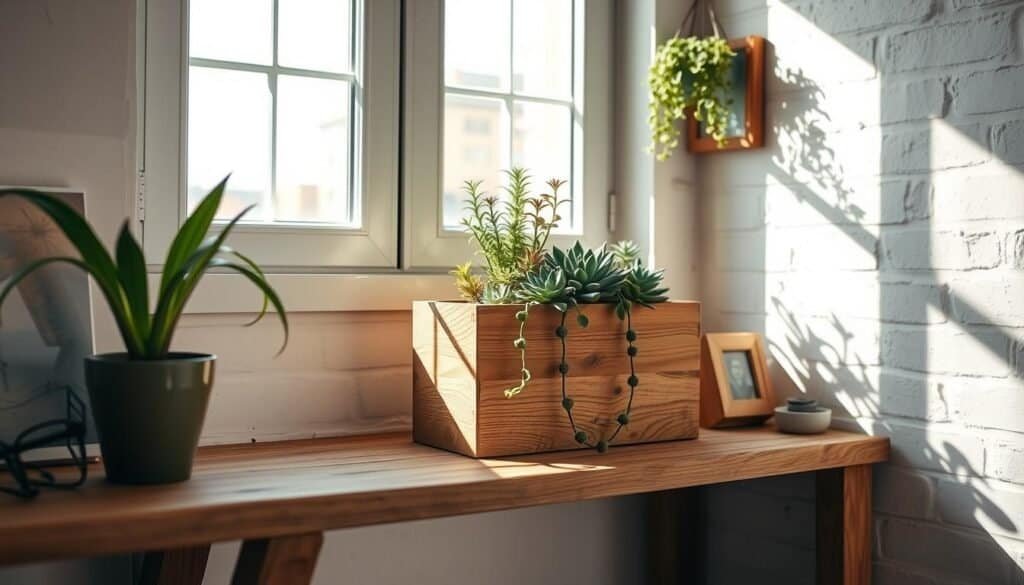
To start, you’ll need some basic supplies for plant decor. You’ll need plants, pots, soil, and things like pebbles or moss for decoration. Pick plants that are easy to care for, like succulents or air plants, for your indoor decor.
Basic Supplies Every Plant Enthuasiast Needs, Where to Find Affordable Materials
Finding affordable materials for your DIY plant decor is important. You can find good deals at local gardening stores or online. Here are some basic supplies you’ll need:
- Plants of your choice
- Pots and planters
- Soil and fertilizers
- Decorative items like pebbles, moss, or shells
- Gardening tools
For a plant decor DIY tutorial, pick a pot that fits your home’s style. Then, fill it with soil, plant your chosen plants, and add decorations. This easy project can be done in under an hour and makes you feel proud.
To find affordable materials for plant decor, check thrift stores, garage sales, or online. You can find unique pots and decorations for less than new ones.
Living Wall Art: Creating a Botanical Masterpiece
Boho plant wall decor is more than a style. It’s a way to bring nature inside and boost your mood. Making a living wall is a fun DIY project that adds natural beauty to any room.
To begin, gather a few essentials: a frame or trellis, a watering system, and your favorite plants. Mix plants with different textures and colors for a striking display. Succulents and air plants are great for living walls because they’re easy to care for.
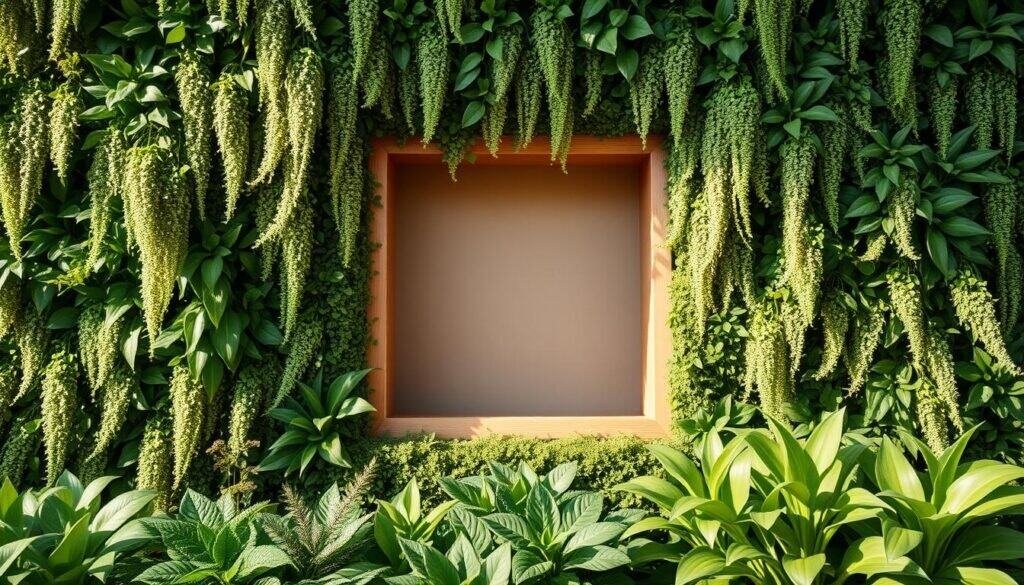
Think about the look you want for your living wall. Do you like a lush, green wall or a sleek, modern one? Choose plants that do well in your room’s light. For a botanical masterpiece, mix plants with various growth habits and textures.
For indoor wall decor ideas, combine plants with decorative items like shells or driftwood. Adding lights can also highlight your plants and create a stunning effect.
- Choose a frame or trellis that fits your space and style.
- Select plants that are suitable for the lighting conditions in your room.
- Consider a watering system to make maintenance easier.
By following these tips, you can make a beautiful living wall design. It will bring nature indoors and enhance your home’s look.
Bathroom Oasis: Humidity-Loving Plants for Your Shower Space
Humidity-loving plants can make your bathroom a peaceful oasis. They thrive in the humid shower space. This adds beauty and calm to your bathroom.
Choosing the right plants for showers is key. Look for ones that handle high humidity and low light. Ferns, orchids, and peace lilies are great for low light high humidity spots.
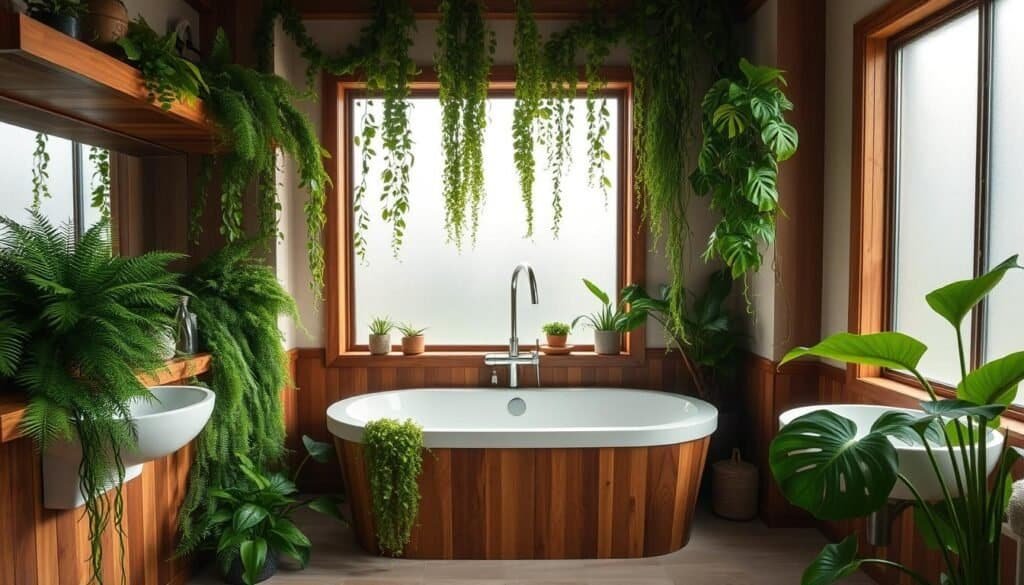
It’s important to keep your bathroom healthy with plants. Make sure there’s good air flow and don’t overwater. This prevents mold and mildew.
Here are some tips for a healthy bathroom with plants:
- Use a well-draining potting mix to prevent waterlogged soil.
- Water plants in the sink or outside the shower area to minimize excess moisture.
- Regularly inspect your plants for signs of mold or mildew.
Optimal Light Conditions
Even though humidity-loving plants can handle low light, some need indirect sunlight. Place them near a window or use grow lights. For more ideas, visit Elevate Your Space with Natural Accent.
By picking the right plants and keeping the environment balanced, you can create a lush bathroom oasis. It brings nature’s peace into your home.
Rustic Wooden Plant Décor Projects
For those who love the charm of the countryside, rustic wooden plant decor is perfect. It adds warmth to your space. Using rustic wooden elements in your plant decor can make your home feel like a natural haven.
Rustic wooden plant decor projects are more than just pretty. They connect you to nature. By using reclaimed or rustic wood, you can add a unique beauty to your home. This mix of wood and plants makes any room cozy and organic.
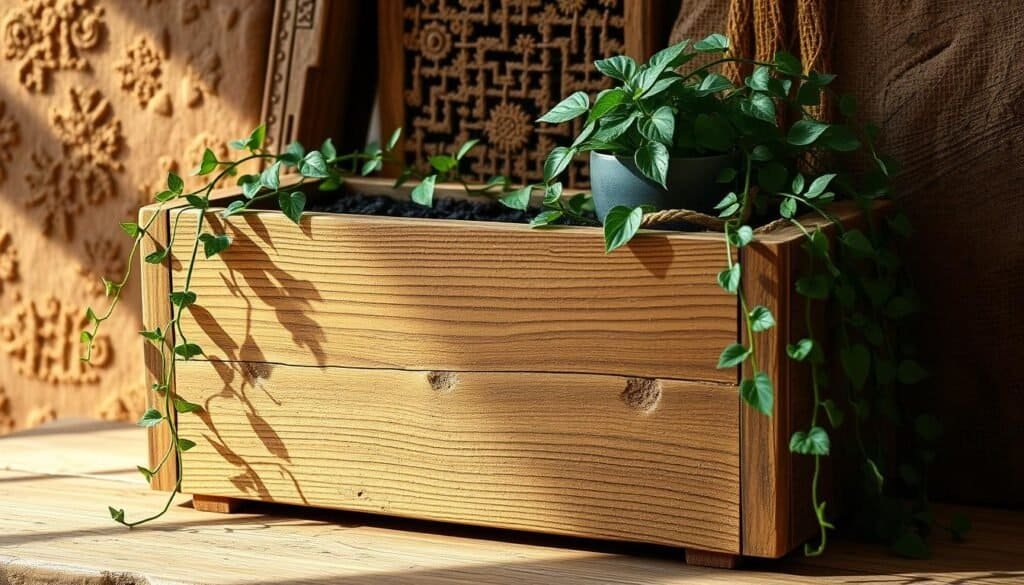
Rustic wooden plant decor is very versatile. You can make everything from a rustic wood stump coffee table to simple wooden planters. The key is to pick wood with character, like reclaimed wood from old barns or trees.
Ideas for Rustic Wooden Plant Décor
- Use an old wooden ladder as a vertical planter.
- Create a wooden planter box from reclaimed wood.
- Make a wooden wall art piece featuring a mix of wood and plants.
When working with rustic wood, it’s key to keep its natural beauty. Use a natural sealant to protect the wood and highlight its color. This not only keeps the wood safe but also shows off its texture and grain.
Adding reclaimed wood home decor to your projects is a smart move. It adds character to your home. It shows the beauty of natural, repurposed materials and the creativity of upcycling.
Geometric Wonder: Hexagon Shelf Plant Displays
Hexagon shelf plant displays mix modern decor with natural beauty. They use hexagon-shaped shelves to show off plants in a cool geometric pattern.
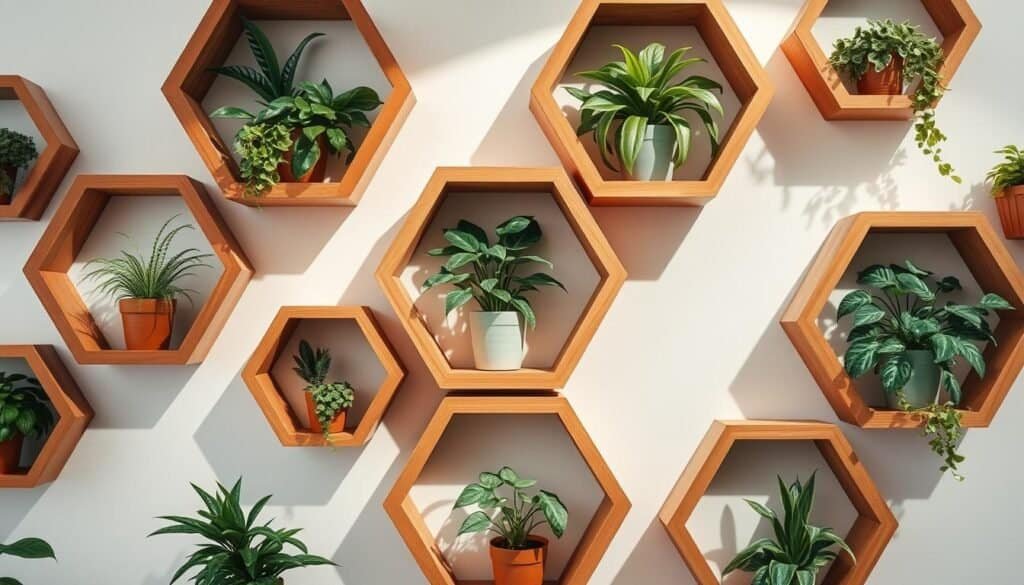
To get the most out of your hexagon shelf, think about color coordination strategies. Pick plants with colors that go well with your home’s look. For example, use plants with bright flowers next to those with softer colors for a nice contrast.
Color Coordination Strategies
There are many ways to coordinate colors. You can pick plants that match your home’s colors for a unified look. Or, go for a bold contrast to make your plants pop.
- Select plants with complementary flower colors.
- Choose foliage hues that harmonize with your home’s decor.
- Experiment with different textures to add depth.
Mixing Plant Sizes and Textures
Another important thing is mixing plant sizes and textures. Using plants of different heights and leaf types makes your shelf more interesting. For instance, mix tall plants with short ones for a lively display.
For more ideas on blending plants with decor, check out inspiring plant display ideas that mix plants with wood.
By carefully choosing plants of different sizes and textures, and focusing on color, your hexagon shelf will become a beautiful centerpiece in your home.
Nature-Inspired Furniture with Integrated Plant Space
Nature-inspired furniture combines organic design with plant space. This mix makes rooms look better and feel more peaceful. It brings the outdoors inside.
Design Inspirations
Designers are making furniture that connects us to nature. Think of a coffee table with a built-in planter or shelves for plants. These add greenery to your living room. For more ideas, check out the Sawdust Man.

- Air purification and improved indoor air quality
- Aesthetic appeal and unique design statement
- Stress reduction and mental well-being
When picking furniture with plant space, think about the plants you want. Make sure they fit the furniture and room conditions. For example, humid bathrooms are great for certain plants, while sunny rooms are better for others.
Adding nature-inspired furniture with plant space to your home makes it better. It creates a more organic and peaceful space.
Corner Plant Sanctuaries: Maximizing Unused Space
Creating a corner plant sanctuary is a great way to add greenery to your home. Often, corners are left unused. But with the right plants and a stylish plant stand, you can turn these areas into beautiful decor elements.
Choosing the Right Plants is key for a stunning corner display. You can choose trailing plants to cascade down, creating a lush effect. Or, structural plants can make a bold statement, drawing the eye to the corner.
Trailing Plants for Visual Interest, Structural Plants for Statement Pieces
- Trailing plants like Pothos or Ivy add a dynamic, whimsical touch.
- Structural plants such as Dracaena or Philodendron provide a striking focal point.
- Combining both types can create a visually appealing contrast.
When picking a corner stand for your living room, think about the style and material. Modern metal stands can add a sleek touch. Wooden stands can bring warmth to the space.
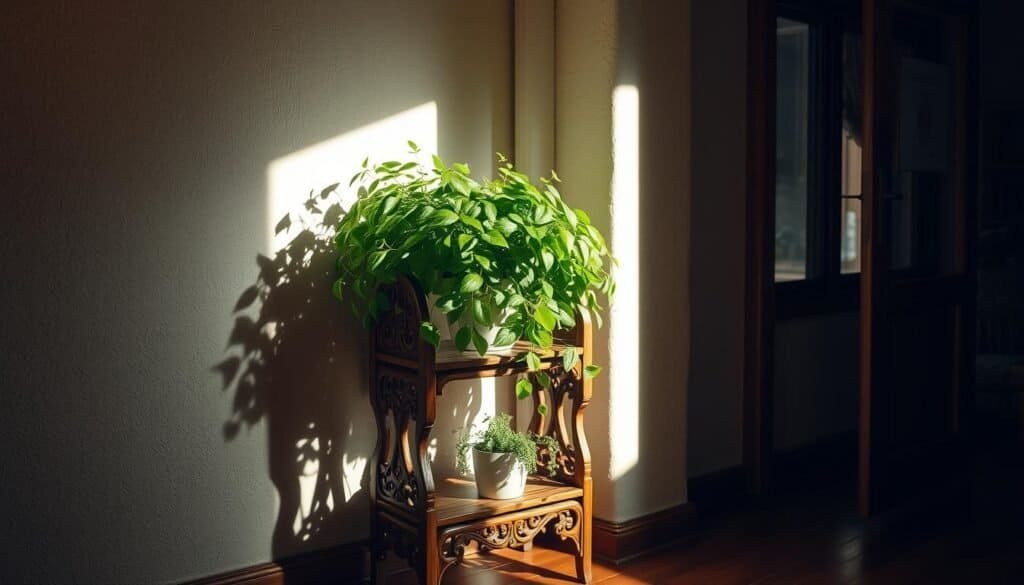
By carefully choosing your plants and stand, you can turn an overlooked corner into a captivating feature of your room.
Conclusion: Finding Focus Through Plant Creativity
Working on plant decor projects can be very calming and creative. It helps you focus and be more mindful. Adding plants to your home brings peace and clarity, helping you face daily tasks.
DIY plant decor, like living walls and geometric shelves, lets you show your creativity. It also boosts your mental health. As you try out different ideas, you’ll enjoy mixing art and nature. This makes you feel more calm and focused.
Plant creativity improves your surroundings and your mindfulness. Taking care of plants and enjoying their beauty centers your mind. This helps you tackle life’s challenges with more energy and focus.
Start your DIY plant decor adventure and see the benefits for yourself. With every new project, you get closer to being more focused and peaceful.