Starting your DIY journey can be incredibly fulfilling. Creating something with your own hands gives you a sense of accomplishment and pride.
Making a small DIY wood accent is a great way to begin. It’s a simple woodworking project that can boost your confidence and provide a sense of personal growth. In this article, we’ll explore various simple DIY projects perfect for beginners. We’ll guide you through the process of creating your own DIY wood accent.
By completing these projects, you’ll experience a sense of empowerment. You’ll be motivated to take on more DIY challenges.
The Satisfaction of Creating Something with Your Own Hands
Working on DIY woodworking projects can be very rewarding. It helps you grow personally and improve yourself. When you make something yourself, you not only get better at DIY. You also see the results of your hard work.

Working on woodworking projects can be calming. It lets you relax and show your creativity. As you finish your project, you feel proud. This pride can make you more confident in other parts of your life.
Some benefits of DIY projects include:
- Developing problem-solving skills through hands-on experience
- Enhancing your creativity and self-expression
- Building confidence through the completion of projects
By doing DIY projects and carpentry projects, you’re not just making something nice. You’re also growing personally. The joy of making something yourself motivates you to keep improving and trying new things.
Want to Feel Proud Today? Build Something Simple Yet Beautiful
Building something simple yet beautiful can make you feel proud and boost your mood. Doing simple woodworking projects lets you create something with your hands. This gives you a sense of accomplishment and pride in your work.
Easy wooden projects are great for beginners because they need little equipment and skill. You can start with a wooden candle holder. It adds warmth to your home and shows off your skills.
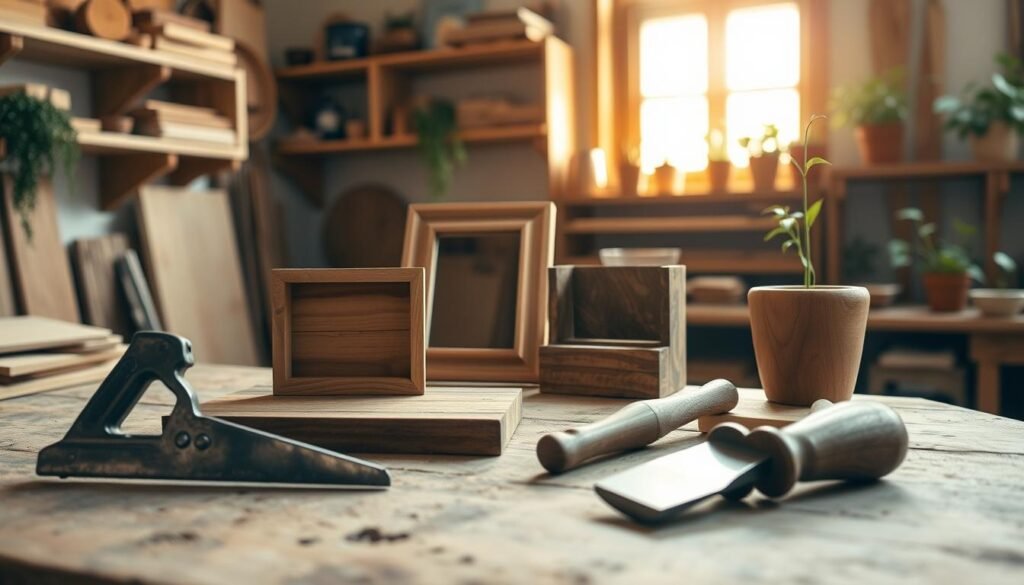
Trying beautiful DIY projects is fun and rewarding. You can make wood creations like rustic picture frames or useful items like wooden step stools. These projects make your home better and show your personal achievement.
Start with projects that need few materials and tools. This builds your confidence in woodworking. It also encourages you to try harder projects later. With simple woodworking projects, you can make beautiful things that show your creativity and effort.
Feeling proud of what you’ve made is a great reason to keep woodworking. So, choose a project that excites you and start making something beautiful today.
Essential Tools and Materials for Beginner Woodworking Projects
Starting a woodworking project as a beginner means you need the right tools and materials. Knowing the difference between essential hand tools and optional power tools is key. It can greatly impact your woodworking journey.
Must-Have Hand Tools
Beginners should start with basic hand tools. These include a tape measure, chisel set, and hand saw. These tools are essential for measuring, cutting, and shaping wood.
- Tape measure
- Chisel set
- Hand saw
Optional Power Tools That Make Life Easier
While not essential for beginners, power tools like a circular saw and drill press can make woodworking easier.
- Circular saw
- Drill press

It’s important to know the difference between softwoods and hardwoods. Softwoods come from coniferous trees and are softer and less expensive. Hardwoods come from deciduous trees and are denser.
Where to Source Affordable Wood
You can find affordable wood at local hardware stores or online. Check out Habitat for Humanity ReStores or local classifieds for reclaimed or discounted lumber.
Rustic Wooden Picture Frame: Frame Your Memories
A rustic wooden picture frame adds a personal touch to any room and even a clear head.. It’s a great DIY project. You can make a beautiful frame using reclaimed or rustic barnwood. This not only beautifies your home but also shares a story.
To begin, pick the right wood for your frame. Think about using rustic barnwood for a genuine look. You can find rustic barnwood at local stores or online. For more ideas, check out this page to see how rustic wood frames can brighten your bedroom.
Cutting and Assembly
After picking your wood, cut and assemble the frame. Measure your photo to figure out the frame size. Then, cut the wood to match. Use wood glue and nails to put the frame together. Make sure the corners are tight to avoid the frame breaking.
Finishing Touches
After building the frame, sand it to smooth out any rough spots. You can stain or paint the frame to fit your decor. Lastly, add a hanging wire or stand to show off your photo.

By following these steps, you can make a stunning rustic wooden picture frame to display your favorite memories. This DIY project is both fun and rewarding. You’ll have a unique piece of decor that shows off your style.
Floating Wooden Shelf: Practical and Stylish
Looking to improve your living space? A DIY floating wooden shelf is perfect. It’s both practical and stylish. It gives you more storage and makes your space look better.
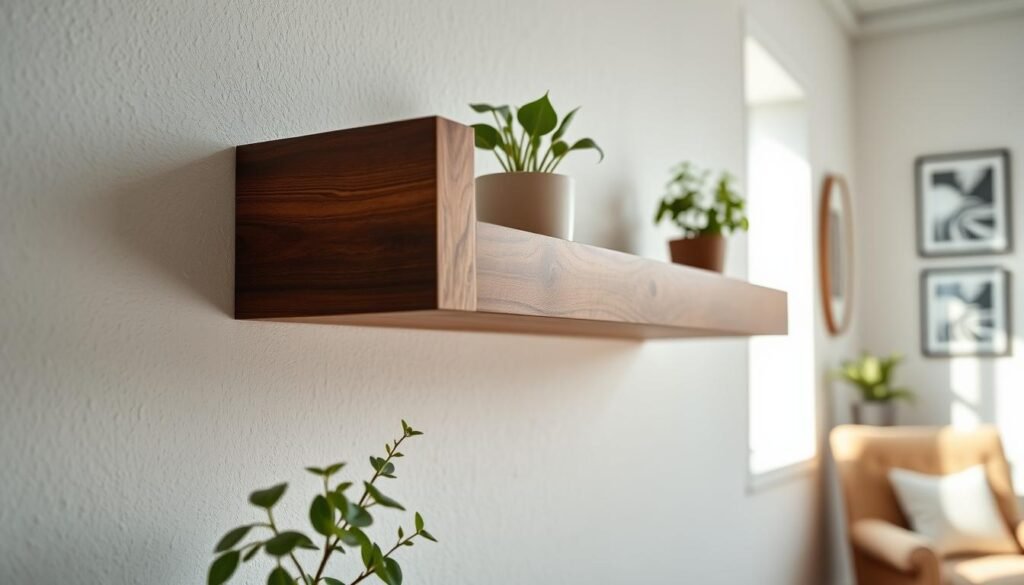
Before you start making your floating wooden shelf, prepare the wood first. Sand it to make it smooth. Then, stain or paint it to fit your decor.
Mounting Techniques
The success of your DIY shelf depends on how you mount it. Use hidden brackets or French cleats for a clean look. Make sure your shelf is level and well-attached to the wall studs.
By following these steps and using the right mounting techniques, you can make a beautiful and useful floating wooden shelf. It will add a DIY touch of elegance to your home.
Wooden Coasters: Protect Surfaces with Style
Wooden coasters are a great way to protect your furniture and add style. They keep your surfaces safe from water marks and spills. Plus, they bring warmth to your decor.
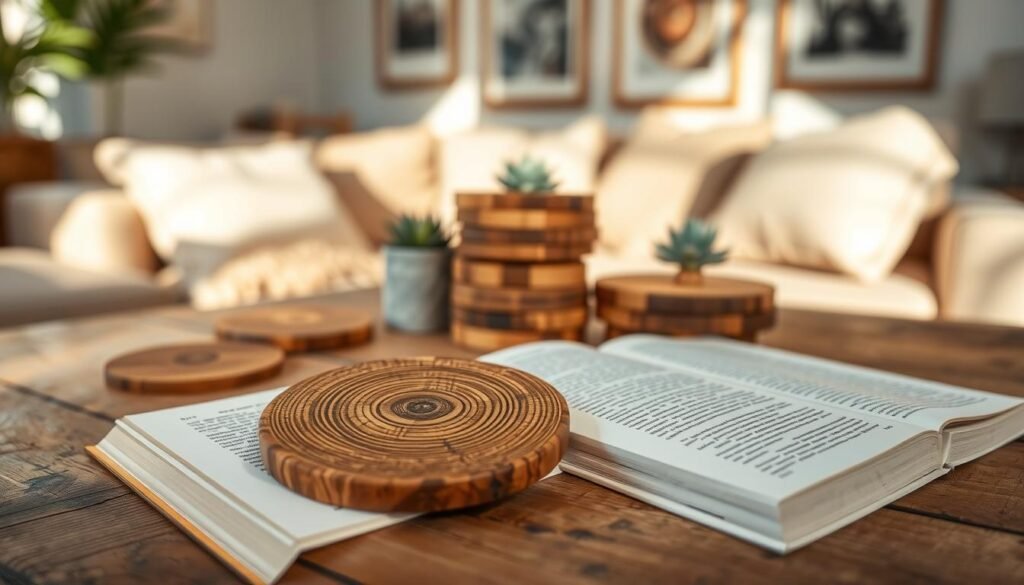
To make your own wooden coasters, start with cutting and sanding the wood. This makes them smooth and ready for use.
Cutting and Sanding
First, cut your wood into coaster sizes. Use a saw for precise cuts. Then, sand the edges to smooth them out. This makes your coasters look good and work well.
Sealing for Durability
After cutting and sanding, seal your coasters to protect them. You can use varnish or oil for this. This step keeps them safe from moisture and makes them last longer. For more ideas, check out DIY personalized wood coasters.
Benefits of making your own wooden coasters include:
- Customization to fit your home decor style
- Protection of your surfaces from water damage
- A fun and rewarding DIY project
By following these steps, you can make coasters that protect and style your home.
Tabletop Wooden Planter: Bring Nature Indoors
A tabletop wooden planter is a great way to add natural beauty to your home. It lets you bring the outdoors inside, making any room brighter with greenery.

To begin, you need to build the base of your planter. This means cutting and putting together the wood to make the container.
Building the Base
First, cut the wood into the right sizes. Then, use wood glue and nails to put it together. Make sure the corners are tight and the base is strong.
Waterproofing Considerations
After building the base, think about adding a waterproof coat. This is key to keep the wood dry and your planter lasting longer.
With your planter built and waterproofed, it’s time to add soil and plants. This DIY planter project not only beautifies your space but also makes you feel proud of your work.
By following these steps, you can make a stunning tabletop wooden planter. It brings nature right into your home, adding a personal touch.
Wooden Wall Art: Express Your Creativity
Add a unique touch to your home with handmade wooden wall art. It shows off your personal style. Wooden wall art brings warmth and creativity to any room.
Creating wooden wall art lets you try out different designs and techniques. You can pick from many types of wood and finishes to fit your decor.

To make a mountain silhouette, pick the right wood for your style. Use a template or draw it freehand. Then, cut it out with a jigsaw or coping saw. Sand the edges to make them smooth.
Staining and Finishing
After cutting, stain the design to highlight the wood’s natural color. Apply a finish like polyurethane or varnish. This protects the wood and adds shine. It makes your DIY wall art look great and last longer.
By following these steps, you can make stunning wooden wall art. It shows off your creativity and adds a personal touch. Whether it’s a mountain silhouette or another design, your wood art DIY will spark conversations.
Simple Wooden Step Stool: Functional and Rewarding
Building a wooden step stool is a rewarding project that adds functionality to your home. It’s perfect for beginners, needing only basic woodworking skills.
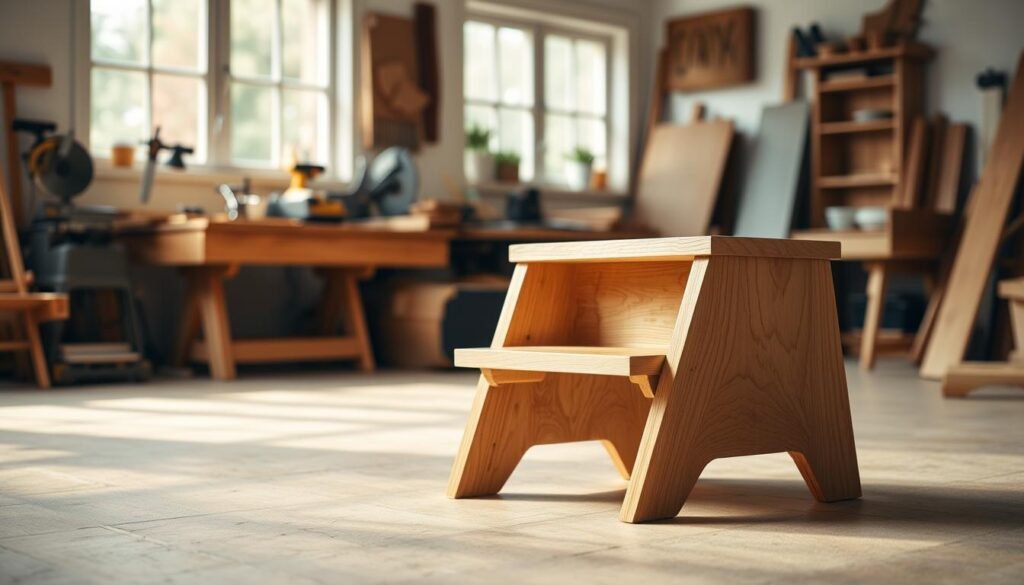
To start, you’ll need to cut the wood into the required pieces for your step stool. This means measuring and cutting two side pieces, one step, and a top rail. Accuracy is key to ensure all pieces fit together properly.
Assembly and Reinforcement
Once all pieces are cut, assemble the step stool by attaching the step to the side pieces and adding the top rail for stability. Reinforce the joints with screws or nails to ensure the stool is sturdy and can support weight.
Completing this DIY step stool project not only provides a functional item for your home but also gives you a sense of accomplishment. With these simple steps, you can create a practical and useful wooden step stool.
Wooden Tic-Tac-Toe Game: Fun to Make and Play
Making a wooden tic-tac-toe game is a great way to bond with loved ones. It’s a fun DIY project that brings people together. For more ideas on building classic wood games, visit The Sawdust Man.
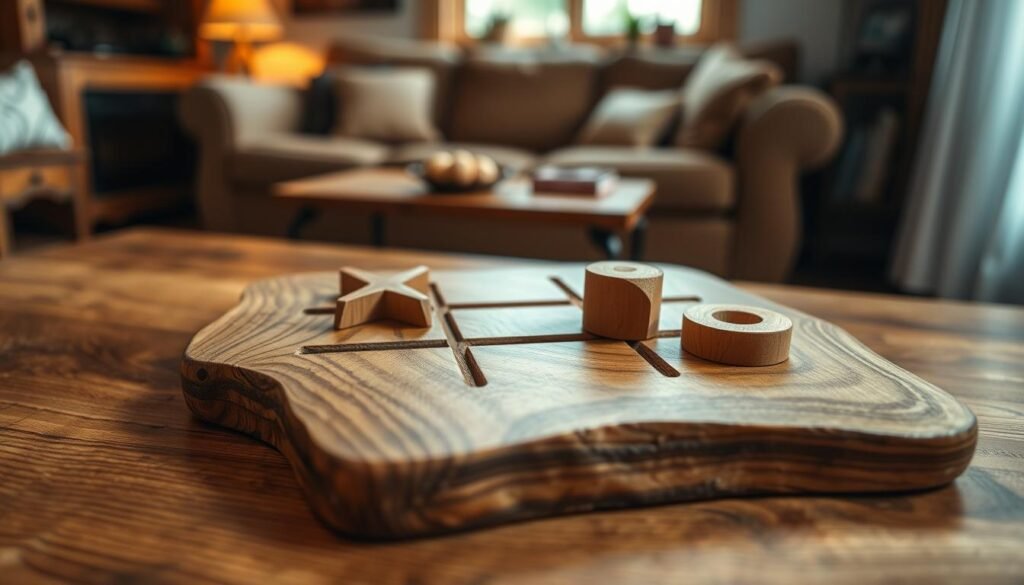
To start making a handmade wooden tic-tac-toe, cut a piece of wood into a square. Then, draw a 3×3 grid on it. Use a ruler and pencil for straight, even lines.
Making the Game Pieces
Now, make the game pieces. Cut two shapes, like circles and crosses, from wood. These will be your X and O pieces. Sand them to make them smooth.
Putting the game together is easy. Place the pieces on the grid, and you’re set to play. This wooden tic-tac-toe board is perfect for friendly games with others.
Wooden Key Holder: Practical Organization
Organize your keys with a beautifully crafted wooden key holder. This project is not only functional but also a great way to practice your woodworking skills. A DIY key holder can be a simple yet effective addition to your home, keeping your keys organized and within easy reach.
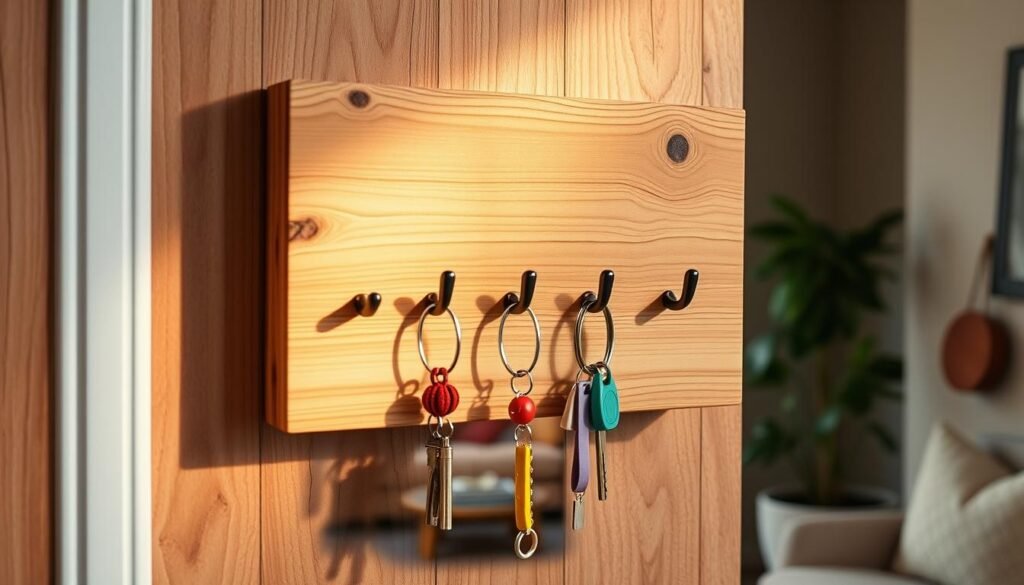
Start by preparing the backboard for your key holder. Choose a piece of wood that fits your desired design and size. Sand the wood to smooth out any rough edges, ensuring a clean finish.
Adding Hooks and Hangers
Next, focus on adding hooks and hangers to your key holder. Select hooks that match your project’s style and attach them securely to the backboard. This will provide a sturdy place for your keys, making it a practical solution for practical organization in your daily life.
Creating a wooden key holder is a rewarding project that can enhance your home’s organization. It’s also one of the many wood projects that sell, making it a great idea for those looking to monetize their woodworking skills.
Troubleshooting Common Issues in Small Wood Projects
Troubleshooting is key for DIY fans on small wood projects. Even with good planning, problems can pop up. But knowing how to fix them can really help.
Common Issues and Their Solutions:
- Uneven cuts: Check your saw blade for dullness and ensure your wood is properly secured.
- Assembly issues: Verify that all pieces fit together as planned before applying glue.
- Surface imperfections: Sanding can often resolve minor imperfections.
For bigger problems like warping or cracking, make sure your wood is dry and stored right. Knowing why the problem happened is the first step to solving it.
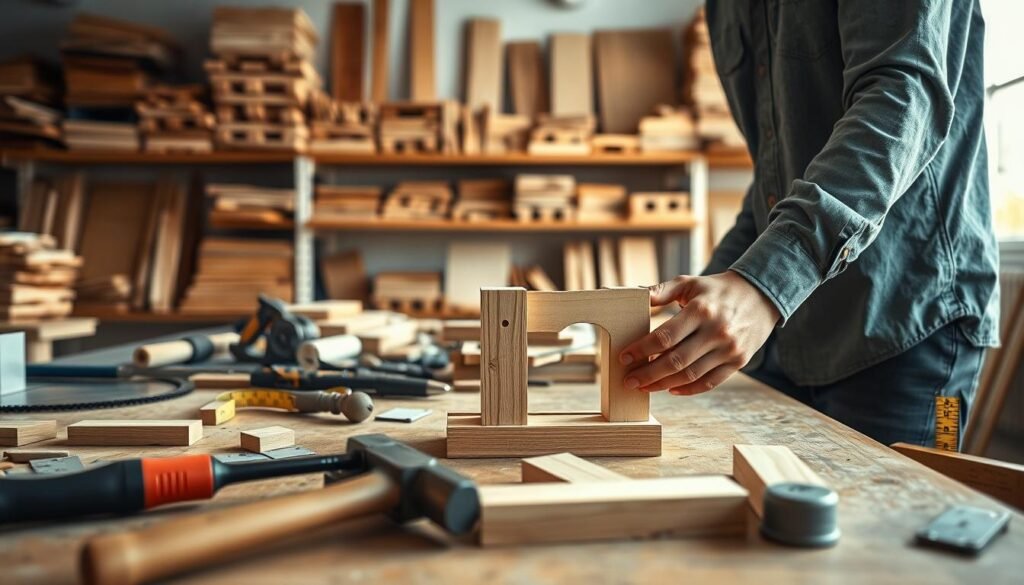
Being ready to troubleshoot can turn problems into chances to learn. It improves your DIY skills and the quality of your projects.
Conclusion: Your Small Wood Accent is Just the Beginning
Finishing a small wood accent project is a big win in your DIY adventure. You’ve learned by doing and feel more confident in woodworking. This is just the start, as you’re ready for bigger and more fun projects.
Now, you’re ready to try new things like building a wooden planter or wall art. The world of woodworking is full of possibilities. Your small wood accent shows you can make something both beautiful and useful.
Keep going on your DIY path, knowing each project is a chance to learn and improve. Stay inspired and don’t hesitate to try new things. Your next project is waiting, and it’s going to be amazing.