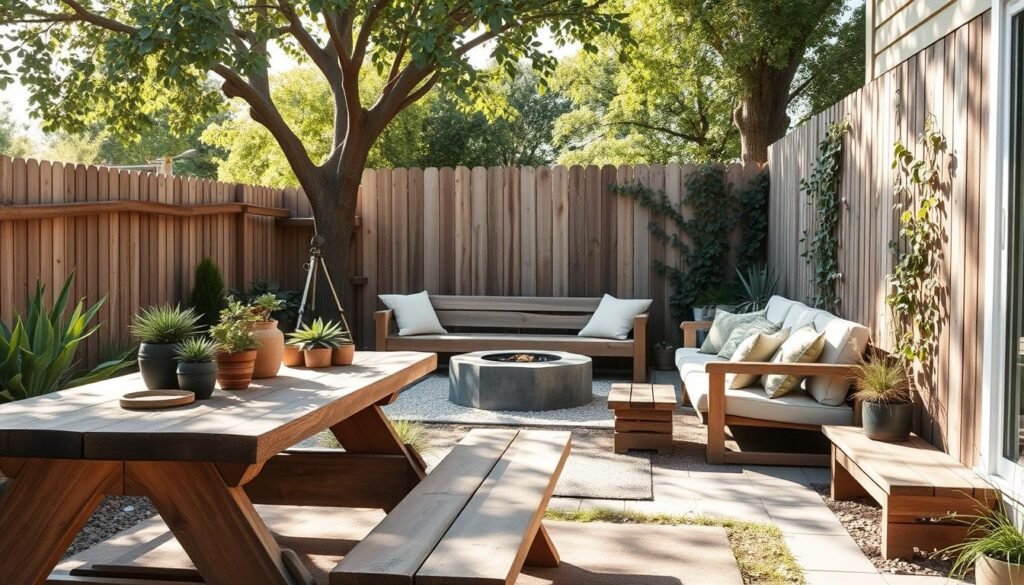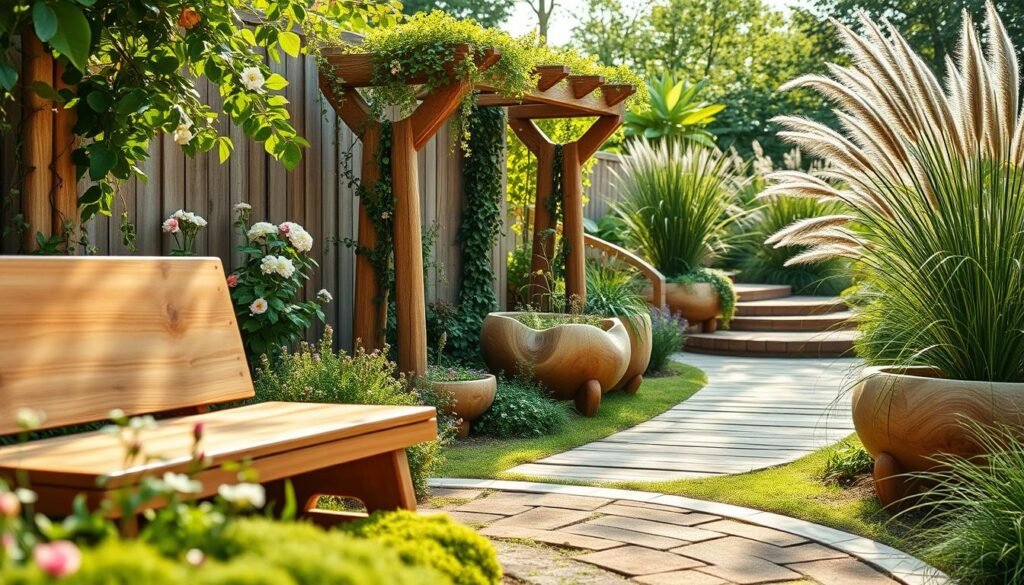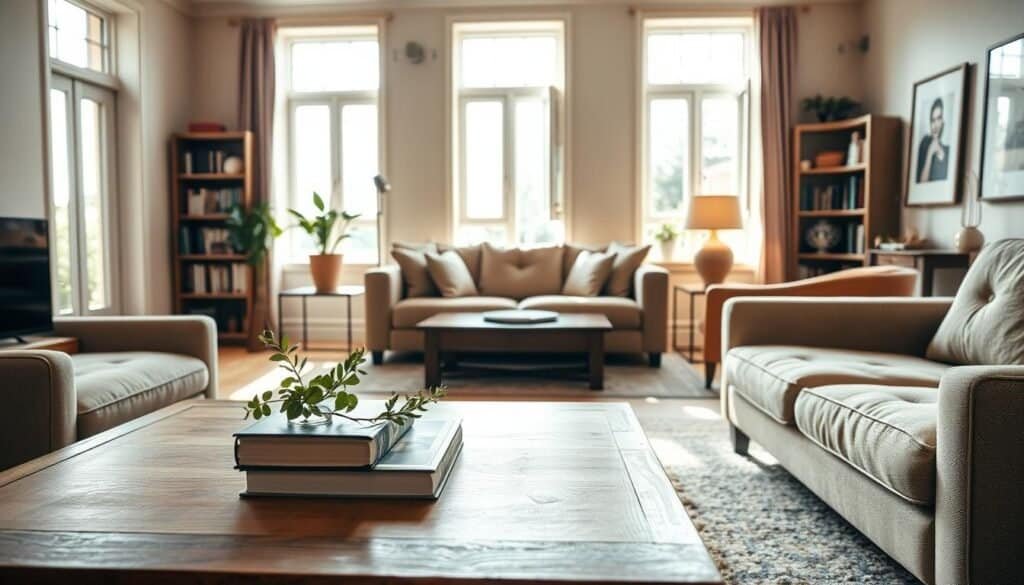
Creating a nurturing living space is more than just making it look good. It’s about making a place that feels safe and welcoming. Adding natural elements to your home can make it feel warmer and cozier.
Choosing sustainable materials and organic materials brings the outdoors in. Wood, stone, and plants look great and make your home healthier. They add to the cozy feel of your space.
By going for nature-inspired design, you can make your home a cozy retreat. This style connects you to nature, making your home feel peaceful and refreshing. It’s a way to bring the outdoors into your natural home design.
The Science Behind Natural Materials and Well-being
Using natural elements in home design is backed by science to boost well-being. Studies show that being around natural materials can improve both mental and physical health.
Reducing Stress with Natural Materials Research shows that natural textures and patterns can lower cortisol levels. This reduces stress and anxiety. For example, adding natural texture inspiration from wood and stone can make a room feel calm.

Nature details, like wood grain or leaf patterns, also boost well-being. They bring the outdoors into our homes, making the transition smooth.
Using natural materials can also make us feel more comfortable and relaxed. For instance, wood’s warmth can make a space cozy. Stone’s cool tones can bring a sense of calm.
- Natural materials can reduce stress and anxiety.
- Incorporating nature details can enhance well-being.
- Using natural textures can create a calming atmosphere.
By understanding the science behind natural materials and well-being, homeowners can make smart choices. They can create spaces that are not just beautiful but also good for their health.
Want Your Home To Feel More Nurturing? Try Natural Materials in These Ways
To make your home feel more nurturing, try using natural materials. Wood, stone, and plants can warm up your space. They add character and make your home feel cozy.
Using natural materials in furniture is a great idea. A wooden coffee table or a stone vase can be a room’s centerpiece. Choose natural wood grain textures for furniture to make it stand out.

- Use reclaimed wood for shelves or wall art to add warmth and history.
- Stone or pebble accents in your garden or indoors can ground your space.
- Natural fiber rugs, like jute or sisal, can make your floors softer.
- Adding plants with different textures can make your space more interesting and clean the air.
- Think about a wood texture printable or wood grain design for walls or cabinets for a natural look.
Decorative accents offer endless possibilities. Use a log texture or wood reference for inspiration. You can find wooden decorative boxes or tree-branch sculptures.
Background elements can also make a big difference. A wood grain background or wood pattern background can match your furniture and decor. This creates a cozy and nurturing atmosphere.
By adding these natural elements, you can turn your home into a cozy haven. It will nurture both your body and soul.
Wood: The Timeless Foundation of Nurturing Spaces
Wood in interior design is more than looks; it’s about creating a cozy space. It makes a home feel welcoming and comfortable. Wood’s textures and tones can turn a house into a home.
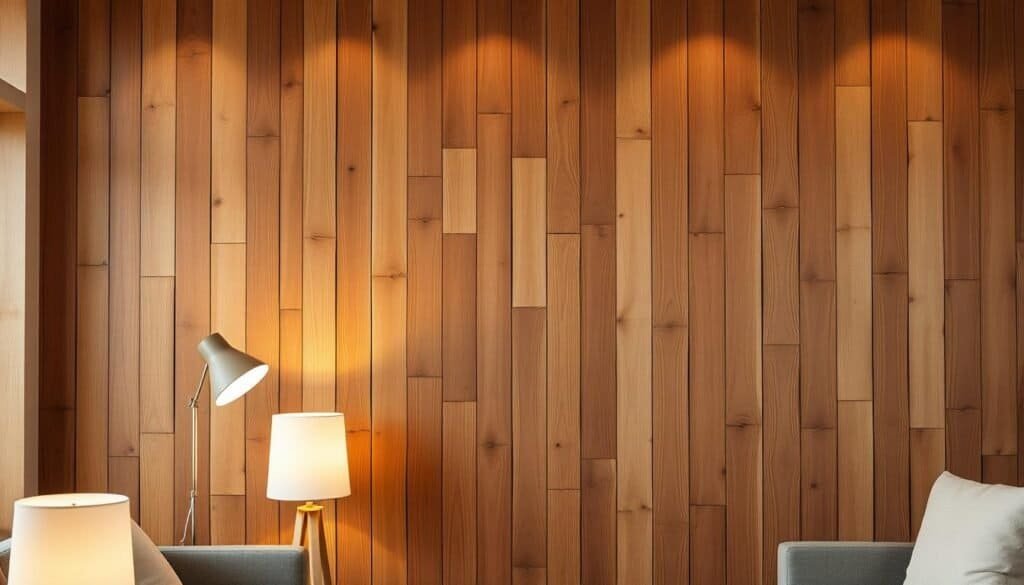
Choosing between hardwoods and softwoods is key. Hardwoods, like oak and maple, are strong and last long, perfect for busy areas and furniture. Softwoods, such as pine and cedar, are cheaper and add beauty, great for paneling or trim.
Hardwoods vs. Softwoods: Making the Right Choice
Think about the use and look you want when picking between hardwoods and softwoods. For a dark wood feel, hardwoods are better. Softwoods give a lighter, rustic look.
- Hardwoods are durable and luxurious.
- Softwoods offer a casual, rustic vibe.
- Cost is also a factor in your choice.
Reclaimed Wood: Stories and Sustainability
Reclaimed wood adds character and tells a story. It’s a green choice, saving trees and keeping wood history alive. It’s great for furniture, walls, or floors, adding a vintage feel.
Reclaimed wood has a wooden surface with rustic texture, perfect for any room. It brings warmth, whether you prefer warm dark wood or lighter tones.
Adding wood to your home, whether hardwoods, softwoods, or reclaimed, makes it more nurturing. The right wood choice and use can make your home cozy, inviting, and nature-connected.
Stone and Clay: Grounding Elements for Your Home
To create a nurturing environment, consider incorporating stone and clay into your home decor. These natural materials can add a grounding element to a space. They promote a sense of stability and calm.
Stone, with its rugged texture and earthy tones, can be used in various ways. For instance, a stone texture seamless background can be used as a statement wall. This creates a focal point in a room. You can also incorporate stone through decorative accents like vases, candle holders, or even a stone-clad fireplace.
Clay, on the other hand, offers a more pliable and versatile option. It can be molded into various forms, from functional items like pottery to decorative pieces like wall hangings. The natural, earthy quality of clay can bring warmth to a room. This makes it feel cozier and more inviting.
Decorative Accents and Small Touches
When it comes to incorporating stone and clay into your home, it’s not necessary to make grand changes. Small touches can be just as effective. Consider using:
- Stone coasters with interesting wood grain patterns
- Clay pottery as vases or pen holders
- A natural petrified wood texture as a wall art piece
These small accents can add a touch of natural beauty to your space. They create a more nurturing environment.
Temporary Solutions for Renters
For renters, making permanent changes to the living space may not be feasible. But, there are ways to incorporate stone and clay into your decor. You can use:
- Portable stone or clay decorative items like sculptures or figurines
- Textiles with stone or clay-inspired patterns, such as a blue texture background throw blanket
- Removable wall decals featuring various wood grain textures

By incorporating these elements, renters can enjoy the benefits of stone and clay in their home. They can do this without making any permanent changes.
In conclusion, stone and clay are versatile natural materials that can enhance your home’s ambiance. Whether you’re making significant changes or just adding small decorative touches, these elements can promote a sense of calm and stability in your living space.
Natural Fibers: Softening Your Space with Organic Textiles
Natural fibers are key to making your home cozy and green. They mix comfort with care for the planet. Adding these fibers to your decor warms up your space.
Fibers like cotton, linen, and wool are good for the earth and add texture. Mixing cotton and linen gives a fabric texture seamless look.
Some top natural fibers are:
- Cotton: Soft, breathable, and versatile.
- Linen: Known for its cooling properties and natural texture.
- Wool: Offers warmth and is ideal for colder climates.
Seasonal Textile Rotations
Changing your textiles with the seasons keeps your home fresh. In summer, light fabrics like cotton and linen work well. They highlight your green texture background plants.
- Summer: Opt for light, breathable fabrics.
- Winter: Choose warmer, heavier textiles like wool.
Mixing and Matching Natural Fibers
Mixing natural fibers adds depth and warmth to your home. For example, a brown wood texture piece with linen and wool rug creates a cozy feel.
Here’s how to mix them:
- Combine different textures for depth.
- Use a common color palette to tie fibers together.

Using natural fibers and seasonal changes makes your home cozy and green. It’s a way to live sustainably.
Bringing the Outdoors In: Plants and Botanical Elements
Bringing the outdoors in makes your home feel more welcoming and natural. Adding plants and botanical elements to your decor can make your space feel more nurturing.
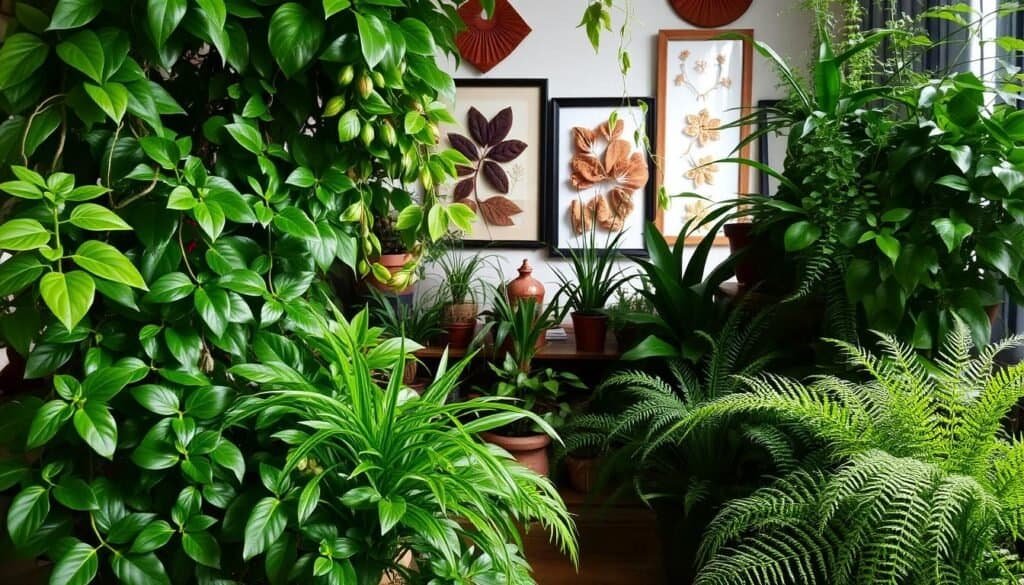
Creating terrariums or miniature ecosystems is a charming way to bring nature indoors. You can use glass containers, soil, plants, and decorative items like miniature fairy garden furniture or a pinecone fairy.
To make a terrarium, start with a clear glass container. Add small rocks or pebbles for drainage and activated charcoal to prevent mold. Then, add soil and plant your greenery. Decorate with small stones, moss, or diy fairy house ideas for a whimsical touch.
- Choose plants that thrive in low-light, like ferns or succulents.
- Use decorative rocks or shells for visual interest.
- Adding a gnome house diy or fairy garden houses diy adds a playful element.
Vertical Gardens for Small Spaces
Vertical gardens are great for small spaces. You can use a trellis, a wall-mounted planter, or repurposed furniture. They add greenery to your home without taking up floor space.
To make a vertical garden, pick plants like flowering vines or leafy greens. Mix plants with different textures and growth habits for interest. Adding fairy furniture diy or mini fairy garden diy elements adds whimsy.
- Choose a sturdy base or frame for your vertical garden.
- Pick plants that fit your lighting conditions.
- Add decorative elements, like a pinecone fairy, for visual appeal.
Adding plants and botanical elements to your home makes it more nurturing and welcoming. Whether you choose terrariums, vertical gardens, or just add greenery, the benefits are many.
Natural Light and Water Features: Dynamic Natural Elements
To make your space feel welcoming, think about natural light and water features. Natural light makes rooms feel bigger and more inviting.
To get more natural light, place mirrors wisely, use sheer curtains, and keep windows clear. This brightens the room and shows off natural materials like wood and stone.
Tips for Maximizing Natural Light:
- Use mirrors opposite windows to reflect natural light.
- Opt for sheer curtains or blinds that allow sunlight to filter through.
- Keep windowsills clear of clutter.
Water features bring a calming touch to your home. The sound of water can make your space feel peaceful. Adding a small fountain or a DIY fairy garden with water is a great idea.
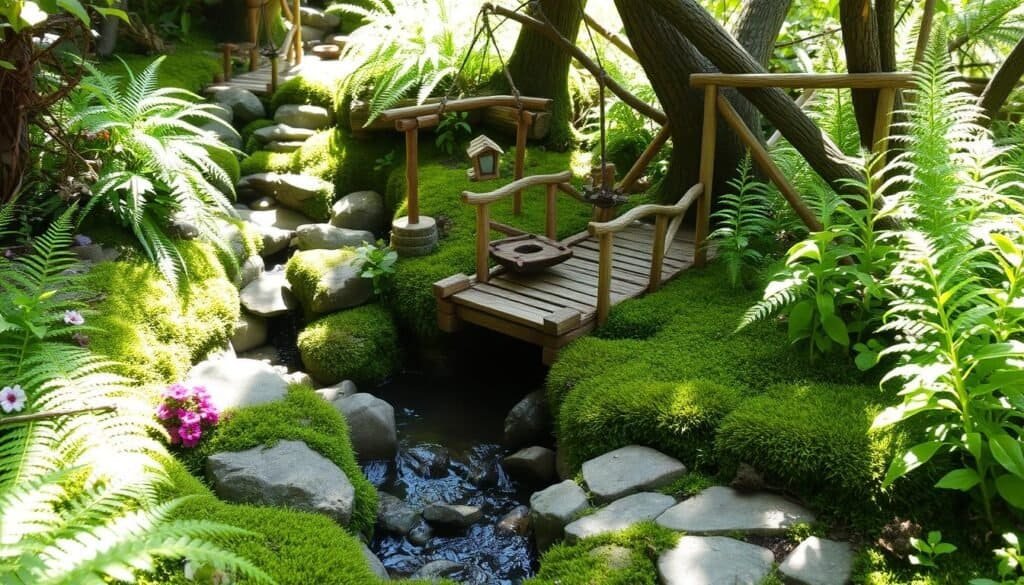
When you design a water feature, think about your space’s size and style. A small, detailed fountain can be as impactful as a big one, depending on your design goals. Adding fairy house crafts or DIY fairy elements can make it feel more natural and whimsical.
Combining natural light and water features makes your home feel nurturing. For example, a water feature near a window can make the light dance on the water, adding life to your space.
Ideas for Combining Natural Light and Water Features:
- Position a water feature near a window to catch natural light.
- Use solar-powered pumps for eco-friendly water features.
- Incorporate plants around the water feature to enhance the natural ambiance.
By adding natural light and water features thoughtfully, you can make your home feel more connected to nature. This can improve your overall well-being.
DIY Projects: Creating with Natural Materials
Using natural materials in DIY projects can make your home cozy. Wood, stone, and plants bring warmth and character to your decor.
Starting with DIY projects is easy. Try making seasonal decorations. For example, a centerpiece with pinecones, leaves, and twigs is beautiful.
- Pinecones
- Dried leaves
- Twigs
- A vase or container
Seasonal Decorations from Nature
Collect items like pinecones, acorns, and dried flowers for decorations. Use them to make wreaths, garlands, or centerpieces that show the season.

In fall, a wreath with dried leaves, twigs, and pinecones can warm your space. Spring brings a chance to make a garland with flowers and greenery.
Natural Material Wall Art
DIY wall art with natural materials is also great. Use reclaimed wood, stone, or other elements for unique pieces that add texture and interest.
For example, arrange framed leaves, flowers, or other elements in a collage for stunning wall art. Or, create a geometric pattern with wood or stone.
Some ideas for natural material wall art include:
- Building a wooden fairy house or wood fairy house to hang.
- Making a mosaic with small stones, shells, or other elements.
- Creating a piece with reclaimed wood for warmth and character.
DIY projects with natural materials make your home more inviting and nurturing.
Conclusion: Creating Your Naturally Nurturing Haven
Using natural materials in your home can greatly improve your well-being. It brings the outdoors inside, making your space more relaxing and peaceful.
Start by adding plants, botanical prints, or a vase with branches. You can also try DIY projects like building a fairy house or a mini tree house. For a rustic feel, learn to make a house out of sticks.
Whether you want a whimsical fairy garden or just organic textures, the options are vast. Embracing natural materials and creativity can make your space feel nurturing and special.
So, why not begin today? Try making a fairy house or a mini treehouse to add magic to your home.