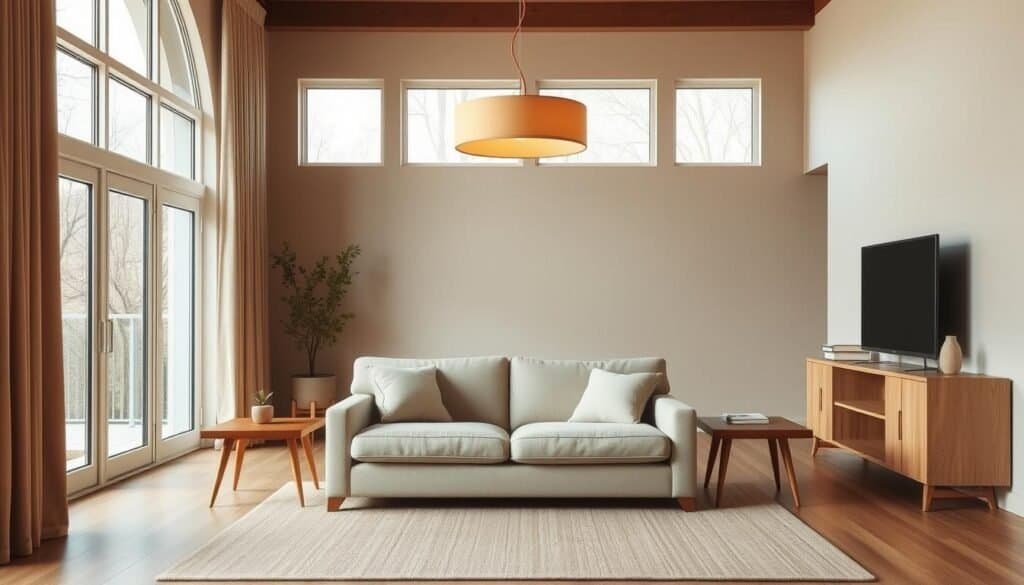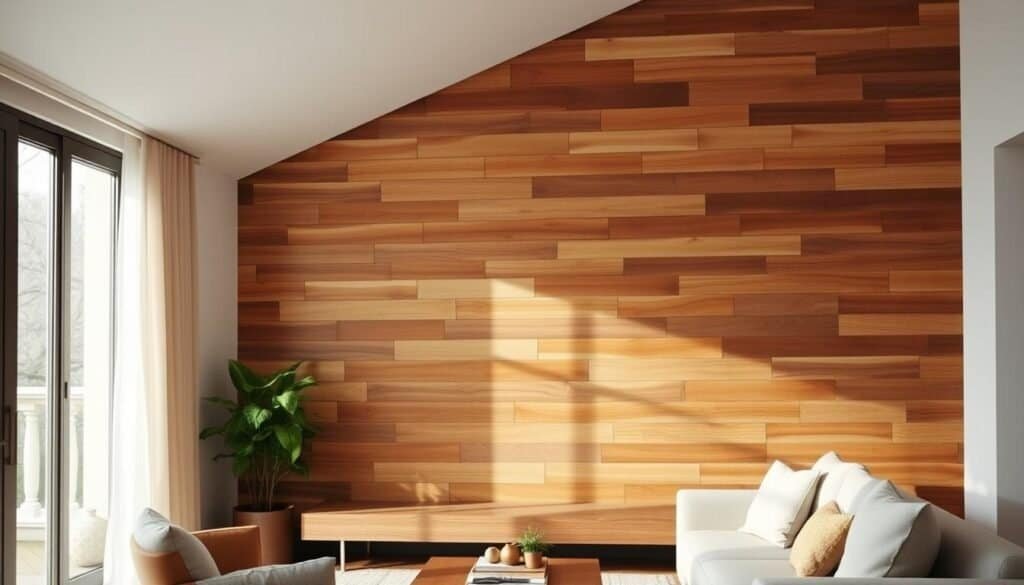
Adding gentle wood tones to your home can make it feel calm and cozy. Wood’s natural warmth can change a room, making it feel more welcoming. The right wood accents can bring peace and tranquility to your space.
In calming home design, the materials you choose matter a lot. Gentle wood tones can make your decor soothing, creating a peaceful place away from daily stress. By adding peaceful wood accents, you can make your home a relaxing haven.
Using gentle wood tones is a smart way to make your space calm. It’s about picking the right pieces that bring serenity and comfort. This way, you can create a serene space for you and your family to enjoy.
The Psychology of Wood in Interior Design
Wood in home decor is more than a trend. It affects our well-being. Wooden elements add warmth and coziness, making rooms feel welcoming.
Natural wood décor calms us, reducing stress. It connects us to nature with its patterns and textures.

Adding wood design ideas to your interior design changes your home’s feels well as your bedrooms.. Wood furniture and accent walls offer endless creative options.
Wood in wooden home decor also shapes our mood. Studies show it boosts mental health and well-being.
Integrating wood into your home’s wood interiors creates a peaceful space. It promotes relaxation and comfort.
Understanding the Spectrum of Wood Tones
Wood tones can greatly impact the ambiance of a room. Knowing their spectrum is key to designing a serene space. The various wood tones available offer a range of options for homeowners looking to create a calming atmosphere.
The spectrum of wood tones spans from light to dark, with numerous shades and hues in between. Light wood tones, such as those found in oak and pine, can make a room feel more spacious and airy. On the other hand, dark wood tones, like espresso and walnut, can add warmth and coziness.
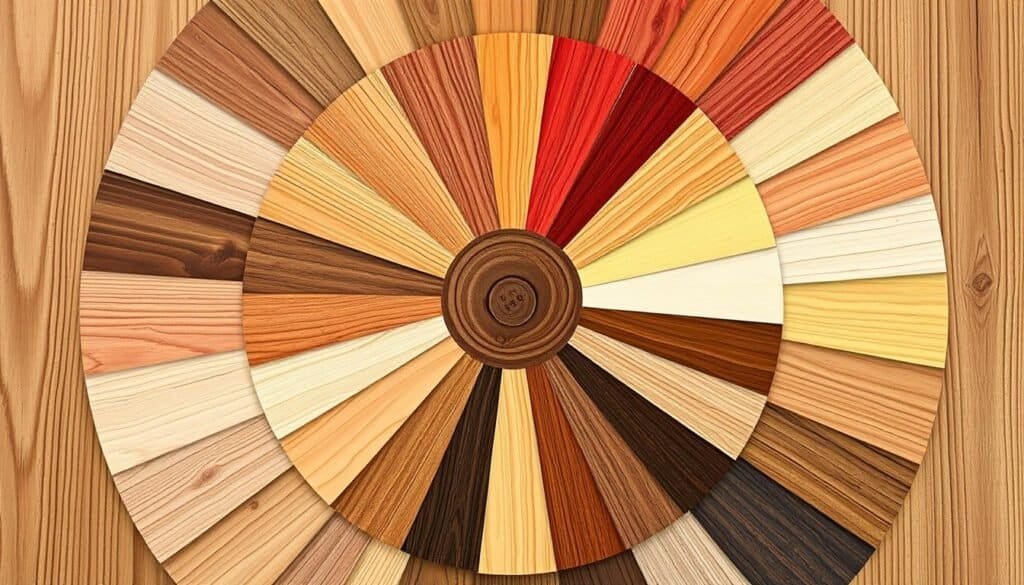
Understanding the wood color wheel can help in selecting the right wood tones for your home. It’s essential to consider the color palette with wood floors to ensure a harmonious and balanced look. For instance, cool-toned woods like maple and ash can be paired with calming colors like blue and green.
When choosing various wood floor colors, it’s important to think about the overall aesthetic you want to achieve. You can either match the wood tones throughout the house for a cohesive look or mix different tones to create visual interest.
By exploring the spectrum of wood tones and understanding how to combine them effectively, you can create a calming and inviting space that reflects your personal style.
Want Your Space to Feel Calm Again? Try Refreshing It With Gentle Wood Tones
To make your home feel calm, add gentle wood tones to your decor. These tones bring warmth and coziness. They make your space feel welcoming and peaceful.
Choosing the right wood furniture and accents is key. Wood furniture in gentle tones can serve as a versatile foundation for your decor. For example, beech wood furniture works well with many colors and styles.
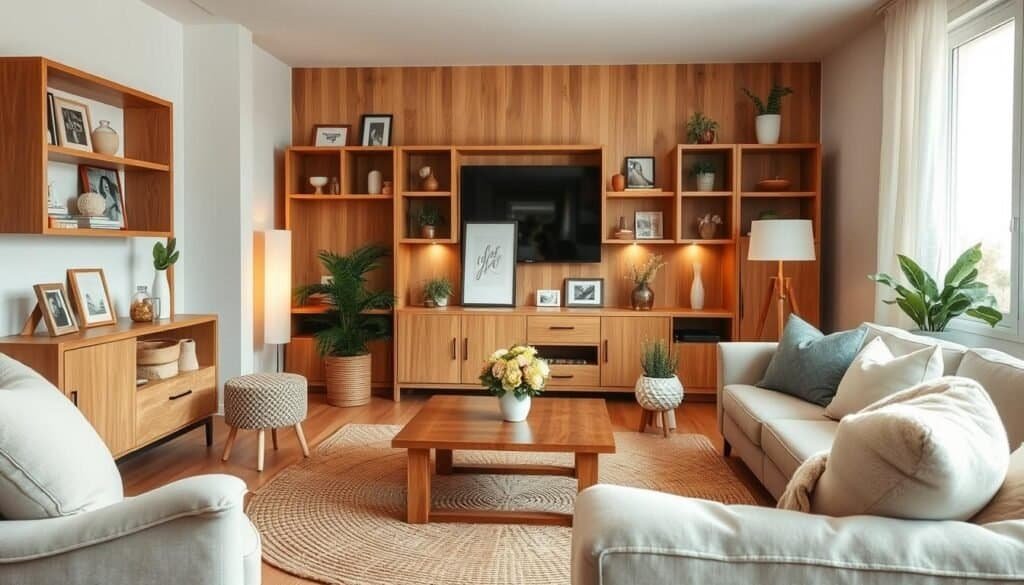
Matching wood colors is important. If your floors are dark, pair them with lighter furniture. Light floors look good with darker accents. This contrast adds interest to your space.
Here are some tips for contrasting hardwood floors and matching wood colors:
- Balance dark floors with lighter wood furniture.
- Use lighter wood accents to brighten up a room with dark furniture.
- Consider the undertones of the wood (warm or cool) when selecting complementary colors.
- Mixing different wood tones can add depth to your decor, but be sure to do so thoughtfully to avoid visual clutter.
Colors that match beech wood include earthy tones like sage green, sandy beige, and soft grays. These colors complement beech wood’s warm undertones. By adding gentle wood tones and matching colors, you can refresh your home and create a calm oasis.
Living Room Serenity: Wood Furniture and Accents
Adding wood elements to your living room can make it feel more calm. Wood furniture and accents add warmth and coziness. This creates a peaceful space for relaxation.
Wooden furniture, like a reclaimed wood coffee table or a wooden TV stand, is key to your room’s design. These pieces are not just useful but also make the room look good. Choose wood tones that match your decor for a unified look.
Wood can also be used for accent walls in your living room. A wooden wall panel or a wooden decorative screen adds texture and interest. For a TV wall, a wooden surround or a reclaimed wood accent wall behind the TV makes a great focal point.
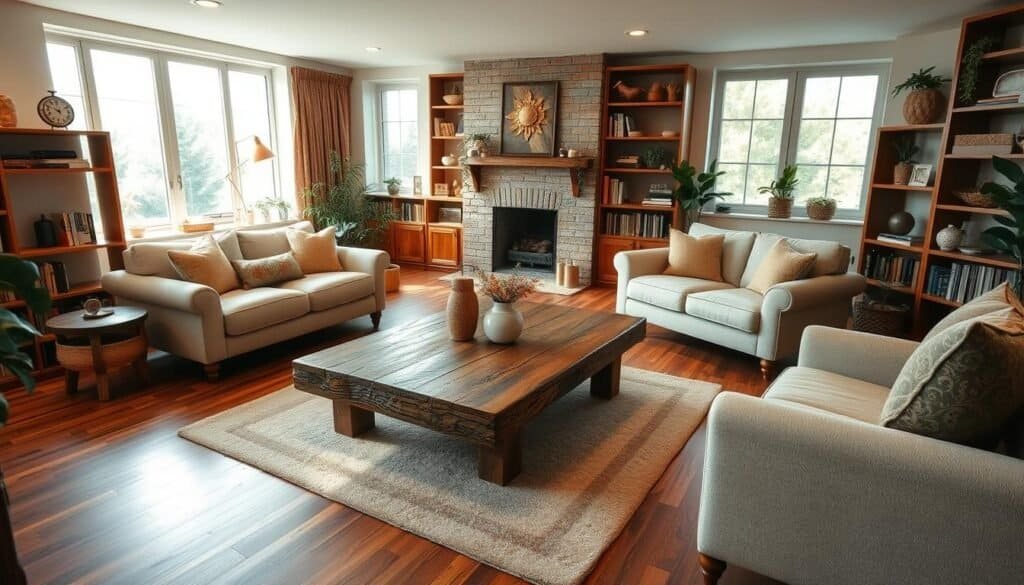
Other wood accents, like wooden picture frames, decorative boxes, or a wooden wall clock, can also enhance the room’s calmness. The trick is to use these elements in a way that makes your outdoor space feel calm and welcoming, not crowded.
When looking for home design living room ideas with wood, think about the style you want. Wood fits many design themes, from modern to traditional. It helps you create the perfect atmosphere in your living room.
Bedroom Retreats Enhanced by Wood Tones
A bedroom retreat can be calming and inviting with gentle wood tones. Wood adds a natural warmth, making your bedroom cozy and serene. It’s perfect for a restful night’s sleep.
Reclaimed wood brings history and character to your bedroom. It adds unique textures and tones. Use it for your bed frame or nightstands to highlight the room.
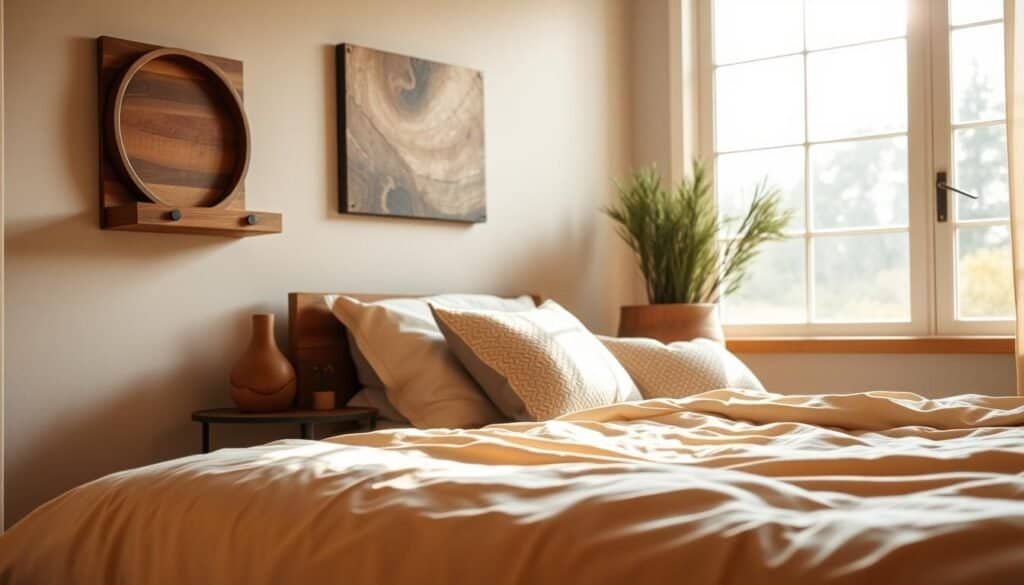
To make your bedroom retreat even better, add spa-like elements. Think soft lighting and plush textiles with your wooden furniture. This mix creates a spa-like home decor feel in your bedroom.
For a DIY project, add wooden accents or decor. Even though “diy wood bathroom decor” is for bathrooms, it works in bedrooms too. You can make a wooden headboard or wall art for a personal touch.
By choosing wood tones and the right decor, you can make a bedroom retreat. It will be calming and inviting, a true sanctuary in your home.
Kitchen and Dining Areas: Warmth Where You Gather
Wood in kitchen and dining decor is a classic choice. It brings warmth and character to these key home areas.
Wooden furniture, like dining tables and chairs, is key to a cozy atmosphere. Choose rustic wood decor for a genuine vibe or sleek, modern wood for a contemporary look.
Wood isn’t just for furniture. Wooden floors can make these spaces feel warmer. Wooden decor items, like wall art or utensil holders, also add a nice touch.
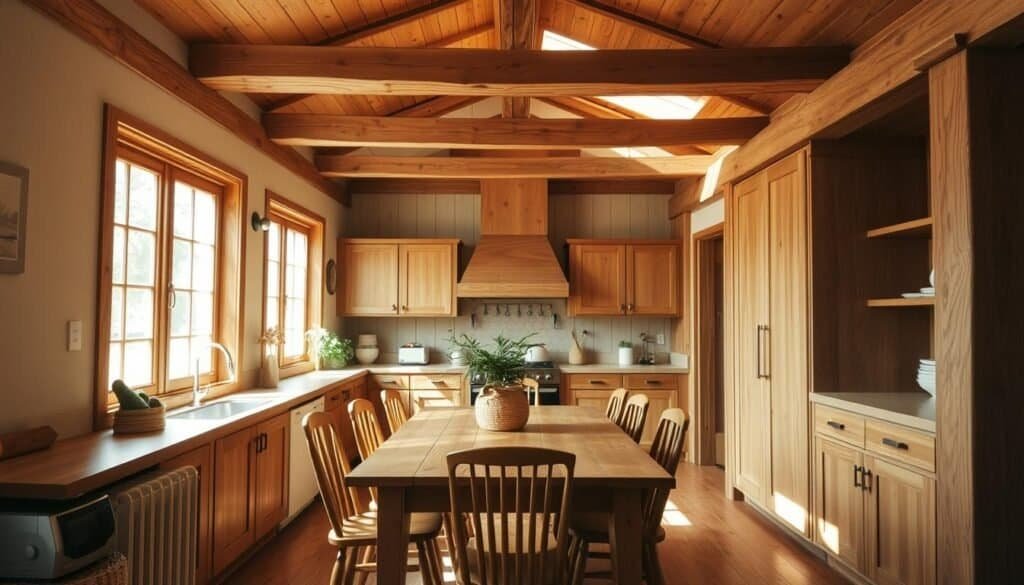
When designing your kitchen and dining areas, think about the look you want. Mixing wood tones or combining wood with metal or glass can create a cohesive look. Here are some ideas:
- Use reclaimed wood for a rustic, eco-friendly dining table.
- Add wooden accents, like a wooden kitchen island or wooden shelving.
- Choose hardwood flooring for warmth underfoot.
By carefully adding wood items and warm wood tones, you can make your kitchen and dining areas welcoming. They’re perfect for family and friends gatherings.
The Art of Mixing Wood Tones Successfully
Mixing wood tones is all about balancing shades and textures. When done right, it adds depth and interest to a room. But, finding the right balance can be tricky.
To mix wood tones well, think about the look you want. For a cohesive feel, pick woods in the same color family. For something eclectic, mix different tones and textures. Remember, the wood color combination should match the room’s furniture, flooring, and decor.
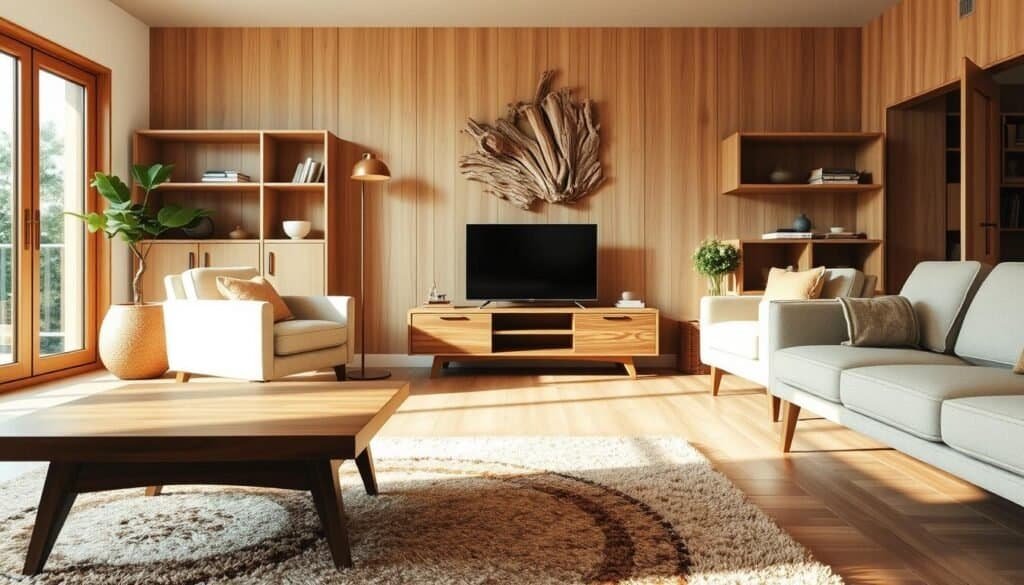
The 60-30-10 rule is a good starting point. It suggests using 60% of one wood tone, 30% of another, and 10% as an accent. For example, use a light wood for most furniture (60%), a medium wood for secondary pieces (30%), and a dark wood for accents (10%).
When combining light and dark wood furniture, find a common thread. This could be texture or color. This helps tie the space together. The 60-30-10 rule can also guide you to a balanced mix.
For more ideas on using natural wood tones in your living room, check out The Sawdust Man. They have lots of tips and inspiration.
Mixing wood tones is all about trying different things and finding what works. By understanding the basics and using guidelines like the 60-30-10 rule, you can make your home welcoming and stylish.
Wall and Floor Treatments That Transform
Adding wood to your walls and floors can make any room feel warmer and more textured. Wood’s natural beauty can really enhance your space, making it feel cozy and welcoming.
Wooden wall slats are great for making a feature wall in living rooms. They add depth and interest, creating a standout focal point. For a modern vibe, try using reclaimed or distressed wood.
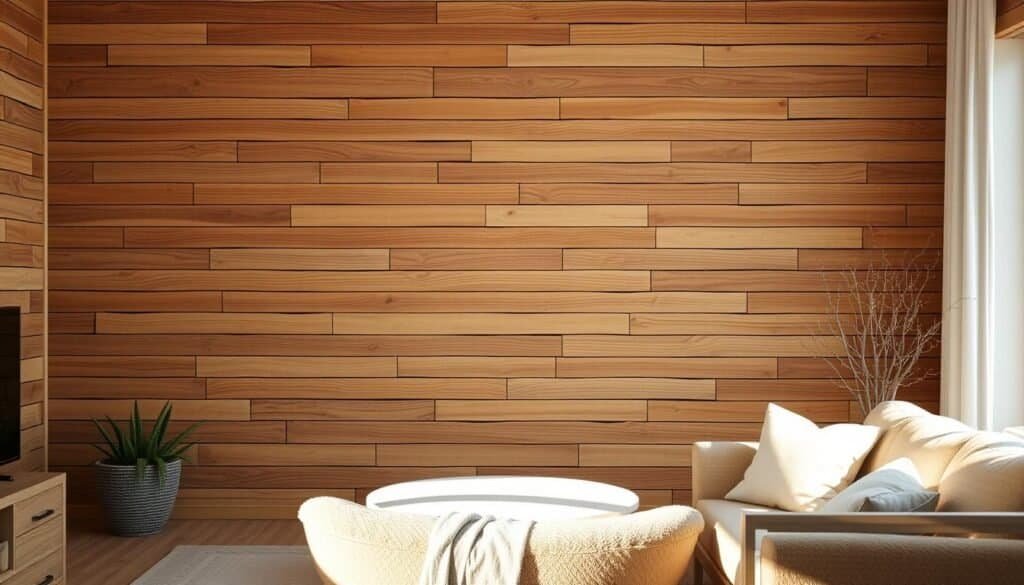
Hardwood flooring is a classic choice that fits many design styles. You can pick from many wood types, each with its own look and feel.
For a unified look, mix wooden wall and floor treatments. For instance, use wooden slats on a wall and hardwood floors together. Here are some ideas to start with:
- Make a statement wall in your living room with wooden panels.
- Add wooden accents to your floor design for extra interest.
- Try mixing wood with other materials like stone or metal for a unique look.
By carefully choosing wood for your walls and floors, you can create a space that’s warm, inviting, and truly yours.
Small Wooden Accents with Big Impact
Make your home feel warmer and more inviting with small wooden accents. These small touches can change how your living space feels. They make it cozier and more welcoming.
Wooden decorative items for home are diverse. You can find everything from detailed figurines to simple, rustic plant decor. Adding these to your decor adds depth and interest to any room.
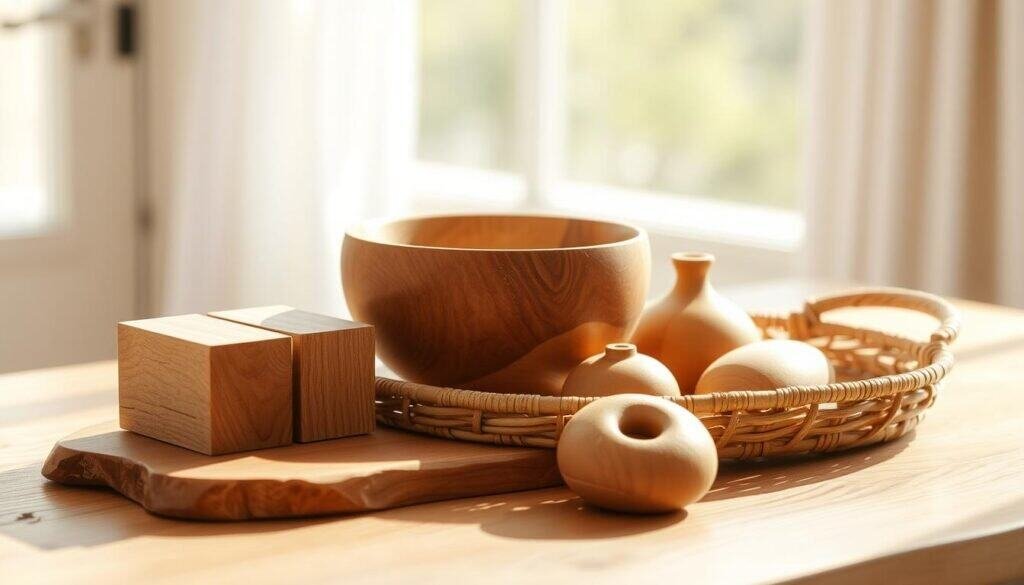
- Adding a driftwood wall planter to your living room or kitchen adds a natural touch.
- Wooden decorative boxes or containers are great for storing small items on shelves or coffee tables.
- Rustic plant decor, like wooden planters or holders, boosts your home’s rustic charm.
For more ideas on using wood decor, check out The Sawdust Man. They have fresh spring wood decor ideas. By choosing and placing small wooden accents wisely, you can make your home warm and inviting.
Complementary Colors That Enhance Wood’s Calming Effect
Choosing the right complementary colors is key to a harmonious and calming space with wood at its center. The perfect color palette can really bring out wood’s natural beauty, making your home feel serene.
When picking colors for wood, the type of wood matters a lot. For example, colors that match oak wood are often earthy like sage green, sandy beige, or soft blues. These hues complement oak’s warm tones without overwhelming them.

Colors that go with walnut wood are usually deeper, like emerald green, navy blue, or warm neutrals. These colors make walnut’s dark, luxurious tones stand out, creating a calm and sophisticated space.
A natural wood color palette includes earthy tones like browns, tans, and taupes. These colors blend well to create a soothing atmosphere. Adding colors next to wood tones on the color wheel, like greens or blues, can enhance this effect.
Here are some ways to use complementary colors effectively:
- Use throw pillows or blankets in contrasting colors to add interest
- Paint walls a soothing color that complements the wood tones
- Add natural elements like plants or a vase with branches
By carefully choosing complementary colors, you can make wood’s calming effect even stronger. This creates a peaceful space that encourages relaxation and well-being.
Conclusion: Embracing the Timeless Tranquility of Wood
Incorporating gentle wood tones into your home decor can deeply impact your mood. It can turn your living spaces into serene retreats. This is thanks to the psychology of wood in interior design.
Wood decor adds warmth and character to any room. It’s perfect for creating a peaceful bedroom or a cozy kitchen. For more ideas, check out these 10 wood decor ideas that warm up every room.
Choosing wood decor brings more than just beauty to your home. It creates a calming space that promotes relaxation and well-being. Remember, the right wood decor can make your home a peaceful haven.