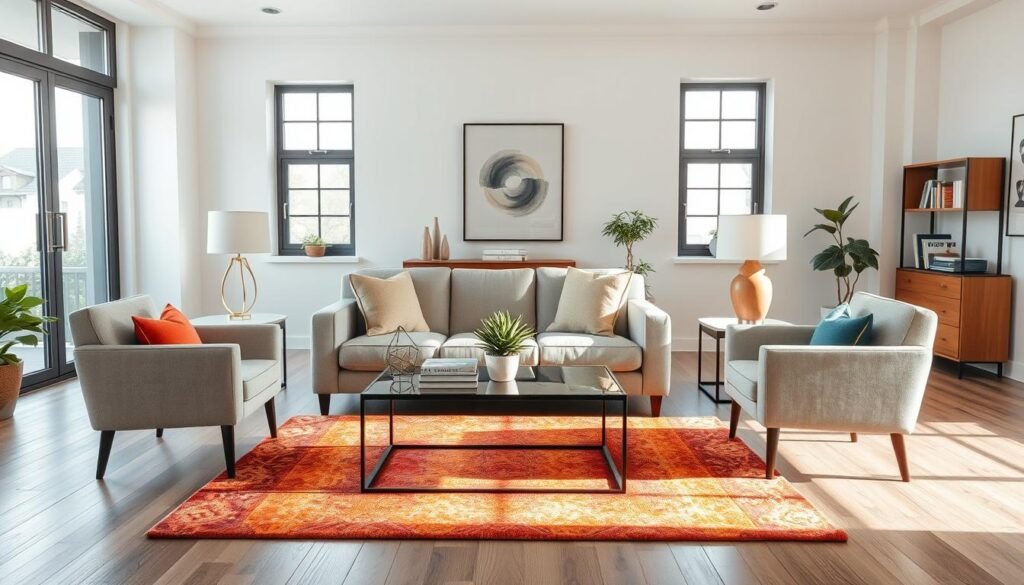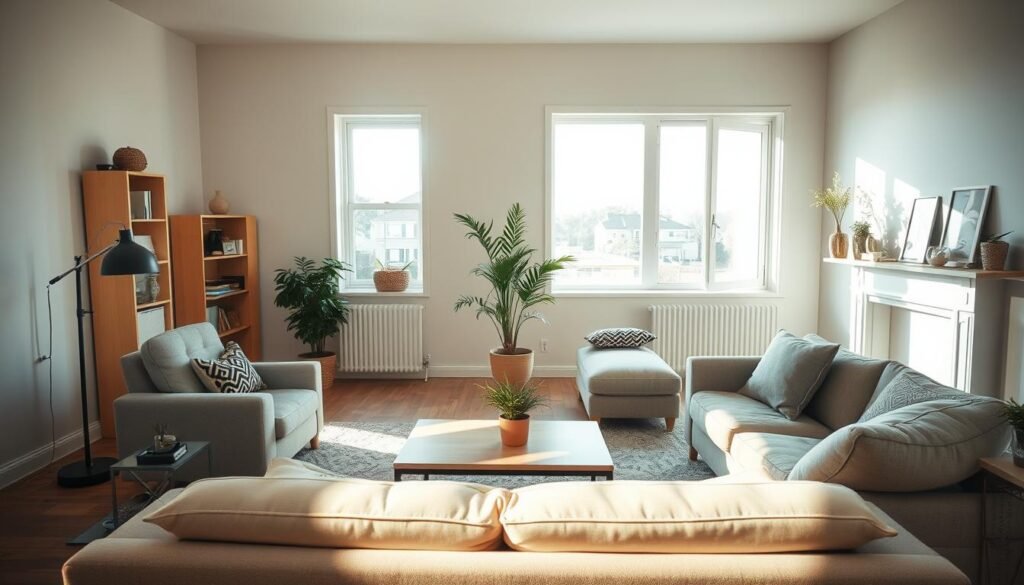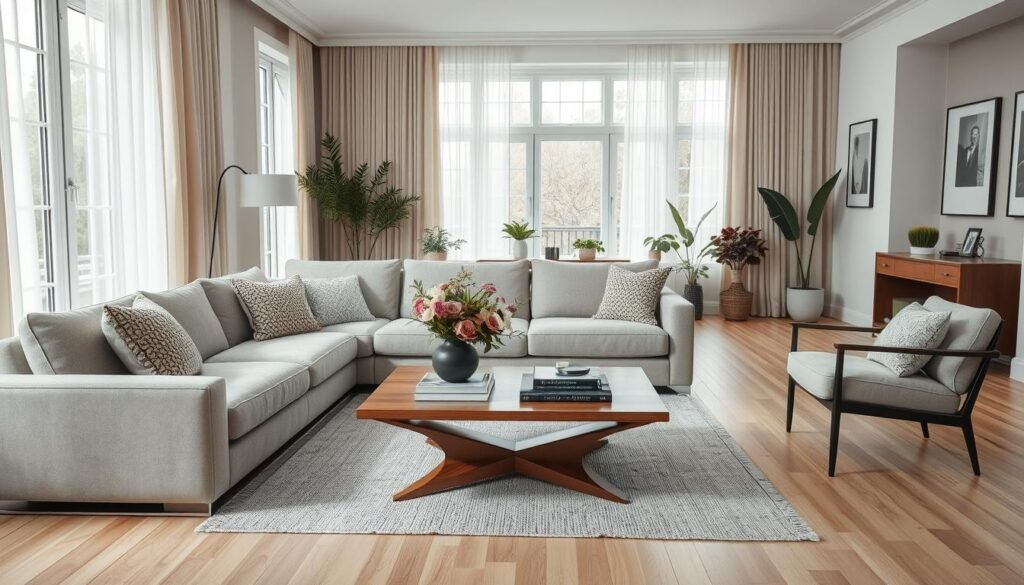
Creating a warm and inviting living room is a delicate balance. It’s about making a space that exudes warmth but doesn’t feel heavy or overwhelming.
To get this balance right, use home decor tips that bring calm and serenity. Choose soothing colors, add textures that feel good, and bring in elements of nature.
With the right interior design inspiration, you can make a warm living room that’s both welcoming and beautiful. By finding the perfect balance, you’ll have a space to relax and unwind that truly reflects your personal style.
Creating a Welcoming First Impression: Entry Living Room Solutions
The entry living room is a special space that needs careful design. It should feel warm and inviting. When the front door opens into the living room, it’s key to make the entryway stand out without losing the room’s openness.
Furniture Placement to Define Zones
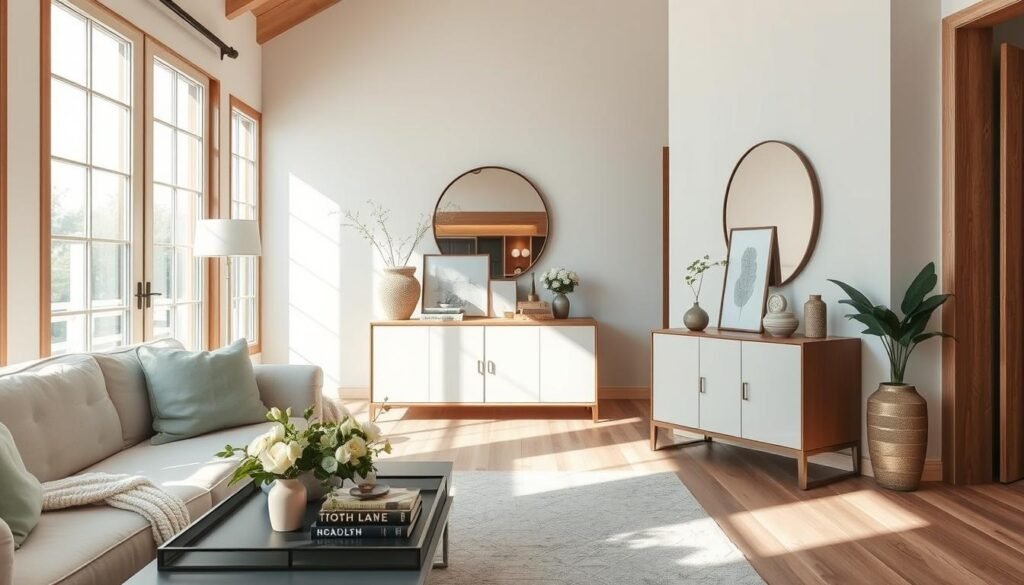
Placing furniture wisely can mark the entryway from the rest of the room. A console table or bench can create a soft boundary. This not only holds keys and mail but also acts as a visual divider.
Flooring Transitions That Create Boundaries
Different flooring can show where the entryway starts. For example, switching from hardwood to tile or using a unique rug can clearly mark the entry area.
In open concept entryways, partitions can be both useful and stylish. You can use sliding panels, room dividers, or even a big piece of art to subtly separate the areas.
See-Through Shelving as Functional Dividers
See-through shelving or glass partitions can keep the space open while defining the entryway. They add storage and interest without blocking views.
Small Space Shoe and Coat Storage Solutions
In small entry living rooms, finding storage can be tough. Use wall-mounted hooks, compact shoe racks, or multi-functional furniture to keep things tidy and organized.
Entryway Table Styling With Purpose
An entryway table is more than just for storage; it’s a chance to add style and personality. Pick decorative items like vases or framed photos that show your taste and match the room’s look.
Color Psychology: Warm Palettes That Don’t Feel Heavy
Creating a warm and inviting living room doesn’t mean you have to lose brightness. Warm color palettes can make your space feel welcoming without feeling too much.
Choosing the Right Beige, Taupe and Warm Gray Tones
Beige, taupe, and warm gray tones are great for adding warmth. They work well with many decorating styles, from modern to traditional. For example, beige can be your main wall color, while taupe can add depth to your furniture.
Incorporating Natural Elements for Organic Warmth
Adding natural elements like wood, stone, and plants can warm up your living room. They add texture and bring an organic feel, making your space cozier.
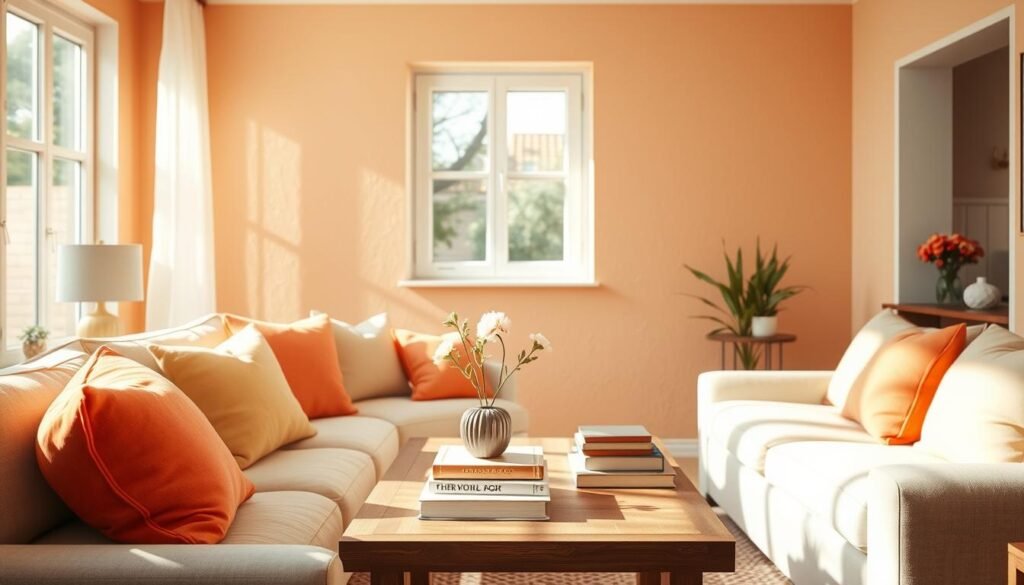
Changing your color palette with the seasons keeps your living room fresh. For example, use warmer tones in winter and lighter shades in summer. You can do this with throw pillows, blankets, or wall art.
Color Coordination for Visual Cohesion
It’s important to have visual cohesion with warm palettes. Choose a few core colors and use them throughout the room. For instance, if beige is your wall color, use it in your furniture and decor too.
The 60-30-10 Rule for Color Distribution
The 60-30-10 rule helps with color distribution. Use 60% of the room for a dominant color, 30% for a secondary color, and 10% for an accent color. This creates a balanced and appealing space.
Using White and Light Elements to Brighten Warm Schemes
To avoid a heavy feel, add white and light elements. White trim, light-colored furniture, or sheer curtains can brighten the space and balance it out.
Lighting Strategies That Transform Atmosphere
Changing your living room’s feel starts with smart lighting strategies. The right lighting can make a room cozy, open, or lively. It’s all about finding the right mix of light types.
Ambient, Task, and Accent Lighting Balance
A good lighting plan has ambient, task, and accent lighting. Ambient lighting lights up the whole room. Task lighting shines on areas like reading spots. Accent lighting brings out decorations or special features.
Warm vs. Cool Light Bulbs: Making the Right Choice
Choosing between warm and cool light bulbs changes the room’s mood. Warm bulbs (2700K-3000K) make it cozy. Cool bulbs (3500K-5000K) energize the space.
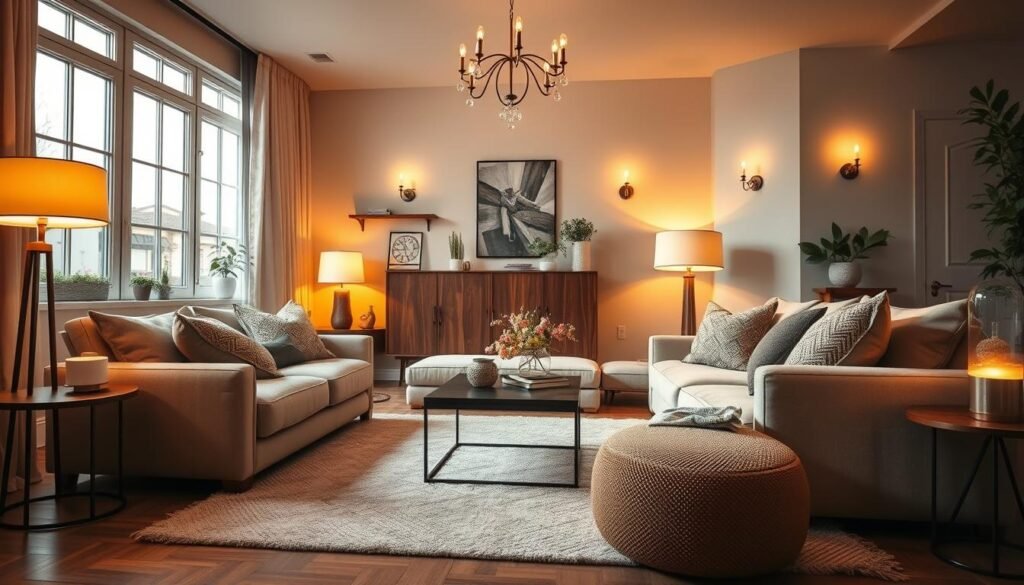
Using materials that soften light adds depth to your living room. Natural fabrics or frosted glass lampshades make the light more welcoming.
Scale Considerations for Small to Medium Rooms
In small rooms, choose lighting that fits right. Big fixtures can feel too much. Small ones might not light enough.
Mirror Placement to Amplify Brightness
Placing mirrors where light hits them makes the room brighter. This trick works well in rooms with little natural light.
Window Cleaning and Treatment Maintenance
Clean windows and keep your window treatments in check. They affect how much natural light gets in. Clean windows and the right treatments brighten and improve the room’s feel.
Furniture Arrangement: Living Room Styling That Feels Like You’ve Nailed It
A well-planned furniture arrangement is key to a comfy and stylish living space. It’s not just about picking the right furniture. It’s also about how you place them in your living room.
Traffic Flow Principles for Comfort and Function
Ensuring a smooth traffic flow is vital for comfort and function in your living room. This means arranging furniture for easy movement around the room.
- Leave enough space between furniture pieces for people to walk through comfortably.
- Avoid blocking doorways or pathways with large furniture items.
- Consider the ‘traffic lanes’ in your room and keep them clear.
Negative Space as a Design Element
Negative space, or the empty space around and between furniture, is a powerful design element. It can make your living room feel more spacious and less cluttered.
Using negative space effectively can enhance the aesthetic appeal of your living room.
L-Shaped and Sectional Solutions for Different Spaces
L-shaped and sectional sofas are versatile options for living rooms. They provide ample seating and help define the space.
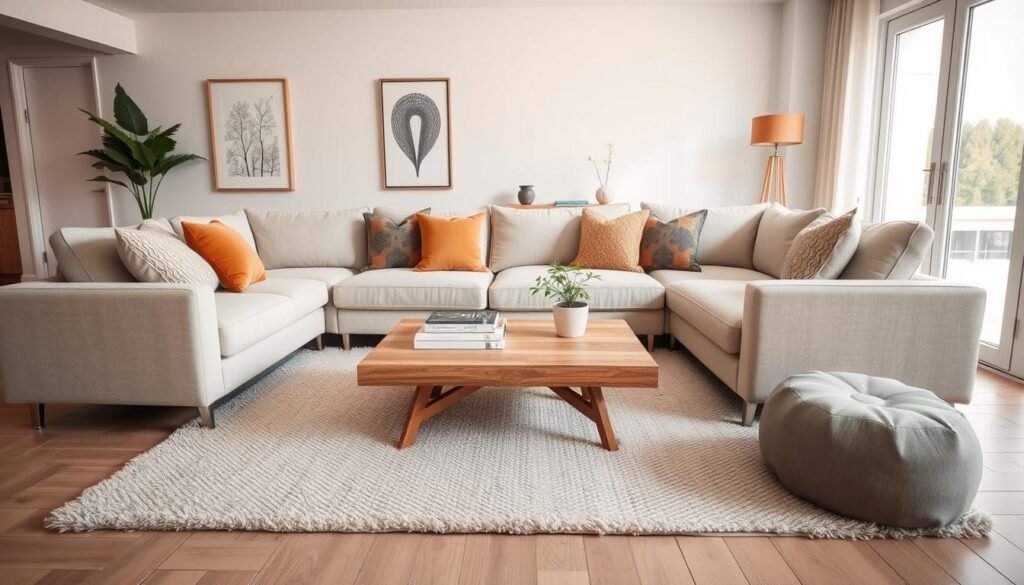
The right sofa can be a centerpiece of your living room. Current trends include sofas with clean lines, tufted upholstery, and modular designs.
Multi-Functional Furniture Worth Investing In
In today’s homes, multi-functional furniture is increasingly valuable. Pieces like storage ottomans and coffee tables with storage can help keep your living room organized.
- Storage ottomans that double as seating.
- Coffee tables with built-in storage.
- Shelves that can hold decorative items and books.
Scale and Proportion Rules for Tight Spaces
In smaller living rooms, scale and proportion are critical. Choosing furniture that is appropriately sized for the room can make it feel larger.
Measuring your space and selecting furniture that’s proportionate can greatly improve the feel of your living room.
Texture Play: Adding Depth Without Visual Weight
Using texture can make your living room more interesting and cozy. It does this by adding layers without making the room feel heavy. This is done by mixing different textures in a way that looks good together.
Textile Layering Without Heaviness
Layering textiles is a smart way to add depth. Start with a light-colored sofa as the base. Then, add throws, pillows, and rugs in textures that match. For example, a velvet sofa looks great with a chunky throw blanket.
Introducing Natural Fibers for Warmth
Natural fibers like wool, linen, and cotton make your living room warm and cozy. Using these materials for furniture, rugs, or wall hangings adds depth and interest. Natural fibers are not only beautiful but also strong and eco-friendly.
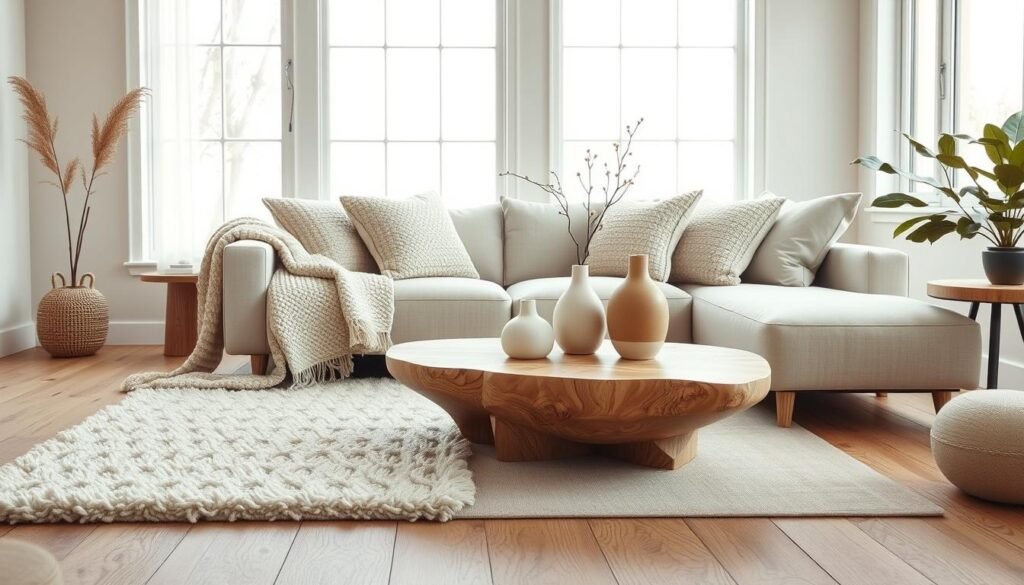
Mixing materials like wood, metal, and soft surfaces makes your room inviting. For example, a wooden coffee table with metal accents and a plush rug adds layers to your room.
Contrasting Textures That Create Visual Interest
Using contrasting textures can make your living room more interesting. For instance, a sleek sofa next to a rough stone or brick wall is striking.
Balancing Rustic and Bohemian Elements
To mix rustic and bohemian styles, combine natural materials like reclaimed wood with global textiles and decor. This mix creates a unique, layered look that’s both earthy and eclectic.
Signature Pieces That Define the Style
Signature pieces, like a standout furniture piece or art, define your living room’s style. These items should show your personal taste and enhance the room’s texture and character.
Window Treatments That Balance Privacy and Light
The right window treatments are key to a cozy yet bright living room. They let in natural light while keeping things private. This creates a warm and inviting space.
Fabric Selection for Maximum Light Diffusion
Picking the right fabric is important for light and privacy balance. Lightweight, sheer fabrics let light through while keeping things private. Look for fabrics with a loose weave for the best light diffusion.
Hanging Techniques to Maximize Window Size
How you hang curtains can change how big your windows look. Hanging curtains higher and wider than the frame makes windows seem bigger. This lets more natural light into the room.
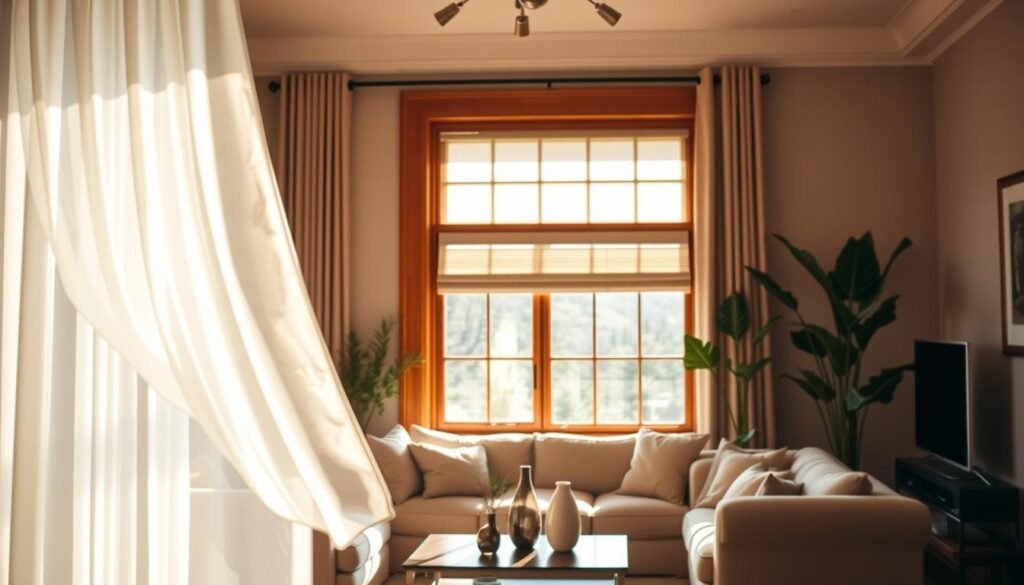
Layering blinds and curtains gives you control over light and privacy. Use sheer curtains with blinds during the day to adjust light levels. At night, add heavier drapes for privacy and warmth.
Seasonal Adjustments for Changing Light
Changing your window treatments with the seasons helps with light changes. In summer, use light fabrics to keep cool. In winter, thicker drapes help keep warm.
DIY Customization Techniques
Customizing your window treatments can save money. Try making DIY curtain rods or use old materials for a unique look.
Where to Splurge vs. Where to Save
Invest in quality window treatments for areas with lots of natural light. They make a big difference in your living room’s feel. For less important spots, you can save money with cheaper options.
Stylish Storage Solutions to Minimize Visual Clutter
Getting rid of visual clutter is easy with smart storage. A tidy living room feels bigger and more welcoming.
Coffee Tables With Hidden Compartments
Coffee tables with secret spots are great for hiding things like remotes and magazines. Look for tables with lift-top designs or hidden drawers for extra use.
Ottomans and Benches With Interior Storage
Ottomans and benches with secret storage are perfect for hiding blankets and pillows. Choose storage ottomans with removable tops for easy access.
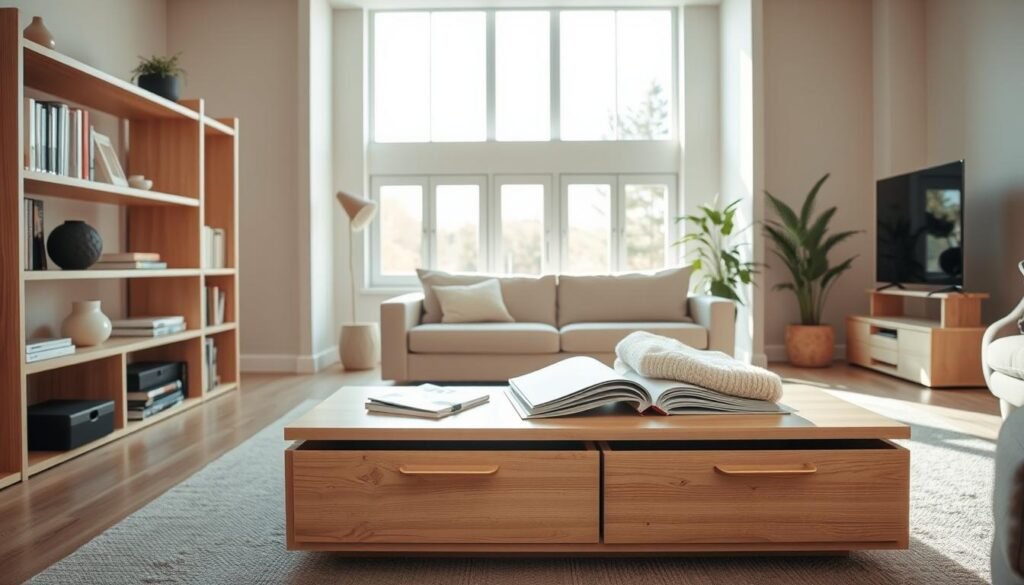
Open shelving can show off your decor, but it needs careful styling. Balance decorative items with negative space and mix up heights and textures for interest.
Cabinet Selection for Clean Sightlines
Choose cabinets with simple designs to keep the room light. Cabinets with glass doors also make the space feel open.
Vertical Storage Solutions That Draw the Eye Up
Tall shelves or storage units make the room look bigger. Use wall-mounted shelves to save floor space and keep things tidy.
Minimalist Approaches to Necessary Items
Using multi-functional furniture cuts down on clutter. Select items with simple, clean designs for a neat look.
Personal Touches: Gallery Walls and Meaningful Displays
Adding personal touches to your living room can make it feel more welcoming. Gallery walls and meaningful displays are great ways to do this. They help create a warm and inviting space that shows off your personality.
Frame Selection and Spacing Guidelines
Choosing the right frames is key for a gallery wall. Pick frames that match in style and color. Using frames with the same color or material helps keep things looking good together.
- Choose frames that fit well with the images or objects they’ll hold.
- Keep frames 2-4 inches apart for a balanced look.
- Try different frame styles to add interest.
Color Themes That Unify Diverse Images
A good color theme can tie together different images. Look at the main colors in your pictures and pick a theme that goes well with them.
- Find the main colors in your images.
- Pick a color theme that matches these colors.
- Use frames and mats that fit your color theme.
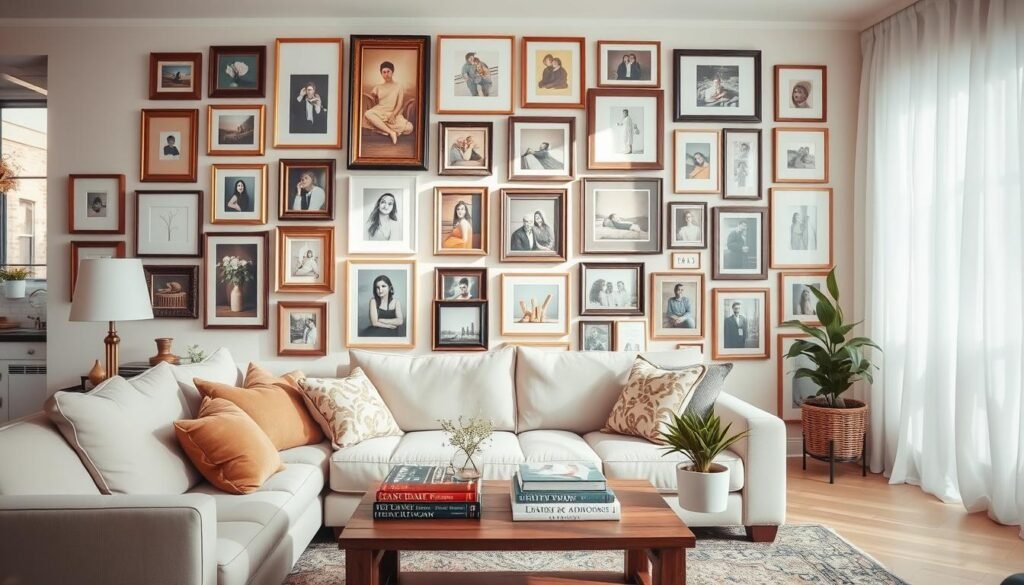
The rule of three helps with design. It says to group things in threes for balance. Use this rule for your gallery wall by grouping frames or objects in odd numbers.
Incorporating Books, Objects, and Plants
Adding books, objects, and plants to your gallery wall can make it more interesting. These items add depth and beauty to your decor.
- Use books to decorate or add height.
- Add objects that show your interests or personality.
- Bring in plants for a touch of green.
Storage Solutions for Off-Season Decor
To keep your living room tidy, use storage solutions for off-season decor. Bins, baskets, or storage ottomans are great for storing items not in use.
Quick-Change Elements for Maximum Impact
Adding quick-change elements to your decor makes it easy to update your space. Things like throw pillows, blankets, or vases can be changed out with the seasons.
Budget-Friendly Transformations With Major Impact
Transforming your living room on a budget can make it feel new and welcoming. You don’t have to spend a lot to achieve this.
Paint Techniques Beyond Basic Walls
Advanced paint techniques are a cheap way to change your living room. Try ombre walls or stenciling for a unique look.
- Ombre walls create a gradient effect that adds depth.
- Stenciling lets you add patterns or designs for a unique touch.
- Painting one wall in a bold color makes it a focal point.
Furniture Refreshes Anyone Can Master
Refreshing your furniture is a fun DIY project. Reupholstering or repainting old furniture can make it look new.
- Choose fabric that matches your decor.
- Prime before painting for a smooth finish.
- New hardware can give furniture a modern look.
What to Look For and What to Avoid
When buying second-hand furniture, look for sturdy pieces. Avoid items with broken frames or worn-out parts.
Restoration Tips for Second-Hand Treasures
Restoring second-hand furniture is rewarding. Start by cleaning and sanding it. Then, apply a fresh coat of paint or varnish.
Pillow, Throw, and Rug Refreshes
Updating your pillows, throws, and rugs can instantly refresh your living room. Pick items in colors and textures that match.
Affordable Art Sources That Look Expensive
Finding affordable art that looks expensive is possible. Look for prints from local artists or online marketplaces with original art at good prices.
By using these budget-friendly tips, you can make your living room look amazing. You can do it without spending too much.
Conclusion: Bringing It All Together for Your Perfect Warm Yet Light Living Room
Creating a warm living room that feels light and inviting is all about balance and light. The right color palette, lighting, and furniture arrangement are key. This way, you can make a perfect living room that’s warm but not heavy.
A warm living room is more than just wall colors. It’s about textures, lighting, and personal touches that make it feel like home. By mixing textures and adding stylish storage, you can make a light living room cozy and inviting.
Experimenting to find the right balance is the key. With these ideas, you can turn your living room into a warm, welcoming space. It’s perfect for relaxing and entertaining, no matter your budget. The result is a beautiful, functional space that’s the heart of your home.