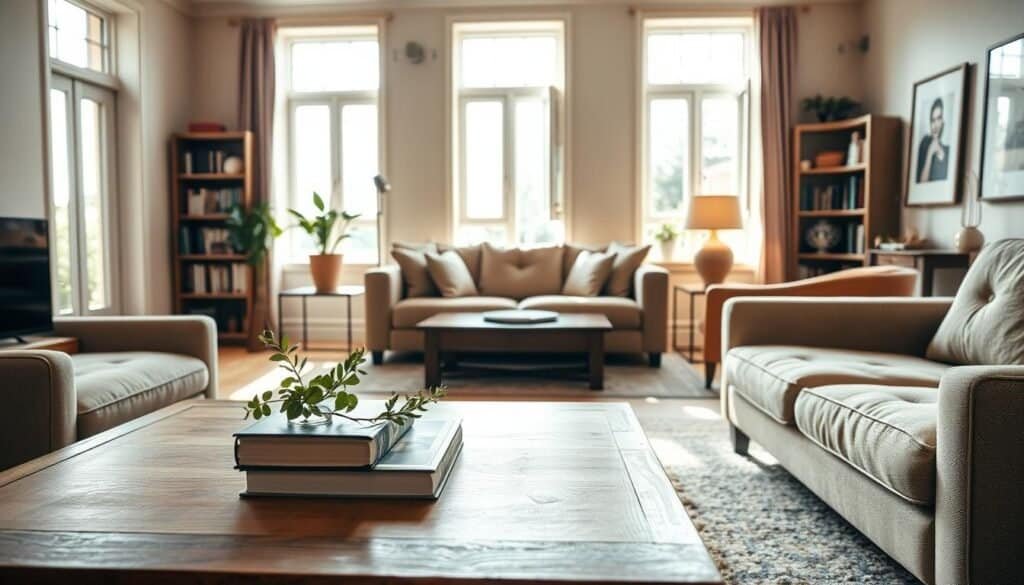
Making a cozy living space is more than just adding decorations. It’s about creating a feel-at-home atmosphere. A well-planned layout can make all the difference in making your home warm and inviting.
In home design and interior decorating, it’s easy to follow the latest trends. But, the real foundation of a cozy home is its structure, not just its looks.
By focusing on your home’s design basics, you can make it feel warm and welcoming. This approach to home design is all about comfort and relaxation. It makes your home the perfect place to unwind and recharge.
The Foundation of Home Comfort
The comfort of a home starts with its layout. A good layout is key to creating a cozy atmosphere. It’s not just about looks; it’s about making a space that feels warm and inviting.
A functional layout is key for comfort. It makes sure the space is used well, making it easy to move and spend time together. This helps create a cozy and connected feeling.
Important parts of a comfy home layout include:
- Efficient use of space
- Clear pathways for movement
- Adequate lighting
- Cozy nooks for relaxation
Good room organization is also important. It means arranging furniture and decor to create harmony and balance. Think about the room’s flow and each area’s purpose.

By focusing on a functional layout and smart room organization, homeowners can make their house feel like a home. It becomes a cozy place to relax and enjoy time together.
How Warmth Starts With Structure, Not Just Aesthetics
The structural parts of a home are the real heroes that make it warm and inviting. They often get overlooked in favor of decorative touches. While aesthetics help make a house feel cozy, it’s the structure that really brings warmth.
Beyond Decoration: The Structural Elements of Warmth
Many think of furniture and colors when they think of a warm home. But, the structural elements like layout, window placement, and ceiling height are key. They help create a cozy atmosphere.
A smart floor plan can make a home feel more welcoming. For example, a home with cozy corners and places to relax feels warmer. Stylish home features like exposed beams or high ceilings add beauty and warmth.

Using natural materials, like wood for floors or walls, also adds warmth. These materials bring a cozy feel that synthetic materials can’t match.
In summary, while decoration is important, the structure of a home is the real foundation for warmth. By focusing on structural elements and adding stylish home features, you can make your home a warm and inviting space.
Thoughtful Floor Plans: The Blueprint for Cozy Living
The blueprint for a warm and inviting home lies in its floor plan. A well-designed floor plan is key for a cozy living space. It makes the home feel welcoming and comfortable.
Key Elements of Cozy Floor Plans include open yet defined spaces. They also use natural light well and have a layout that promotes flow and functionality. When designing your dream house floor plans, think about how different areas will be used and how they will connect.

House layout ideas for cozy living often mix open and intimate spaces. For example, an open-plan living area is great for family gatherings. A cozy reading nook or home office is perfect for a quiet retreat.
To achieve cozy living through your floor plan, consider these tips:
- Designate areas for different activities to create a sense of purpose and functionality.
- Use natural materials and textures to add warmth to your space.
- Incorporate plenty of natural light to enhance the sense of warmth and welcoming.
By focusing on these elements, you can create a house floorplan that looks great and feels like home. Whether you’re building from scratch or renovating, thoughtful floor plans are the first step towards achieving cozy living.
Natural Light: A Structural Element of Warmth
Using natural light well can greatly change a home’s feel. It makes spaces feel bigger, more welcoming, and cozy. In today’s homes, using light wisely is key to a warm, inviting feel.
Maximizing natural light is more than just big windows. It’s about how light works with your home’s design. By planning window and skylight placement, you can let in more light.
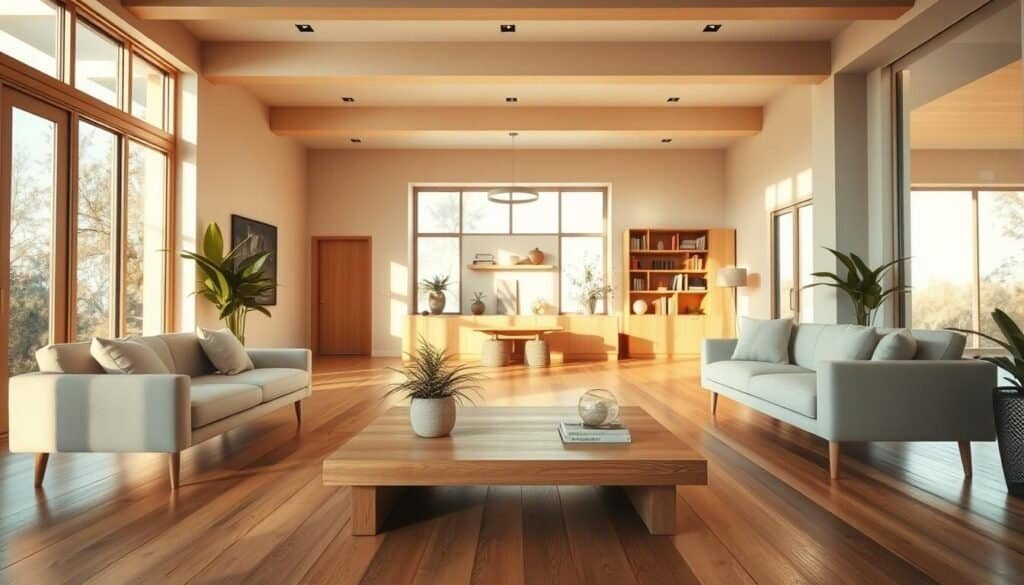
To use natural light well, try reflective surfaces to spread light. Choose window treatments that let you control light. Also, add features like clerestory windows or solar tubes. This way, your home will feel brighter and more cozy, connected to the outdoors.
- Use mirrors or reflective surfaces to bounce natural light.
- Install skylights or larger windows to increase natural light intake.
- Choose light-colored finishes to enhance light reflection.
By using these methods, you can make your home brighter and more welcoming. This approach not only looks good but also helps save energy and is better for the planet.
Ceiling Heights and Architectural Details That Create Intimacy
A well-designed home can feel incredibly cozy. This is thanks to thoughtful ceiling heights and architectural features.
When designing a home, it’s key to think about how different elements affect the ambiance. Ceiling heights play a big role in this.
Lower ceilings can make a room feel cozier and more intimate. On the other hand, higher ceilings can add a sense of grandeur. But, it’s not just about the height. The architectural treatment of ceilings also greatly impacts a space’s feel.
Here are some ways to use ceiling heights and architectural details for intimacy:
- Using exposed beams to add character and warmth.
- Incorporating moldings and trim for depth and visual interest.
- Selecting lower ceiling heights in areas for relaxation, like bedrooms.
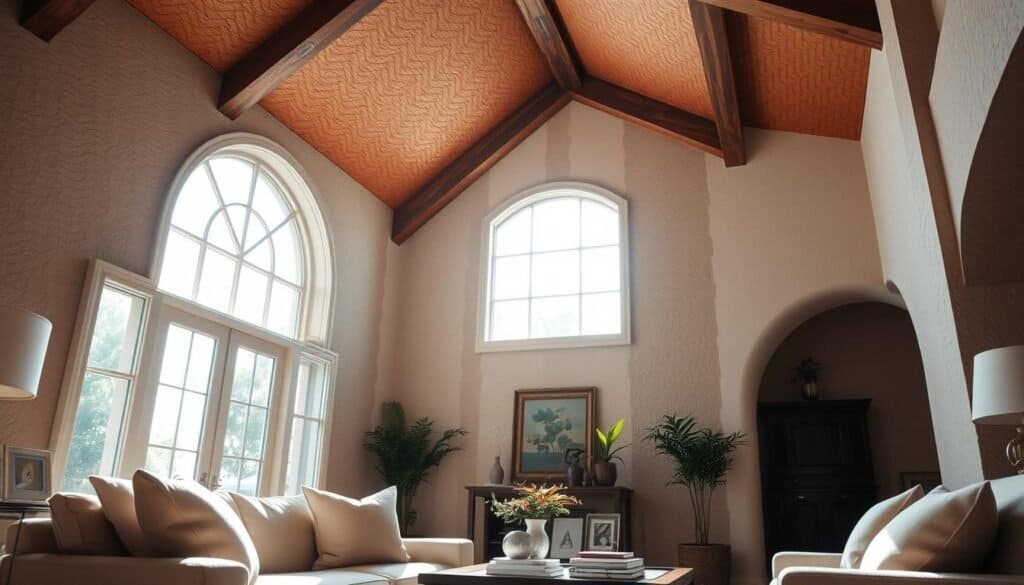
By carefully adding these elements, homeowners can make their living space feel welcoming and intimate.
The Role of Materials in Structural Warmth
The warmth of a home comes from the materials used in its construction and decor. Materials play a key role in making a space cozy and inviting. For example, using natural materials like wood and stone can warm up a room.
In Mexican kitchen decor, you’ll find vibrant tiles, rustic wood, and earthy tones. These elements not only warm up the space visually but also strengthen the home’s structure. Spanish decor apartments also use terracotta, ceramic tiles, and wooden beams to create a cozy feel.

The materials you choose can really change how warm a home feels. For instance, materials with high thermal mass, like concrete or brick, help keep the temperature steady. This makes the space feel cozier. The texture and color of materials also affect the room’s mood. Warm materials like wood and terracotta make a space feel more welcoming.
To achieve warmth, pick materials that are not just durable and insulating but also beautiful. By mixing materials well, homeowners can create a cozy and inviting home that shows off their style.
- Natural materials like wood and stone add warmth.
- Vibrant tiles and rustic wood are characteristic of Mexican decor.
- Terracotta and ceramic tiles are commonly used in Spanish decor.
Home Office Design: Structure Before Style
Before choosing furniture, it’s key to structure your home office for maximum productivity. A well-designed home office boosts your work efficiency and well-being.
The structure of your home office is more than layout. It’s about creating a space that’s both productive and comfortable. Think about the room’s size, window placement, and where to put electrical outlets.

To get a productive home office, start by figuring out its main uses. Will it be just for work, or also for storage or reading? Identifying your needs helps you choose the best layout.
- Use the “work triangle” concept, like in kitchen design, to improve your workspace.
- Make sure there’s enough storage for your office supplies and documents.
- Get a comfortable, ergonomic chair to support good posture.
By focusing on your home office’s structure first, you can make a space that works well and looks good. This way, you’ll get a productive home office design that fits your needs.
Kitchen Layouts That Foster Connection
Kitchen design is key in creating a space for connection. A well-designed kitchen becomes the home’s heart. Here, family and friends share meals and make memories.Open Layouts are great for this. They remove barriers, making it easy to chat while cooking.
For those who enjoy hosting, akitchen island is a smart choice. It adds counter space and becomes a natural spot for guests to gather.
Decor that shows your style makes your kitchen welcoming. Addingfiesta kitchen decor ideas can bring a lively, festive vibe.

- The G-shaped layout, which provides ample counter space and creates a sense of enclosure.
- The L-shaped layout, which is ideal for smaller kitchens and can help to create a cozy atmosphere.
- The U-shaped layout, which is perfect for larger kitchens and can accommodate multiple cooks.
Choosing a layout that encourages connection and decor that reflects you can make your kitchen the home’s heart.
Cultural Influences on Structural Warmth
Different cultures add unique touches to their homes, making them warm and inviting. For example, aMexican home modern design uses bright colors, rustic materials, and open spaces. This creates a cozy and welcoming feel. Traditionalhacienda home interiors have thick walls, large courtyards, and detailed designs. These features add both strength and a cozy vibe.
Cultural influences show up in many parts of home design. Scandinavian homes are known for their simple designs, light woods, and big windows. These elements bring in natural light and create a sense of warmth and simplicity. On the other hand, Mediterranean homes often have terracotta tiles, stucco walls, and ornate ironwork. These add texture and beauty, making the space feel warmer.
Adding cultural touches to your home can be easy. Just include a fewcozy accent pieces that show your heritage. This not only adds warmth but also tells a story, making your space feel more personal and welcoming.
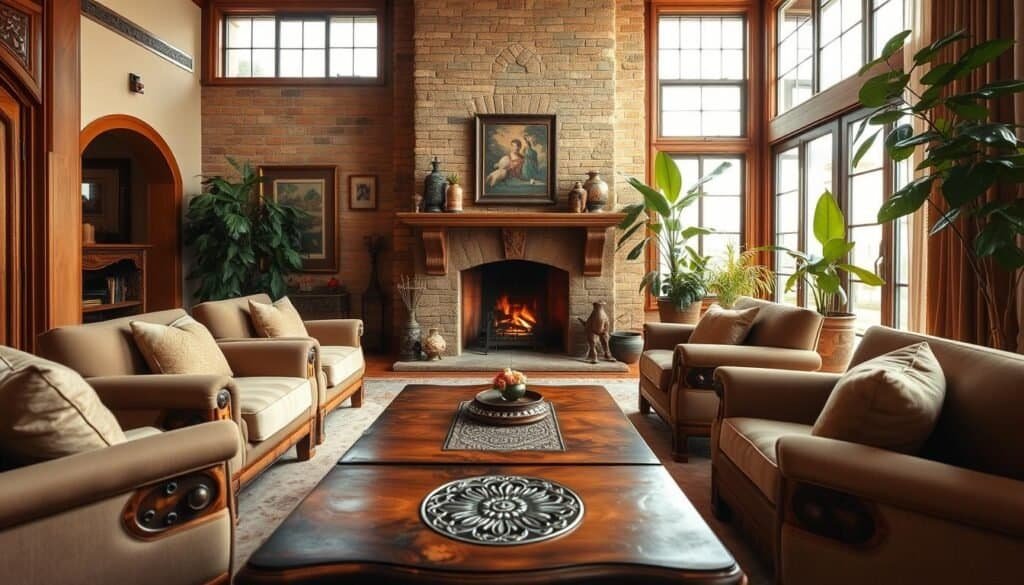
By embracing cultural influences, homeowners can make spaces that are beautiful and meaningful. Whether it’s traditional styles or modern takes on cultural elements, the goal is to find a balance. This balance should reflect your identity and create a sense of belonging.
Small Space Solutions: Tiny Homes and Efficiency Apartments
Living in small spaces doesn’t mean you have to give up warmth and comfort. Tiny homes and efficiency apartments are leading the way with smart designs. They make cozy living possible, even with limited space.
Maximizing Space is key in tiny homes. Using furniture that does more than one thing is a smart move. For instance, a storage ottoman can be a coffee table and a place to store things.
- Choose light colors to make spaces look bigger.
- Use wall-mounted shelves and storage to save floor space.
- Mirrors help reflect light, making rooms feel larger.
In tiny house cabins, cozy nooks and snug areas make the space feel bigger and welcoming. Adding natural materials and textures warms up the space.

Efficiency apartments also benefit from smart design. Focus on function and simplicity to create a cozy vibe. Layered lighting adds warmth and makes the space feel roomier.
With these small space solutions, tiny homes and efficiency apartments can be surprisingly cozy. They show that warmth and comfort are possible, even in smaller spaces.
Entryways and Transitions: Setting the Tone Structurally
Making your entryway warm and inviting is key to a great first impression. The entryway is the first thing you see when you enter a home. It sets the mood for the rest of the house. Smooth transitions between areas can really boost the feel of the place.
To make an entryway inviting, think about these things:
- A console table or shelf for keys and mail
- A mirror to make the space look bigger
- Good lighting, like a pendant light or table lamp
- A cozy rug that matches the home’s style
These elements help create awelcoming atmosphere. They make guests feel right at home.

For home entryway inspiration, go for simple and useful designs. A tidy entryway makes a big difference. Adding natural touches, like fresh flowers or a plant, brings warmth and personality.
Conclusion: Embracing Structure as the Foundation of Warmth
Creating a warm and inviting home is more than just decorating. The structure of a home is key to building warmth. Elements like floor plans, natural light, and architectural details all matter.
Homeowners can make better choices when designing or renovating by understanding structure’s role. This is true for any home, big or small. The right structural elements can make any space feel cozy and connected.
Think about your own home’s structure when planning. Embracing this idea can make your home feel welcoming and special. It’s all about creating a space that feels like home.