The design of a home greatly affects its feel. Often, the layout is why a room feels uncomfortable or unwelcoming. Understanding how the space’s structure affects its spatial energy is key to making it better.
Space clearing and smart design choices can turn a house into a cozy home. It’s about finding what makes a home environment positive and using it to make the space welcoming.
The Psychology Behind Uncomfortable Spaces
The design of a space greatly affects our comfort and health. Our surroundings shape our mood, actions, and overall well-being.
Principles like feng shui help balance a space’s energy, making it more harmonious. Design elements are key in how we see a space.
The layout, lighting, and materials used can make a space feel welcoming or not. For example, a messy room can feel heavy, while a simple space can help us relax.
Feng shui teaches that the flow of energy, or “chi,” is essential for a balanced space. This means arranging furniture to allow easy movement and avoid blocking doors or paths.
House layout ideas that follow feng shui can make our homes more comfortable. Knowing why some spaces feel bad helps us improve our living and work areas.
By using feng shui and thinking about design elements, we can make spaces that support our health and happiness.
When a Space Feels Off: Identifying the Warning Signs
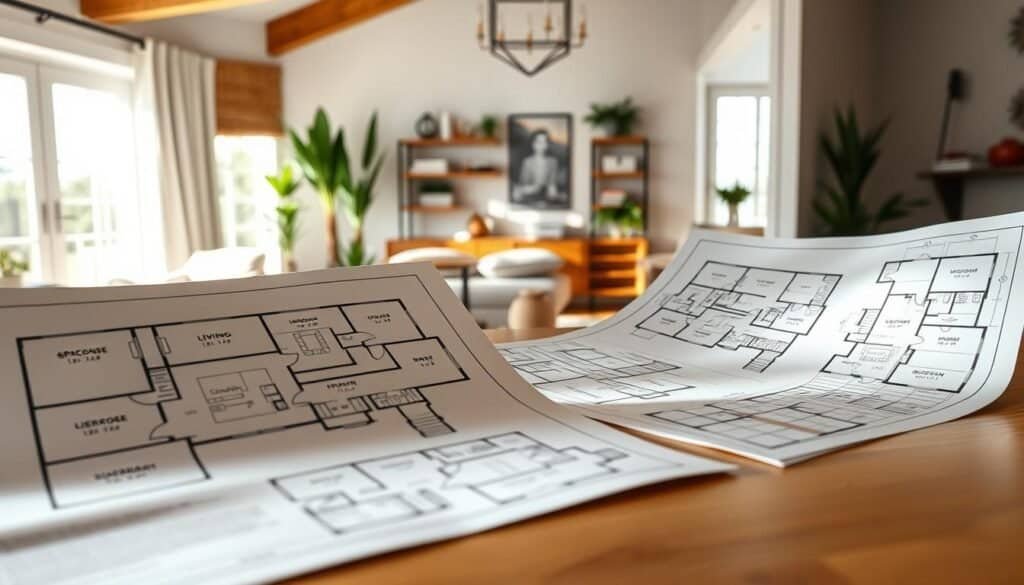
Spotting the signs of a bad space design can change your home for the better. A good house floorplan is key for a cozy living space.
An awkward layout is a big sign of a bad design. If the house design floor plans aren’t well planned, it can make you feel uneasy.
- Poor traffic flow
- Insufficient natural light
- Disproportionate scale and dimensions
- Awkwardly placed fixtures and furniture
When designing your dream house floor plans, think about the space’s flow. A good layout can greatly improve comfort and function.
Some home layout ideas to remember include:
- Make a clear path through the space
- Use lighting to add warmth and welcome
- Add natural elements, like plants and materials
A dream house layout should be both useful and look good. Knowing the signs of a bad design lets you make your home more welcoming and comfy.
Poor Traffic Flow: The Silent Space Killer
The way we move through a space greatly affects our comfort and work efficiency. Bad traffic flow can cause frustration and discomfort. A well-thought-out floor plan is key to creating a smooth path through a space.
Effective floor plan ideas can greatly change how we feel in a space. For example, an open floor plan can make a space feel bigger and improve movement. But, it’s important to think about the downsides, like noise and less privacy.
Open Floor Plan Considerations
When using an open floor plan, finding the right balance is important. Here are some key points to consider:
- Use furniture or rugs to define different areas in the open space.
- Add sound-absorbing materials to reduce echo.
- Lighting can help create different moods and separate areas.
Creating Intuitive Pathways
It’s essential to make paths through a space easy to follow. Here are some tips for layout house floor plans:
- Make sure there’s a clear path through the space.
- Don’t overfill the space with too much furniture.
- Use visual cues to guide people through the space.
By exploring different floor plans and using effective home layout plans, we can make our spaces more functional and enjoyable. For instance, a well-designed floor plan can make a home office more efficient, helping us work better.
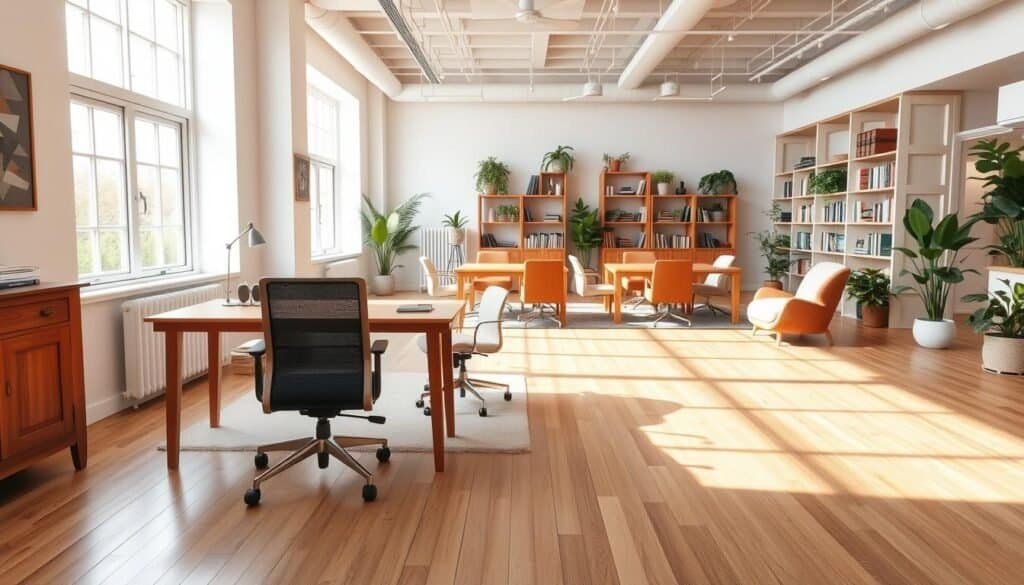
In conclusion, bad traffic flow can really hurt how we use and enjoy a space. By using good floor plan ideas and making paths easy to follow, we can make our homes or offices more pleasant places to be.
Disproportionate Scale and Dimensions
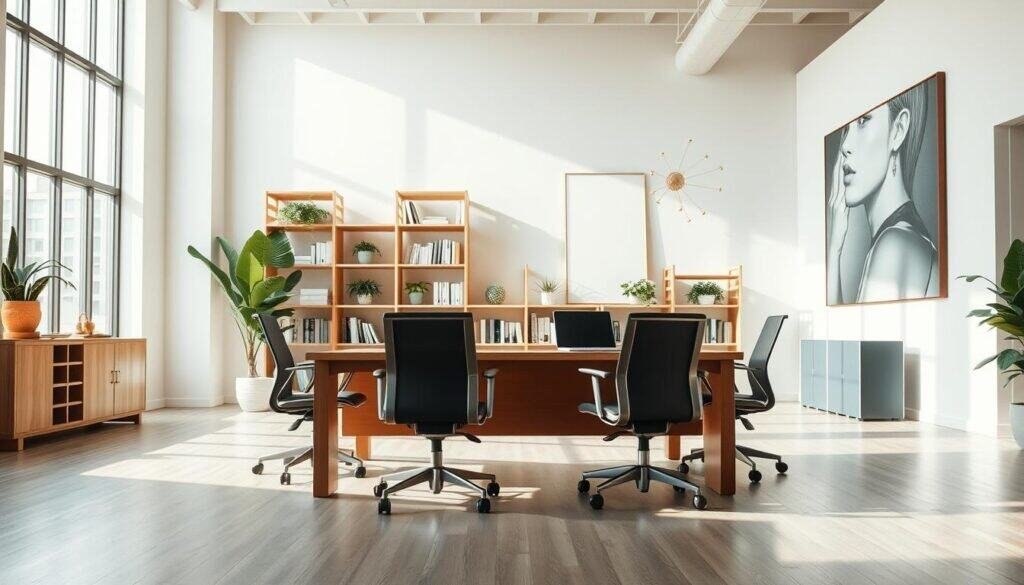
A room’s size and scale are key to its feel and use. When they’re off, it can feel uncomfortable.
Room dimensions include ceiling height, size, and furniture scale. Each part shapes the room’s vibe.
Too Low: The Claustrophobia Effect
Low ceilings can make a room feel tight and trapped. A small office with low ceilings can be hard to work in. To fix this, use light colors on ceilings and walls to open up your office room layout.
Adding mirrors can also reflect light and make the room seem bigger. This trick is great for small office layout ideas.
Too High: The Cavernous Feeling
High ceilings can make a room feel empty and cold. For big rooms with high ceilings, area rugs and layered lighting can make it cozy. For home office design inspiration, try dividing the room into different areas for different tasks.
To make a room feel right, balance its size and furniture. In a small office, pick compact furniture and smart office desk layout to boost function.
Understanding how scale and size affect a room helps in designing or renovating. Whether it’s a house room layout or small office ideas, getting the scale right is essential for a welcoming space.
Insufficient Natural Light: The Mood Dampener
A well-lit space boosts our mood and energy. It’s key in workplace design. Natural light illuminates our area and helps our body clock, improving well-being and productivity.
Too little natural light causes discomfort and eye strain. It also lowers motivation and focus. In home office space design or open office design, getting enough natural light is vital. This requires careful planning and design.
Window Placement and Size Considerations
Windows’ size and position are key for natural light. Big windows facing the right direction bring in more light. For example, in a two desk office layout, desks near windows get natural light.
Reflective Surfaces and Light Wells
Reflective surfaces and light wells also improve natural light. Mirrors, light walls, and reflective floors bounce light deeper. This is great for rooms with little window space, like some home office room design setups.
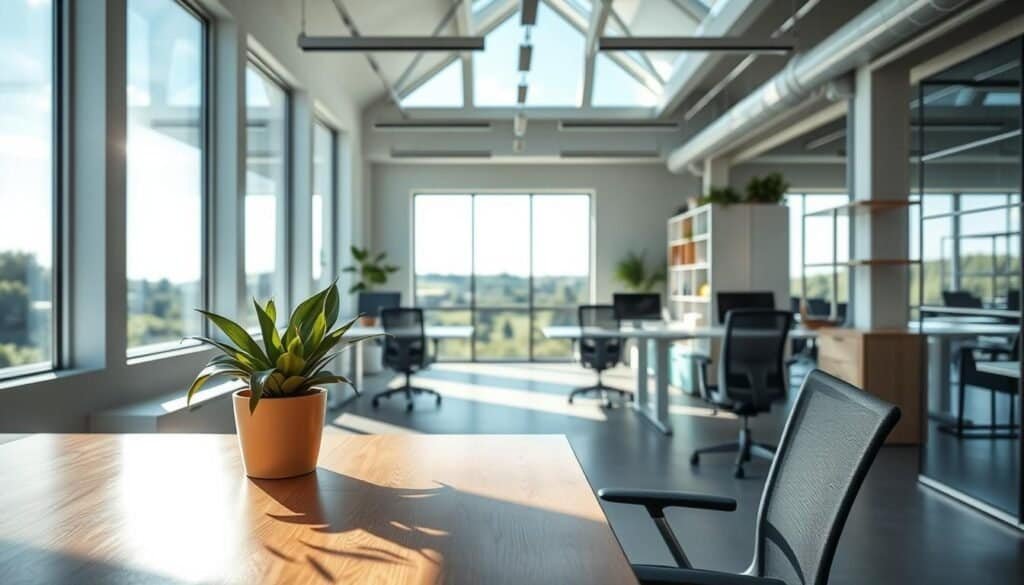
Designing with natural light in mind makes spaces better. Whether for a home office or a big workplace, it’s about smart window placement, reflective surfaces, and creative designs like light wells.
Acoustic Nightmares: When Spaces Echo or Amplify Sound
Spaces that echo or amplify sound can be a real problem. It’s more common than you might think. For example, a poorly designed home office can be distracting and hurt your productivity.
Several things can make these issues worse. Hard surfaces, large open areas, and high ceilings are common culprits. In an office, this can make it hard to work well. Adding elegant home office decor tips like sound-absorbing materials can help.
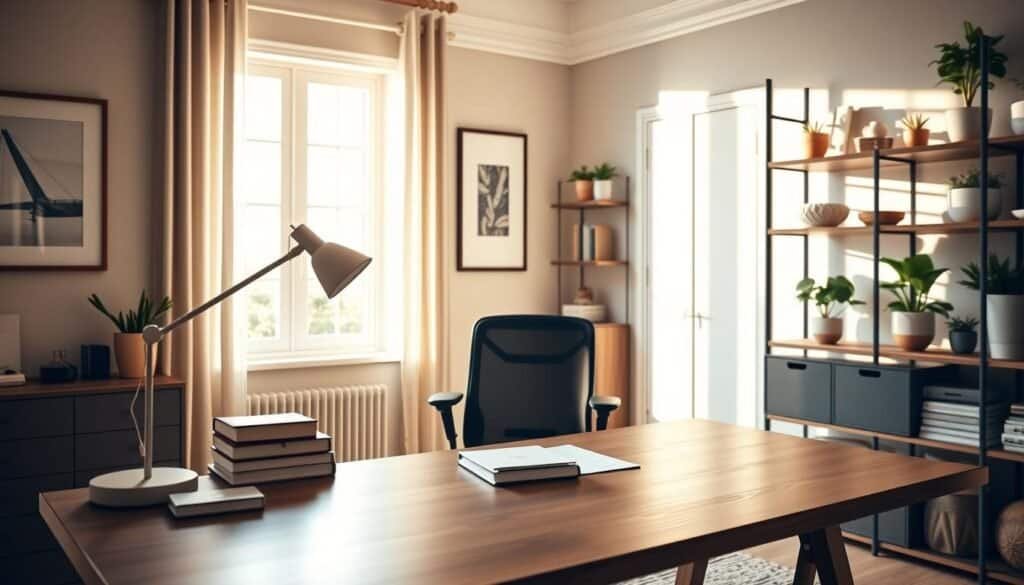
To make your space sound better, think about its layout and materials. Sophisticated home office ideas often include rugs, curtains, and comfy furniture. These items can soak up sound. For an elegant home office inspiration, look for designs that use these elements well.
Also, placing sound-absorbing panels in the right spots can cut down on echo. When setting up an office, aim to reduce echo and sound amplification. This might mean dividing big spaces into smaller ones or using sound-absorbing materials on walls and ceilings.
By tackling acoustic problems, you can turn a bad space into a great one. Whether you’re after elegant home office decor or solutions to sound issues, the details of your design are key.
Awkward Layouts and Unusable Spaces
When a space feels off, it’s often because of an awkward layout. This layout fails to serve its purpose. Awkward layouts can make a space feel uninviting and hard to use. This is common in small or irregularly shaped areas, where creative planning is key to making the most of the space.
Using floor plans is a great way to tackle awkward layouts. Fans of The Sims 4 can use sims4 layout floor plans or sims 4 layout floor plans modern designs for inspiration. This can help make your space more functional and beautiful.
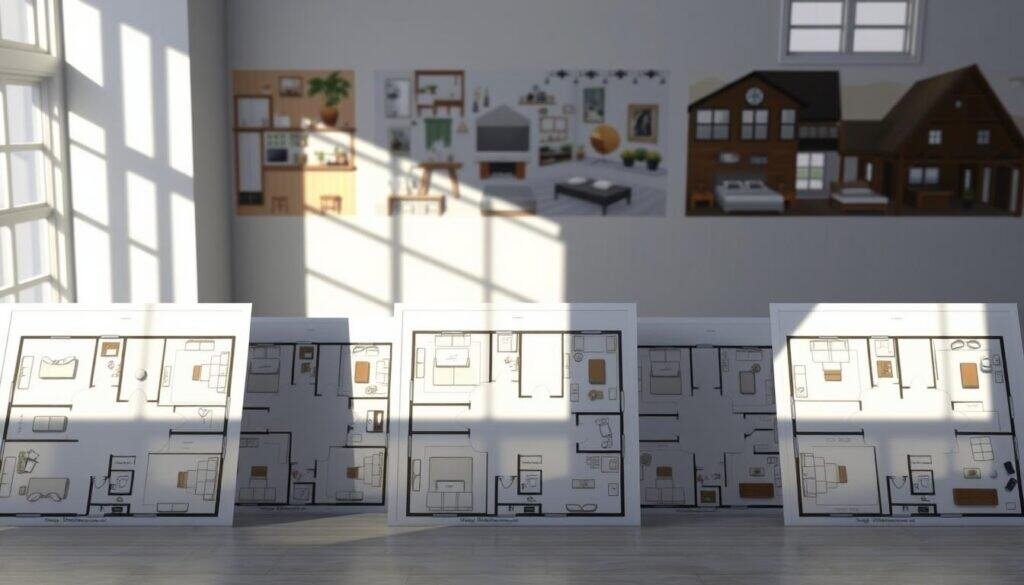
- Use multifunctional furniture to reduce clutter and enhance functionality.
- Implement a flexible workspace that can adapt to different tasks and needs.
- Opt for modern floor plans that prioritize natural light and airflow.
Creating Functional Nooks in Challenging Corners
Challenging corners can be turned into functional nooks by:
- Installing corner shelves or storage units to maximize space.
- Creating a reading nook or a small workspace that utilizes the corner effectively.
- Using customized furniture designed to fit the unique dimensions of the corner.
By using these strategies, you can make awkward spaces into functional and welcoming areas. Whether it’s a small office or a challenging corner, creative layout planning is essential to unlock your space’s full value.
Color, Texture, and Material Mismatches
Mismatches in colors, textures, and materials can make a space feel off. When designing or renovating, it’s key to think about how these elements work together. For example, a bold color scheme needs neutral textures and materials to balance it out.
Colors greatly impact a space’s mood and feel. Choosing a palette that complements the space’s purpose is vital. Calming colors like blues and greens are great for bedrooms. Vibrant colors can boost creativity in workspaces. You can find modern texture ideas to warm up and deepen your space.
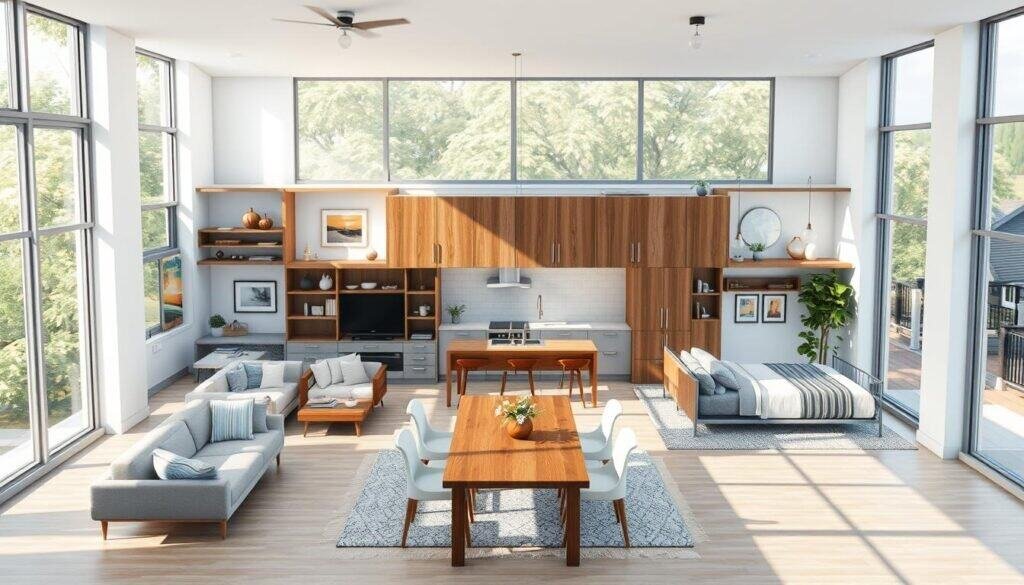
Textures add depth and interest. Mixing smooth and rough textures can make a space visually appealing. But, it’s important to balance them to avoid clutter. For virtual space designers, using sims 4 houses layout floor plans with grid can help achieve harmony.
Feng Shui Tips for Balanced Space
Feng shui can help pick colors, textures, and materials for a balanced space. Using natural materials like wood and stone can improve energy flow. Also, a balanced color scheme that matches the five elements (wood, fire, earth, metal, water) can bring harmony.
Modern Decor Ideas That Enhance Spatial Flow
Modern decor, like statement pieces or bold colors, can make a space flow better by creating focal points. Think about the layout and how people move through it. For ideas, look at sims 3 mansion blueprints or core floor house plans for effective design.
Creating a harmonious space takes careful thought about colors, textures, and materials. By balancing these and using feng shui, you can make spaces that look good and work well.
Conclusion: Transforming Uncomfortable Spaces into Harmonious Environments
Making our living spaces comfortable is key to our happiness. We can fix issues like bad flow and too little light. For example, choosing 1 level floor plans can make a house feel bigger and more connected.
When we design or update our homes, we should think about house blue print ideas that bring balance. A houses single story design can help create a peaceful atmosphere. Looking at house building inspiration can also guide us in making a space that’s both beautiful and practical.
For those aiming for a house design medium size, planning is essential. By following the tips in this article, we can build a home that’s not just pretty but also caring and fun. Whether it’s smart lighting or smart layout, there are many ways to make a space feel welcoming.