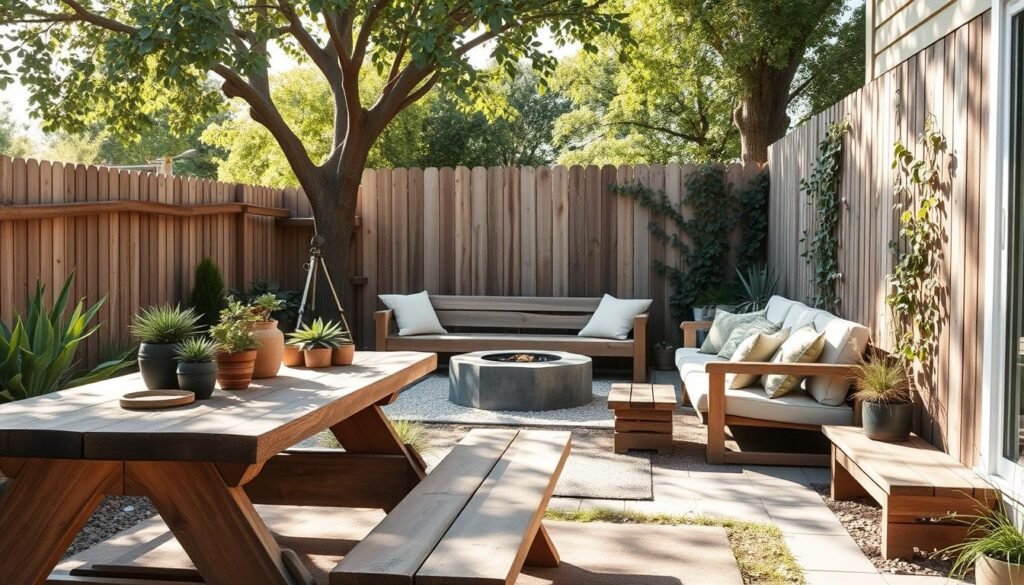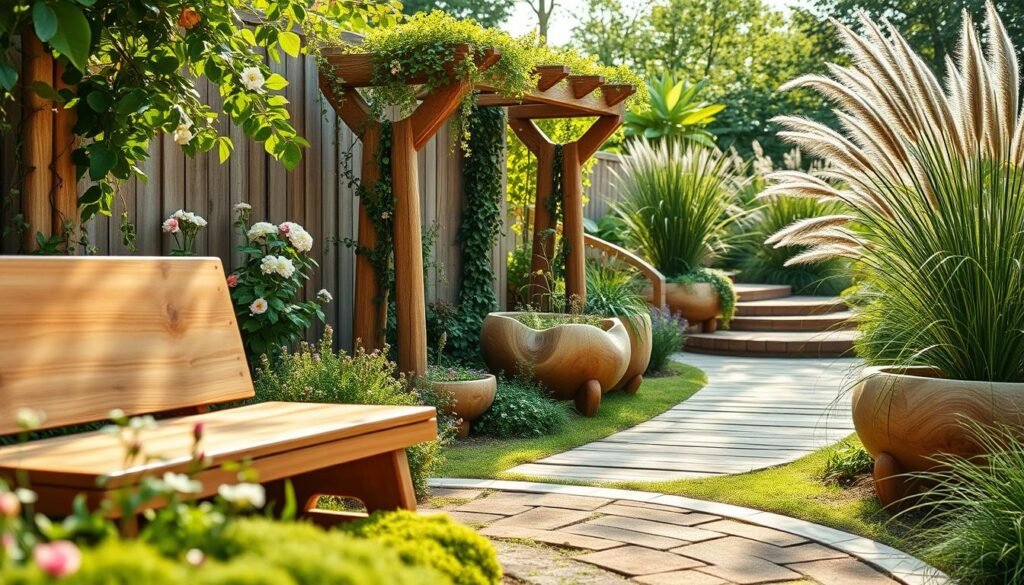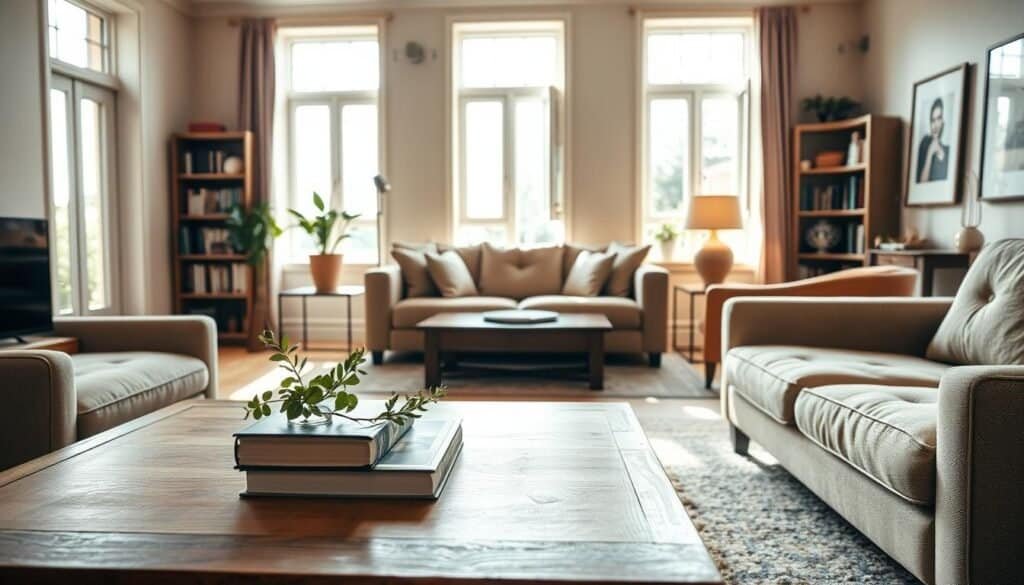
Modern spaces often have clean lines and minimalism. But, this can make them feel cold and sterile. To fix this, adding natural design elements can help. This way, you can make your space cozy and modern at the same time.
Using organic shapes and materials, like wood, is a good start. As The Sawdust Man suggests, combining plants with wood accents warms up your space.
This method makes modern spaces feel more welcoming. It’s ideal for a modern home with a hint of warmth.
The Challenge of Modern Minimalism
Modern minimalism brings a clean look to our homes. But, it can make them feel cold. This style focuses on simplicity and few colors, which is common in contemporary home decor. Yet, it can make our spaces feel empty and unwelcoming.

The environment around us greatly affects our mood and wellbeing. A minimalist space can feel too clean, which might harm our mental health. Studies show that our surroundings can change how we feel, with too much clutter causing anxiety and too little making us feel cold.
To find a good balance, we need to add warmth to our minimalist homes. We can do this by using natural materials, textures, and colors that feel cozy. For example, a warm wood accent wall or soft textiles can really help. For more ideas, check out this article on adding warmth to minimalist spaces.
Understanding how our environment affects us helps us choose better decor. It’s about mixing the simplicity of modern minimalism with the warmth of natural elements. This way, we create a space that looks good and feels good too.
When Modern Feels Just Too Cold: Recognizing the Signs
When your modern space feels like a cold showroom, it’s time for a change. Modern design is sleek but can make a home feel cold. Recognizing a cold modern space is the first step to making it warm and cozy.
Some common signs include:
- An over-reliance on minimal decor, leaving the space feeling empty and stark.
- A lack of natural elements, such as wood or plants, which can add warmth and texture.
- Overuse of cold materials like metal and glass without balancing them with warmer elements.
To make changes, consider adding rustic accents to warm up your space. This could be a wooden coffee table or natural textiles like wool or jute.

A warm and cozy design doesn’t mean giving up modern style. It’s about finding a balance that suits your home. By noticing the coldness and making a few changes, you can make your home stylish and welcoming.
To achieve a cozy modern living space, try layering textures, using natural materials, and adjusting lighting. These steps help you enjoy a modern home that’s also cozy.
Embracing Natural Materials as Design Elements
Using natural materials in design is changing how we see modern homes. Wood, stone, and plants add warmth and character to any room.
Natural materials bring a sense of authenticity to modern design. For example, Spanish wood floors add elegance and history. Mediterranean home flooring, like terracotta or limestone, brings a warm, earthy vibe.
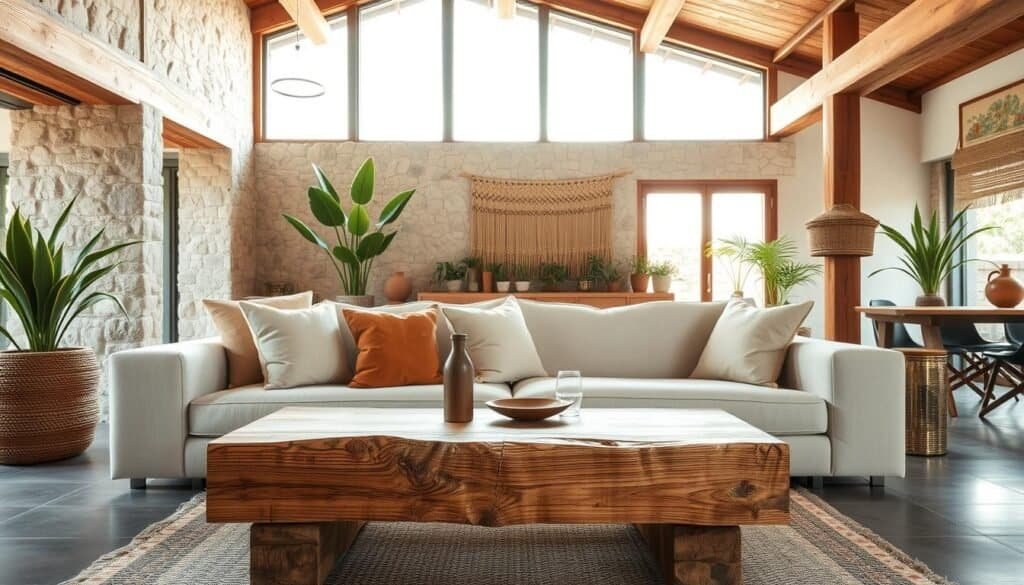
In modern Mexico homes, natural materials blend with bright colors and textures. Mexican tile decor adds personality to kitchens and bathrooms.
Here are some tips for using natural materials in your design:
- Mix different textures, like smooth stone and rough-hewn wood, to create depth.
- Use plants to bring in a natural, organic element and improve air quality.
- Select materials that are sustainable and eco-friendly.
By embracing natural materials, you can make a modern space that’s both stylish and welcoming.
The Power of Biophilic Design in Contemporary Homes
Biophilic design is changing how we see homes today. It brings nature inside, making modern living spaces feel warmer and more welcoming. This approach improves our wellbeing and connects us to the outdoors.
By adding plants, natural light, and organic materials, biophilic design makes homes feel more inviting. It reduces stress, improves air quality, and strengthens our bond with nature.
To use biophilic design in your home, think about these key elements:
- Incorporating plants and green walls
- Maximizing natural light through strategic window placement
- Using organic materials for furniture and decor

Biophilic design is more than just looks. It’s about making our homes healthier. By blending modern decor with natural elements, we create a space that feels both modern and organic.
Textiles and Fabrics: Layering for Coziness
The smart use of textiles and fabrics can turn a chilly, modern area into a warm retreat. Layering various textures and fabrics is a simple yet effective way to warm up minimalist spaces.
Layering textiles helps create a visually appealing space. Mixing materials like wool, cotton, and linen adds complexity to your decor. For example, a woolen throw blanket paired with linen curtains can make a modern living room cozy and inviting.
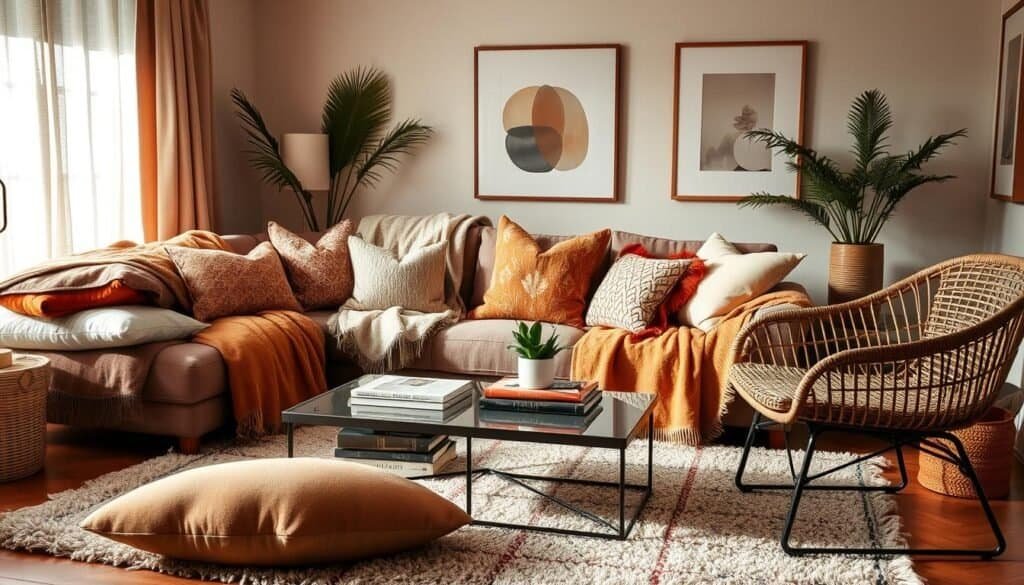
When layering fabrics, think about the texture, weight, and color of each. Mixing different textures, like smooth and rough, adds depth. Also, varying fabric weights, from light to heavy, balances your space. For home decor ideas, start with heavy fabrics like upholstered furniture, then add lighter layers like throw blankets and pillows.
To make your modern living room cozy, try different patterns and colors. Mixing patterns like stripes with solids adds interest. A mix of warm and cool colors makes the space cozy and welcoming. For more house decorating ideas, add natural materials like woven baskets or a jute rug for warmth underfoot.
By carefully layering textiles and fabrics, you can make a cozy and welcoming space that respects modern design. This approach not only beautifies your home but also makes it feel more comfortable and lived-in.
Color Theory: Warming Up Your Palette
Color theory is key in making cold, modern spaces cozy. The right colors can change a room’s feel, making it warmer and more welcoming.
Warm colors like terracotta, sienna, and golden brown can make modern spaces cozy. You can use these colors for walls, furniture, or decor.
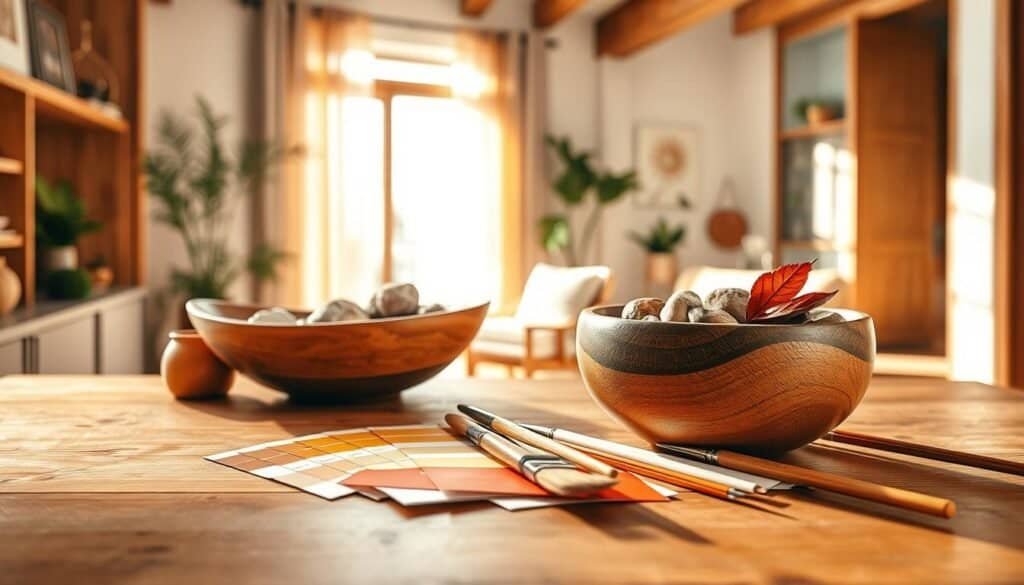
Neutrals and earth tones also help make a space cozier. Beige, taupe, and soft gray can create a calm background for modern decor.
Here are some tips for choosing colors:
- Balance warm colors with neutral tones to avoid overwhelming the space.
- Use earthy tones in furniture and decor to add depth and coziness.
- Consider the natural light in your space and how it affects the color palette.
By using these color theory tips, you can make your modern hallway decor or contemporary hallway decor cozy. Even your home’s entryway can become a cozy spot with the right colors, giving you great home entryway inspiration.
Furniture Selection: Balancing Form and Comfort
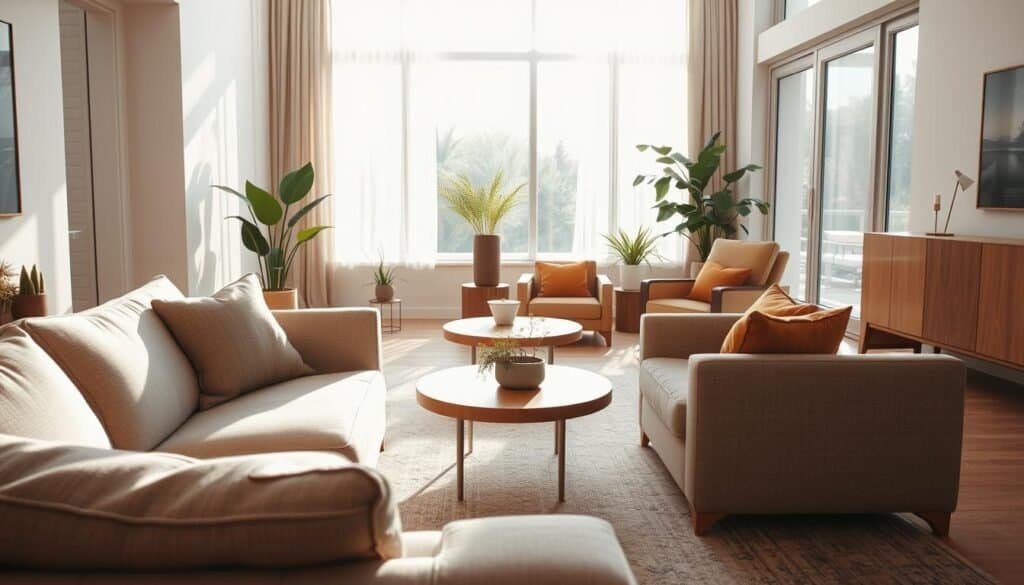
Choosing furniture that looks good and feels comfortable is key in modern home design. To find the right balance, think about material, texture, and size. These factors are important for a harmonious look and feel.
Material and texture are big in furniture choice. Natural materials like wood and stone warm up a room. Luxurious fabrics like velvet and linen make it cozy.
- Go for furniture with simple designs for a modern vibe.
- Look for pieces with soft cushions and strong frames.
- Make sure furniture fits well in the room and with other items.
- Use different textures with upholstery, rugs, and decor.
By thinking about these points, you can make a space that’s both elegant and welcoming. For example, an elegant home office might have a sleek desk and a comfy chair. A cozy living room could have a soft sofa and a wooden coffee table.
In short, finding the right balance in furniture choice is essential for a modern home. By picking the right materials, textures, and sizes, you can create a space that’s both stylish and inviting.
Lighting Strategies for Cozy Modern Spaces
To make modern spaces cozy, the right lighting strategies are key. Lighting sets the mood for a warm, inviting atmosphere. It makes a space feel welcoming and comfy.
Warm lighting sources are great for coziness. Candlelight adds a soft, warm glow that makes rooms feel intimate and relaxing. Fire elements like fireplaces or electric fires also add warmth and coziness.
Candlelight and Fire Elements
Adding candlelight is easy. Just place candles on a coffee table or mantelpiece. For a bigger impact, use many candles or put them in decorative lanterns. Fire elements require more effort but greatly enhance the ambiance.
Layering light sources is another smart move. Mix overhead lights with table lamps, floor lamps, or string lights for a warm glow. The goal is to find a balance that makes the space feel cozy and relaxing.
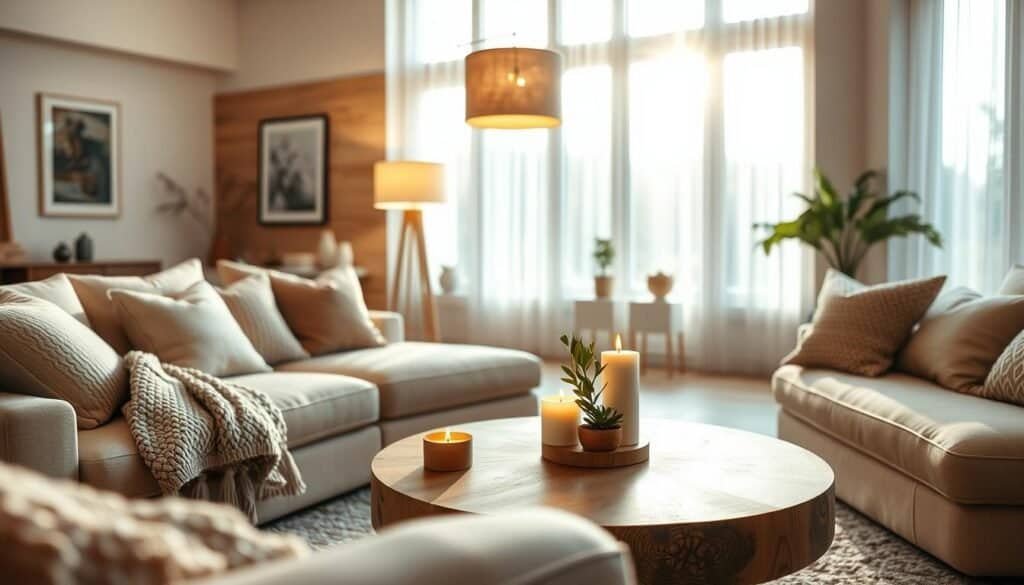
With careful lighting choices and layering, you can turn your modern living space into a cozy retreat. It will be stylish and welcoming.
Room-by-Room Guide to Natural Design Integration
To warm up your modern space, try a room-by-room natural design integration plan. This method lets you pick designs that fit each room’s needs and uses.
In the living room, add warmth with a stone fireplace or a reclaimed wood wall. Arrange furniture around these features to make the room feel cozy and welcoming.

In the kitchen, use natural materials like granite or wooden cabinets. For a house layout ideas twist, add natural textures with woven baskets or a jute rug.
Bedrooms benefit from soft textiles like cotton or linen bedding and natural fiber rugs. Layering these can make the room cozy and inviting.
Bathrooms can feel serene with natural stone or plants. A modern sims house layout might include a freestanding tub or a living wall.
- Look at each room’s purpose and find spots for natural design.
- Pick materials and elements that match the room’s use and decor.
- Balance natural and modern elements to keep the space balanced.
By using this room-by-room guide, you can mix natural design with modern style. This creates a warm and harmonious home.
Conclusion: Creating Balance in Modern Design
Modern spaces can sometimes feel cold and uninviting. But, by adding natural elements and thinking about color, texture, and lighting, you can make them cozy. This way, your modern space can feel welcoming and stylish.
To blend warmth with modernity, introduce natural materials like wood and stone. Use textiles and fabrics to add depth and coziness. This approach makes your modern home feel warm and inviting.
The secret to great modern design is finding a balance. It’s about mixing form and function with modern and warm elements. By doing this, you create a space that looks good and works well. It also shows off your personal style.