A good night’s rest is key for our bodies and minds. But, for many, sleep disorders and insomnia symptoms get in the way.
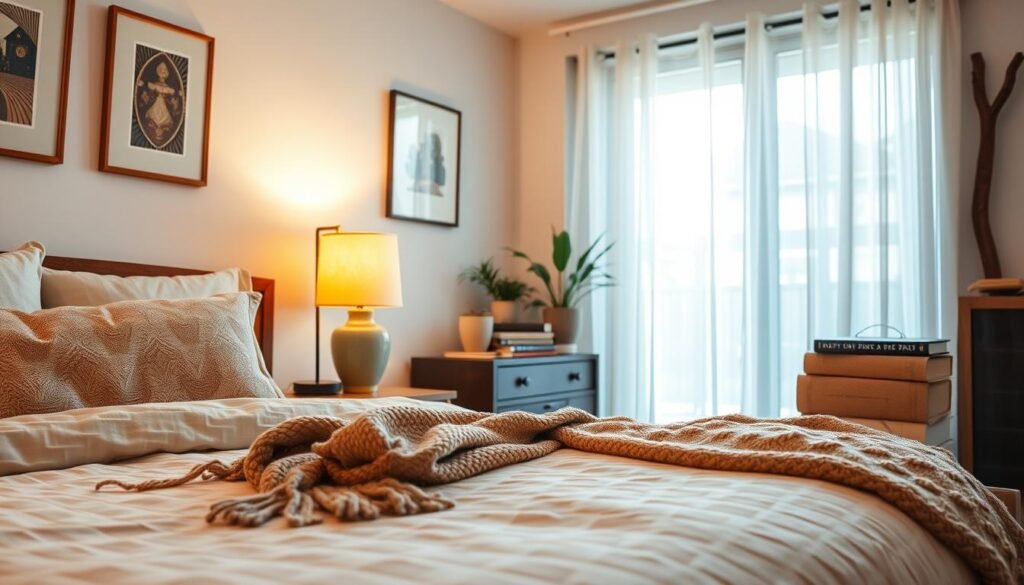
Creating a calm space is vital for better sleep quality. Small changes in texture and tone can help you fall asleep easier. A softer, more calming atmosphere can ease sleep disturbances.
With a few simple changes to your bedroom, you can sleep better. And wake up feeling refreshed and revitalized.
The Secret Relationship Between Bedroom Design and Quality Sleep
The design of your bedroom is key to good sleep. A well-designed bedroom boosts your sleep hygiene and mental health. The layout, colors, and materials can either help you relax or make it hard to sleep.
A cluttered bedroom can block a good night’s sleep. Keeping your bedroom tidy is part of a healthy bedtime routine. Also, the right bedding and furniture can make a big difference. Choosing comfy, cozy bedding is a simple yet effective sleep solution.

Creating a sleep-friendly environment is more than looks; it’s about making a space for relaxation and renewal. For more ideas, check out different bedroom inspirations that focus on coziness and comfort.
By focusing on these details and making smart design choices, you can greatly improve your sleep. A master cozy bedroom is essential for a restful night’s sleep.
Signs Your Bedroom Is Working Against Your Sleep
The design and elements of your bedroom are key to good sleep. If you’re having sleep disturbances, check your bedroom’s layout and decor.
Harsh lighting is a common sleep problem. Bright lights or too much natural light in the morning can mess with your sleep. Try using blackout curtains or dim red lights to help you sleep better.
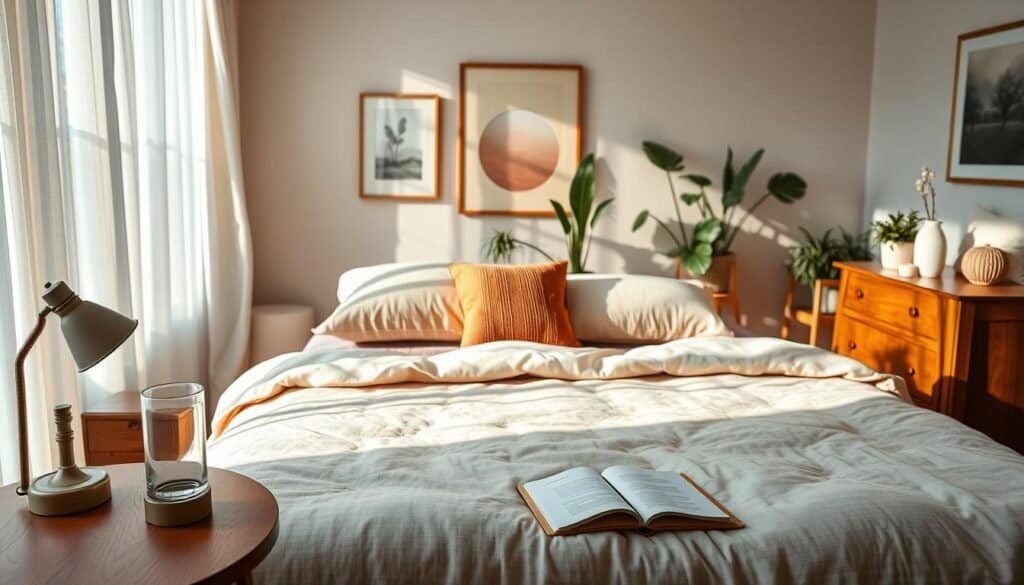
Uncomfortable bedding can also hurt your sleep. A good mattress and pillows are essential. For vaulted master bedrooms, add decor like hanging plants or large chandeliers. This can make your room feel cozy. You might also want to look into adding warm wooden details to make your room feel cozier.
Clutter is another sleep disturber. A clean and tidy bedroom helps you sleep better. Fixing these issues can help you get better sleep.
When Sleep Just Doesn’t Feel Right: Identifying Your Bedroom Culprits
The bedroom is often seen as a place of rest. But sometimes, it can be the reason for sleepless nights. It’s important to look at how your bedroom’s design, layout, and materials affect your sleep.
Think about your bedroom’s design. For example, master bedrooms with vaulted ceilings can feel open and peaceful. Also, rustic modern bedroom master suite ideas can add warmth and comfort. Looking at these can help find what’s keeping you awake.

- Check your bedroom’s colors to make sure they’re soothing.
- Look at your bedroom’s layout to see if it helps you relax.
- Make sure your bedding and mattress are comfy.
By changing these things, you can make your bedroom a place where you can sleep well.
Understanding how your bedroom affects your sleep and making small changes can greatly improve your rest. It might be as simple as choosing master vaulted ceiling bedroom designs or keeping your bedroom tidy. Every little change helps.
Soft Color Psychology: Creating a Sleep-Inducing Palette
The colors in your bedroom can greatly affect your sleep. It’s key to pick colors that help you relax. Soft, calming colors tell your brain it’s time to sleep, making your rest better.
When making a cozy master bedroom, think about color psychology. Soft blues and greens calm you down. Gentle lavenders bring peace. For a warm bedroom aesthetic, use warm neutrals like beige or soft gray.
- Soft blues and greens for a calming effect
- Gentle lavenders to promote serenity
- Warm neutrals like beige or soft gray for a cozy feel
For more ideas on making your bedroom cozy, check out this article. Remember, a classy bedroom can be warm and inviting. Soft, muted tones add elegance and help you relax.

Choosing the right colors for your bedroom can make it a master room inspiration for restful sleep. Think about the look you want and pick colors that match it.
Finding Your Perfect Mattress: The Foundation of Restorative Sleep
Choosing the right mattress is key to a good night’s sleep. A good mattress keeps your spine aligned and reduces pressure points. These points can mess up your sleep.
When picking a mattress, think about what you need. There are many types to choose from:
- Memory Foam Mattresses: These mold to your body, giving great support and relief from pressure.
- Innerspring Mattresses: They breathe well and offer firm support, making them a popular choice.
- Hybrid Mattresses: They mix the support of innerspring coils with the comfort of memory foam.
Your bed for bedroom is more than just furniture; it’s where you rest. Pick a mattress that fits your bedroom ideas bed and bed rooms design modern interior. For a calm main bedroom design, a beige mattress or bedding adds to the peaceful feel of a beige colour bedroom.

Getting the right mattress is a big step towards better sleep. Knowing about the different mattresses and their benefits helps you choose wisely. This choice can greatly improve your sleep.
Bedding That Feels Like a Gentle Hug: Transforming Sleep Quality
Bedding that feels like a gentle hug is more than a luxury; it’s essential for good sleep. The right bedding offers comfort and support for a restful night. It’s important to pick bedding that matches your sleeping style.
Side Sleeper Solutions
Side sleepers need bedding that relieves pressure well. A soft, breathable mattress topper and the right pillows are key. A memory foam pillow that molds to your head and neck is great. It supports your spine and keeps it aligned.
- Look for bedding with a soft, breathable fabric.
- Choose a mattress topper that provides pressure relief.
- Select pillows that maintain the natural alignment of your neck and spine.
Back and Stomach Sleeper Options
Back and stomach sleepers need bedding that supports without being too hard. A medium-firm mattress and a thin, firm pillow are good. For stomach sleepers, a very thin pillow or no pillow at all is best.
- Opt for a medium-firm mattress that supports your body.
- Use a thin, firm pillow to maintain spinal alignment.
- Consider a bedroom refresh to create a sleep-conducive environment.

Choosing the right bedding for your sleep position can greatly improve your sleep quality. A comfortable and supportive bedroom is key. The right bedding should feel like a gentle hug.
Gentle Lighting That Signals Your Brain It’s Time to Rest
Gentle lighting is more than a design choice; it tells our brains it’s time to sleep. The right lighting can greatly improve our sleep quality. It turns our bedrooms into true sleep sanctuaries.
To add gentle lighting to your bedroom, you have several options. Accent lighting can create a warm atmosphere. Creative decor like candles or fairy lights can also add a soft glow. For those in log home interiors or tiny house decor, using natural light during the day and layered lighting at night can enhance sleep.
Here are some tips for perfect gentle lighting:
- Use dimmer switches to control the light intensity.
- Choose warm-toned light bulbs for a cozy feel.
- Avoid harsh, direct lighting; instead, opt for soft, indirect light sources.
- Layer your lighting with a combination of overhead, table, and floor lamps.
In a minimalist home, simplicity is essential. A few, well-placed light sources can create a peaceful atmosphere without clutter. The goal is to signal to your brain that it’s time to relax, so keep the lighting soft and calming.

Creating the Perfect Sleep Temperature and Air Quality
Improving your sleep starts with the right bedroom temperature and air quality. A comfortable sleep environment is key for a good night’s rest.
Optimal Sleep Temperature: Experts say the best bedroom temperature for sleep is 60-67 degrees Fahrenheit. This helps your body stay in its natural sleep cycle.
- Keep your bedroom cool by adjusting your thermostat or using fans.
- Avoid overheating by using breathable bedding and keeping your bedroom well-ventilated.
- Consider using a smart thermostat to maintain a consistent temperature throughout the night.
In your dream house, the perfect sleep temperature is easy with modern systems. For a master room color ideas accent wall, pick calming colors for relaxation.

Good air quality is also important. Here’s how to improve it:
- Use an air purifier to remove allergens and pollutants from the air.
- Keep your bedroom well-ventilated by opening windows or using an exhaust fan.
- Avoid strong chemicals or fragrances that can irritate your respiratory system.
For bedroom ideas for couples accent wall, go for a design that encourages relaxation and closeness. Think soothing colors and soft modern lighting.
By focusing on these areas, you can make a sleep sanctuary that improves your rest quality.
Silencing the Night: Effective Noise Reduction Strategies
Creating a silent sleep environment is key for well-being. External noise can disrupt sleep quality. So, it’s important to use effective noise reduction strategies in your bedroom.
To cut down on external noise, think about using soundproofing materials like acoustic panels or blankets. These can help reduce echo and absorb sound in your bedroom.
- Use thick, heavy curtains or drapes to block out external noise.
- Seal any gaps or cracks around windows and doors with acoustic sealant.
- Install soundproofing panels on walls or ceilings.
Another good strategy is to use white noise machines or apps. They create soothing sounds to mask background noise. This can help make your sleep environment more consistent.

When designing your bedroom, add elements that promote relaxation and reduce noise. Think about cozy accent walls and calming color schemes. These can help create a peaceful atmosphere.
By using these noise reduction strategies, you can make your sleep environment more serene. This can improve the quality of your rest and overall well-being.
Digital Detox: Creating a Tech-Free Sleep Haven
In today’s world, it’s key to have a digital detox before bed. Your bedroom should be a place for rest, not for screens. Remove TVs, computers, and phones from your bedroom to make it tech-free.
Start a calming pre-sleep routine like reading or meditation. It helps you relax and makes your bedroom a sleep zone. Think about main bedroom accent wall ideas that bring calmness, like soft colors or nature scenes.

For couples, bedroom design ideas for couples master suite wall colors are important. Soft colors help you relax. Also, primary bedroom accent wall ideas can add calmness, like a soothing color or texture wall.
Make your bedroom a tech-free haven with calming designs. Have a bedtime routine, keep devices out, and sleep well.
Softening Your Space: Textures and Materials That Promote Relaxation
Adding the right textures and materials to your bedroom can make sleeping better. It’s all about creating a calm place that encourages you to relax. Plush carpets, soft bedding, and comfy upholstery are key.

Using different textures can make your bedroom more interesting. Mixing smooth things like wood or metal with soft fabrics looks great. Try using natural materials like cotton, linen, or bamboo for their soothing effects.
Vaulted Ceiling Considerations
Bedrooms with vaulted ceilings need cozy textures to balance the height. A statement light fixture or bold drapery can make the room feel cozier. It helps bring your gaze down, making the space feel more personal.
Accent Wall Strategies
Accent walls are a chance to add something new, like a reclaimed wood panel or a fabric-covered wall. It brings depth and interest to your bedroom. This makes it feel more relaxing and unique, perfect for master bedrooms decor ideas for couples or apartment decor inspiration.
Conclusion: Transforming Your Bedroom Into Your Personal Sleep Sanctuary
Making your bedroom sleep-friendly is key to better sleep. Add soft colors, a comfy mattress, and gentle lights. This turns your bedroom into a cozy retreat.
Think about your bedroom’s decor to create a calm space. A cozy master room can greatly improve your sleep. Use plush bedding and soft textures for a relaxing feel.
Follow the tips in this article to make your bedroom a sleep haven. Create a cozy space that helps you relax and recharge. With a well-designed bedroom, you’ll sleep better and wake up feeling great.