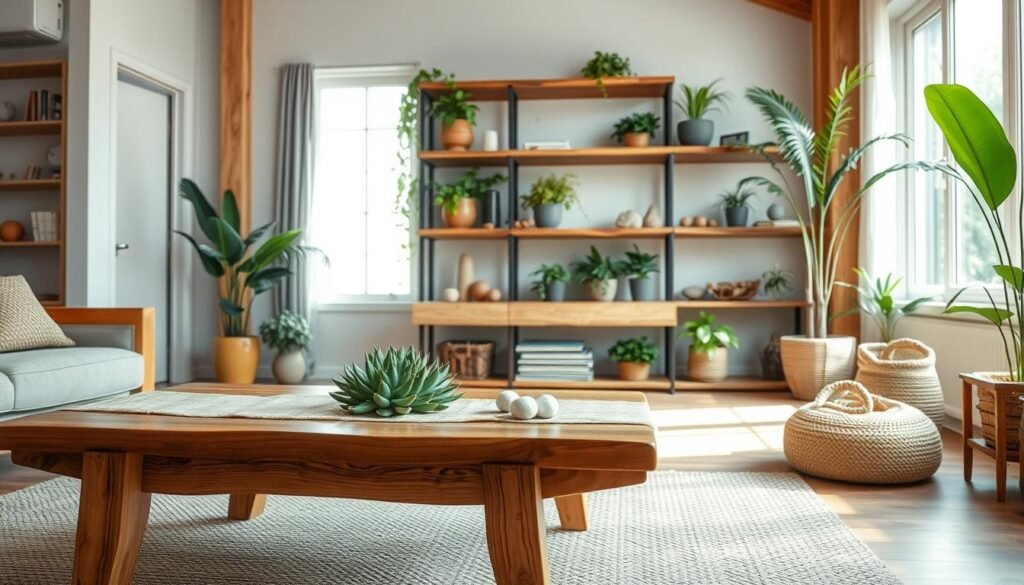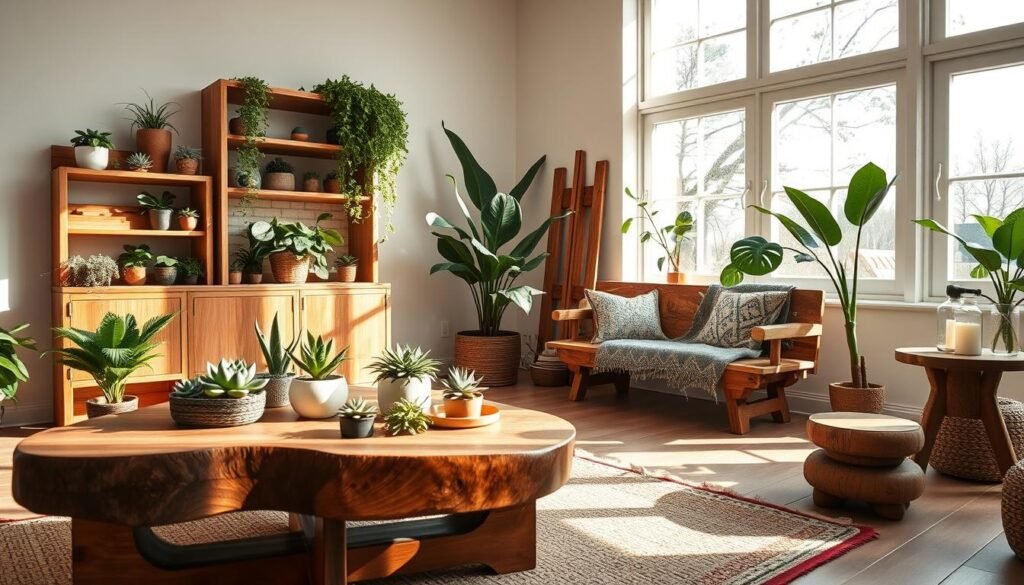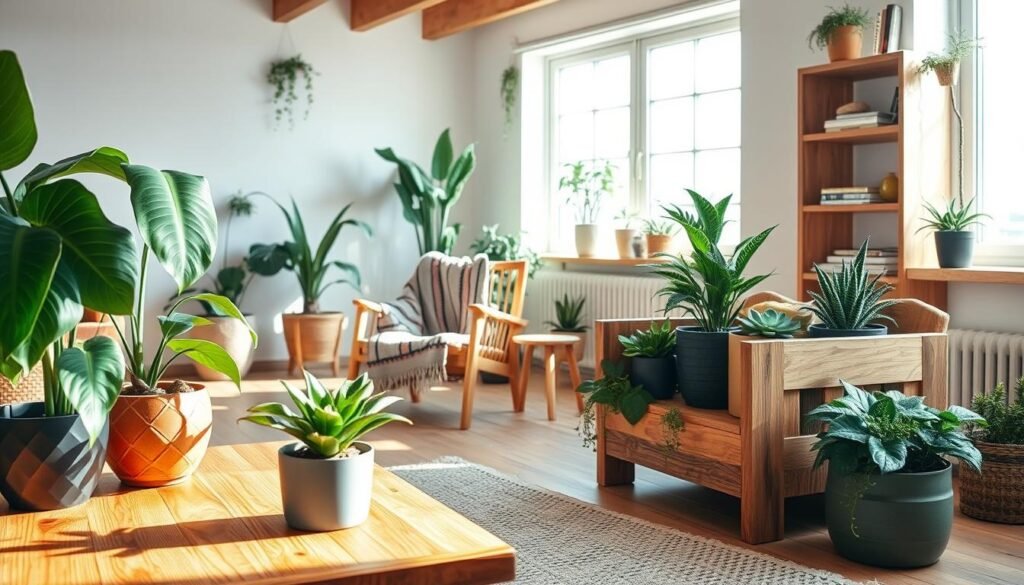
A stagnant home can really affect our well-being, making us feel stuck and unproductive. Plants can make spaces feel softer and more complete.
Adding greenery to your home can make it feel fresh again, boosting a positive energy flow. A well-designed home is key to our health and happiness.
By adding plants, you can give your space a new lease on life. It makes your home feel more welcoming. This simple trick can help you feel less stuck and improve your life quality.
Signs Your Space Is Feeling Stuck and Stagnant
A cluttered living space can really affect your mood and how productive you are. Clutter makes your space feel cramped and overwhelming. This contributes to a feeling of stagnant energy.
Decluttering tips can help you deal with clutter. Begin by sorting items into three piles: keep, donate, and discard. Be honest with yourself about what you really need or use. Getting rid of things you don’t need frees up space and clears your mind.
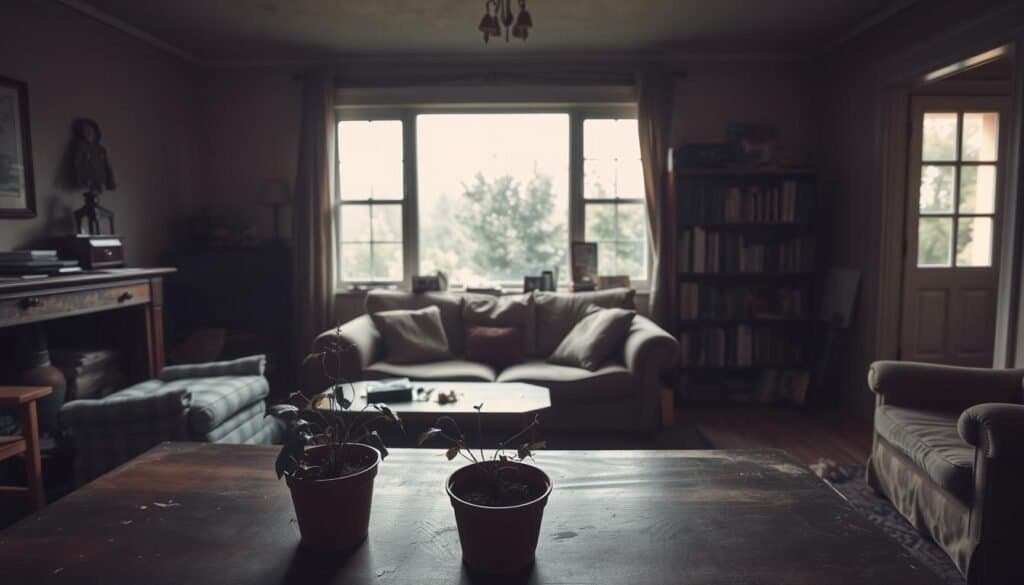
Not enough natural light is another sign of a stagnant space. Natural light can make you feel better and more energetic. If your space is dark, try using mirrors to reflect light or installing skylights for more sunlight.
Poor air circulation is common too. Space clearing techniques like opening windows for fresh air or using an air purifier can improve air quality. This makes your space feel fresher and more inviting.
To make your space feel more welcoming, try rearranging your furniture. This can help create flow in your space. It makes your space feel more dynamic and open.
- Remove clutter to reduce stagnant energy.
- Utilize natural light to boost mood.
- Improve air circulation with fresh air or air purifiers.
- Rearrange furniture for a more open layout.
The Science Behind Why Plants Improve Spaces
Indoor plants are not just pretty; they also make our spaces better. Studies show that home plants indoor can boost both our mental and physical health.
One big plus of house plants decor is how they clean the air. They take in carbon dioxide and give out oxygen. This makes the air we breathe cleaner and healthier.
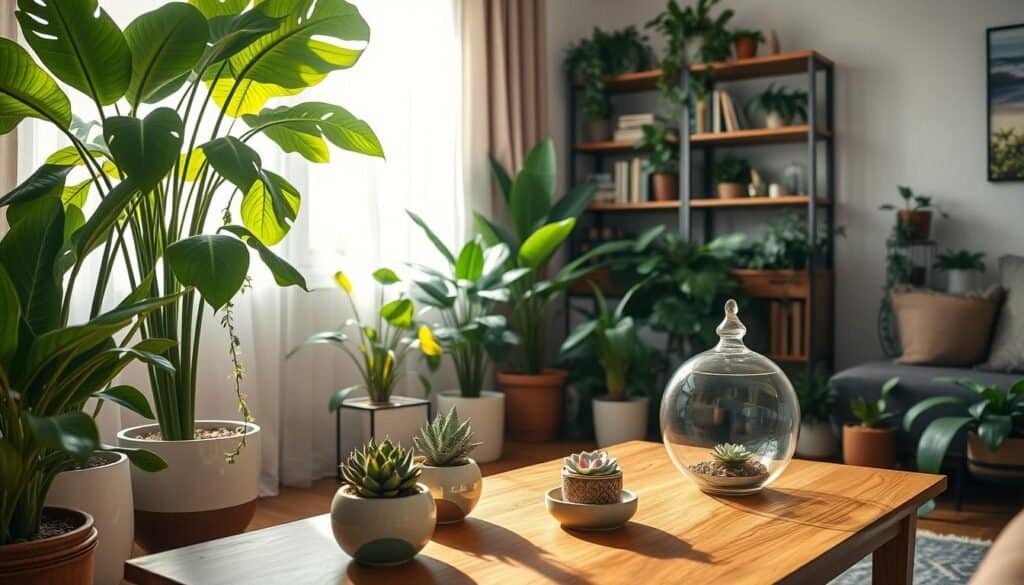
Adding indoor plants decor to your home does more than look good. It also makes your indoor space healthier. Plants help create a positive energy flow, making your home feel more inviting and cozy.
Being around plants also lowers stress and lifts our mood. So, indoor plants decor is a simple way to make your living space better.
When Your Space Feels Stuck: Plant Solutions for Every Room
When your living space feels stale, the right plants can bring it to life. Each room has its own needs. The right plants can make each space look better and work better.
Living Room Plants are key to home decor. For a cozy feel, try Snake Plants or ZZ Plants. For a lively touch, Boston Ferns or Peace Lilies are elegant choices. For more ideas, check out this article on mixing plants with wood.
Bedroom Plants should help you relax and clean the air. Lavender and Snake Plants are great for this. They calm you down and purify the air.
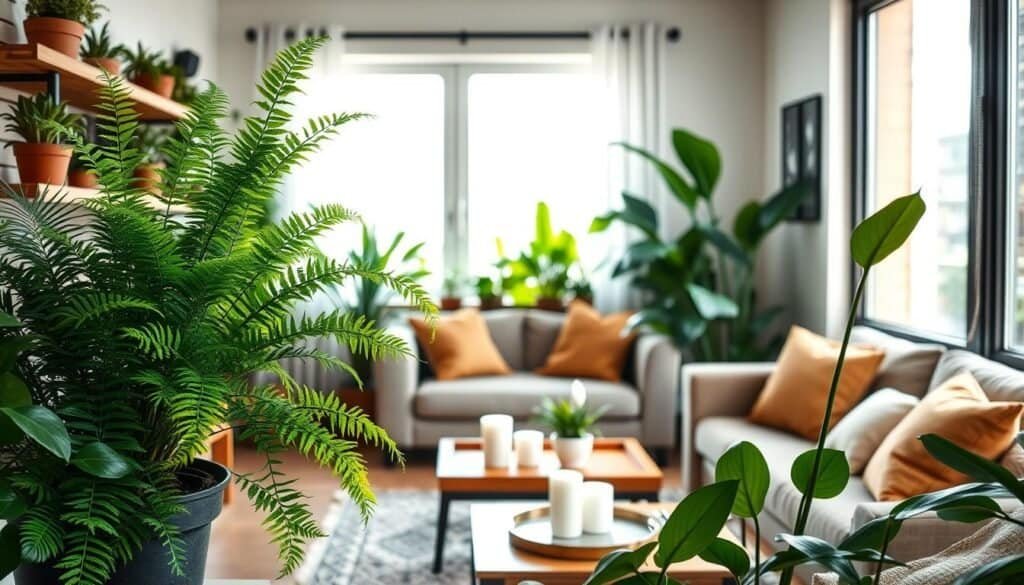
Kitchen Plants bring freshness and energy. Herbs like Basil and Mint are pretty and useful. For dark kitchens, Pothos or Dracaena work well.
To make your indoor plants decor work, think about the light in each room. Pick plants that match. With the right plants, your home can become lively and inviting.
- Check the light in each room before picking plants.
- Choose plants that meet the look and function of each room.
- Go for easy-care plants if you’re always busy.
Choosing the Right Plants for Your Light Conditions
To make your indoor garden vibrant and healthy, pick plants that fit your home’s light. Each plant needs different light to grow well and look good.
In low-light spots, some plants work better. Monstera and Philodendron are great for these areas. They’re tough and have beautiful leaves.
Monstera and Philodendron Varieties
- Monstera deliciosa, with its iconic monstera leaf, brings a tropical vibe to any room.
- Philodendron types like Philodendron selloum and Philodendron cordatum have heart-shaped leaves. They do well in low light.
- Both Monstera and Philodendron are perfect for indoor plants decor. They grow big and make a statement.
But, sunny spots can host more plants. These include colorful ones that brighten up your space.
Colorful Plants That Love Sunshine
- Colorful plants like Croton and Coleus are ideal for sunny areas. They add colors to your house plants decor.
- Pests like aphids are less common in sunny spots. This is because of the good air flow.
- Plants like Hibiscus and Bougainvillea love sunlight. They also bloom beautifully, adding to your garden’s beauty.
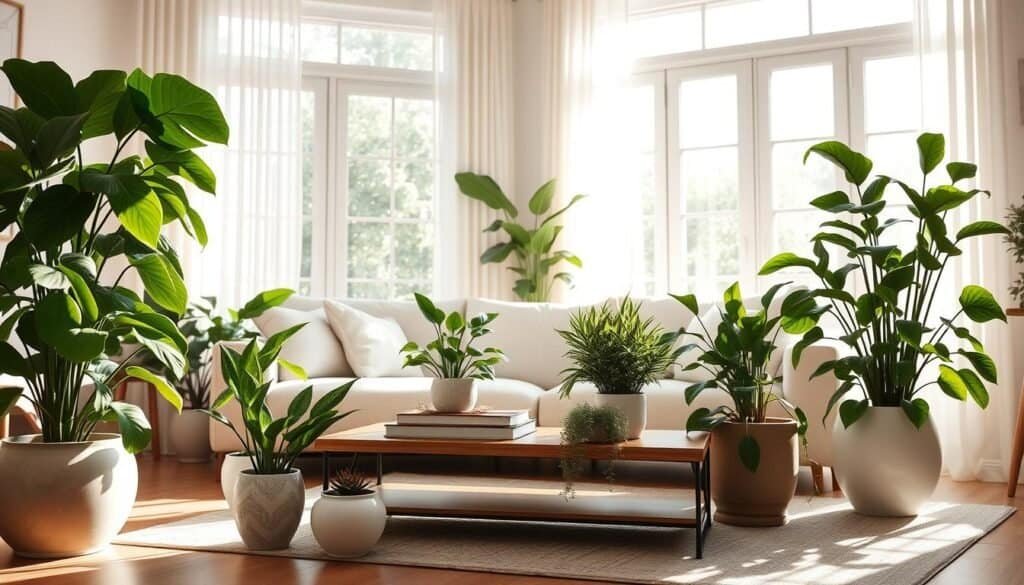
By picking plants that match your home’s light, you can have a thriving indoor garden. Whether it’s dark or sunny, there’s a plant for every need.
Creating Plant Focal Points and Green Moments
Turning your living space into a lush oasis begins with eye-catching plant focal points. These spots draw the eye and bring calm, making your home feel more welcoming.
One great way to make a plant focal point is through indoor plant shelving ideas. By setting aside a shelf or wall for plants, you create a stunning display. This adds depth and visual interest to any room.
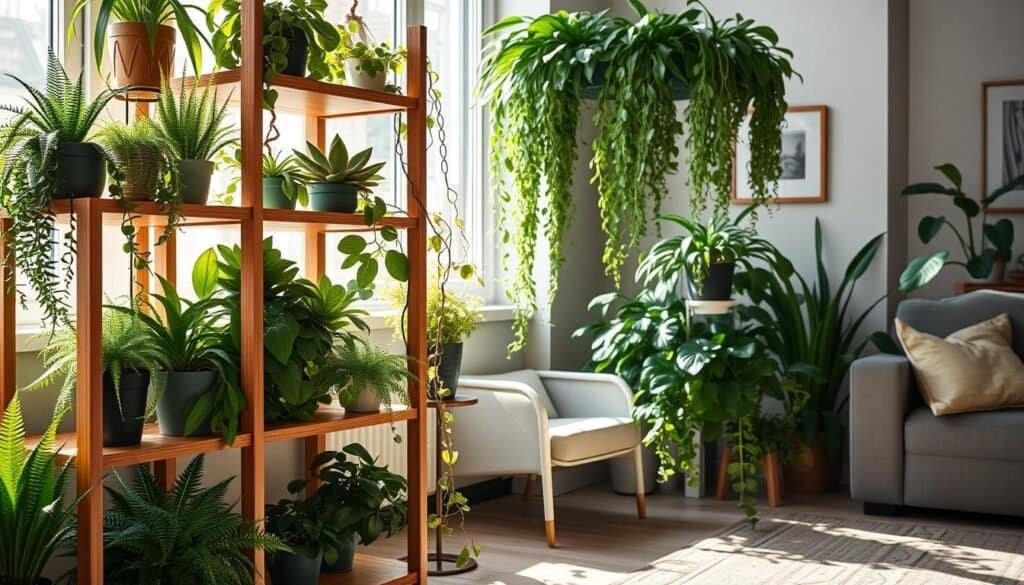
- Use a mix of plant sizes and textures to add visual interest to your shelves.
- Consider indoor plants shelf ideas that include decorative elements like woven baskets or vintage planters.
- Create a plant accent wall living rooms can benefit from, using a combination of framed plants and greenery.
For a dramatic effect, design a living room plant decor ideas that blends plants with the room’s look. Place a large potted plant in a key spot or use plants to frame a window or doorway.
By carefully adding plants to your decor, you make a space that feels fresh, vibrant, and uniquely yours.
Plant Styling Techniques for Different Aesthetic Goals
Discover the art of plant styling and learn how to create stunning displays. It’s not just about placing plants; it’s about balance between plants and space.
Choosing plants and styling them is key for different looks. For a modern look, try Monstera Albo. Its unique leaves add sophistication to any room.
Working with Monstera Albo and Rare Specimens
Monstera Albo is prized for its white and green leaves. Style it in a minimalist planter to highlight its beauty. This makes a room feel elegant.
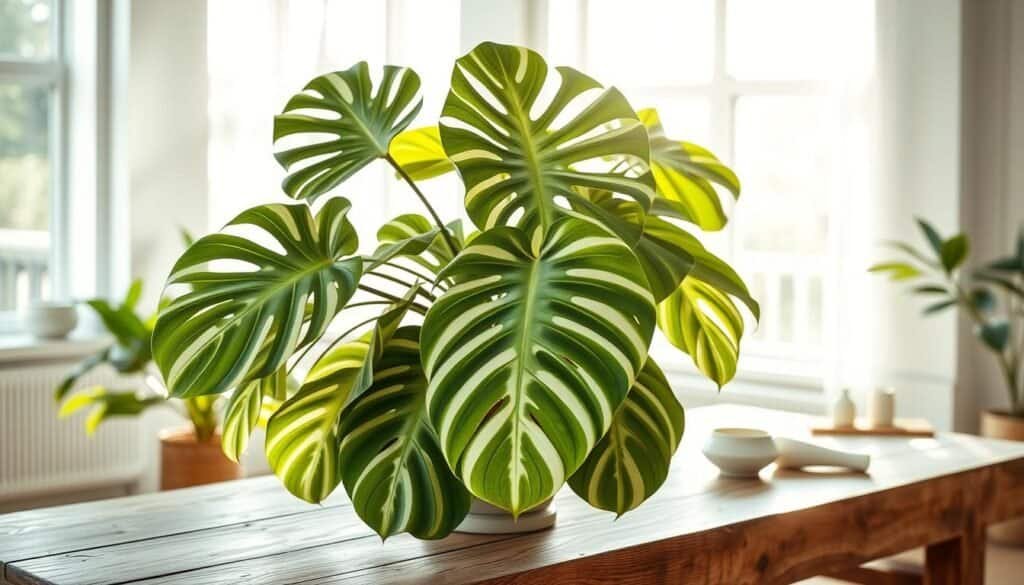
Ferns and ivy add depth and interest. Hang ivy in a macramé planter or place ferns on a shelf. This creates a layered look.
Here are tips to enhance your plant decor:
- Mix textures with plants of different shapes and sizes.
- Use plant stands or hanging planters to vary heights.
- Group plants for a lush, garden-like feel.
By using these techniques, you can create a unique indoor plants styling that shows your taste.
Plant Care Basics for Busy People
Plant care can be simple, even for those with busy lives. With a few easy tips, you can keep your plants happy and healthy. You don’t need to spend a lot of time doing it.
Leaf Cutting and Propagation Basics
Leaf cutting and propagation is a great way to grow more plants. It lets you make new plants from the ones you already have. This keeps your collection growing.
To start, you need a healthy leaf, a clean tool, and a pot of soil or water. Some plants grow roots in water, while others need soil. Knowing what your plants need is key to success.
- Choose a healthy leaf with no damage.
- Cut the leaf just below a node.
- Put the cutting in water or soil, depending on the plant.
Seasonal Care Adjustments
Changing your indoor plant care schedule with the seasons is important. In spring and summer, plants need more water and light. But in fall and winter, they need less water and protection from cold.
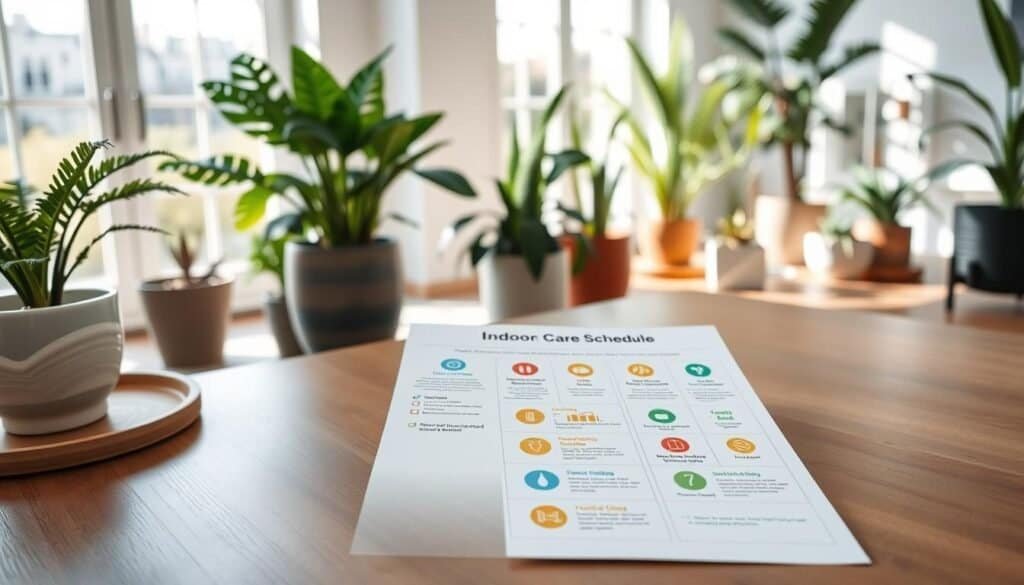
- Water more in spring and summer.
- Water less in fall and winter.
- Give more light in darker months.
By following these tips and adjusting your care, you can have a beautiful indoor garden. Even with a busy schedule, it’s possible.
Using Plants for Feng Shui and Energy Flow
Plants are more than just decorations. They can also boost your home’s feng shui. By picking the right plants and where to put them, you can make your space more harmonious.
Feng shui remedies involving plants can balance your home’s energy. Some plants attract good energy, or “chi.” Others keep bad energy away.
Think about a plant’s shape, size, and color when choosing for feng shui. Plants with rounded leaves or that grow fruit are good. Also, don’t put plants where they block energy flow or right in front of the door.
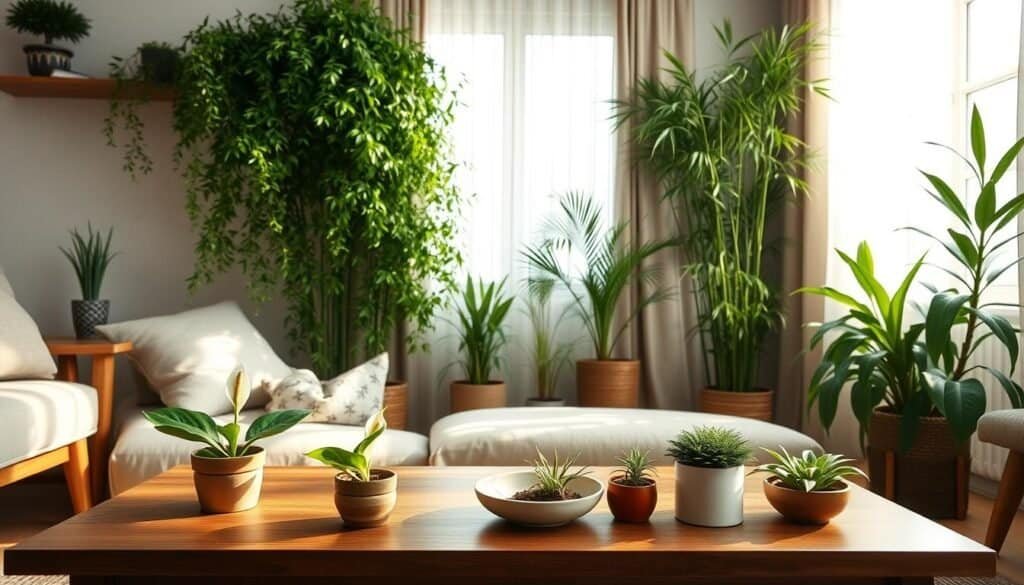
Great plants for feng shui include the money tree and the peace lily. The money tree draws in wealth, and the peace lily cleans the air and brings positive vibes. Adding these plants and arranging them well can make your home more balanced and peaceful.
To get the most from your plants, keep them healthy. This helps them grow and keeps your home’s energy positive.
Outdoor and Patio Greenery Solutions
To make your outdoor spaces better, think about adding plants that do well outside. These plants make your home look nicer and feel more welcoming. They’re great for relaxing and having fun.
Garden Design with Decorative Pots is a great way to make your outdoor area special. Decorative pots can tie everything together and match your home’s look. Pick pots that fit your garden’s style, considering material, size, and color.
Garden Design with Decorative Pots
Decorative pots can be a highlight in your garden or patio. A big, stylish pot at your patio entrance can set the mood. You can also group smaller pots for a nice look.
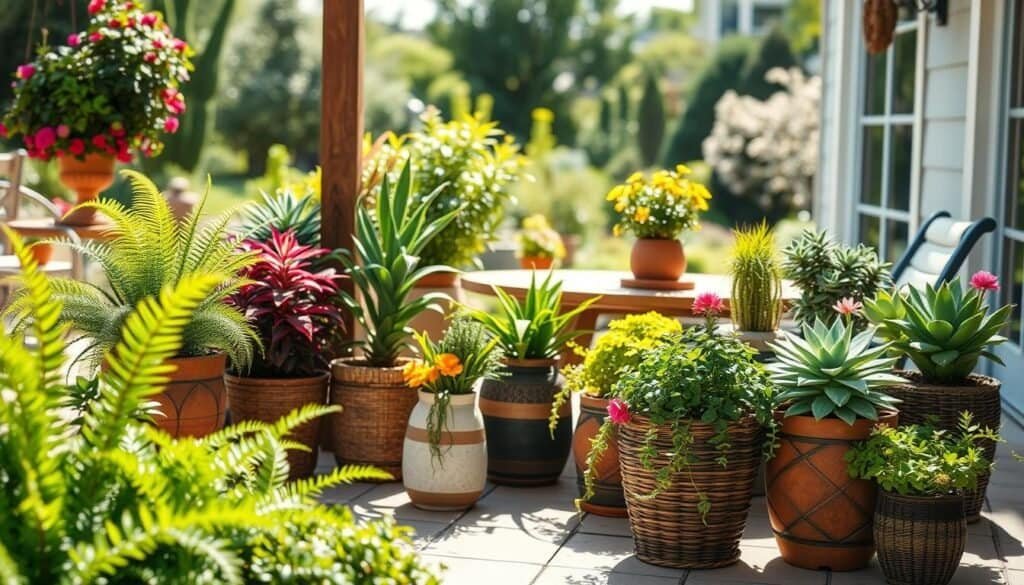
Some plants do well both inside and outside. Snake plants, peace lilies, and succulents are great for these areas. They’re easy to care for and perfect for people who don’t have a lot of time.
When picking plants for outside, think about sunlight, soil, and how much water they need. By choosing the right plants and using decorative pots, you can make a beautiful outdoor space.
- Choose plants that fit your climate and maintenance level.
- Use decorative pots to add a personal touch to your garden.
- Consider the overall aesthetic you want to achieve with your outdoor greenery.
Conclusion: Breathing New Life Into Your Space with Plants
Adding plants to your home is a simple way to make a big change. They can improve the air and make your space look better. Plants turn any room into a lively oasis.
Looking for home decor ideas or a calm spot? Plants are a great choice. Try adding some greenery to your living room plants decor. Or play with different indoor plants decor styles to find your favorite.
Choosing the right plants can really change your space. It can make your home feel new and fresh. So, why not start your plant journey today? See how plants can improve your home and health.