Choosing eco-friendly materials can really change a room’s feel. Unlike synthetic finishes, organic materials add a special touch that decor can’t match.
Natural materials in interior design make a room look better and feel healthier. Using wood, stone, and plaster makes a space cozy and welcoming. It feels real and warm.
This design approach is more than just looks. It’s about making a space feel alive and connected to nature. Using natural elements in design is key to a space’s atmosphere.
The Hidden Power of Natural Materials in Interior Design
Using natural materials in interior design adds depth and character. These materials can change a room, making it feel more welcoming. Wood, stone, and natural fibers create a warm atmosphere that synthetic materials can’t match.
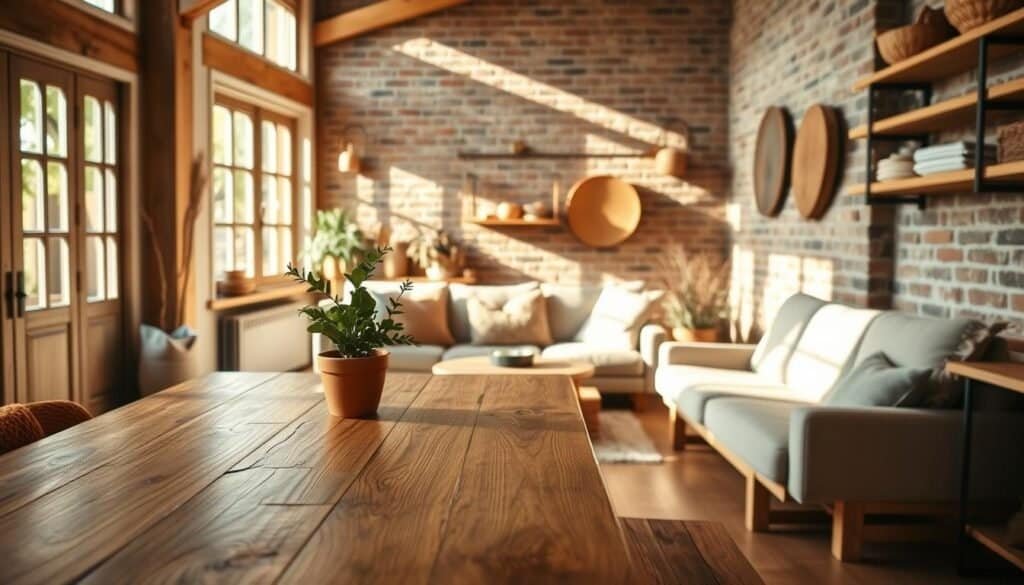
Natural materials bring authenticity to a space. They have unique textures and patterns that make a room interesting. For instance, a wooden floor’s grain or marble’s veining add elegance. Adding nature-inspired accents enhances a space’s natural beauty.
Choosing sustainable and eco-friendly materials is good for the environment and health. Reclaimed wood, bamboo, and low-VOC paints are stylish and eco-friendly. They help reduce environmental impact while keeping decor modern.
Using natural materials in design connects a room to nature, even indoors. This connection makes a room feel more relaxed and inviting.
Natural Materials Matter: Creating Authentic Connections in Your Space
Using natural materials in interior design is more than a trend. It’s a way to connect deeply with our surroundings. Natural materials matter because they add authenticity and warmth. This makes a space feel welcoming and cozy.
Adding wood, stone, and natural fibers to your design promotes well-being. Being around natural elements can lower stress and boost mood. It’s a simple way to feel closer to nature.
For example, using reclaimed wood for floors or walls adds character. It also supports sustainable living. Adding plants or green walls purifies the air and beautifies the space. This creates a balanced and harmonious environment.
Choosing eco-friendly materials like bamboo, cork, and low-VOC paints is good for the planet. They also improve indoor air quality. These materials can be used in many ways, from furniture to wall finishes, giving designers and homeowners lots of options.
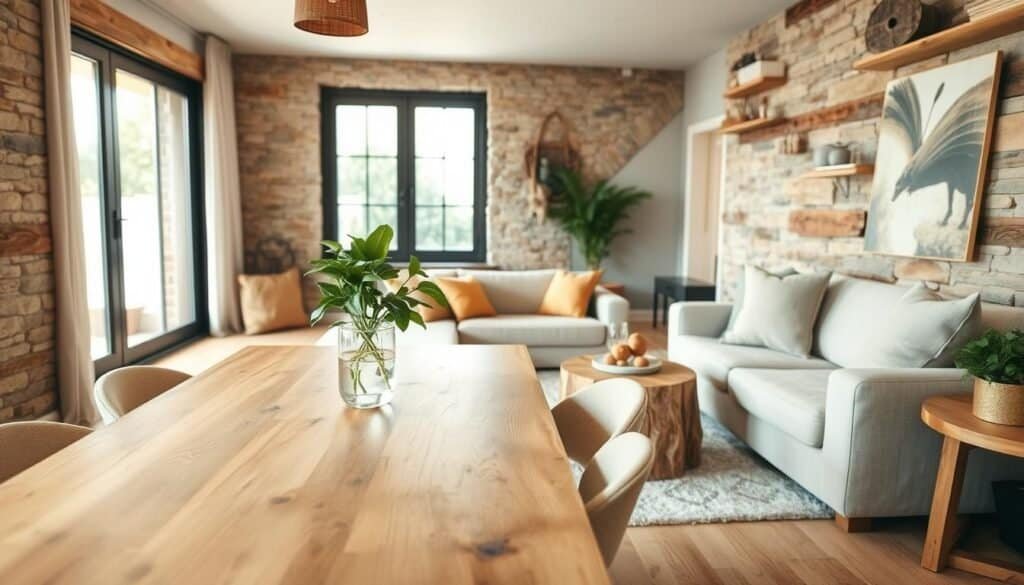
By picking natural materials, you’re making a statement about your style. You’re also investing in your health and the planet’s. As we embrace sustainable living, natural materials become even more vital for creating genuine, eco-friendly spaces.
Wood: How Timber Creates Warmth That Decor Cannot Replicate
Wood adds a unique warmth and coziness that decor alone can’t match. Its natural texture and grain make a space feel authentic and comfortable. This makes it more inviting and like a home.
The warmth of wood goes beyond looks. It creates a deep emotional connection. Unlike synthetic materials, wood connects us to the past. It’s a natural element used for centuries in design and construction.
Flooring vs. Accent Pieces
There are two main ways to use wood in design: flooring or accent pieces. Wooden flooring can change a room’s feel, making it warm and cohesive. It covers the floor to ceiling.
Using wood as accent pieces, like in furniture or wall paneling, adds character. 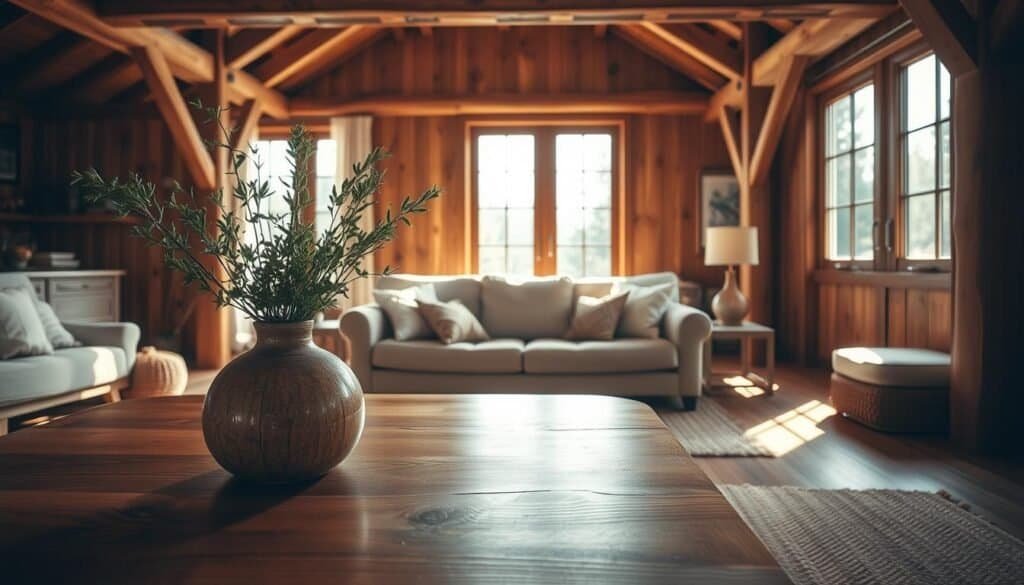 This method creates focal points without overwhelming the space. It allows for a more subtle use of wood.
Whether you choose flooring, accent pieces, or both, wood makes a space feel welcoming. The key is to balance wood with other elements. This creates a harmonious and inviting interior.
- Wooden flooring creates a cohesive atmosphere.
- Accent pieces add character and depth.
- A balanced approach ensures harmony.
Stone and Concrete: Grounding Elements That Transform Energy Flow
Stone and concrete are more than just materials. They are grounding elements that change the feel of any room. Their use in interior design can greatly affect the energy flow, making spaces more balanced and harmonious.
Grounding and Balancing Energy The natural textures and earthy tones of stone and concrete add stability to interiors. By using these materials, homeowners can create a calming atmosphere. This atmosphere promotes relaxation and reduces stress.
From Countertops to Statement Walls
Stone is often used in countertops, adding durability and beauty. For example, granite countertops bring elegance and improve the kitchen’s energy.
Concrete, on the other hand, is versatile in design. It can be molded into various forms, from sleek countertops to striking statement walls. A concrete statement wall can become a room’s focal point, adding depth and visual interest.
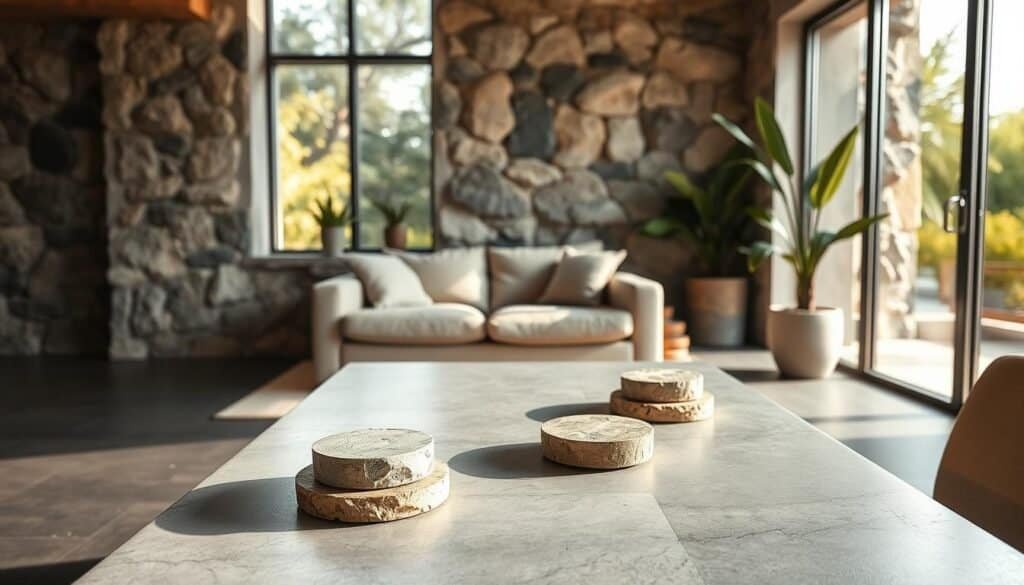
In interior design, stone and concrete can change energy flow, making spaces more dynamic and engaging. Whether used subtly or as a bold statement, these materials can transform spaces. They make them feel more connected to nature.
By carefully adding stone and concrete to your design, you can use their grounding properties. This can improve your home’s ambiance, promoting well-being and tranquility.
Natural Fibers: Creating Acoustic Harmony Beyond Visual Appeal
Natural fibers are not just pleasing to the eye; they also play a significant role in making homes more comfortable. Using natural fibers in rugs, curtains, and upholstery can greatly improve a room’s sound quality.
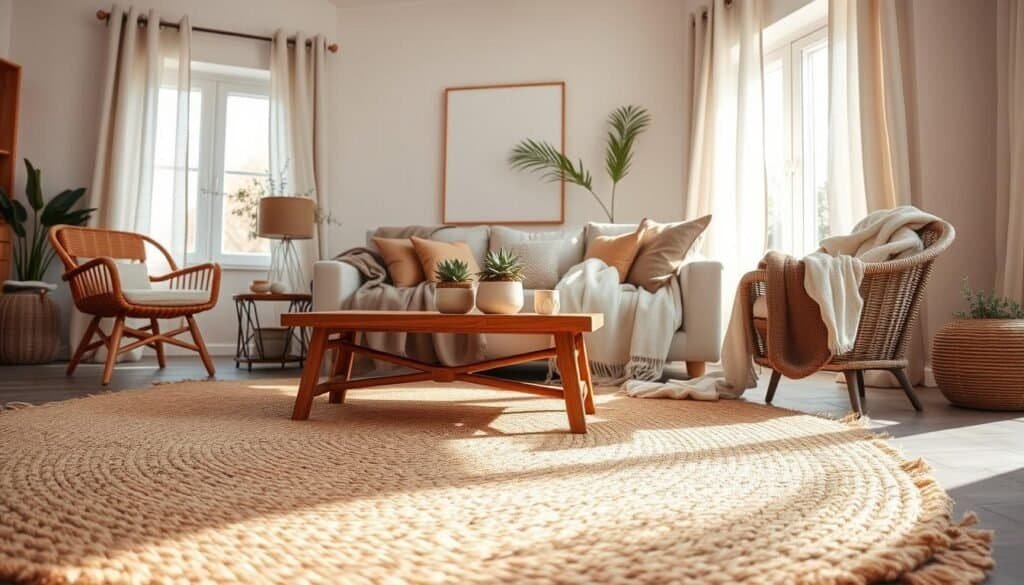
The material choice for rugs, curtains, and upholstery greatly affects a space’s sound. Natural fiber rugs can absorb sound, reducing echo and reverberation. Curtains made from natural fibers like cotton or linen can also act as sound dampeners, minimizing external noise and improving overall acoustic comfort.
Upholstery made from natural fibers not only looks good but also makes furniture quieter. For those wanting a calmer home, adding natural textures is a smart move. You can find more ideas on creating a calming atmosphere with natural textures here.
Some key benefits of using natural fibers in interior design include:
- Improved acoustic quality through sound absorption
- Enhanced aesthetic appeal with varied textures and patterns
- Eco-friendly and sustainable material choices
By carefully choosing natural fibers for your interior design, you can make a space that looks good and feels comfortable.
Clay and Ceramics: The Handcrafted Touch That Synthetic Materials Lack
Clay and ceramics bring a unique, handmade feel to any room. They add a special touch that synthetic materials can’t match. Using these natural materials in your design can make a space look and feel better.
Unique Characteristics of Clay and Ceramics
- Handcrafted elements that add a personal touch
- Natural textures that create warmth and depth
- Durable and long-lasting
There are two main ways to use clay and ceramics in your design. You can choose terracotta floors or ceramic collections.
Terracotta Floors vs. Ceramic Collections
Terracotta floors have a warm, earthy look and a rustic charm. They add a sense of history and authenticity. Ceramic collections, on the other hand, offer a wide range of designs. This means you can pick from traditional to modern styles, giving you more design options.
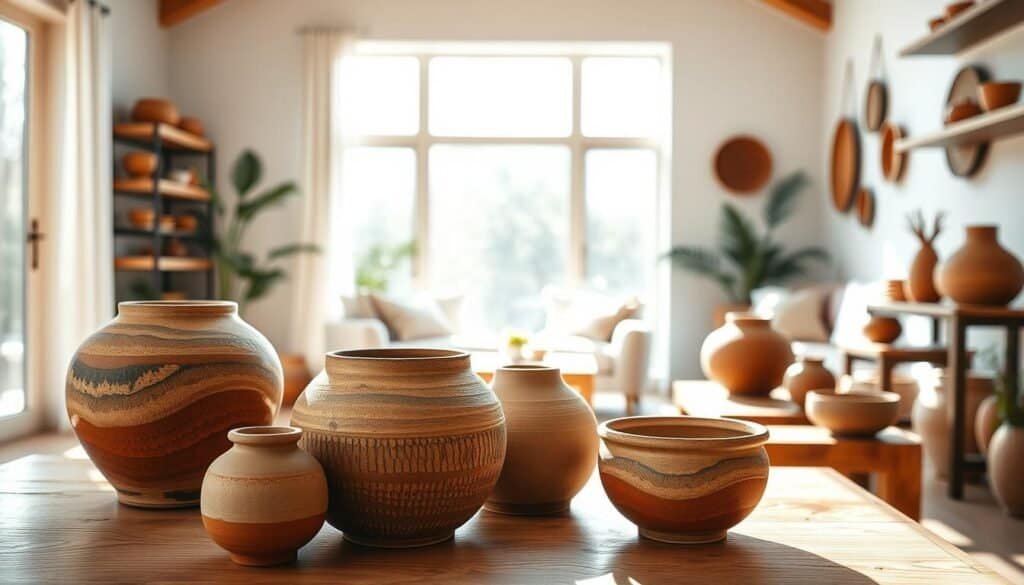
- Terracotta floors provide a timeless, classic look
- Ceramic collections offer versatility in design and style
- Both materials are durable and resistant to wear
Adding clay and ceramics to your design makes a space feel real and beautiful.
Rattan and Wicker: How Woven Materials Create Visual Rhythm
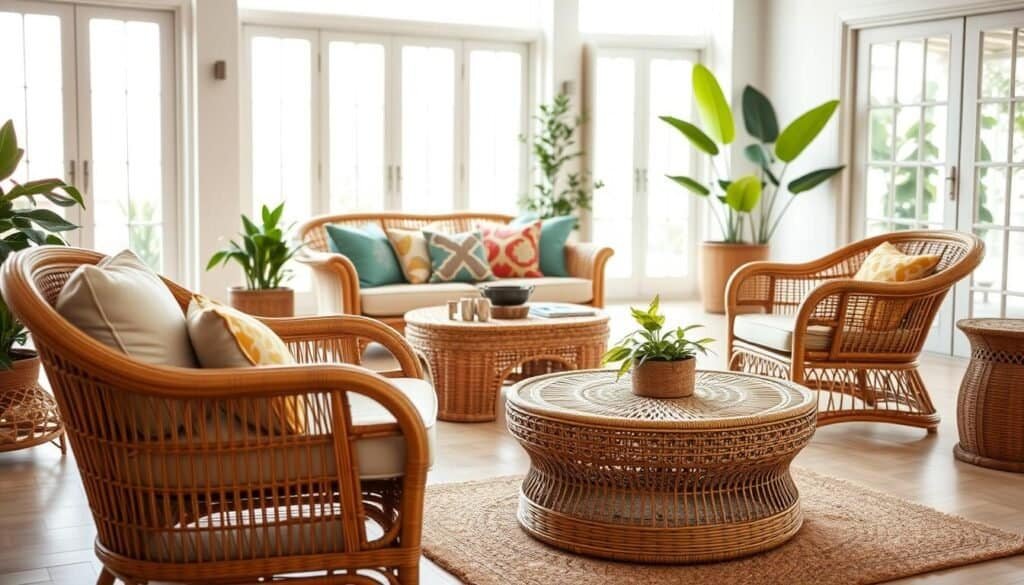
Woven materials like rattan and wicker are changing how we see furniture. They make spaces stylish and eco-friendly. The patterns and textures of rattan and wicker furniture add depth and interest to any room.
The natural beauty of rattan and wicker lies in their ability to create rhythm and harmony. They can instantly make a room look cozy and inviting. For more inspiration, check out warm and inviting wood and rattan texture.
Furniture Pieces That Make Statements
Statement furniture pieces made from rattan and wicker can be bold, like oversized chairs, or detailed, like coffee tables. These pieces are not just functional. They also catch the eye and start conversations.
- Rattan armchairs with woven details
- Wicker coffee tables with natural finishes
- Hanging rattan lamps that add a touch of bohemian chic
Adding rattan and wicker to your interior design connects you to nature and makes your space visually appealing. The rhythm these materials create can turn a room into a dynamic and engaging space.
Metal: The Evolving Patina That Brings History to New Spaces
Metal elements in interior design are not just functional; they evolve over time. They develop a unique patina that adds history to a space. This transformation is seen in metals like copper, bronze, and iron. They change color and texture as they react to their environment.
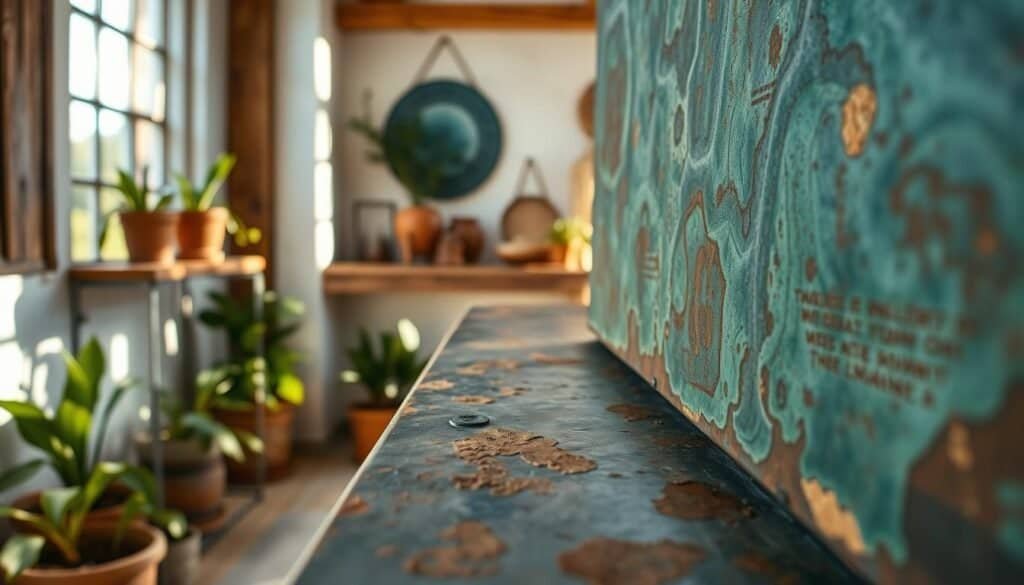
The evolving patina of metal adds character and storytelling to a room. It makes the space more inviting and personalized. For example, copper turns greenish, while bronze gets a rich, dark patina.
Hardware Choices That Elevate Everyday Interactions
Hardware choices, like door handles and cabinet pulls, greatly impact a space’s look and function. Choosing metal hardware adds sophistication and durability. Brass can bring luxury, while matte black steel offers a modern, industrial vibe.
When picking metal hardware, think about the design theme and how the metal will age. Metals like stainless steel stay the same, while others, like copper, change a lot. This helps make choices that improve a space’s look and feel.
- Brass: Adds a luxurious feel
- Matte Black Steel: Provides a modern, industrial aesthetic
- Copper: Develops a unique patina over time
By adding metal elements and choosing hardware wisely, you can make a space that looks great and tells a story through its materials.
Glass: Transparency That Creates Depth Beyond Decorative Effects
Glass brings transparency and depth to any space. It can be used in big windows or decorative items. This adds beauty and interest to a room.
Glass lets natural light into rooms, making them feel bigger and more inviting. It also connects us to the outdoors, bringing nature inside.
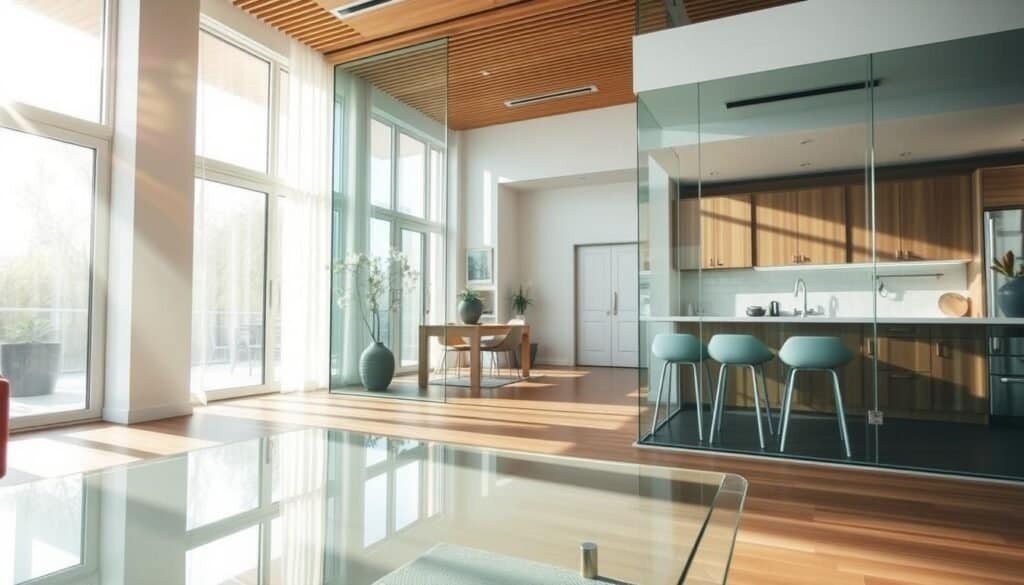
Glass isn’t just for windows. It’s also in vases, sculptures, and tableware. These items add elegance and sophistication to any room. For more ideas on using natural materials, check outthis article.
Glass is very versatile. Textured glass adds visual interest. Colored glass brings a splash of color to a room.
Using glass in your design makes a space feel open and beautiful. You can use glass panels, decorative items, or glass-topped furniture. The options are endless.
Leather and Hide: The Tactile Experience That Improves With Age
Adding leather and hide to your space brings a unique touch that gets better with age. Unlike fake materials, they grow a beautiful patina over time. This makes them even more special and unique.
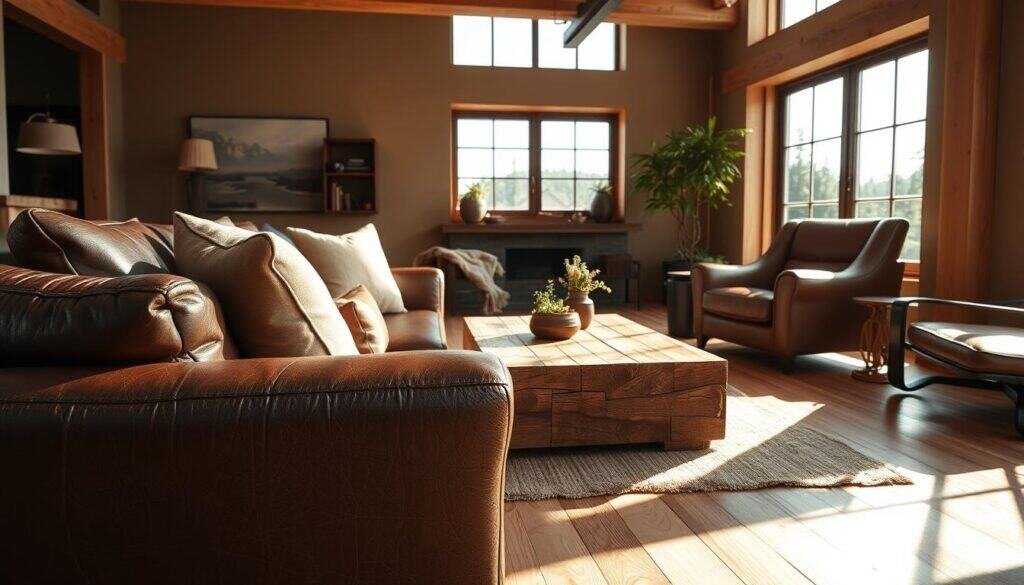
Leather and hide offer a touch experience like no other in interior design. They make a space feel warm and inviting. Used in furniture, walls, or accessories, they add a depth and richness that’s hard to find elsewhere.
Investment Pieces Worth Their Longevity
Buying leather and hide pieces is more than their looks; it’s about their lasting quality. Top-notch leather and hide items can last for decades, getting even more stunning with age. This makes them great investments for any room.
- Leather and hide develop a unique patina over time.
- They offer a tactile experience that deepens with age.
- These materials add warmth and comfort to a space.
Choosing leather and hide for your design means picking materials that last. It’s also investing in pieces that will grow more precious with time.
Combining Natural Materials: Creating Sensory Harmony Through Contrast
Mixing natural materials can transform a room into a unique sensory experience. By carefully choosing different textures, colors, and elements, you can make a space that looks great and feels good.
Contrasting natural materials is essential for sensory harmony. For example, combining smooth stone with rough wood or soft leather with woven fibers adds depth and interest.
- Mixing materials like wood, stone, and clay can create a rich sensory experience.
- Contrasting textures, such as smooth glass against rough concrete, adds visual and tactile interest.
- Incorporating natural fibers like wool or silk can enhance the acoustic harmony of a space.
Small Changes With Big Impact
Even small changes can make a big difference when mixing natural materials. For instance, adding a wooden accent table to a room with stone or concrete can bring warmth and character.
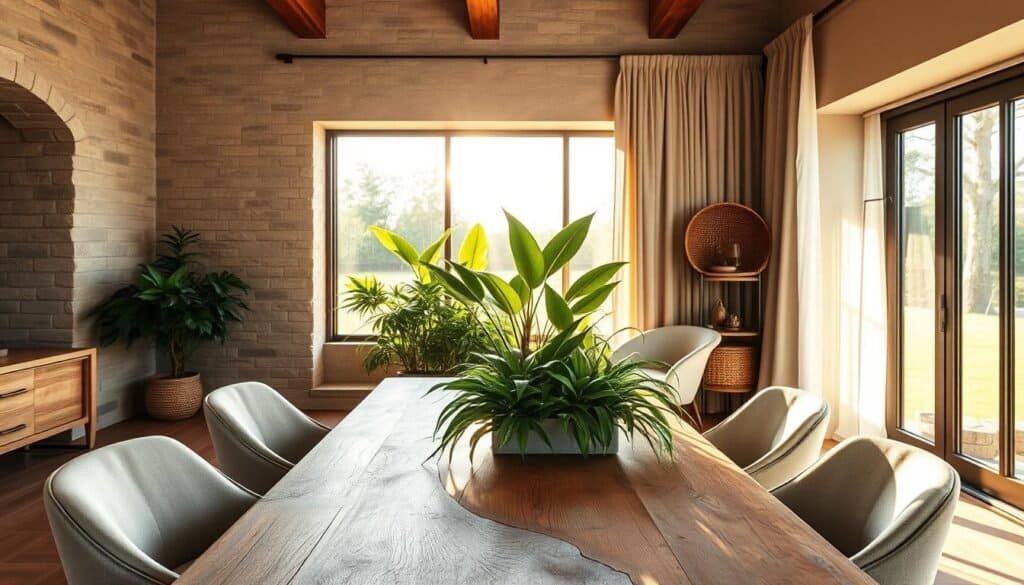
- Start with a dominant natural material and then introduce contrasting elements.
- Balance warm and cool tones to create a harmonious palette.
- Experiment with different textures to find the perfect blend for your space.
By mastering the art of combining natural materials, you can craft a space that is not just beautiful but also engaging on many sensory levels.
Conclusion: Embracing the Living Quality of Natural Materials
Natural materials greatly affect how a space feels, going beyond just decoration. Wood adds warmth, while stone grounds the space. Each material brings its own special touch to design.
Using natural materials lets people create spaces that show their style and improve well-being. It also connects us to nature. Choosing eco-friendly materials is key to a greener future.
Over time, natural materials develop a unique patina. This adds history and depth to any room. Choosing natural materials for our designs can make our living spaces more in tune with nature.
In the end, using natural materials in design benefits both us and the planet. It helps us appreciate the beauty of nature more deeply.