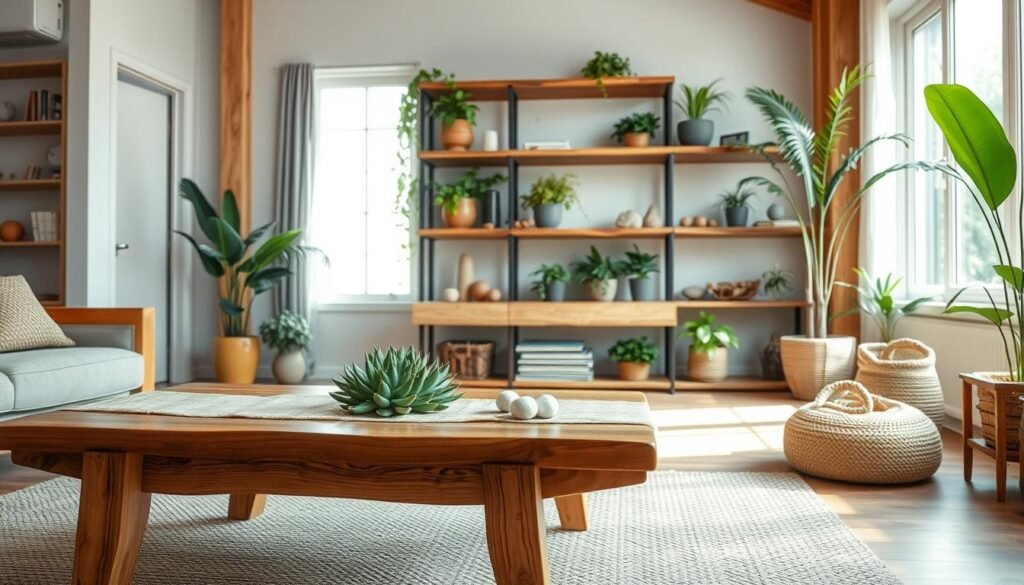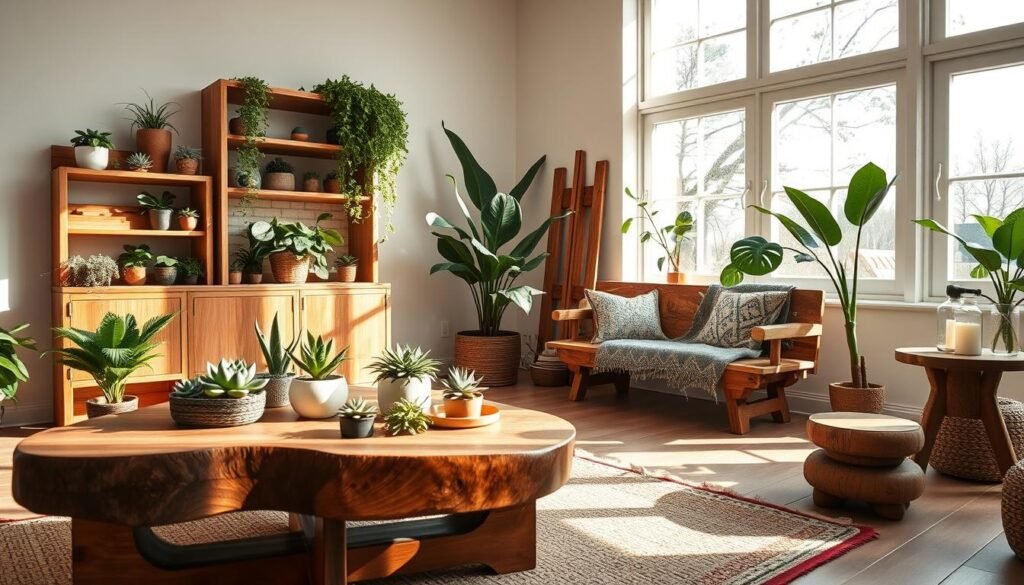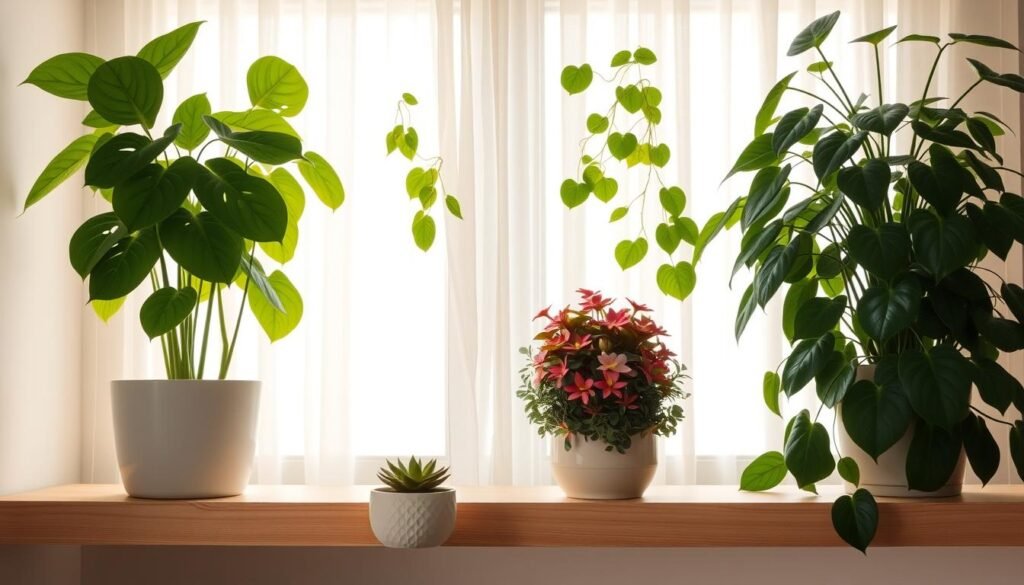
Adding natural elements to your home decor can make it warmer and more inviting. Using wood and plants can soften hard spaces, making your living areas cozy and welcoming.
Decorating with living room plants and indoor plants can turn a cold room into a cozy haven. Adding house plants aesthetic brings warmth and personality to your space.
Combining wood accents with lush greenery creates a harmonious balance. This makes your home feel relaxing and comfortable. This approach to home decor is not only beautiful but also boosts your well-being.
Why Cold Rooms Need Natural Elements
Natural elements can make cold, uninviting rooms warm and welcoming. Adding wood accents and lush greenery can greatly improve a room’s ambiance.
Adding natural elements boosts a room’s look. Wood accents for home decor add warmth and character. Plants also bring life to dull areas, giving garden decor inspiration.
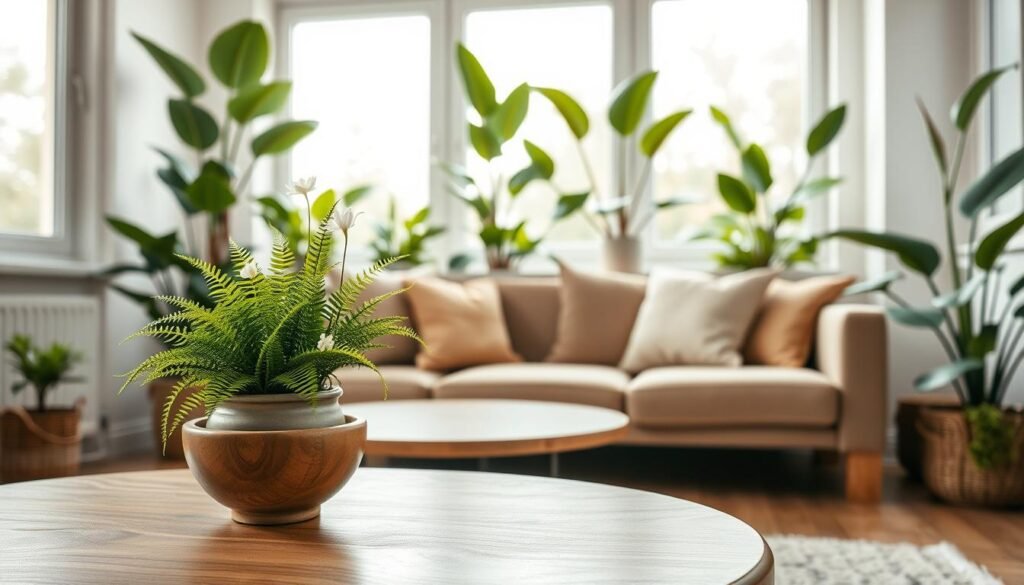
Natural elements also improve our mood. Being around nature reduces stress and boosts happiness. You can bring nature indoors by adding greenery for outdoor spaces or ways to incorporate plants into your space.
- Enhance the aesthetic appeal of cold rooms
- Improve the psychological well-being of occupants
- Create a more inviting and warm atmosphere
Understanding natural elements’ importance helps transform cold spaces into warm, welcoming areas. These spaces promote well-being and comfort.
Understanding Wood and Plant Ideas That Soften Hard Spaces
Finding out which parts of your home feel cold is the first step. This helps you use wood and plant decor to make them warmer. Cold spots can come from not enough natural light, too much metal or glass, or little decor.
Identifying Cold Areas in Your Home
Start by watching your home at different times of day. See which rooms feel less cozy. Spaces with little natural light tend to feel colder. Also, rooms with cold colors or too many synthetic materials can feel chilly.
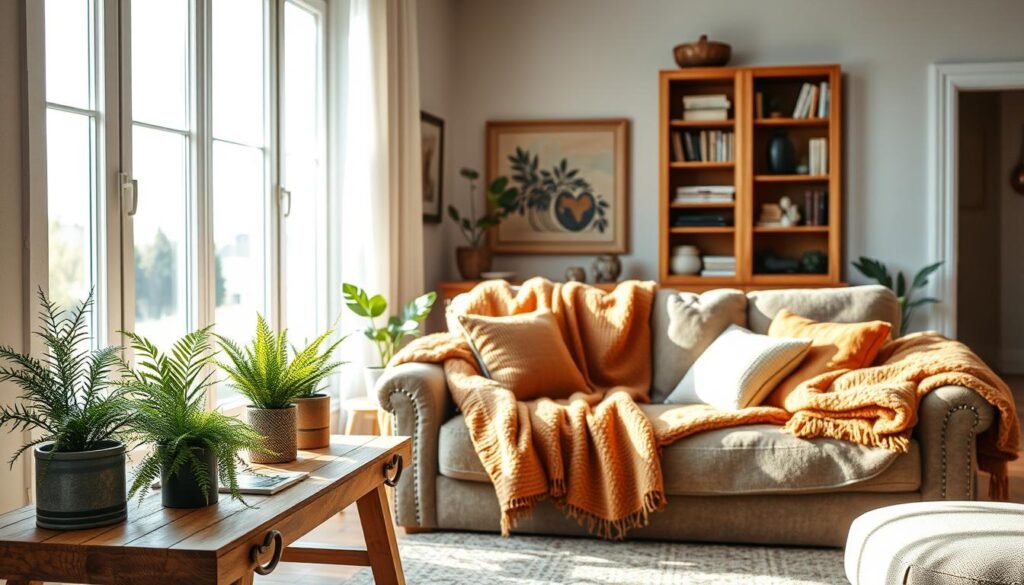
After finding the cold spots, you can start using wood and plants to warm them up. Adding home plants can make the air cleaner and add warmth and color. Pick plants with bright flowers or interesting leaves to brighten the space.
Think about the look you want for your house plants decor. A few plants can change a minimalist room a lot. For a cozier feel, mix plants with wooden pieces.
- Choose plants that do well in low light for dark areas.
- Use plants to draw attention to a room, like a special piece of furniture.
- Use colorful plants to make cold areas feel warmer and more interesting.
Knowing how to spot and fix cold spots in your home with wood and plants can make it feel warmer and more welcoming.
Creating Living Plant Walls to Transform Stark Rooms
One of the best ways to make a stark room feel softer is by adding a living plant wall. These walls, also known as green walls or vertical gardens, bring nature indoors. They can completely change how a room feels.
Living plant walls look great and also clean the air. They can even make a room sound better. Pick plants that do well in vertical spaces for your wall.
Philodendron and Ivy Varieties for Vertical Gardens
Philodendron and ivy leaves are perfect for a lush look. They grow well in different light and can climb or cascade.
To make a beautiful living plant wall, use a trellis or modular planter. Keep your wall healthy with regular watering and pruning.
If you’re looking for indoor plants shelf ideas, a living plant wall is a great option. It’s not only decorative but also brings nature inside.
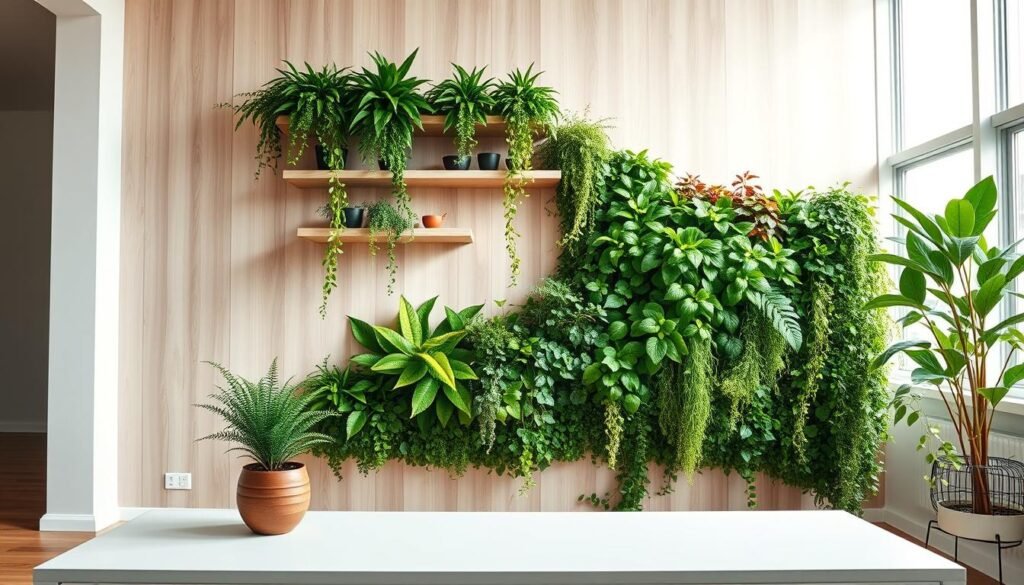
Adding a living plant wall to your room makes it more welcoming. It works well with both minimalist and modern designs. A living plant wall is a smart and beautiful choice.
Wooden Accent Features That Add Instant Warmth
Cold rooms can feel warmer with wooden accents. These features add warmth and coziness. They look good and make cold rooms feel softer.
Types of Wooden Accent Features include walls, furniture, and decorative items. A wood accent wall with plants is great. It mixes wood’s beauty with plants’ freshness.
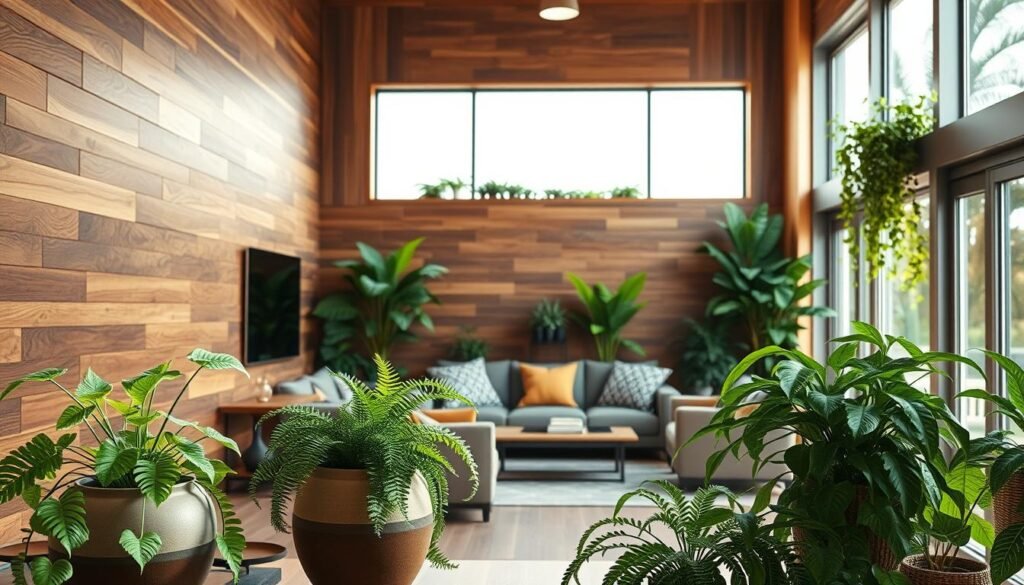
Keeping wooden elements in good shape is key, thanks to humidity. Too much humidity can damage wood, while too little can cause it to crack.
- Regularly check wooden features for damage.
- Use a humidifier or dehumidifier to keep humidity stable.
- Apply a protective finish to make wood last longer.
Wooden accents and care make spaces warmer and more welcoming. A modern wooden wall with plants is not just pretty. It also makes the air healthier.
Strategic Plant Corner Ideas for Minimalist Spaces
Turning minimalist spaces into green havens is an art. It needs careful placement and the perfect plants. These spaces, with their clean lines and simple colors, are ideal for statement plants. The right plants and placement can bring warmth and personality.
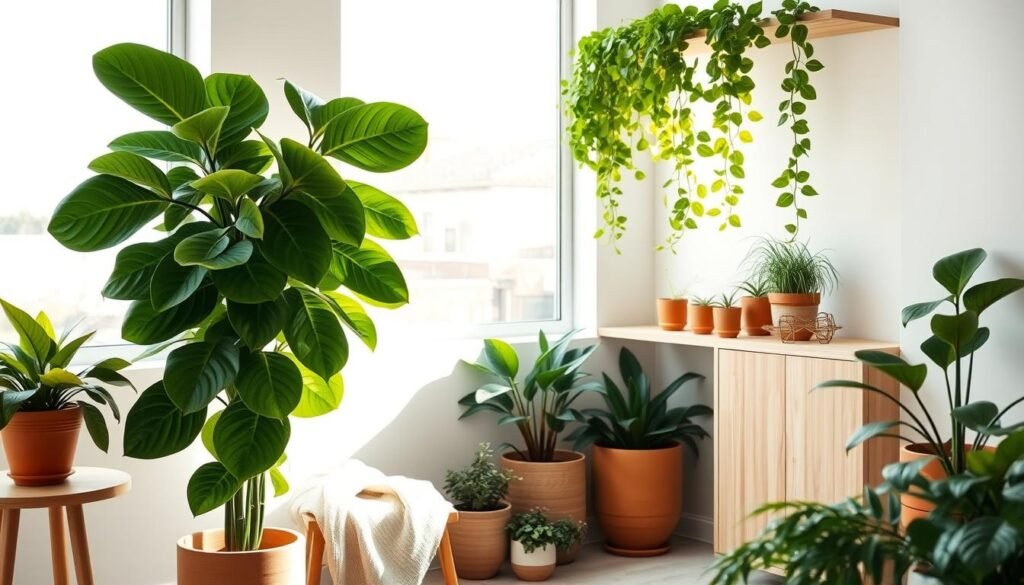
Monstera Albo stands out with its variegated leaves. It’s perfect for adding elegance to minimalist areas. Choose a sleek planter to highlight its beauty without cluttering.
An Adenium plant adds a pop with its thick trunk and vibrant flowers. Its shape makes it great for corners or against plain walls. Here, its beauty shines.
Money Plants and Trailing Varieties for Vertical Interest
Money Plants are easy to care for, making them ideal for indoors. Trailing types can climb walls or trellises. This adds depth and makes the room feel lively.
Using trailing varieties like Money Plants adds depth. Hang them from ceilings or place them on high shelves. This draws the eye upwards, creating height.
For indoor plant corner ideas, pick a plant stand that fits the minimalist look. A simple, geometric stand can elevate the plant and enhance the decor. Look for plant stand ideas indoor that are both functional and stylish.
Indoor Plant Shelving Solutions for Small Rooms
Small rooms can have lots of greenery with the right shelving. You can use vertical space to keep the floor clear and add nature indoors.
Indoor plant shelving ideas vary from simple shelves to complex units. Pick one that fits your room’s style and holds your plants well.
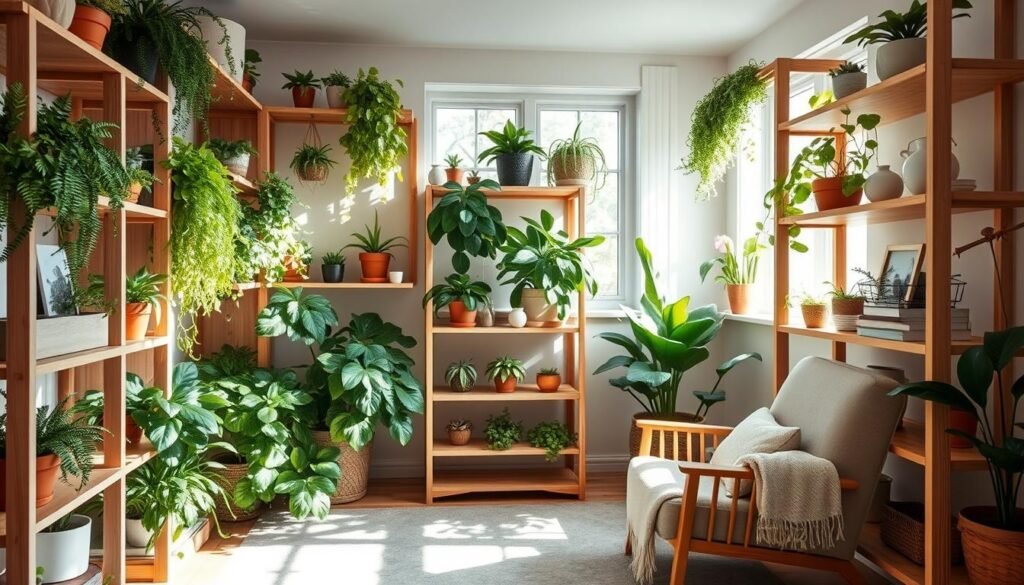
Using shelving units in small rooms is smart. You can mix books and plants for a cool look. Place small plants on books or use bookends for separate spots.
- Choose plants with different textures and sizes for depth.
- Bookshelves with adjustable shelves work for plants of all heights.
- Think about your plants’ lighting needs when placing them.
By mixing books and plants on shelves, you make small rooms cozy and inviting.
Wood and Plant Combinations for High-Humidity Rooms
Wood and plants together in humid areas like bathrooms create a peaceful space. The warmth of wood and the lushness of plants make the area welcoming.
Benefits of Wood and Plant Combinations in humid rooms include better looks and a calming feel. Orchids, for example, love humid places, making them perfect for bathrooms.
Orchid House Displays for Bathroom Environments
Orchid displays can make bathrooms look elegant. Here’s how to set up an orchid house:
- Pick orchid types that do well in damp air, like Phalaenopsis or Paphiopedilum.
- Use wooden planters or shelves to add warmth and texture.
- Make sure plants have good air flow to avoid fungal diseases.
Keeping an indoor plant care schedule is key for your plants’ health. Check moisture levels often and adjust watering as needed.
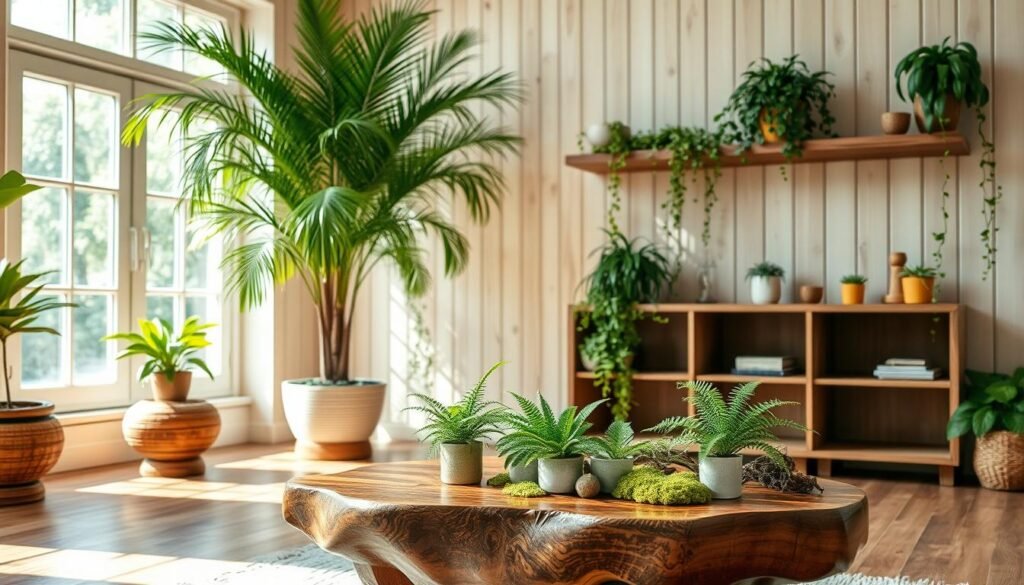
Wood and plants can turn humid rooms into cozy spots. Think about your plants’ needs and the look you want.
Natural Elements for Kitchen Spaces
Natural elements can make your kitchen warmer and more welcoming. Adding wood and plants brings warmth and personality to your space.
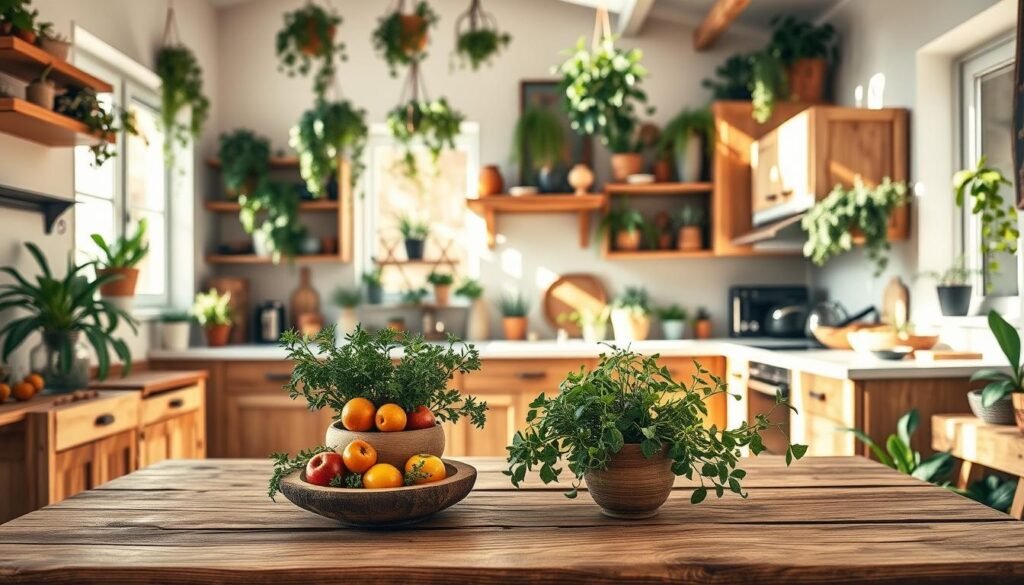
Choosing the right plants for your kitchen is key. Colorful plants can brighten up your kitchen and make it look great.
Colorful Plants That Complement Kitchen Color Schemes
- Herbs like basil and mint are perfect for kitchens with green or herb-inspired colors.
- African Violets match well with kitchens that have purple or pink colors.
- Succulents are great for kitchens with neutral or earthy tones.
Adding natural elements and colorful plants to your kitchen decor makes it more inviting. It shows off your personal style.
Floor Plants and Designer Planters for Empty Corners
Empty corners don’t have to be dull. Floor plants and stylish planters can bring life to these spaces. You can turn them into cozy retreats or vibrant focal points.
When picking floor plants, think about the lighting and space. Tall plants like snake plants or fiddle leaf figs are great for corners with little light. Brighter spots can handle a variety of colorful plants.
Plants for Tall Pots and Large Spaces
For tall pots and big spaces, choose plants that grow upwards or have a big presence. Some top picks include:
- Fiddle leaf figs
- Rubber plants
- Tall snake plants
Pair these plants with designer planters to boost their beauty. Find planters that match your room’s style, whether it’s modern, rustic, or minimalist.
Here are some tips for picking the right planter:
- Think about the material: ceramic, wood, or metal.
- Match the color with your room’s palette.
- Choose a size that fits your space.
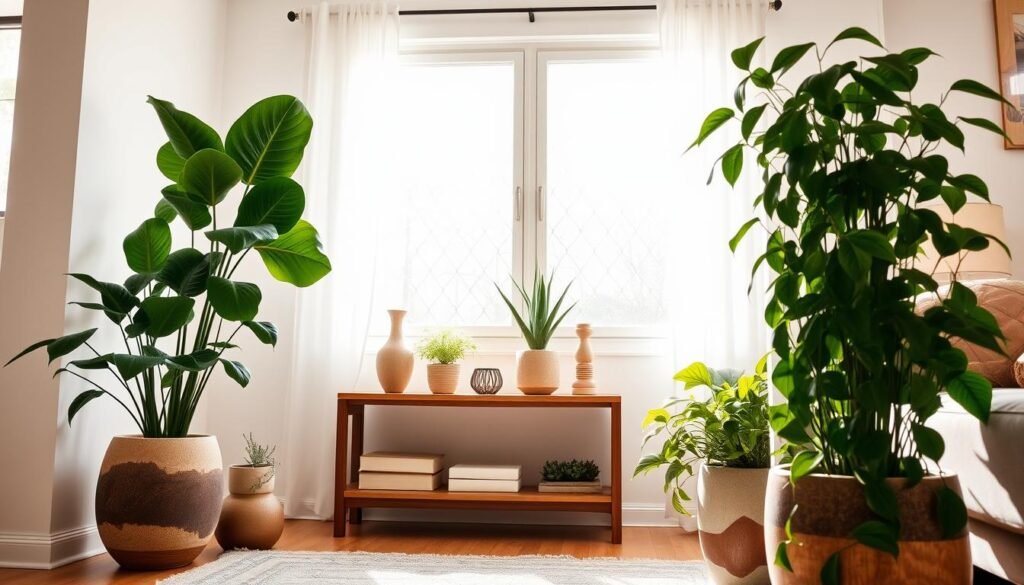
By mixing floor plants with designer planters, you can make any room welcoming. Don’t hesitate to try out different plants and planters to find the best fit for your space.
Creating and Maintaining a Plant Care Schedule
A good plant care schedule is key to a lush indoor space. It’s important to know what your plants need. Then, create a routine that meets those needs.
Benefits of a Plant Care Schedule
- Ensures consistent watering and fertilization
- Helps in monitoring plant health and addressing issues promptly
- Enhances plant growth and longevity
To make a schedule, you can use printables or digital tools.
Plant Watering Schedule Printables and Digital Tools
There are many plant watering schedule printables online. You can customize them for your plants. Or, use digital tools like apps for reminders and tracking.
Some popular digital tools include:
- Plant care apps that offer personalized care plans
- Digital calendars for scheduling watering and fertilization
- Spreadsheets for tracking plant health and growth
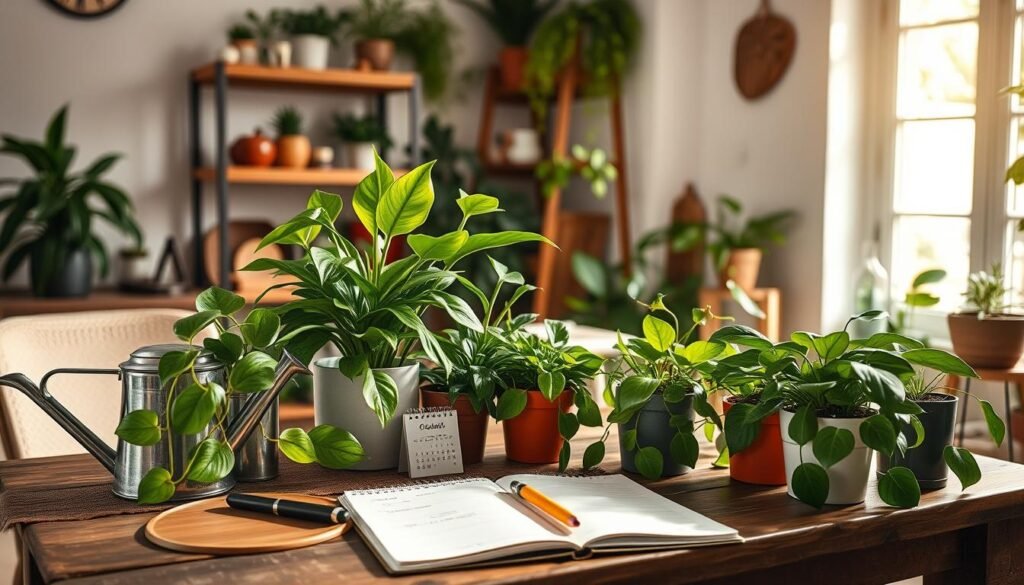
By following a plant care schedule, your indoor garden will thrive. It will be healthier and more vibrant.
Conclusion: Bringing Your Cold Rooms to Life with Natural Elements
Adding natural elements to your home decor can really make cold rooms feel warmer. Using wood and plants can make hard spaces feel cozy and inviting.
Living plant walls, wooden accents, and clever plant corners can change cold rooms into cozy spots. These ideas can make your cold rooms feel more welcoming.
It’s important to mix natural elements with your current decor. This creates a nice balance of textures and colors. With some creativity, you can make any space feel warm and show off your style.
Using natural elements can make your home feel more comfortable. Start looking into ways to use wood and plants today. See how they can make your home feel softer and more alive.