Your backyard is growing, and so is your tool collection. Adding new garden accessories is exciting. But, it also brings risks to your daily gardening routine. Many people don’t realize how gardening supplies can cause injuries if not used carefully.
Knowing about garden tool safety is key for garden lovers. By understanding how garden items can be dangerous, you can avoid injuries. Learning these safety tips helps keep your gardening time safe and enjoyable.
Key Takeaways:
- Prioritize awareness when handling sharp or heavy equipment.
- Regular maintenance prevents equipment failure and accidents.
- Proper storage keeps your backyard environment organized and secure.
Understanding Garden Tool Safety — The Mistakes Most People Make
Every year, thousands of garden lovers get hurt in their own yards. We often forget about garden tool safety while admiring our plants. Many think they’re safe because they know their space well.
Garden tool accidents happen more than we think. They usually come from simple mistakes made when we hurry. Not respecting our tools can turn a fun hobby into a danger.
Knowing common safety mistakes in gardening is key to a safe garden. Many gardeners skip checks, thinking they’re too experienced. But, even experts can get hurt if they don’t follow basic rules:
- Not checking tools for loose handles or dull blades before use.
- Wearing the wrong shoes that don’t protect against dropped items.
- Trying to clear debris from moving parts while the power is on.
- Ignoring how tired you are, which can affect your grip and focus.
Putting injury prevention in gardening first lets you enjoy the outdoors safely. Knowing the risks helps you take steps to avoid them. A safe garden is a productive one, starting with how we do our daily tasks.
Neglecting Proper Maintenance of Cutting Tools
It’s surprising to find out that a dull blade is more dangerous than a sharp one. When blades get dull, they need more force to cut through stems or soil. This extra force often leads to accidents, which are a major cause of garden tool accidents.
Keeping your tools in good shape is key to using them right. Whether you use modern shears or antique tools, a sharp edge makes cutting easier. This simple habit is a top safety tip for gardeners.
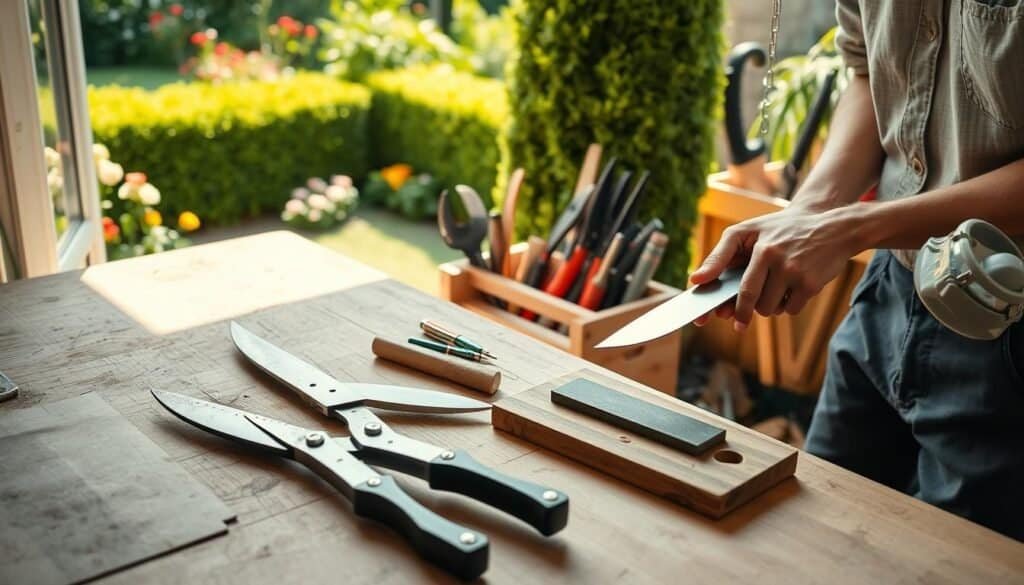
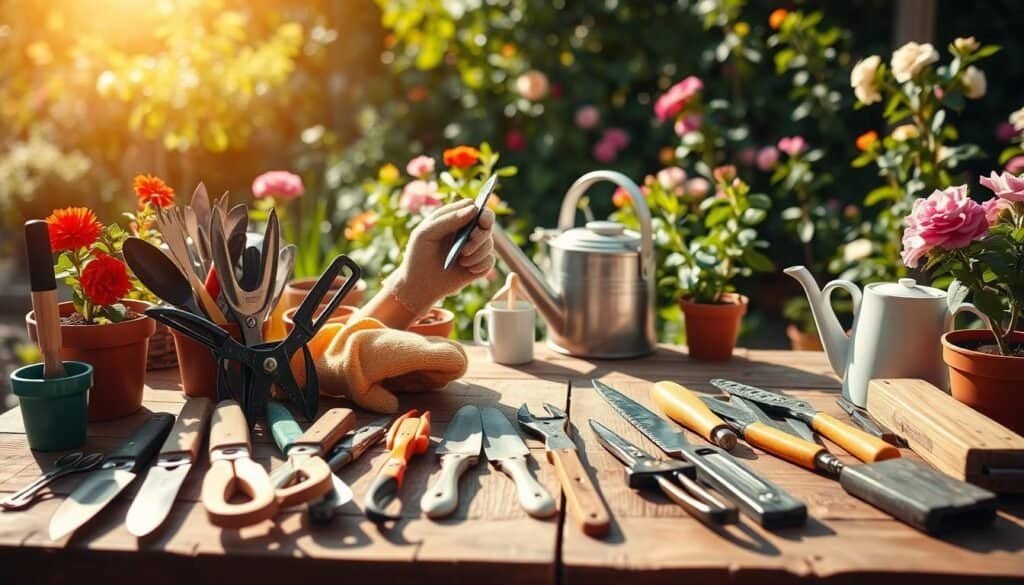
To keep your tools in top shape, follow a regular maintenance routine. Clean off sap and dirt after each use to prevent rust and keep parts moving well. Here are some steps to follow:
- Wipe down your harvesting tools and garden hand tools with a dry cloth after each session.
- Use a sharpening stone or file to hone the edges of your garden shears and pruning equipment.
- Check the handle of your garden rake and other cultivating tools for cracks or loose connections.
- Apply a light coat of oil to metal surfaces to protect your garden tool set from moisture damage.
Spending time on your tools will make them last longer. When your tools are well-maintained, you can work with confidence and precision. Remember, taking care of your supplies is as important as the planting itself.
Improper Lifting Techniques with Heavy Equipment
Many gardening injuries come from bad lifting habits, not the tools. People often focus on sharp blades but forget about the strain from heavy garden equipment. Learning how to lift properly can help you avoid accidents with garden tools and keep your body healthy.
Using a rotary tiller or garden cultivator can be tricky. Always bend at your knees, not your waist, to stay stable. If you’re using a mini tiller, keep it close to your body to protect your back.
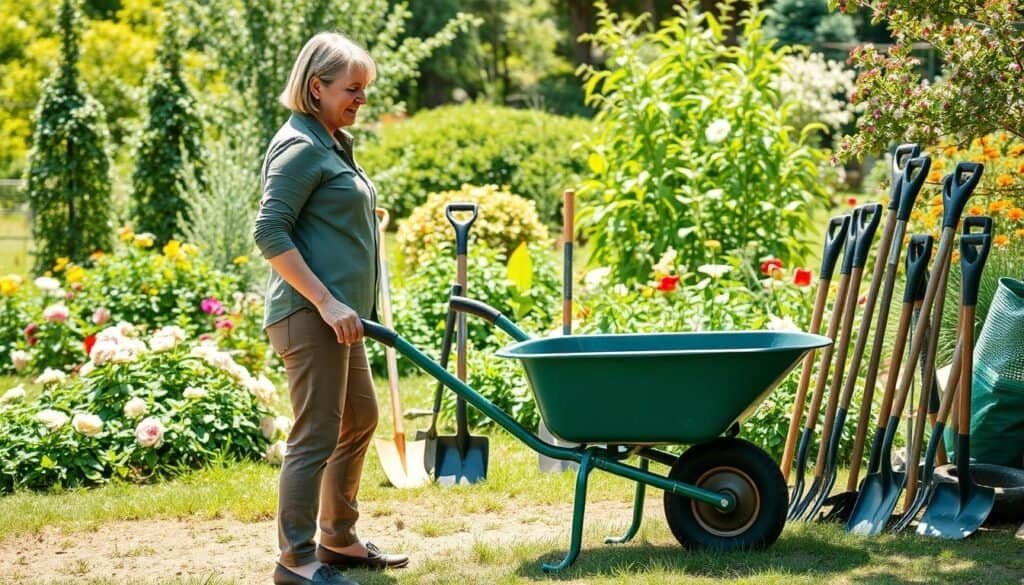
Carrying heavy loads can also hurt your back. Using yard carts is a smart way to move things without straining yourself. Here are some shovel ideas to make your work easier:
- Install a sturdy shovel holder in your shed to keep tools off the floor.
- Use a cart to distribute weight evenly across your yard.
- Always clear a path before moving heavy items to prevent tripping.
Even small tools like a pruning saw need proper posture. If you’re looking for a farm gardening tools guide, remember ergonomics first. While you might not need a lock picker for your shed, a tidy space helps you avoid reaching for heavy items.
The Hazards of Poorly Organized Tool Storage
A cluttered shed is not just ugly; it’s also dangerous. Sharp tools left on the floor or hidden under debris can cause serious injuries. To keep yourself and your family safe, it’s vital to organize your tools well.
Many people find it hard to keep their yard tools organized. Whether you have a big garden tool house or a small shed, keeping tools off the ground is key. A simple shovel holder can prevent accidents and make your tools easy to find.
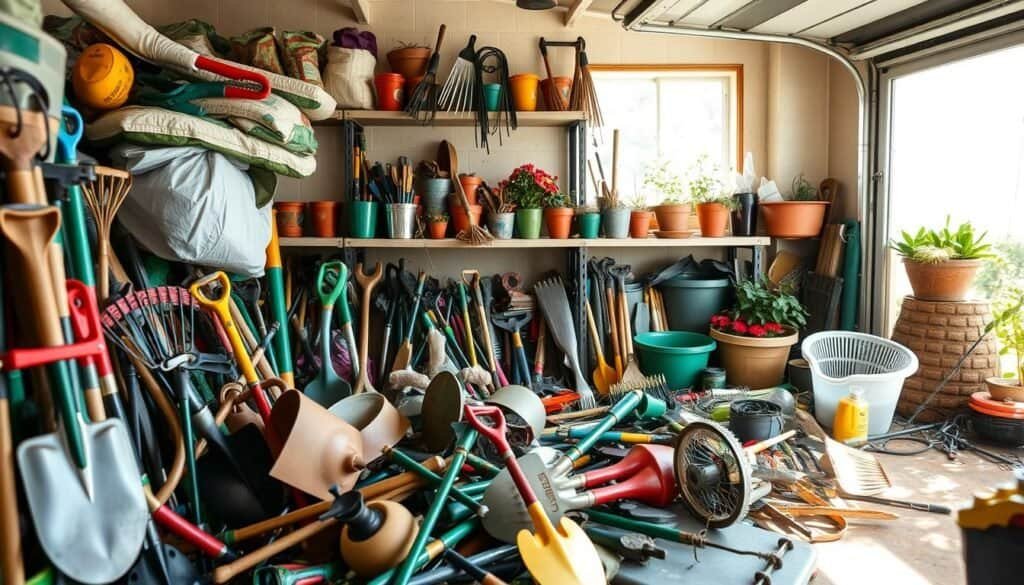
If you’re on a budget, diy pallet storage ideas are a great option. You can make a garage tool organization on pallet system to hang tools. These pallet tool storage diy projects are not only useful but also keep your space clean and safe.
Here are some tips to better organize your garden shed organization ideas:
- Install a sturdy shovel holder to keep long-handled tools upright and secure.
- Use pallet garage storage to create custom slots for smaller hand tools.
- Group your gardening tools storage by how often you use them to save time.
- Clear the floor completely to avoid tripping hazards in your small tool shed ideas.
Spending time on outdoor tool storage ideas will save your tools and keep you safe. By using garden tool organization diy methods, you can turn a messy shed into a professional storage area. A clean space is a safe space, so start organizing your garden tools storage ideas now.
Misusing Power Gardening Equipment
Power tools make yard work faster, but they demand your full attention to stay safe. It’s key to know how to use garden tools right when using machinery. High-quality garden equipment can change your landscape, but you must respect it to avoid serious injury.
When using a mini tiller or a pruning saw, you must stay in control. Many people avoid accidents by staying alert and keeping their hands away from moving parts. Always check your equipment for loose bolts or damaged cords before starting the engine.
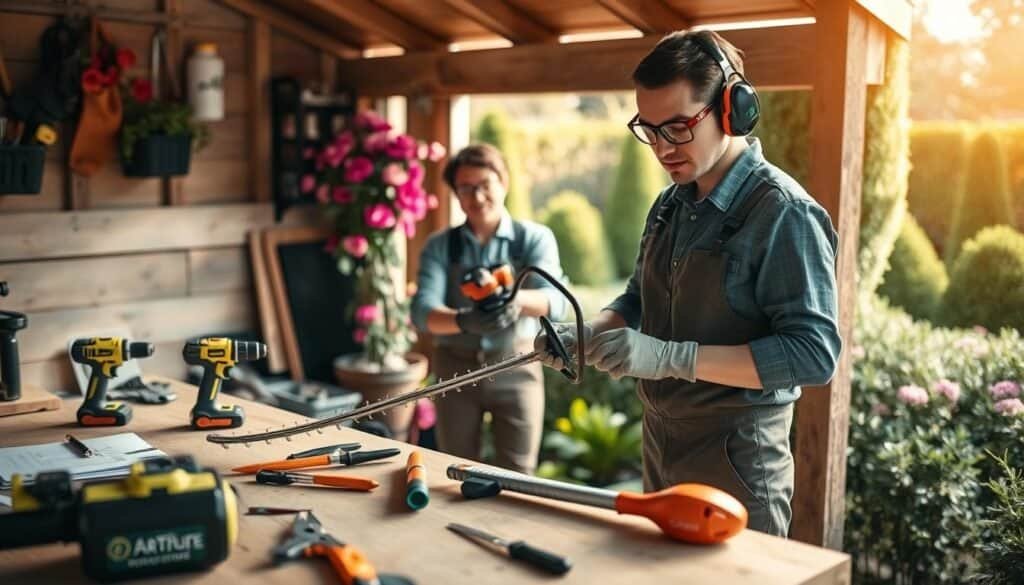
The importance of safety with garden equipment is huge, even with heavy-duty farm tools and equipment. Never skip safety guards or disable kill switches on your machines. These features protect you from unexpected mechanical failures or slips during use.
Whether using a garden cultivator or traditional farmer tools, keep your workspace clean. Even simple tasks like using garden scissors need focus to avoid accidents. Always wear the right shoes and eye protection when working in the yard.
Proper organization is also key when handling your gear. Using yard carts to move heavy items prevents strain. Keep a lock picker or other specialized items stored safely to keep them out of children’s reach. When moving cart weeds or debris, make sure your equipment is stable and balanced to prevent tipping.
- Always read the manual before using a new piece of power equipment.
- Inspect all power cords for fraying or damage before plugging them in.
- Clear the area of rocks and sticks to prevent dangerous projectiles.
- Wear protective gear such as gloves and goggles at all times.
- Turn off the engine completely before performing any maintenance or adjustments.
Ignoring Personal Protective Equipment Requirements
Keeping your body safe while working outdoors is key to injury prevention in gardening. Many overlook the importance of protecting their skin and eyes. Personal Protective Equipment (PPE) is your last defense against cuts, debris, and chemicals.
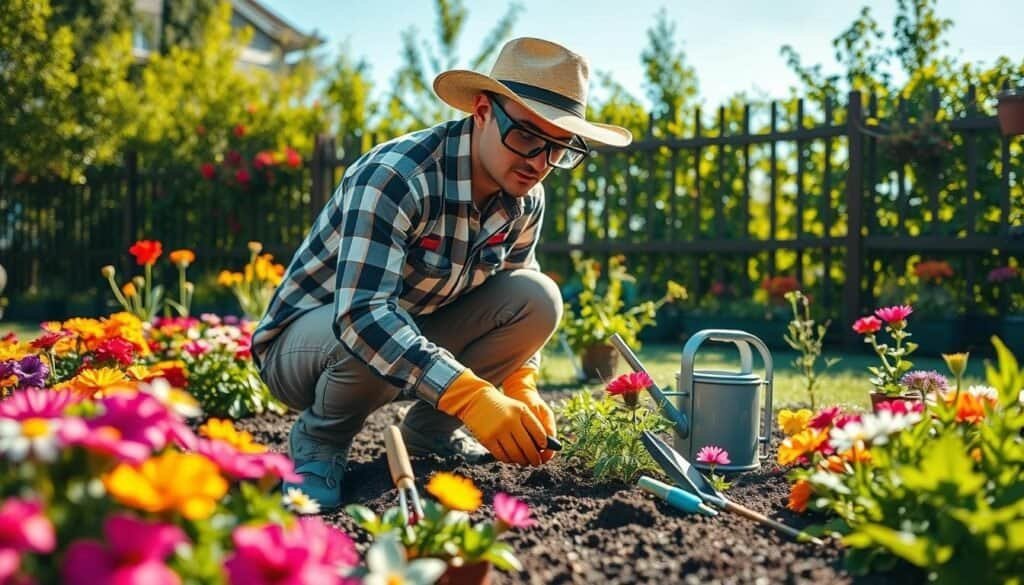
Wearing the right gear can prevent small accidents from becoming big health issues. When you focus on safety, you can enjoy gardening more. High-quality equipment is worth it for your long-term health.
Follow these garden tool safety guidelines to keep your space safe:
- Wear durable gloves: Pick gloves that are thick and can resist punctures and chemicals.
- Use eye protection: Safety glasses or goggles keep dust, wood chips, and branches out of your eyes.
- Choose sturdy footwear: Wear closed-toe boots with good grip to avoid injuries from falling tools or sharp edges.
- Use hearing protection: Earplugs or muffs are needed when using loud power tools to prevent hearing loss.
By making these habits a part of your routine, you lower the risk of yard injuries. Safety gear is not just extra; it’s essential for safe gardening. Stay safe, stay comfortable, and keep your garden thriving.
Overlooking Ergonomics in Garden Tool Selection
Finding the right fit for your hands and reach can change your gardening. Many focus only on the task, but picking essential tools for home gardeners that fit your body is key. When you choose comfort, you join the ranks of essential tools for gardeners who work longer without getting tired.
Looking at a garden tools and equipment chart helps find the best for you. Knowing about types of gardening tools lets you pick ones that don’t strain your wrists and back. This way, you avoid the aches that often come after a long day in the garden.
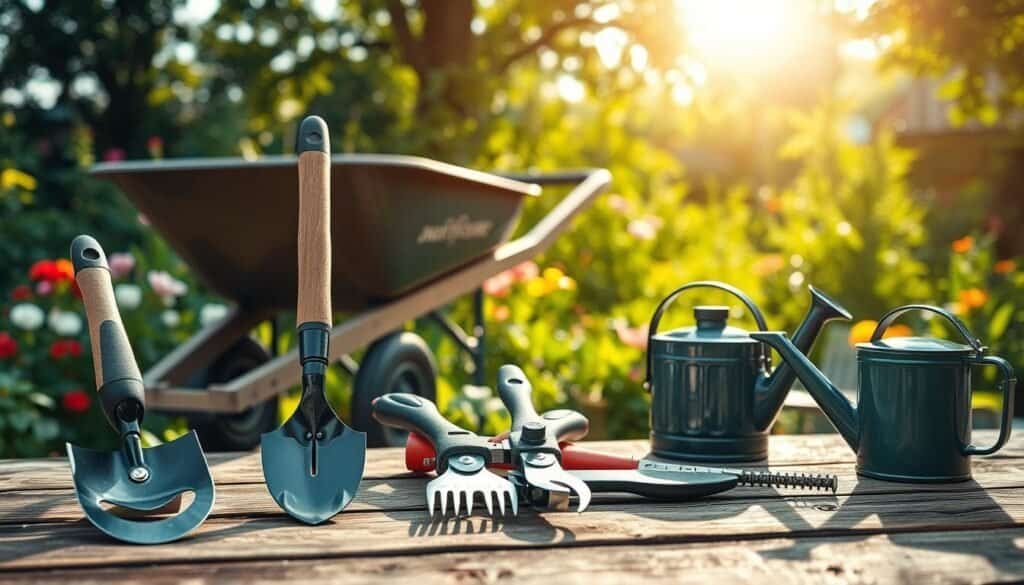
Think of this as your own gardening tools educational guide. When researching garden tools and equipment names, look for padded grips or adjustable handles. These small details make a big difference in how you feel after gardening.
Creating a well-thought-out garden tools and supplies collection is a smart health investment. Focus on these garden care tools essentials to keep your body feeling good:
- Tools with ergonomic, non-slip handles to reduce grip fatigue.
- Lightweight materials that prevent shoulder and arm strain.
- Adjustable reach tools to minimize excessive bending or stretching.
- Properly balanced equipment that feels natural in your hands.
Prioritizing ergonomics makes gardening a joy, not a chore. By choosing gear that fits your body, you protect your joints and work more efficiently in the yard.
The Dangers of Improper Tool Shed Organization
A cluttered shed is more than just an eyesore; it’s a safety hazard. When you ignore tool shed organization, you risk trips, falls, or cuts. It’s key to have a place for every item to keep your space safe.
Bad storage harms your tools too. Moisture causes rust, and heavy items damage your garden tool house. Good garden shed storage ideas keep your tools in top shape.
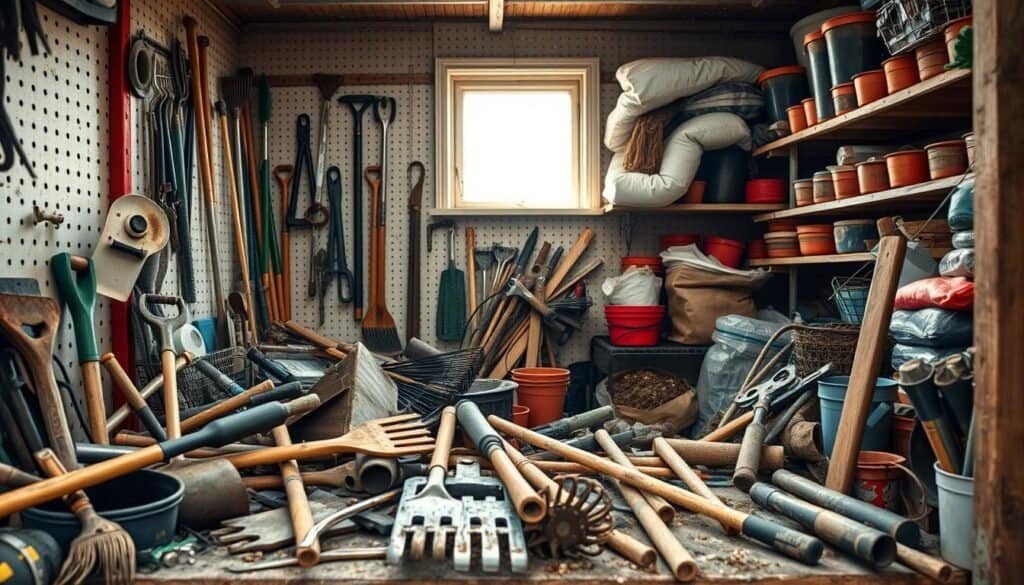
Whether your shed is small or large, the goal is to keep things easy to find and safe. Many people use garden tool organization diy projects to make the most of vertical space. Here are some easy ways to improve your outdoor tool storage ideas:
- Use diy pallet storage ideas for long-handled tools.
- Install wall-mounted hooks to keep sharp edges off the floor.
- Label bins for small gardening tools storage to avoid digging through piles.
- Utilize pallet garden storage to keep heavy equipment off the ground and away from moisture.
Keeping your garden tools organized prevents accidents. By choosing the right yard tool organization for your space, you save time. Strong organization habits make your shed a safe, efficient workspace for all your projects.
If you’re on a budget, pallet tool storage diy projects are a great option. These wooden pallet garden storage solutions are perfect for keeping your lawn equipment storage tidy. A well-organized shed is the key to a safe and productive gardening experience.
Common Mistakes When Using Harvesting and Cultivating Tools
Harvesting your crops should be a joy, but common safety mistakes in gardening can turn a productive day into a painful one. Many people underestimate the force needed when using harvesting tools or cultivating tools. Always remember, your garden hand tools are designed for specific tasks. Using them incorrectly can lead to injury.
One frequent error is the improper handling of garden scissors and garden shears. Gardeners often fail to keep these blades sharp. This forces them to apply too much pressure, leading to slips. Basic safety tips for gardening tools can help you maintain control and precision during every harvest.
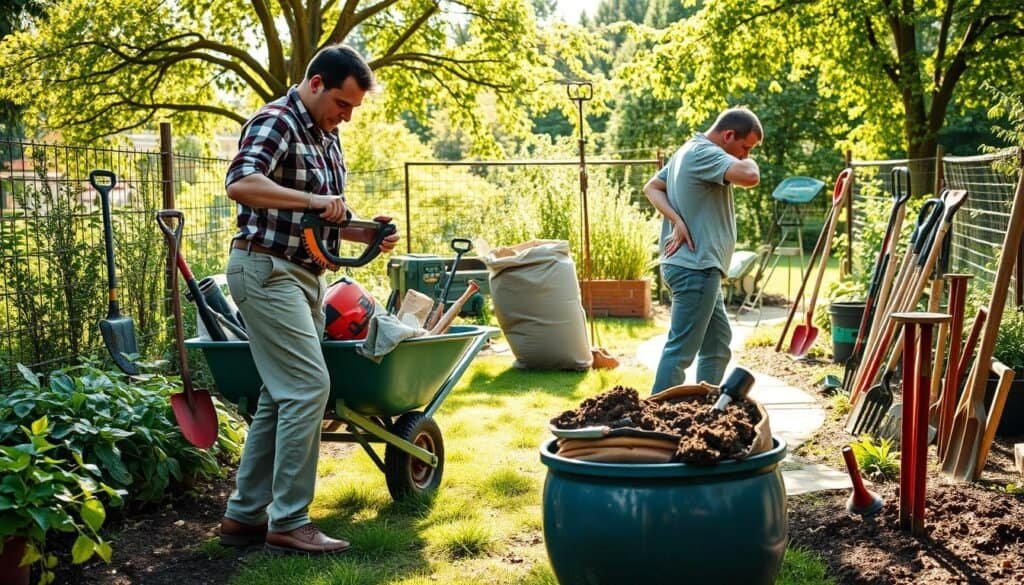
When selecting items from your garden tool set, consider the ergonomics of the handle. Whether you prefer modern garden accessories or traditional Japanese farming tools, the grip should feel natural in your hand. Using tools that are too heavy or poorly balanced often results in wrist fatigue and accidental cuts.
Proper technique is just as important as the quality of your farm tools and equipment. When using a garden rake or other long-handled implements, keep your back straight to avoid strain. Consider these essential safety practices for your daily routine:
- Always cut away from your body when using sharp blades.
- Wear gloves to improve your grip and protect against blisters.
- Clean your tools immediately after use to prevent rust and dullness.
- Store sharp items in a designated rack, not on the ground.
- Inspect your equipment for loose bolts or cracks before starting work.
By staying mindful of these habits, you ensure that your time in the garden remains both productive and safe. Taking a moment to check your gear before you begin is the best way to protect yourself and your plants. Enjoy the process of cultivating your backyard oasis with confidence and care.
Environmental Factors and Weather-Related Safety
Staying safe in the garden is more than just wearing gloves. It’s about watching the sky and the thermometer. The weather often decides if it’s the right time to prune or mow. Following garden tool safety guidelines helps you avoid accidents.
Knowing when to stop working is key. Wet grass or muddy soil can make tools slippery. Always check the ground before starting big projects.

Extreme heat is a big risk when working outside. It can make you tired and increase the chance of accidents. Here are some tips to stay safe:
- Work when it’s cooler, like early morning or late evening.
- Drink lots of water while gardening.
- Take breaks in the shade to cool down.
- Wear light, breathable clothes to stay cool.
High winds can also be dangerous. They can blow debris or make tall equipment unstable. If it gets too windy, wait until it’s better.
Respecting nature is about recognizing the importance of safety with garden equipment. By staying alert to changes, you protect yourself and your tools. Always put your safety first when the weather changes.
Conclusion
Keeping your garden tools safe is a journey that lasts. It protects you and your equipment for many years. By making safety a priority, you create a safe space in your backyard.
Staying away from common mistakes makes gardening safer and more fun. Keeping your tools in good shape, storing them right, and choosing ergonomic tools are key. These habits make your gardening successful.
Brands like Fiskars and Stihl make durable tools. Taking good care of them means fewer accidents and more work done. This makes your gardening better.
Check your shed now. Make sure everything has its place, away from busy areas. This keeps your tools safe and your space organized.
Stay safe and keep your tools in great shape. You should enjoy the results of your hard work in a safe place. This place is built on smart habits and care.
Share your best safety tips with other gardeners. Your dedication to safety encourages others to garden safely and confidently.