Imagine picking fresh lettuce or tomatoes from your kitchen counter, no dirt needed. Growing your own food indoors might seem hard, but it’s easy. Many city folks find soil-less cultivation perfect for small spaces.
You don’t need a big garden or a green thumb to start. This guide is for beginners, teaching you about water-based gardening. We want to make it clear and simple, so you can grow plants with ease.
Living in a small place or a busy home doesn’t stop you from being self-sufficient. It’s time to stop doubting and try it out. With this guide, you’ll see how easy and rewarding indoor gardening can be for all.
Why You Should Try A Friendly Beginners guide to home hydroponics, give it a try
Ever wanted to grow your own food? Hydroponics is a fresh and exciting way to do it. Many people find it changes how they see fresh produce. With a friendly beginners guide to home hydroponics, starting is easy and fun.
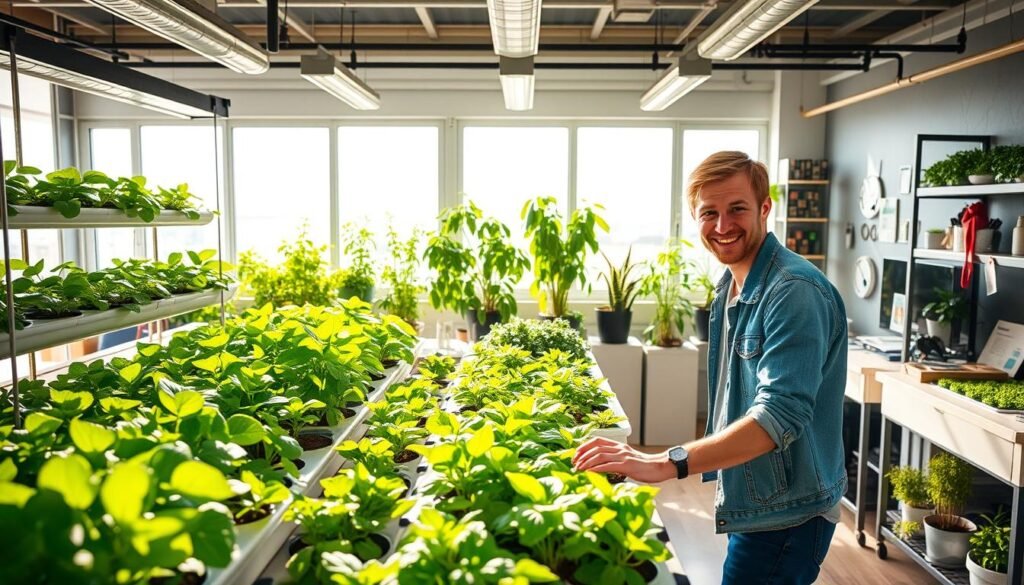
Starting this journey lets you control your food’s ingredients and use space wisely. It’s cleaner and more predictable than outdoor gardening. You’ll see hydroponics for beginners is about creating a lively space in your home.
Here are a few reasons to start your own system today:
- Year-round harvests: Enjoy fresh greens all year, no matter the weather.
- Space efficiency: Grow more in less space than traditional gardens.
- Faster growth rates: Plants grow quicker with direct nutrient access.
- Water conservation: Use much less water than traditional irrigation.
Gardening is good for your mind, bringing calm and a sense of achievement. Even with little experience, you can get great results. So, why not try hydroponic gardening for beginners and bring nature indoors?
Understanding the Core Benefits of Hydroponic Gardening
Hydroponics offers more than just ease for gardeners today. It uses water-based gardening to give plants direct access to nutrients. This method lets plants grow faster and healthier than those in soil.
This method is also very efficient. It uses less water than traditional farming because it recirculates moisture. This makes hydroponic gardening great for those who want to be kinder to the planet.
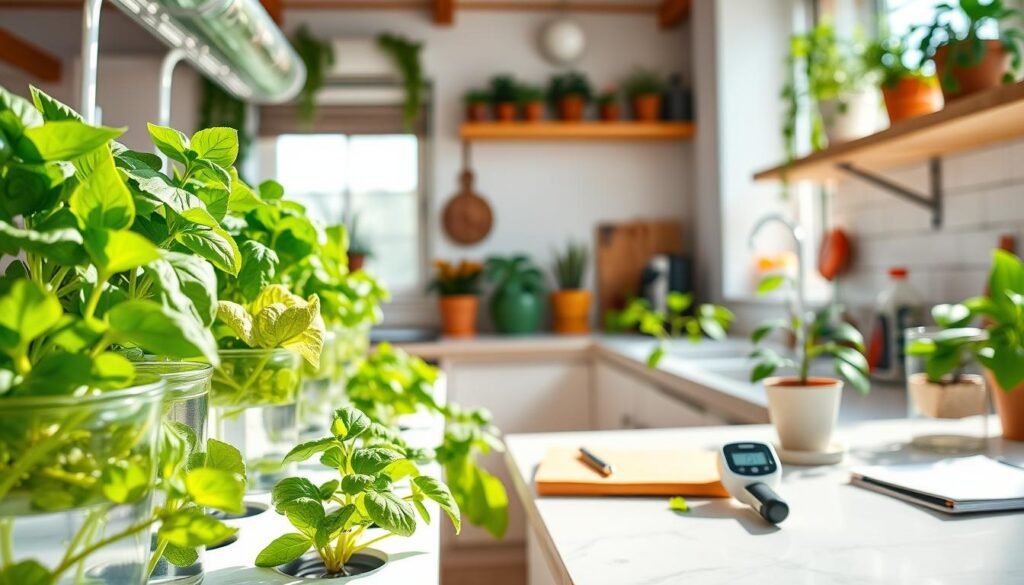
There are many practical benefits for your home:
- Elimination of soil-borne pests: Without dirt, you avoid many garden pests and diseases.
- Year-round production: By growing plants indoors, you can have fresh greens all year, no matter the weather.
- Space optimization: These systems need less space, making them ideal for small places like apartments or kitchens.
The benefits of hydroponics are about control and reliability. By growing plants indoors, you create a stable environment. This makes your home a productive, sustainable space all year.
Essential Components for Your First Hydroponic Setup
Setting up an easy hydroponic setup is easier when you know the basic parts needed. With the right tools, you can start your water-based gardening journey confidently.
For beginners in hydroponics, understanding the key components is critical. Proper hydroponics system installation helps avoid leaks and ensures plants get enough oxygen to grow well.
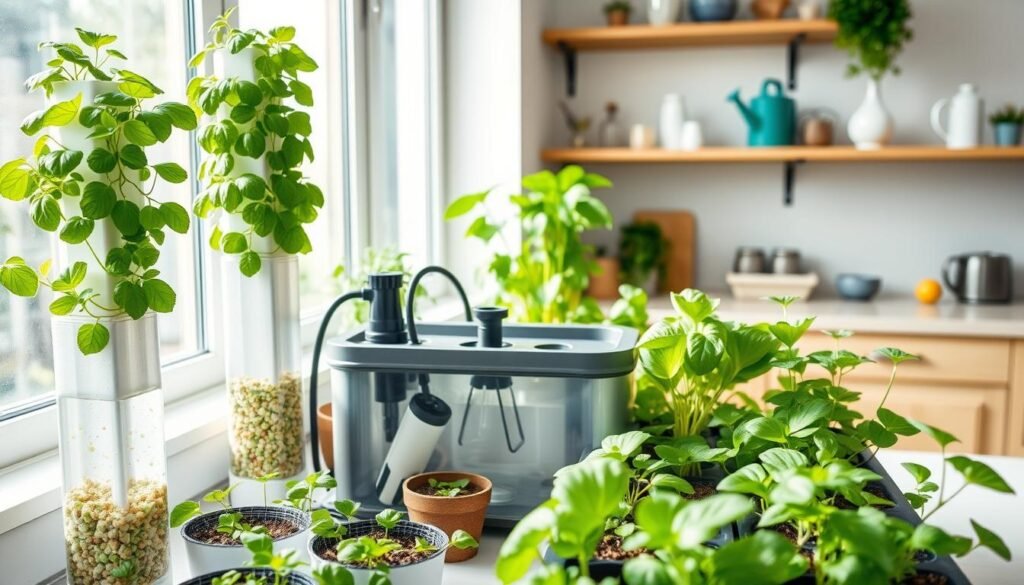
To create a reliable hydroponic setup, you need specific items. These parts work together to provide a stable environment for your plants to thrive without soil.
- Reservoir: A sturdy, light-proof container for your nutrient-rich water.
- Submersible Pump: Keeps the water moving, essential for oxygenation.
- Nutrient Delivery System: Tubes or emitters that carry the solution to the roots.
- Grow Medium: Materials like clay pebbles or rockwool that support the plant structure.
- Air Stone and Pump: Adds extra oxygen to the water to prevent root rot.
Choosing a high-quality hydroponic gardening system saves time and trouble. Durable hydroponic grow systems keep your indoor garden productive and healthy all year.
Choosing the Best Vegetables for Hydroponics
Choosing the right crops is key to a successful harvest when growing vegetables indoors. Not all plants do well in water, so picking wisely saves time and trouble. Focus on varieties that grow well in controlled environments for a productive garden all year.
For beginners, it’s best to start with fast-growing, hardy plants. These need less care and give quick results. Add these reliable options to your garden:
- Lettuce: It grows fast and loves the moist hydroponic environment.
- Spinach: A cool-weather favorite that thrives in nutrient-rich water.
- Herbs: Basil, cilantro, and mint grow well and add fresh flavors.
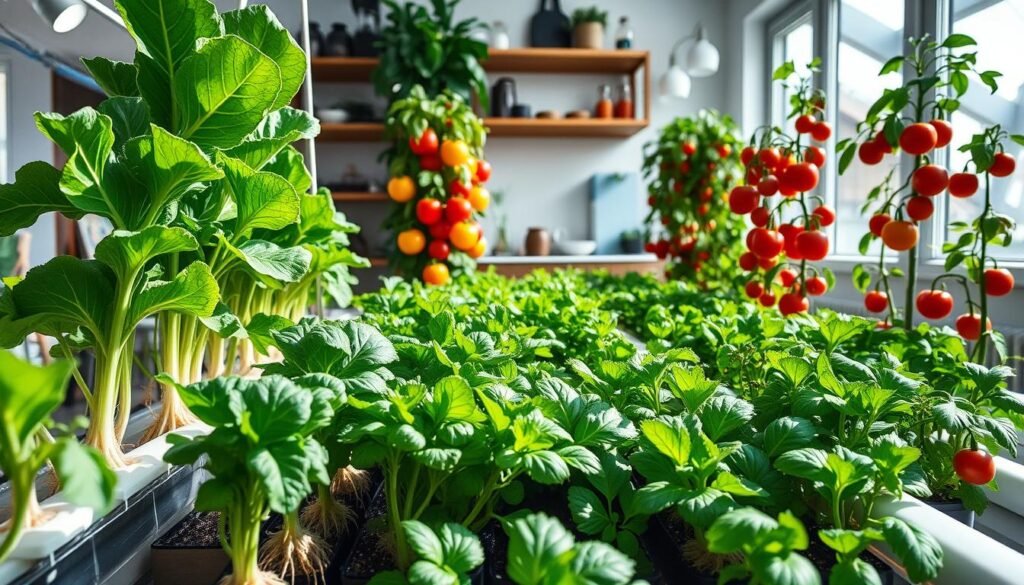
It’s important to manage your plants’ nutrient needs. Different veggies need different things, so use a good liquid fertilizer. Check your water pH often to help your plants absorb nutrients well.
Knowing what your plants need helps avoid common mistakes. Watch your water quality and light to get the most from your hydroponic garden. With practice, you’ll become a pro at indoor gardening.
Simple DIY Hydroponic System Designs for Beginners
Learn how simple items can turn into a working homemade hydroponic system. Making your own gear is a cost-effective way to start indoor farming. With a basic setup, you can grow fresh greens at home using simple techniques.
For a reliable system, try deep-water culture buckets. They’re great for beginners because they need few parts and are easy to work with. You can find many free plans online that guide you through building one.
For those with more space, an outdoor setup can be very rewarding. A good design uses gravity to move water, saving energy. These systems work well for leafy greens like lettuce and spinach.
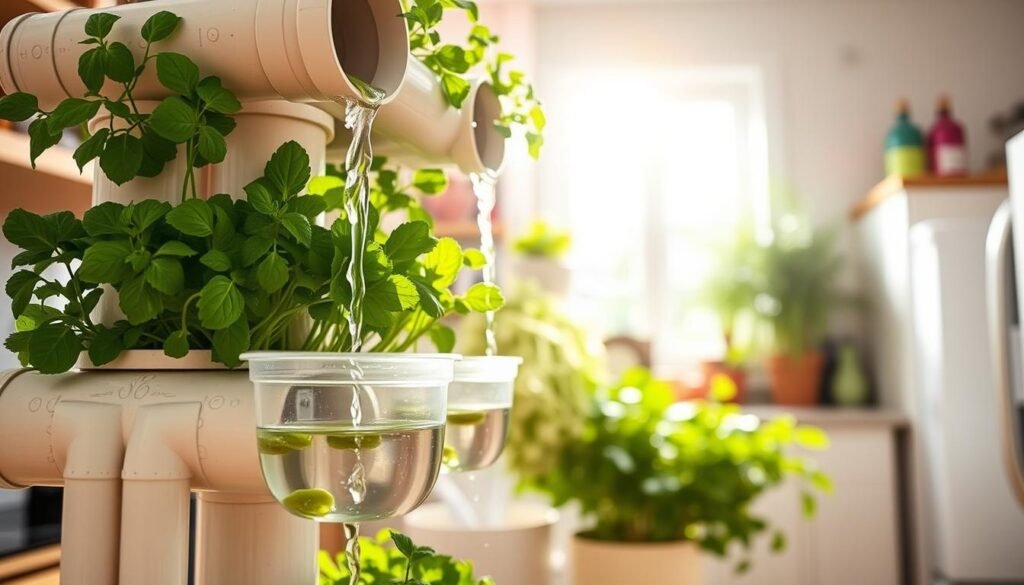
Building a tower garden with pvc pipes is a popular choice. It lets you grow many plants in a small area. A well-made pvc garden can feed a small family all season.
When planning your garden, think about water flow. There are many pvc design options for different spaces. You can adjust these ideas to fit your balcony or patio.
Creating a pvc garden is a fun project that pays off over time. You can add to it as you learn more. An a-frame garden is a highly efficient structure that holds many plants.
For more advanced projects, consider adding fish to your system. An aquaponics setup uses fish waste to feed your plants. These systems are a sustainable way to grow both protein and veggies together.
- Deep-water culture buckets for simple starts.
- Vertical towers to save floor space.
- A-frame designs for high-density planting.
- Horizontal pipe systems for easy maintenance.
- Integrated aquaponics for a natural ecosystem.
Exploring Vertical Hydroponic Systems for Small Spaces
Living in a small apartment doesn’t mean you have to give up on your dream of a lush, productive garden. A vertical hydroponic system lets you grow fresh greens and herbs on your walls. This is perfect for urban dwellers who want a vertical garden hydroponic setup without taking up too much space.
When you start your vertical hydroponics diy project, you can turn unused corners or bare walls into something useful. Building a diy hydroponic wall is a rewarding project. It lets you grow more food in a small area than traditional gardening methods.
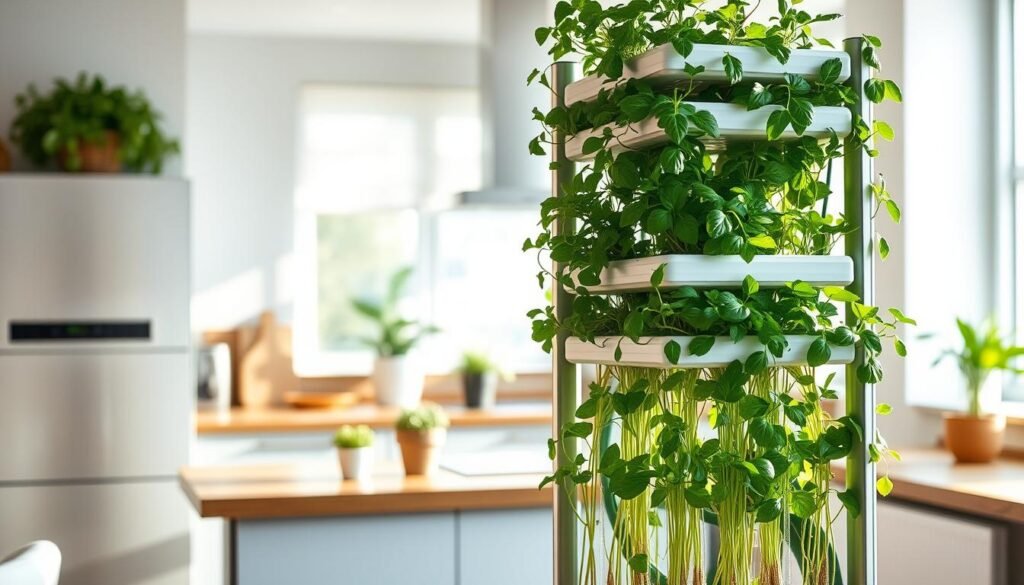
Learning how to build a vertical hydroponics system often involves using PVC pipes or modular stackable pots. Many beginners start with a diy hydroponic tower because it’s compact and efficient. A well-designed hydroponic tower ensures water and nutrients reach every plant in the stack.
For those interested in a symbiotic ecosystem, a vertical garden aquaponics setup is a great choice. An aquaponic vertical garden uses fish waste as plant nutrients, creating a natural cycle. This method is efficient and adds a unique, living element to your home.
By implementing these strategies, you can turn any tiny room into a productive food-growing zone. Hydroponic vertical farming is not just for large commercial operations; it’s a practical and fun way to grow your own food at home. Consider these benefits for your small space:
- Maximizes limited square footage effectively.
- Reduces the need for heavy soil and pots.
- Creates a beautiful, living green wall feature.
- Provides a consistent supply of fresh, organic produce.
Smart Hydroponic Systems for Effortless Indoor Growing
Now, you can have a thriving garden without the hard work of old methods. Indoor farming has changed with tech that automates lights, nutrients, and water checks. A smart hydroponic system makes growing plants indoors easy and hassle-free.
There are many systems to fit your space and needs. The Vegebox hydroponics growing system is great for beginners. It’s compact and all-in-one. For growing more, a modular hydroponic system lets you add units as you expand. A hydroponic tower is ideal for small spaces and big harvests.
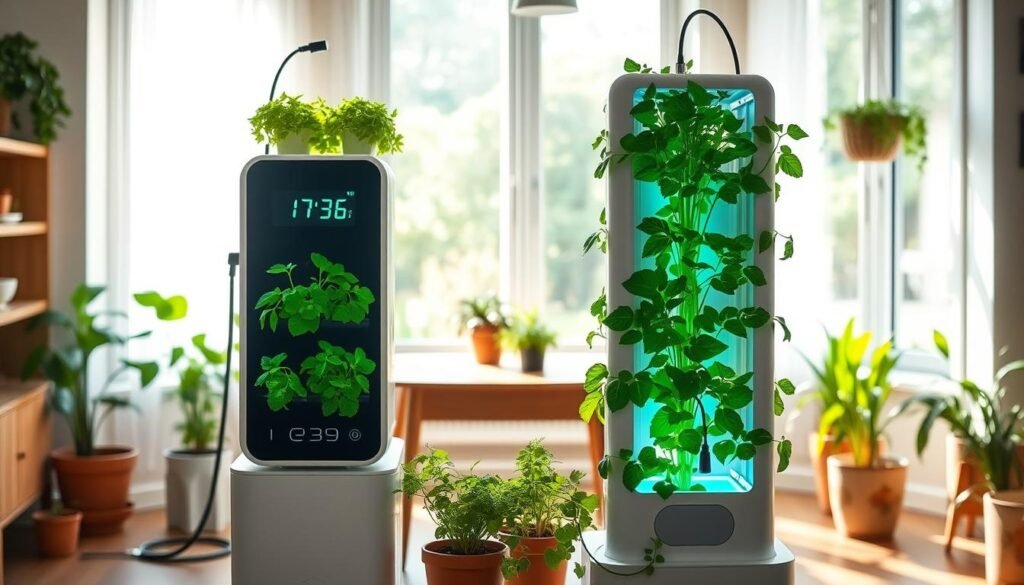
Indoor aeroponics is fast and efficient. It uses a fine mist to feed roots, speeding up growth. Many say aeroponic gardening is the best for quick, high-quality greens.
Investing in a top-notch indoor growing system means fresh, healthy food all year. These systems take care of the hard work, giving your plants what they need. With little daily work, you can enjoy the fun of growing your own food.
Maintaining Your Hydroponic Garden for Maximum Yield
Successful hydroponic farming needs regular checks and tweaks. Keeping your garden in top shape is key to getting the most out of it. A simple routine helps your plants grow strong and healthy all year.
Focus on your water and nutrient solution’s health daily and weekly. Catching small issues early can prevent big problems later.
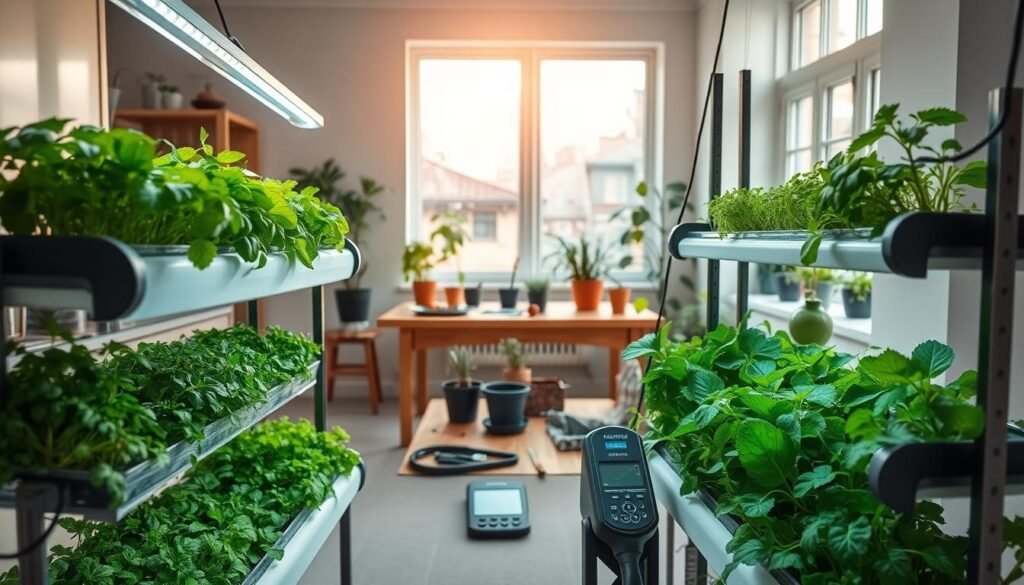
To keep your hydro garden at its peak, follow this essential maintenance checklist:
- Check pH levels: Keep them in the right range for your plants to take in nutrients well.
- Monitor electrical conductivity (EC): Use a meter to track nutrient levels and avoid salt buildup.
- Clean the reservoir: Regularly flush and scrub your tank to stop algae and bacteria.
- Inspect root health: Healthy roots are white and firm; any browning or slime means action is needed.
Knowing how to spot nutrient deficiencies is critical. Yellow leaves or slow growth mean your plants need help. Act fast to keep your plants healthy and your yield strong.
Being consistent is the key to success. Spend a few minutes each week on these tasks. This effort creates a stable home for your plants to grow and thrive for many seasons.
Troubleshooting Common Issues in Indoor Food Gardens
Even experienced gardeners face challenges with indoor food gardens. Hydroponic gardening for beginners is rewarding but can have its ups and downs. Spotting problems early is key to saving your harvest.
Algae growth is a common issue in indoor hydroponic gardens. It loves light, turning water green and harming your plants. To stop it, make sure your reservoir is dark and keep it covered.
Root rot is another big problem. It smells bad and makes roots look slimy and brown. Improving water flow and adding an air stone helps keep roots healthy.
Pests can sneak into your garden, even indoors. Tiny spots or webs on leaves mean quick action is needed. Organic soaps or a damp cloth can often solve the problem.
Being watchful helps keep your garden healthy. Most problems are fixable if caught early. Follow these tips for a thriving garden:
- Check your water pH levels weekly to ensure nutrient uptake.
- Keep your growing area clean to discourage unwanted pests.
- Inspect root health regularly to catch rot in the early stages.
- Ensure your lights are positioned correctly to prevent algae blooms.
Sustainable Indoor Gardening Practices
You can turn your home into a green oasis with sustainable indoor gardening. Focus on using resources wisely to cut down on waste. This way, you get to enjoy fresh food right from your kitchen. It’s good for the planet and gives your family healthy food.
Recycling your nutrient solutions is a smart move. Instead of throwing away water, filter and reuse it. This method cuts down on water use and stops nutrients from running off.
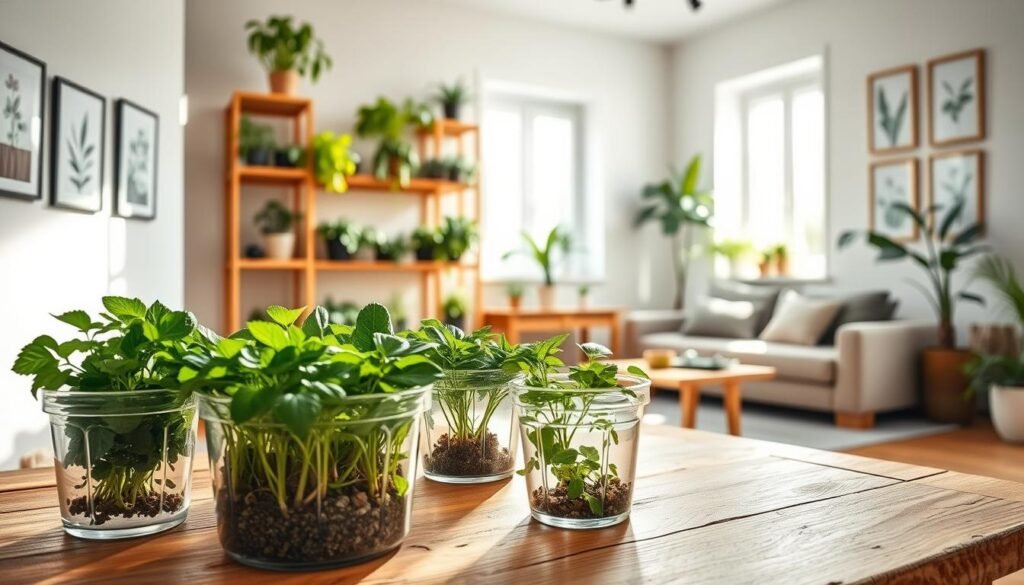
Switching to energy-saving LED lights is key for sustainable indoor gardening. They use much less power than old bulbs but give plants the right light. You’ll see your energy bills drop and your carbon footprint shrink.
Here’s how to start being greener:
- Watch your water use to avoid wasting it.
- Go for organic nutrients to keep your food clean.
- Set timers for your lights to save energy.
- Compost plant trimmings to make natural fertilizer.
Choosing sustainable indoor gardening helps the planet and gives you a rich harvest. These green steps make your garden a symbol of efficiency. You’ll feel good knowing your food was grown with care for the earth.
Design Inspiration for Your Hydroponic Greenhouse
A well-planned hydroponic greenhouse is both a productive garden and a stunning architectural feature. Finding the right design inspiration for hydroponics helps you create a space that feels like a sanctuary. It also maximizes your harvest. By choosing smart layout options, you can turn your gardening hobby into a beautiful home improvement project.
When starting your hydroponic greenhouse journey, think about how it fits into your existing landscape. Many people prefer diy hydroponics because it lets them customize the growing area. You can pick materials that match your home’s exterior, making the new addition look intentional and polished.
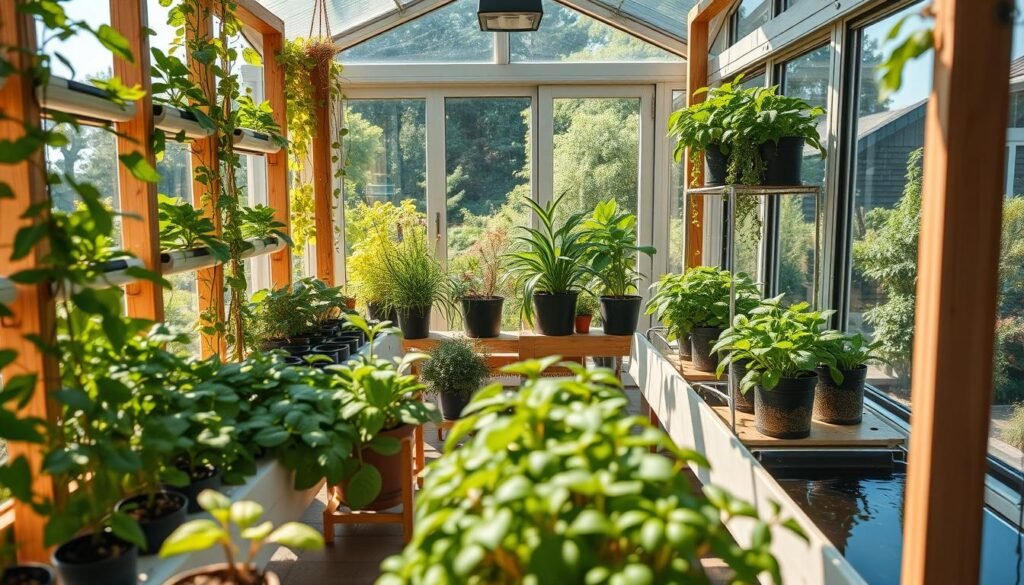
Choosing the right foundation is key for long-term success. Good greenhouse floor ideas focus on drainage and easy cleaning. Using gravel or permeable pavers helps manage water runoff, which is vital for indoor water systems.
Improving your greenhouse interiors makes daily maintenance tasks more enjoyable. Consider these elements to enhance your space:
- Install vertical shelving to maximize your growing footprint.
- Use warm, ambient lighting to make the space inviting during evening hours.
- Incorporate a small seating area to enjoy your plants.
- Choose light-colored materials to reflect natural sunlight effectively.
Whether you’re setting up a simple green house hydroponics system or a complex aquaponics greenhouse, aim to balance form and function. These hydroponic design ideas help you build a space that’s as visually appealing as it is productive. With creativity, your greenhouse will become the highlight of your home.
Conclusion
Building a personal hydroponic garden turns your living space into a vibrant source of nutrition. This rewarding path blends scientific precision with the simple joy of watching plants thrive without soil.
You now possess the knowledge to manage water, light, and nutrients effectively. Brands like AeroGarden or General Hydroponics offer tools that make this transition smooth for every new grower.
Your commitment to this hobby leads to fresh greens right in your kitchen. Every harvest serves as a reminder of your dedication to sustainable living and healthy eating habits.
Take the first step by setting up your reservoir today. Share your progress with local gardening groups or online communities to learn new tricks from fellow enthusiasts.
Your indoor oasis awaits your personal touch. Enjoy the process of watching your seeds transform into a bountiful supply of produce throughout the year.